


Blue-Green Algae Killed Two Dogs in a Week. The Deadly Part Is How Fast It Runs
Blue-green algae is not one poison but two, on two very different clocks. Knowing which one your dog may have hit, and how few minutes you have, is the difference that saves a life this summer.

A dog can go from a happy swim to gone in the time it takes to drive home. That is the part of the blue-green algae story that gets lost in the warnings, and it is the part that actually saves dogs. After two dogs reportedly died within a single week, the useful question is not just “what is blue-green algae,” it is “if my dog hit it, how many minutes do I have?” The answer is unsettling, and it is the reason this is one of the few summer hazards where you cannot afford to watch and wait.
The clock is the whole story
Blue-green algae is not a single poison. The cyanobacteria in a bloom can produce two very different families of toxin, and they run on two very different clocks.
The fast one is anatoxin-a, a neurotoxin. A dog who ingests it can show muscle tremors, stiffness, drooling, difficulty breathing, and seizures, and death from respiratory paralysis can follow within 20 to 30 minutes of the first sign. There is essentially no margin. The slower one is microcystin, a liver toxin. Its signs, vomiting, diarrhea, weakness, pale gums, and later jaundice, tend to appear within one to four hours, with death often within a day and sometimes delayed several more.
This distinction is not academic. It tells you why “I’ll keep an eye on him” is the wrong instinct: with anatoxin-a, the window to act is shorter than the drive to most emergency hospitals. The right move the moment you suspect exposure is to head for a vet and call them while you are moving, not to wait for a symptom to confirm your fear.
How a clear lake still kills
The most dangerous myth about blue-green algae is that you can see it. Sometimes you can. A heavy bloom shows up as green, blue, or brown scum, like spilled paint or pea soup across the surface. But a dog can be poisoned in water that looks pristine.
That is exactly what happened at Lake Tahoe’s El Dorado Beach, where one owner, Anaïs Felt, took her dog Cora for a swim in water she described as crystal clear, with other dogs and people wading nearby. “Within an hour she was very sick, and within three hours she had passed away,” Felt said. A water-quality board ran a site check that turned up no visible algae, with lab results pending. The lesson is that a clear surface is not an all-clear. Toxins can persist in water and along the shoreline after a bloom has dispersed, and a calm, warm, nutrient-rich lake in late summer is the textbook setup.
The threat is also genuinely national. Blooms have been reported from New York to Southern California, and a separate dog death at Lake Travis in Texas was under investigation around the same stretch. This is not a regional fluke; it is what warm water does in the back half of summer.
“The mistake I see is treating a swim like a low-stakes decision,” says Dr. Priya Nair. “With most summer hazards, you have hours and options. With a toxic bloom, you may have minutes, and you will not get a warning symptom you can trust. So the caution has to come before the water, not after.”
Why dogs, specifically
Any animal can be harmed by these toxins, including people, in whom they cause numbness, dizziness, vomiting, and abdominal pain. But dogs sit at the top of the risk list for reasons that have nothing to do with biology and everything to do with behavior. They swim where cats will not, they are far less picky about what water they will drink, and they groom toxins off their own wet fur afterward. A dog does not even need to swim to be exposed; drinking from a contaminated puddle or pond edge, or inhaling spray off a bloom, is enough.
A real prevention plan, not just “be careful”
You cannot test a lake yourself, so prevention is about stacking the odds before your dog ever gets near the water.
Check the advisory first. Many states and counties now monitor recreational water for harmful algal blooms and post closures online; a thirty-second search for the lake’s name plus “algae advisory” is worth more than any visual check at the shoreline.
Treat stagnant, warm, nutrient-rich water as guilty until proven otherwise. Fast-moving, cold, well-circulated water is lower risk; still ponds and lake edges baking in August sun are where blooms concentrate. Avoid any water with visible scum, discoloration, or a swampy smell, and steer your dog away from shoreline foam, where toxins collect.
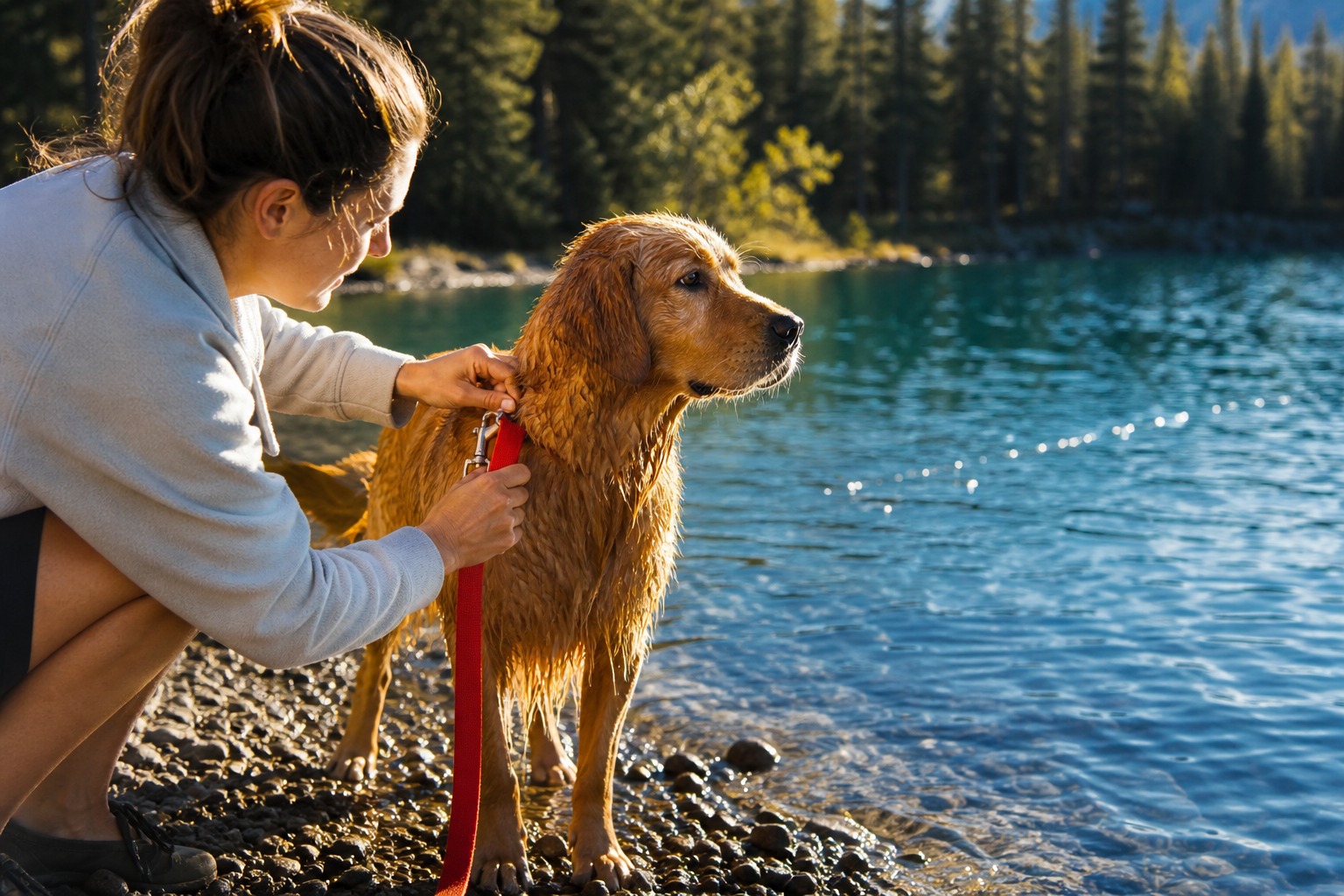
Keep your dog in sight and on a leash near unfamiliar water so they cannot gulp from a puddle or wade into a bloom while you are looking at your phone. And if your dog does get in any natural water, rinse them thoroughly with clean water as soon as they are out, before they lick their coat. That single habit removes toxin they would otherwise swallow during grooming.
None of this requires giving up summer at the lake. It requires treating a warm, still body of water the way you would treat a hot car: not as a maybe, but as a known hazard with a fast, unforgiving clock.
References
- Merck Veterinary Manual, “Algal Poisoning of Animals.”
- Cornell University Riney Canine Health Center, “Blue-Green Algae Poisoning (Cyanobacteria Toxicosis).”
- Rankin, K.A., et al., “Treatment of Cyanobacterial (Microcystin) Toxicosis Using Oral Cholestyramine: Case Report of a Dog from Montana,” Toxins, 2013.
- American Animal Hospital Association, “Algae Alert: Understanding the Dangers of Blue-Green Algae for Pets.”
- VCA Animal Hospitals, “Algae Poisoning in Dogs.”
Common questions
Can you see blue-green algae in the water?
Not reliably. A heavy bloom can look like green, blue, or brown scum or spilled paint on the surface, but a dog can be poisoned in water that looks perfectly clear, which is exactly what happened at Lake Tahoe.
Is there a cure for blue-green algae poisoning in dogs?
There is no antidote. Vets treat the symptoms and support the organs under attack. There is some evidence that the cholesterol drug cholestyramine can bind microcystin in the gut if given early, but the only real protection is keeping your dog out of suspect water in the first place.
What should I do if my dog swam in water that might have algae?
Rinse them with clean water immediately so they cannot lick toxins off their coat, do not wait for symptoms, and call your vet or an emergency hospital on the way there, not after.
Not a substitute for your vet. Our guidance is educational. For urgent symptoms, contact a vet or emergency clinic right away. Editorial standards
Dr. Mehta is a board-certified veterinary nutritionist who evaluates pet food formulations, ingredient quality, and the science behind dietary trends. He writes and reviews all nutrition content at The Pet Times, including our food rankings and feeding guides.
Meet our experts ↗Keep reading
 FoodGingerbread's Real Danger to Dogs Isn't the SugarDr. Nina Kohl · 6 min
 Health & WellnessCooked Salmon Is a Gift. Raw Fish From a Lake Can Kill Your Dog.Dr. Priya Nair · 5 min
 Health & Wellness'Gently Cooked' Didn't Stop the Plastic: What the BeefiBowls Recall Means for Your DogDr. Amara Solis · 3 min
 Health & WellnessYour Dog's Germs Won't Make You Sick. Your Habits MightDr. Amara Solis · 6 min
 Health & WellnessThe Carrot in Your Dog's Bowl Was on a Recall List. Here's the Real LessonDr. Ravi Mehta · 5 min
 TrainingYour Dog Is Dreading Halloween. 8 Reasons Why (and How to Help)Dr. Amara Solis · 8 min