


Your Perfectly Trained Dog Becomes a Stranger at Grandma's. Here's Why.
The dog who has a flawless 'stay' at home falls apart in someone else's living room, and it is not misbehavior. Trained behavior does not automatically travel to new places. Here's how to prep a dog who is genuinely welcome as a guest.

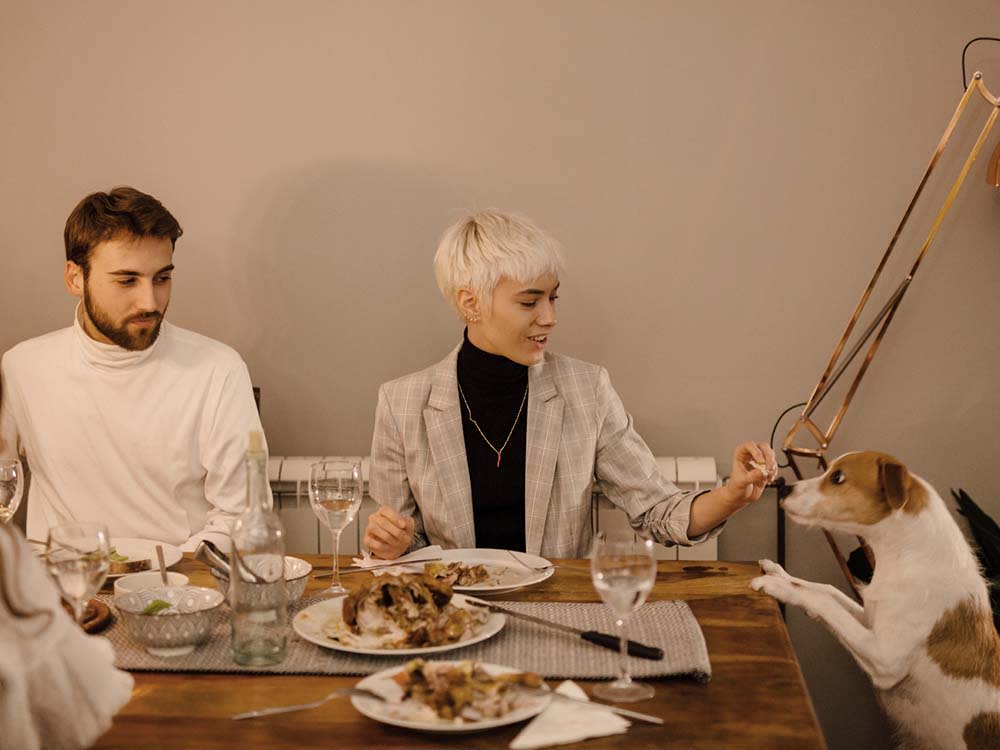
Picture the dog who has a bulletproof “stay” in your living room. You can walk across the room, open the fridge, answer the door, and that dog holds like a statue. Now put that same dog in your in-laws’ house, and watch the stay dissolve into a dog who is up, pacing, and eyeing the cheese board.
Most owners read that as their dog choosing to misbehave, or being stubborn, or embarrassing them on purpose. It is almost never any of those things. It is one of the most reliably overlooked facts in dog training: behavior does not automatically transfer from one place to another. A cue your dog nails at home is, as far as your dog’s brain is concerned, a home cue. Take it somewhere new and you are, in a real sense, starting over.
Once you understand that, being a good guest with a dog stops being about hoping your dog behaves and becomes about deliberately teaching them to behave here, in this house, today. Everything below flows from that one idea.
Start before you go: get the yes
The first step happens before your dog goes anywhere: ask permission, genuinely. Not everyone wants a dog in their home, no matter how lovely yours is, and a host deserves the heads-up so they can move the breakable vase to a shelf above tail height. If the answer is no, respect it and find another arrangement. An unwelcome dog in someone’s house is a fast way to damage a relationship, and it is miserable for the dog to spend a visit as the resented guest.
Pack the skills, not just the leash
The better trained your dog is, the more welcome you both are. The core toolkit is not exotic: sit, stay, come, leave it, a polite greeting, and quiet-on-cue. These are the basics of good canine citizenship, and they are exactly the skills a strange house will test.
I also push people to teach one “show-off” behavior, and not because it is cute. A charming trick is social insurance. When your dog commits a small faux pas, a quick, delightful trick resets the room’s mood and buys forgiveness. A dog who bumps into a guest and then, on cue, covers their face with a paw as if mortified gets laughed with instead of glared at. Pick something easy but impressive, like waiting at a door until released, or a high-five, or a roll-over.
People pack the leash and the food and forget to pack the training. One genuinely charming trick does more for you at a tense family dinner than a perfect heel ever will. It turns a stumble into a party trick, and hosts forgive a dog who just made them laugh.
Head off the classic complaints
Hosts complain about a short, predictable list: barking, jumping on people, and stealing food. These are worth training against specifically before a visit.
For the barker, teach a “quiet” cue at home. The instant the barking starts, say your cue, then bring a treat right to their nose, and only release the treat once they have stopped. Dogs learn quickly that going quiet on cue is what pays. For the jumper, flip the social math: when four paws leave the ground, the people they want to greet turn and leave, and when your dog sits, the attention and treats arrive. Since most jumping is a bid for social contact, dogs figure out fast that sitting is the thing that actually works.
And be honest with yourself about the bigger issues. If your dog bites, destroys things, or guards food or space, a packed holiday house is not the place to find out how it goes. Leave them home with a sitter.
Bring the boredom-busters
A bored dog with pent-up energy is the dog who chews the throw pillow and surfs the counter. Pack the antidotes: a good walk or two, chews, a stuffed and frozen rubber toy, puzzle feeders, and, if your dog genuinely likes their crate and your host has room, the crate itself as a familiar safe base. Exercise before the event, not after the damage.
The move that actually works: drill on arrival
Here is the payoff of the “behavior does not travel” idea, and it is the single most useful thing in this article. As soon as you reasonably can after arriving, run a couple of tiny training sessions right there in the new house. Ask for the sits and stays and leave-its your dog already knows, reward heavily, and let your dog re-learn that these cues apply here too.
This is what separates trainers from beginners. Trainers know a skill has to be re-proofed in each new environment, so they build in that practice instead of assuming. Even two five-minute sessions on arrival can dramatically sharpen your dog’s manners for the rest of the visit. And it is not just obedience that drops off in a new place. Plenty of dogs who are perfectly trustworthy home alone become stressed or destructive when left alone somewhere unfamiliar, so adjust your expectations and your plans for downtime accordingly.
Engineer the wins
Prevention beats correction every time. Do not leave your highly food-motivated dog alone in the room with the turkey on the table, not even for a minute. If your dog raids counters or collects shoes, keep temptation out of reach and make some rooms off-limits with a baby gate, a pen, or the crate, so your dog never even gets the chance to practice the behavior you do not want. You are not managing a bad dog. You are setting an untested dog up to only ever show their good side.
However the visit goes, send a thank-you to your hosts afterward, and an apology if one is warranted. A little grace on the way out keeps the invitation open for next time.
What newer training thinking adds
The instinct to “correct” a dog out of jumping or barking in the moment has largely given way, among modern trainers, to teaching the dog what to do instead and paying them well for it. That is not just kindness for its own sake; a dog who has been taught a clear alternative, like sitting to greet, holds up far better under the stress of a strange, stimulating house than a dog who has only been punished for the wrong thing and left guessing about the right one. Reward-based skills travel better than suppression does.
The other shift is simply taking generalization seriously. It is now a standard part of good training to practice cues across many locations on purpose, precisely because the research and the daily experience of trainers keep confirming that dogs do not assume a skill carries over. If you want a dog who is genuinely portable, the work is not more repetitions in your kitchen. It is the same skills, rehearsed in as many different places as you can manage, long before the big visit.
References
- American Veterinary Society of Animal Behavior. “Position Statement on the Use of Reward-Based Training.” https://avsab.org/resources/position-statements/
- Pryor, Karen. Don’t Shoot the Dog: The New Art of Teaching and Training. Revised edition, 2019.
- American Kennel Club. “Canine Good Citizen (CGC) Program.” https://www.akc.org/products-services/training-programs/canine-good-citizen/
Common questions
Should I ask before bringing my dog to someone's home?
Always. Even dog lovers may have a reason a dog does not work that day, and a surprise dog can strain a relationship fast. Ask ahead, accept a no gracefully, and have a backup plan for where your dog stays if the answer is no.
My dog is great at home but wild at other houses. Why?
Because dogs do not automatically generalize training to new places. A rock-solid 'stay' in your living room is a living-room skill until you have practiced it elsewhere. The fix is to rehearse known cues in new environments, starting easy, not to assume the home version will show up.
What if my dog has a serious issue like biting or guarding?
Then a visit is the wrong setting to test it. If your dog bites, guards resources, or is severely anxious around new people, leave them home with a sitter or board them. It is not fair to the dog or the host, and the stakes are too high in an unfamiliar, crowded house.
Sasha Ford is a certified cat behaviour consultant who has worked with shelters, catteries, and private clients across the country. They review all feline behaviour content at The Pet Times, with expertise in multi-cat households, indoor enrichment, and stress-related disorders.
Meet our experts ↗Keep reading
 TrainingYour Dog Isn't Wrecking the Yard. They're Doing a Job. Name It.Dr. Mara Chen · 8 min
 TrainingYou Can't Train Your Dog in a Moving Car. Start in the Driveway.Dr. Ravi Mehta · 8 min
 TrainingSix Weeks of Crate Rest Will Break You Both. Give the Dog a Job Instead.Dr. Nina Kohl · 8 min
 TrainingYour Dog's Toy Stash Is Adorable. The Growl Over It Isn't.Marcus Webb · 7 min
 TrainingThe 'Hybrid Vigor' Myth Is Backwards: Doodles May Stack Their Parents' ProblemsDr. Nina Kohl · 5 min
 TrainingYour Dog Digs Up Your Sheets. The Timing Tells You Whether to Worry.Dr. Nina Kohl · 7 min