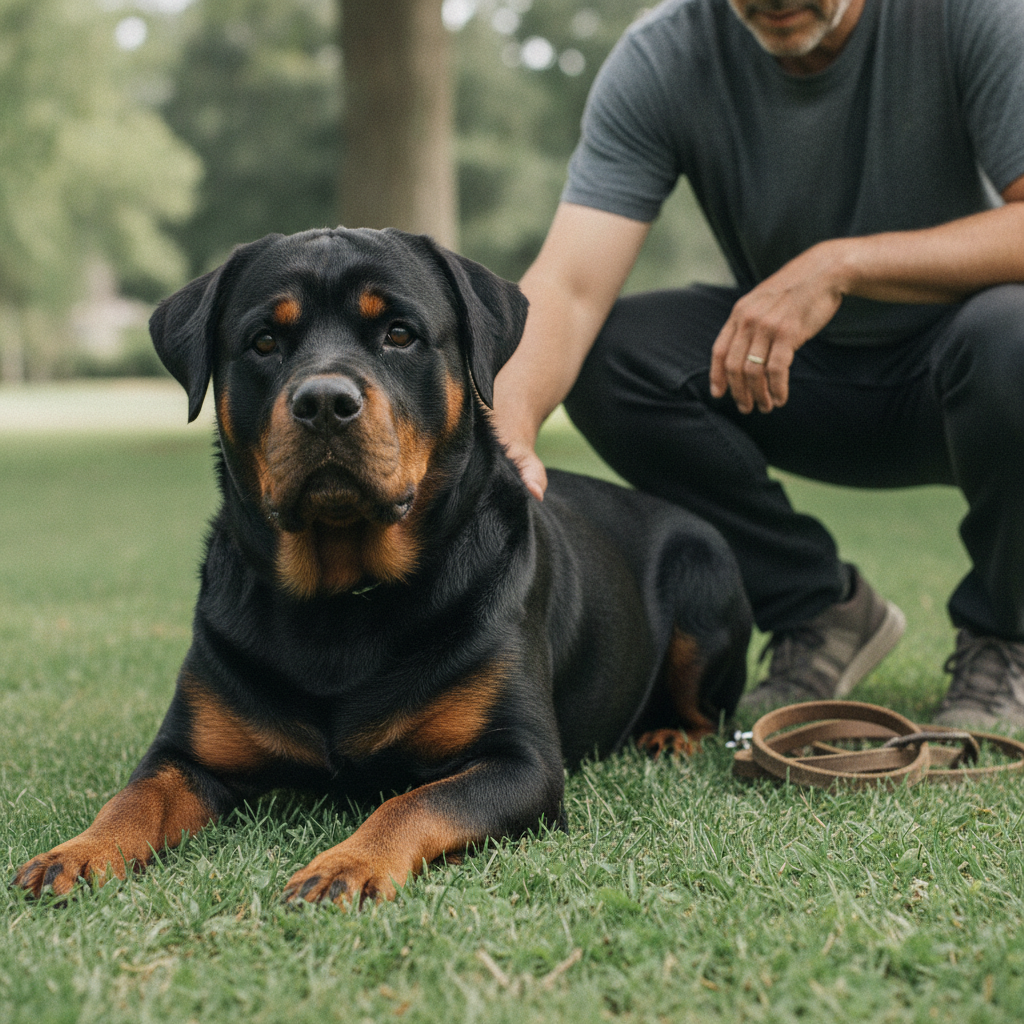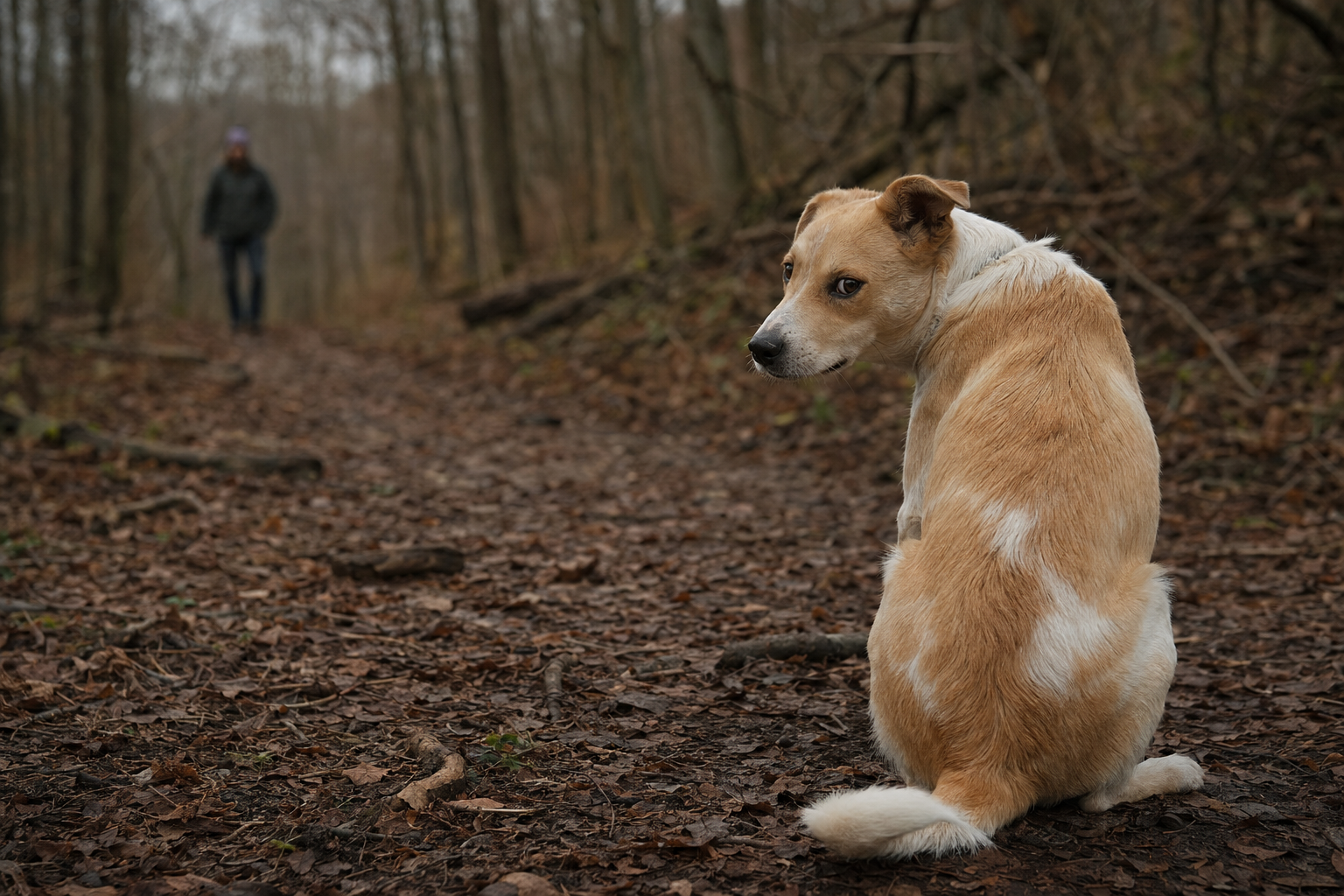
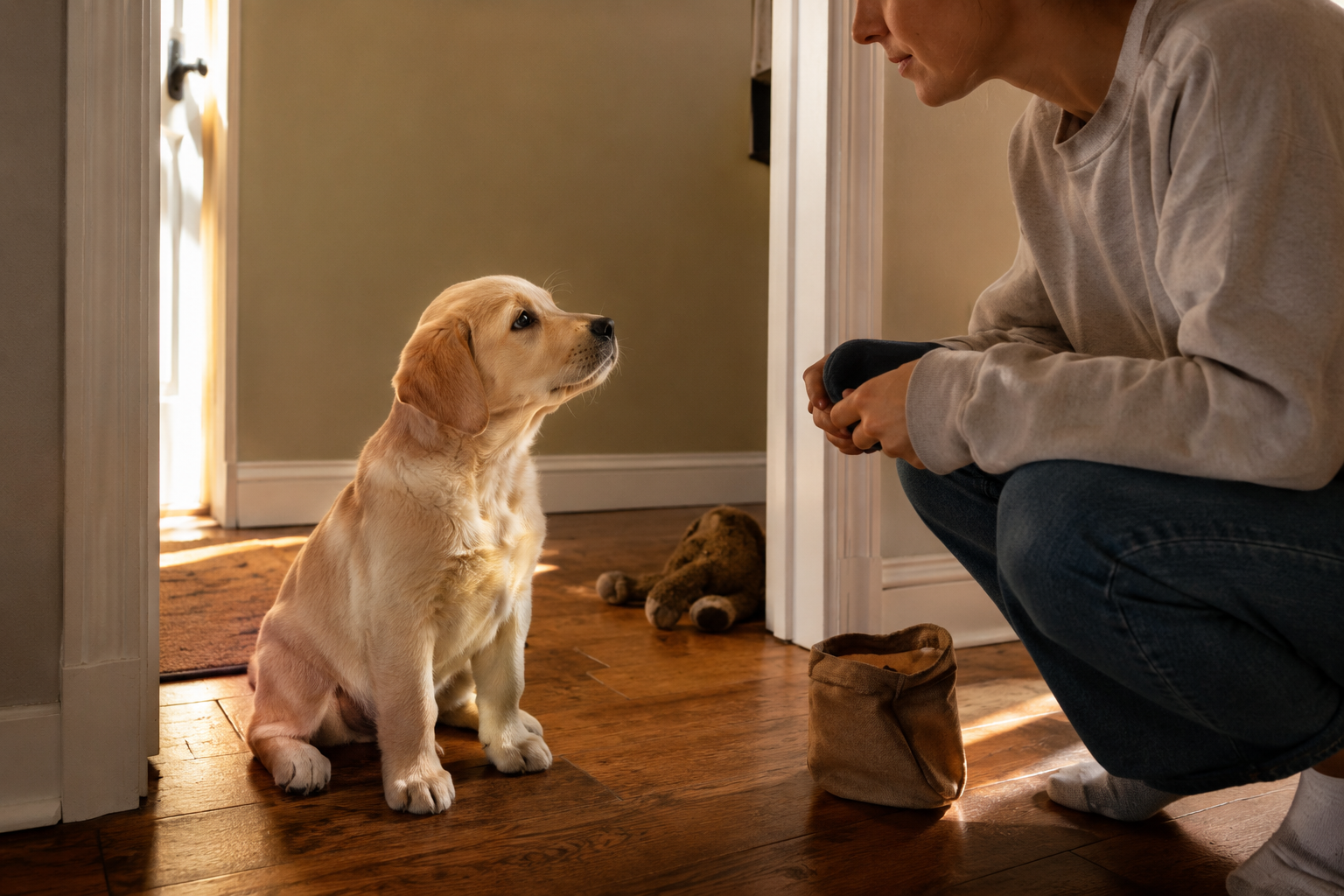
Sit when you greet people. Come every time, and look happy about it. Pee here, not there. Go to your crate. Leave the shoes. Walk on a loose leash. Stay while the exciting thing happens. Settle on your mat while the family eats. The list of what a puppy has to learn does not end, and if you’re feeling buried by it, that’s the correct response. It’s a long list.
Here’s the mistake almost everyone makes with that list: they treat training as an appointment. Block off twenty minutes, do drills, feel virtuous, and then skip it three days running because life happened. The puppy learns in fits and starts, the human feels guilty, and everyone’s frustrated. The trainers whose own dogs are unnervingly well-behaved run it completely differently. They don’t schedule training. They stopped thinking of it as a task at all and folded it into the day they were already living. That’s the whole method, and it works because it matches how puppies actually learn.
Why tiny beats long
When trainers say “short session,” most people picture five minutes. Trainers usually mean thirty seconds, sometimes less. A puppy’s attention is a small tank, and the learning that sticks happens in the first few reps before boredom sets in. Ten thirty-second reps scattered through a day beat one exhausting five-minute block, because each one ends while the puppy is still winning. Learning research in animals has landed on the same place repeatedly: spacing practice out produces more durable memory than cramming it. You’re not skimping by keeping it brief. You’re doing the more effective thing and getting your afternoon back.
The engine that makes this possible is the same in every trick below: catch the puppy doing something right and pay them for it on the spot. Professional trainers are almost annoying about this. If the dog sits when a guest arrives or offers a cute paw, out comes a treat, because a rewarded behavior gets repeated. Class never adjourns, so keep the reward ready and teach the right thing the instant it happens. Which means the one piece of equipment this whole approach depends on is treats within reach, always. A treat pouch on your hip, a stash in your coat pocket, sealed containers on high shelves in every room. School is always in session, so be ready to teach the right lesson the second it happens.
“Owners tell me they don’t have time to train a puppy, and I tell them they have more time than any trainer ever will,” says Dr. Nina Kohl. “You’re with that dog through a hundred tiny moments a day, and each one is a rep. The person who trains in thirty-second flashes all day beats the person who does one perfect twenty-minute session on Sunday. It isn’t close.”
Turn the day you already have into a classroom
The point is to attach a lesson to a thing that was going to happen anyway. Here are the moments already sitting in your day, and what to do with each.
Every doorway is a “wait.” Count the thresholds you and a puppy cross in a day: the back door a dozen times, the crate, and eventually the car door. Any time the puppy isn’t desperate to get to the other side, ask for a wait before you release them. It’s a genuine safety skill, and doorways hand you a dozen free reps a day.
Every good thing is a recall. A reliable “come” is the single most important thing you can teach, because it keeps a dog safe and earns them freedom. The trick is that “come” should always predict something wonderful. Say it right before a belly rub, before you clip the leash for a walk, before a game of chase, before a chew. Dogs already sprint to the crinkle of a treat bag. You’re borrowing that same joy and welding it to the word.
Meals and curbs are a “sit.” It doesn’t take a dog long to work out that putting the rear end down is how you ask politely for whatever you want. Make sit the habit before breakfast and dinner, before the leash goes on, and at the edge of every curb on a walk.
Potty time is a training success. Being outside doesn’t mean your puppy went, so go out with them and watch. The instant they finish, treat them. That’s how they learn that peeing and pooping outdoors is the right answer, and it turns every bathroom trip into a win you can bank.
Their name buys attention. Everything else is easier once your puppy looks at you on cue. Say their name; if they turn to you, treat. Keep something in a pocket and the drill costs you nothing, available in any idle moment you happen to share a room, which is most of them.
Greetings are “four on the floor.” Jumping up is how friendly dogs become unpopular. Every time you come home, reward all four paws staying on the ground with a treat and attention (or reward a sit, if you’d rather). Teach it from day one and you skip years of muddy paw prints on guests.
Walks are check-ins. Puppies get more distracted outdoors, and worse as adolescence hits. Reward your puppy for wandering back to you on a walk and you build a lifelong habit of paying attention to you even when the world is interesting.
Play is real training. Tug is the natural home for “take it” and “drop it.” Offer the toy on “take it,” play, then say “drop it,” bring a treat up to their nose, and reward the moment they let go, then restart the game so “drop it” doesn’t mean the fun is over. Fetch teaches “drop it” too, especially with two balls: show the second, and most dogs spit out the first. A well-played dog is also a dog with less leftover energy to redecorate your couch.
Hallways are heeling. Reinforce your puppy for walking beside you when you were walking anyway, to the kitchen, to the bathroom, across the living room. A few seconds of loose-leash-style walking at your side, a few times a day, is a real head start. Do it on actual walks too, ten to fifteen seconds at a stretch, paying generously for being in the right spot.
The handful of things you do have to sit down for
Integration handles most of it, but not everything. A few skills don’t come up naturally and need dedicated reps: “leave it” so your dog ignores something gross or dangerous on the ground, plus targeting, stay, and party tricks like shake and roll over. The fix isn’t to schedule a class. It’s to hijack the little pauses already in your day. Train during a TV commercial, while leftovers reheat, while you wait for the shower. Any time life hands you a thirty-second gap, that’s a session.
Fold enough of these in and the mountain stops looking like a mountain. It becomes a series of tiny, winnable moments, which is exactly what a puppy is built to learn from, and a lot more fun than drilling. With puppies, fun is the entire point.