The single most common reason people give for not adopting a dog is time. Not money, not space, not allergies. Time. And it is usually said with a little grief in it, the way people talk about a thing they have already decided they are not allowed to have.
It deserves a harder look, because “I don’t have time” is doing two jobs at once. Sometimes it means I cannot give a dog a decent life. Far more often it means I cannot picture how the day would work. Those are not the same problem, and only one of them is disqualifying.
Jessica Koslow is a useful stress test for the second one. She founded Sqirl in Silver Lake in 2011 as a tiny preserves operation, watched it turn into one of the defining restaurants in Los Angeles, and has spent more than a decade inside the schedule that comes with that. When she once walked The New York Times through a typical day, it ran from a 7:15 a.m. pot of tea to a Duolingo lesson in bed at 11 p.m. Payroll, operations, product, staff. Not a schedule with slack in it.
In 2013, she adopted a dog anyway.
The adoption that made no sense on paper
A regular at the restaurant kept coming in with a dog. Koslow eventually told him, more or less, that she had never seen a more handsome animal in her life. He told her he had found the dog on the street and was fostering him. He offered.
She had never had a dog. She had grown up afraid of them after being bitten by a neighbor’s dog as a kid. The math was terrible. Her boyfriend, now her husband, said as much on the phone.
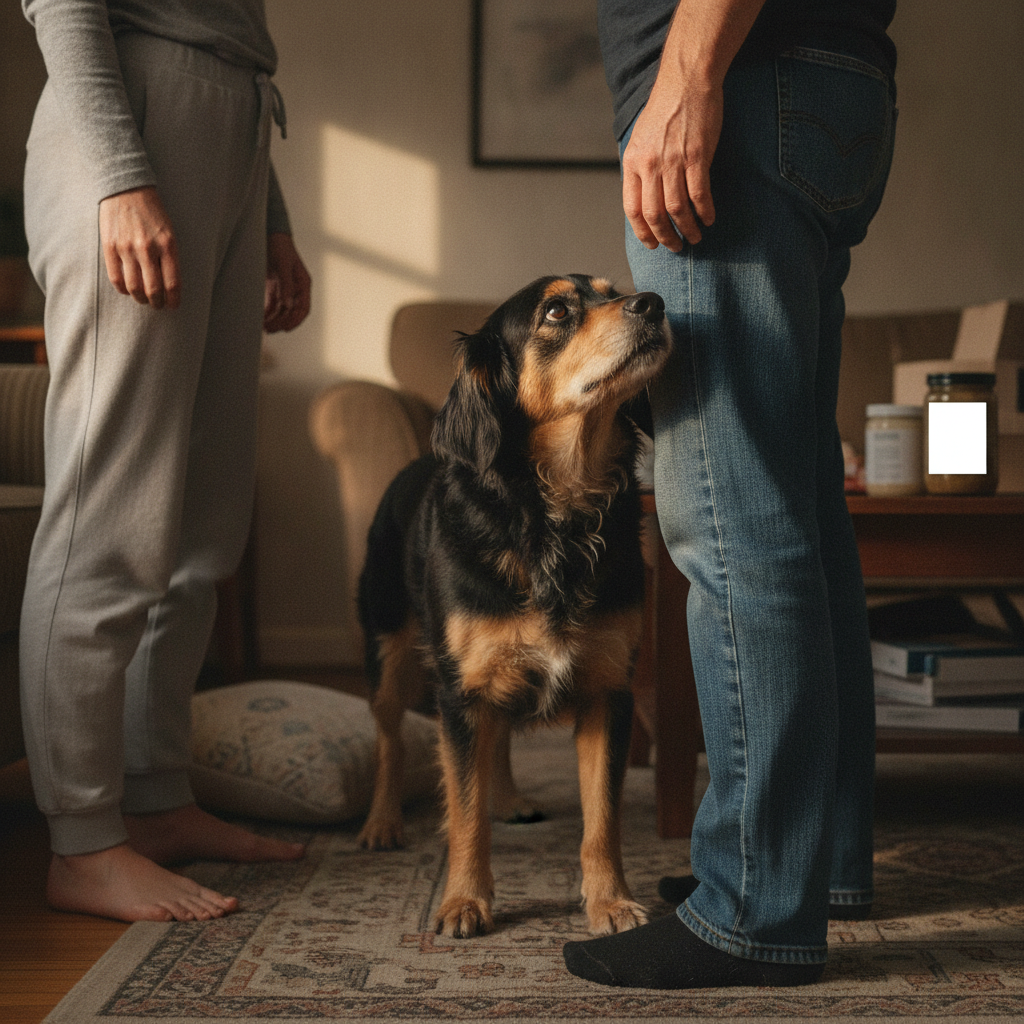
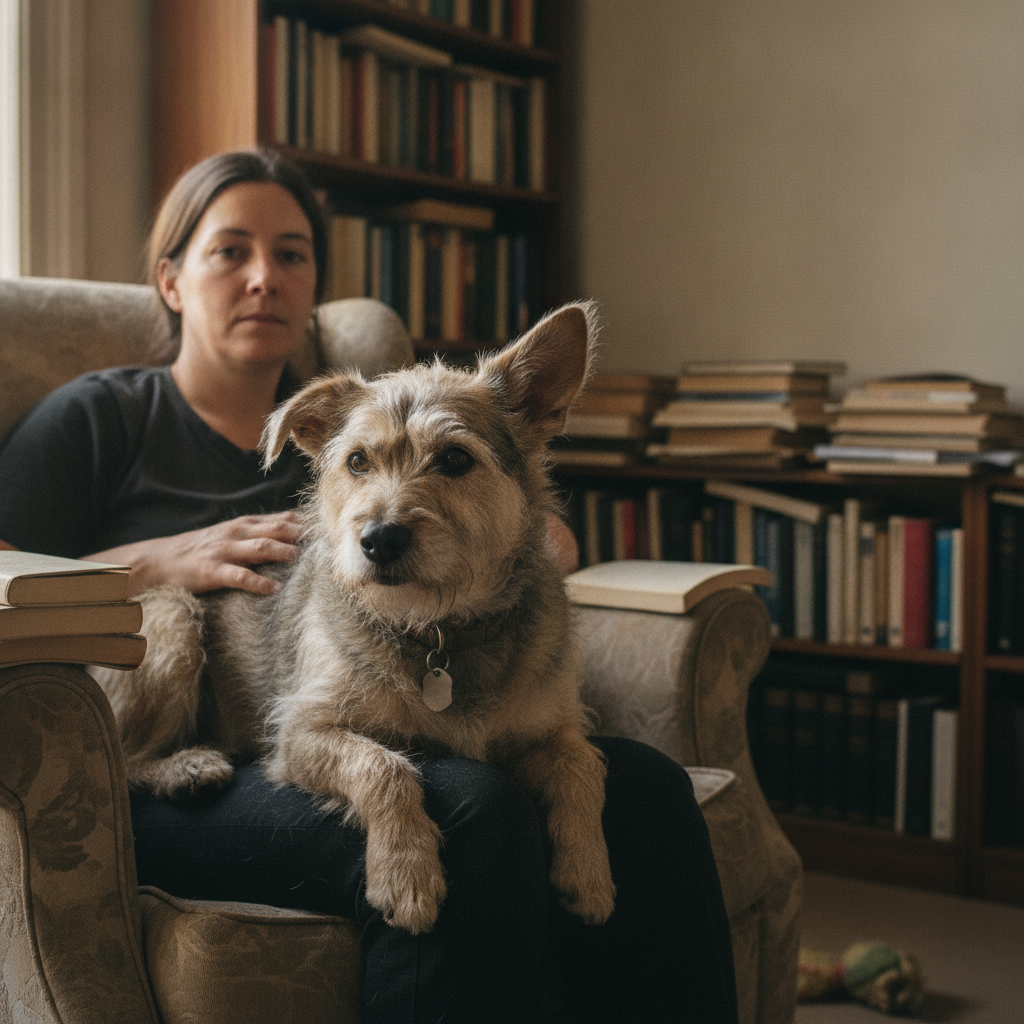
She took the dog. She named him Munk, and she calls him her Franken-dog, an affectionate nickname earned by one ear up and one ear down, wonky paws, a long body, and a walking shadow that looks assembled from parts. Terrier, Poodle, and Chihuahua, best guess.
The relevant part for anyone doing this same calculation: it was not love at first sight in both directions. Munk was afraid of people. He needed time to warm up. That is the ordinary reality of adopting a street dog, and it is the part the “I’d love to but I’m too busy” version of the story never includes.
What she built instead of free time
Koslow did not find hours she did not have. She built structure, which is a different and much more available resource. Broken into parts, it looks like this:
Outsourced peak load. A dog walker comes Mondays and Tuesdays, the days that pin her hardest. Munk goes with her, and he loves the pack she brings.
A workplace that includes him. There is a studio above the restaurant where the team shoots dishes and does design work. Munk is a good studio dog. He goes on those days, and the office likes having him. This is the lever most people ignore: not every work hour is equally hostile to a dog. Some of them are dog-shaped already.
A ritual with a hard edge on it. Nine o’clock is announced as “two pees.” He performs his two pees, returns indoors, and retreats beneath the bed frame. Her husband, an early riser, turns in first. She joins roughly sixty minutes behind him. Only when both humans are horizontal and settled will the dog surface, climb up, and wedge himself between them for the night.
Read that last one again, because it is the whole thing in miniature. It is not extra time. It is the same night that was always going to happen, given a shape a dog can predict.
“Dogs don’t actually need more of your hours, they need your hours to be legible,” says Dr. Nina Kohl. “A dog who can tell what happens next is a dog whose stress hormones aren’t spiking every time you pick up your keys. I would rather see a busy owner with a rigid, boring, repeatable day than a flexible owner with a chaotic one.”
The busy person’s actual checklist
If you are running the “too busy” calculation on yourself, run it against these instead of against a vague sense of guilt:
- Can you name your two worst days? Those are the days you buy help for. Not all seven.
- Is there any part of your work that a dog could physically be present for? An office, a studio, a shop floor, a home-office block. If yes, that is coverage, not indulgence.
- Do you have a fixed evening anchor? A repeatable last-out, last-meal, last-settle sequence matters more to a dog than the number of hours you were home.
- Who is your backup? One person or service who can step in on the day everything goes wrong. Everyone eventually has that day.
- Are you honest about the warm-up period? A frightened rescue may take weeks or months to relax. Budget for that, not for the version where the dog is immediately easy.
If you can answer those five, you are not too busy. You are unrehearsed, which is fixable.
The part that isn’t logistics
Koslow is direct about what Munk gave her, and it is not stress relief or step count. She grew up an only child of a single mother, in a childhood she describes as traumatic in places. What the dog taught her, she says, is what family and unconditional love can actually look like when they are not theoretical.
That is worth saying out loud because the “too busy” objection quietly assumes a dog is another line item, another thing that takes. Sometimes it is. It is also, frequently, the thing that reorganizes the rest around something worth coming home to. Munk knows the words “love” and “friend,” which, from a restaurant dog who could reasonably have been expected to learn “chicken” first, tells you what was being said to him all day.
What’s new since this was written
Sqirl did not slow down. In February 2026 the restaurant added dinner service for the first time in its history, after finally landing a full liquor license at the end of 2024. So the schedule that supposedly made a dog impossible has gotten longer, and the dog is still there. Which is more or less the point.
The wider picture has shifted too, and not kindly. Shelter Animals Count’s 2025 national data shows adoptions of adult and senior dogs falling while puppy adoptions rise. The animals losing out are exactly the ones who suit a busy household best: already housetrained, already socialized, already past the phase that eats your evenings. If your objection is time, the grown dog nobody is choosing is the answer to your objection, not the opposite of it.
References
- Shelter Animals Count. 2025 Annual Data Report. shelteranimalscount.org
- Resy. “Sqirl Is Debuting Dinner. Here’s Everything You Need to Know.” January 2026. blog.resy.com
- ASPCA. U.S. Animal Shelter Statistics. aspca.org