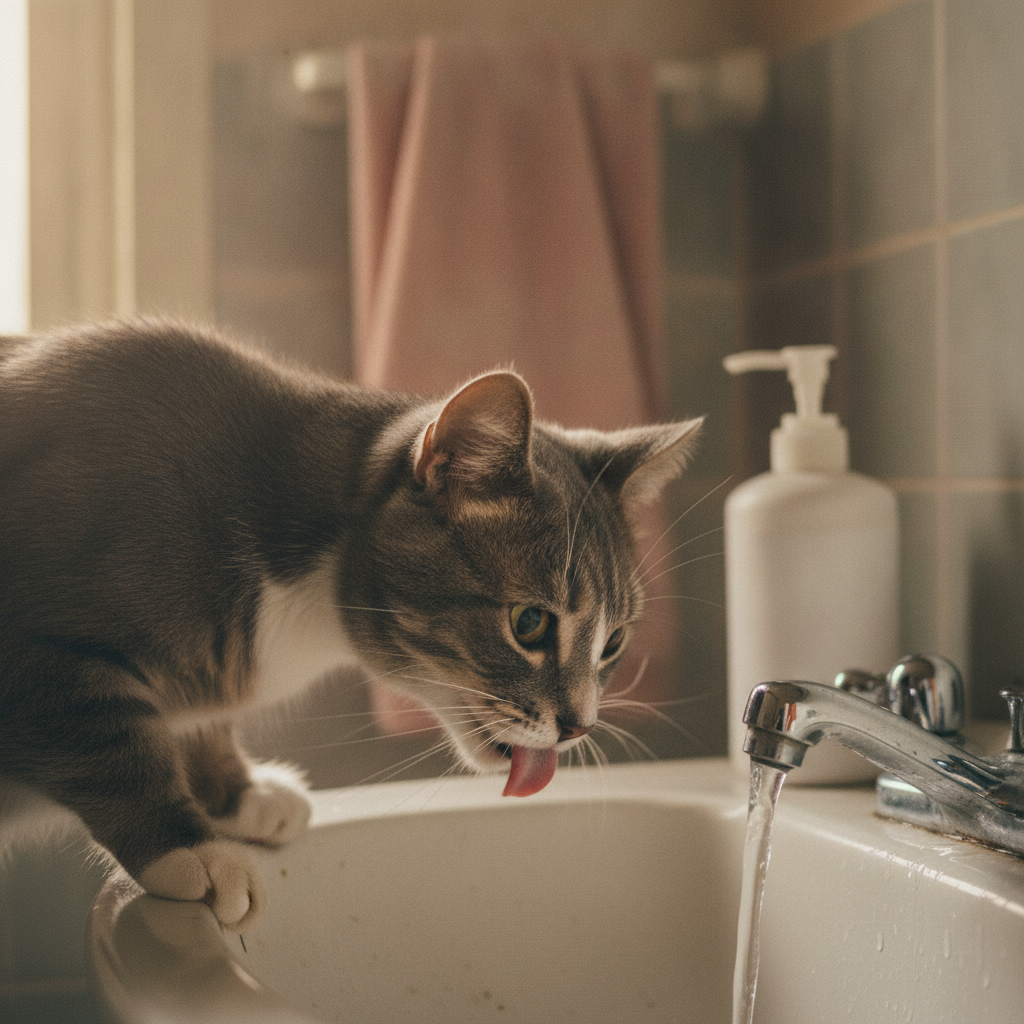
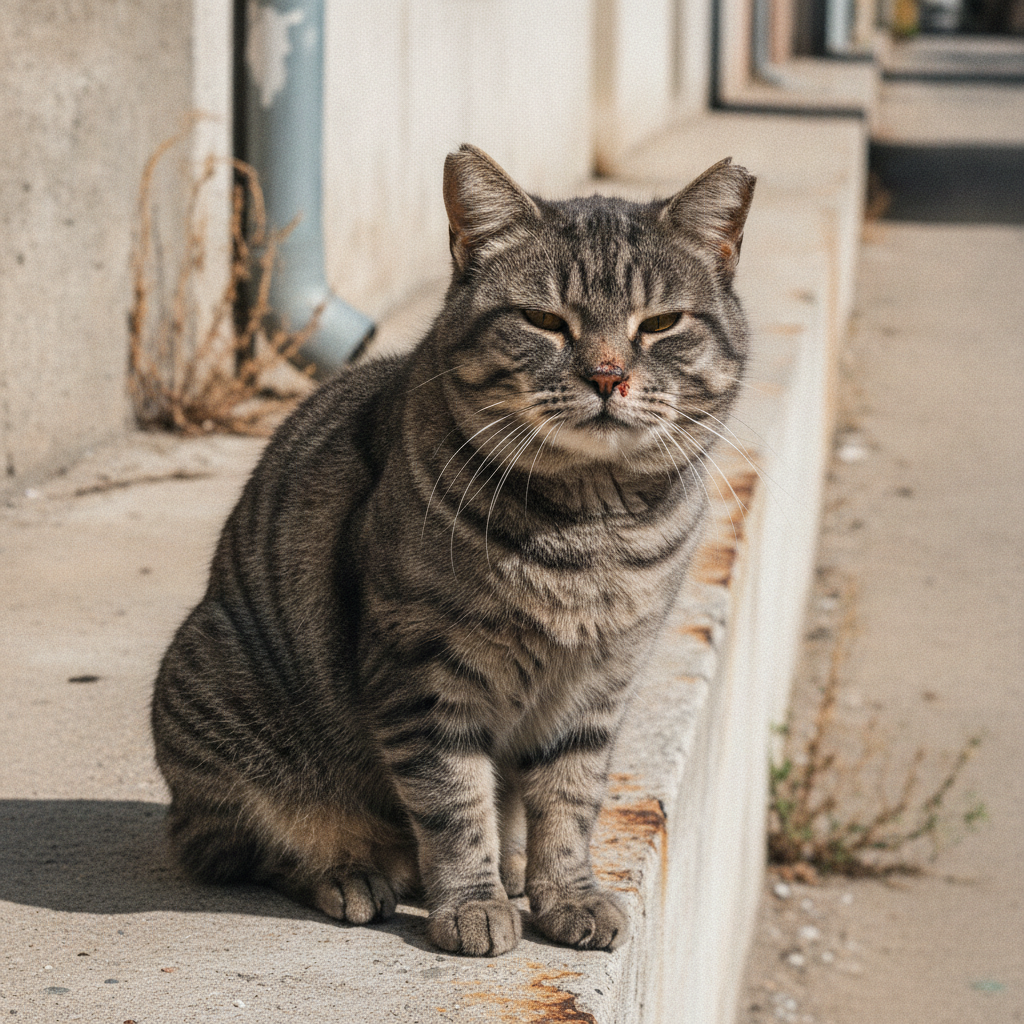
Big cheeks are charming on a baby and on a chipmunk with an ambitious agenda. On a male cat they look like the same thing: a bit of extra padding, a face that’s filled out, a cat who’s doing well for himself.
They are not that.
Tomcat cheeks are armor. They are a slab of thickened tissue that exists for a specific purpose: to absorb the bites and claws of another male cat during a fight over territory or a female. They are built by testosterone, they signal sexual maturity to everyone who sees them, and they carry a very clear piece of information about your cat.
He isn’t neutered. And that fact, not the cheeks, is the thing worth talking about.
What they actually are
Tomcat cheeks, tomcat jowls, shields, stud cheeks, stud jowls: all the same thing. Thickened, fleshy pads that develop on either side of the face in unneutered male cats who go through puberty.
A neutered male typically keeps a kitten-ish face into adulthood: narrow, sleek, fine-boned. An intact male develops a visibly wider head with firm, chunky outcroppings at the cheeks. Once you know what you’re looking at, you can identify an intact tom across a parking lot.
They aren’t pouches. There’s nothing inside them. They’re not like a hamster’s cheeks, which store food and can need attention. This is simply thickened skin and tissue, more resistant to injury than the rest of the body.
Testosterone builds the whole package
The cheeks don’t arrive alone. Testosterone remodels the entire animal:
- Thickened skin, all over
- A wider head
- A thicker, more muscular neck
- A generally larger, more muscular body
- The distinctive tomcat odor, which is unmistakable and which no one who has smelled it forgets
Not every intact male develops all of these, and not to the same degree. But the pattern is recognisable.
Timing: the changes typically begin around five to seven months of age and build gradually. The cheeks may not be fully developed until a cat is approaching one year old.
That number matters, and we’ll come back to it, because five months is also the number that current veterinary consensus attaches to something else entirely.
Why armor, specifically
Here’s the logic, and it’s brutally coherent.
Testosterone doesn’t just build the body, it drives the behavior. An intact tom is territorial, defensive, and reactive to other males, especially with a female in the picture. For a cat living that life, fighting isn’t a risk. It’s a schedule.
And a cat fight is a face fight. The bites land on the head and the front. So the parts of the face that matter most — the eyes, the nose, the mouth — need something between them and the other cat’s teeth. The cheeks are that something. The thickened skin and heavier musculature elsewhere do the same job in the same way.
Then there’s the second function, which is advertising.
A broad, heavy face is a billboard. It tells an approaching male that this is a mature, established, expensive fight to pick, which sometimes ends the encounter before it starts. And it tells a female that this male is sexually mature and viable.
Which is why intact males roam, sometimes extraordinarily far. An outdoor intact tom can disappear for days or weeks at a stretch on a mate-finding expedition. He is not lost. He is working.
“The cheeks are the visible part of a much bigger picture,” says Dr. Lena Park. “What I actually see in the exam room is what comes with them: the roaming, the fight wounds, the abscesses, the bite-transmitted infections. The face is just the part the owner noticed.”
The real risk isn’t the cheeks. It’s what the cheeks are for.
Tomcat cheeks are, in themselves, medically boring. They need no care. They take care of themselves.
But the life they’re built for is dangerous, and it’s the thing to actually weigh.
Fight wounds and abscesses. A cat bite is a puncture: it seals over immediately and traps bacteria underneath, which is a near-perfect recipe for an abscess. The result is a hot, swollen, exquisitely painful pocket of pus, and abscesses on the face or jowls can make eating agonising. You may find bloody discharge in the food or water bowl before you find the abscess itself. Abscesses generally need to be lanced and drained and treated with antibiotics; deep lacerations may need stitches.
Bite-borne disease. This is the part people underrate badly. Feline immunodeficiency virus (FIV) is transmitted primarily through deep bite wounds, which means it spreads through exactly the behavior tomcat cheeks were built to support. Unneutered, roaming, fighting males are the highest-risk population for FIV, and feline leukemia virus (FeLV) also travels through fighting.
Traffic, predators, and disappearance. A cat who roams for weeks is exposed to all of it.
So when you look at those cheeks, what you are actually looking at is a risk profile.
The other tomcat cheeks: when it isn’t testosterone at all
This is the part that should make you pick up the phone.
If a neutered male, a female, or a previously sleek-faced cat develops swelling that looks like tomcat cheeks, that is not tomcat cheeks. Testosterone isn’t building anything. Something else is swelling the face, and the list of causes is a list of problems:
- An abscess from a bite or a puncture
- Injury or trauma
- Dental disease, including a tooth root abscess, which frequently presents as a swelling on one side of the face
- An allergic reaction
- A bee or wasp sting, or an insect bite
- Toxin ingestion
- And, less commonly but seriously, a mass
One-sided swelling is a particular red flag, because testosterone-driven jowls develop symmetrically and slowly over months. A face that puffs up on one side over a day or two is a medical event.
When to see a vet
Call your vet if:
- Your cat’s cheeks are swollen, red, hot, or have a laceration or a draining wound
- There’s bloody or pus-like discharge, or you find it in the food or water bowl
- Your cat is having difficulty eating or drinking, or is pawing at their mouth
- Your cat is suddenly reluctant to be touched on the face
- A sleek-faced cat suddenly develops tomcat-looking cheeks, which is the single clearest signal in this whole article
- The swelling is asymmetric or appeared quickly
What newer guidance adds
There’s now a firm, well-supported answer to the question hiding underneath this entire subject.
A veterinary task force convened in 2016 recommended lowering the standard age for spaying and neutering cats to five months or younger, and the “Fix by Five” position has since been endorsed by an unusually broad coalition, including the AVMA, AAHA, the American Association of Feline Practitioners, the Association of Shelter Veterinarians, and a long list of state veterinary associations. It’s now the accepted norm rather than a fringe position.
Two findings drive it:
There’s no evidence of harm. Unlike in some dog breeds, where the timing of neutering is genuinely debated because of orthopedic and cancer risks, the task force found no evidence that neutering cats before sexual maturity causes adverse behavioral, orthopedic, cancer-related, or medical outcomes. The trade-off that makes the dog conversation complicated does not appear to exist in cats.
And it’s easier on the cat. Surgeons consistently report that the procedure is faster and safer in cats under five months, and that recovery from anesthesia and surgery is quicker in younger cats.
Which brings the timeline full circle. Tomcat cheeks start developing at five to seven months. The recommended neuter age is by five months. A cat neutered on schedule never develops them at all, and never develops the roaming, the fighting, the abscesses, the spraying, the odor, or the FIV exposure that come packaged with them.
So the honest read on tomcat cheeks: they’re a fascinating piece of biology, and they’re a sign that a conversation with your vet is overdue.
Bottom line
Tomcat cheeks are thickened, testosterone-built pads that protect an intact male’s face during fights and advertise his maturity to everyone else. They need no care and cause no harm on their own.
What they signal is the point. An intact tom roams, fights, gets bitten, gets abscesses, and is the highest-risk group for FIV. Neutering, which current veterinary consensus puts at five months or earlier, prevents the whole chain.
And if a cat who never had them suddenly does, that is not testosterone. That’s a swelling, and it needs a vet.
FAQs
What causes tomcat cheeks? Testosterone. They develop only in unneutered male cats who reach puberty, typically starting around five to seven months and filling in by about a year old.
Will tomcat cheeks go away if I neuter my cat? They generally soften and reduce over time after neutering, though a cat who has carried them for years may keep some of the broadened head shape permanently. Neutering stops the process that builds them.
Do tomcat cheeks need any special care? No. They’re thickened skin, not pouches, and they look after themselves. What needs watching is injury: swelling, redness, wounds, or abscesses.
My neutered cat’s cheek is swollen. What does that mean? Not tomcat cheeks. Look at an abscess, a dental problem (especially a tooth root abscess), an insect sting, an allergic reaction, or trauma. One-sided or rapid swelling is a vet visit.
When should a male cat be neutered? Current veterinary consensus, endorsed by the AVMA, AAHA, and the AAFP among others, is by five months of age. There’s no evidence of adverse effects from neutering cats before sexual maturity, and surgery and recovery are both easier in younger cats.
References
- Brooks, Wendy, DVM, DABVP. “Abscesses in Cats from Bite Wounds.” Veterinary Partner, 11 Sept. 2024. https://veterinarypartner.vin.com/default.aspx?pid=19239&id=4951430
- “The ‘Fix by Five’ Initiative: Feline Spay/Neuter by 5 Months of Age Becomes the Accepted Norm.” Trends Magazine, American Animal Hospital Association. https://www.aaha.org/trends-magazine/publications/the-fix-by-five-initiative/
- “Feline Immunodeficiency Virus (FIV).” Cornell Feline Health Center, Cornell University College of Veterinary Medicine. https://www.vet.cornell.edu/departments-centers-and-institutes/cornell-feline-health-center/health-information/feline-health-topics/feline-immunodeficiency-virus
- “2020 AAHA/AAFP Feline Vaccination Guidelines” and related feline preventive care resources. American Animal Hospital Association. https://www.aaha.org/resources/2020-aahaaafp-feline-vaccination-guidelines/
- “Dental Disorders of Cats.” MSD Veterinary Manual. https://www.msdvetmanual.com/cat-owners/digestive-disorders-of-cats/dental-disorders-of-cats