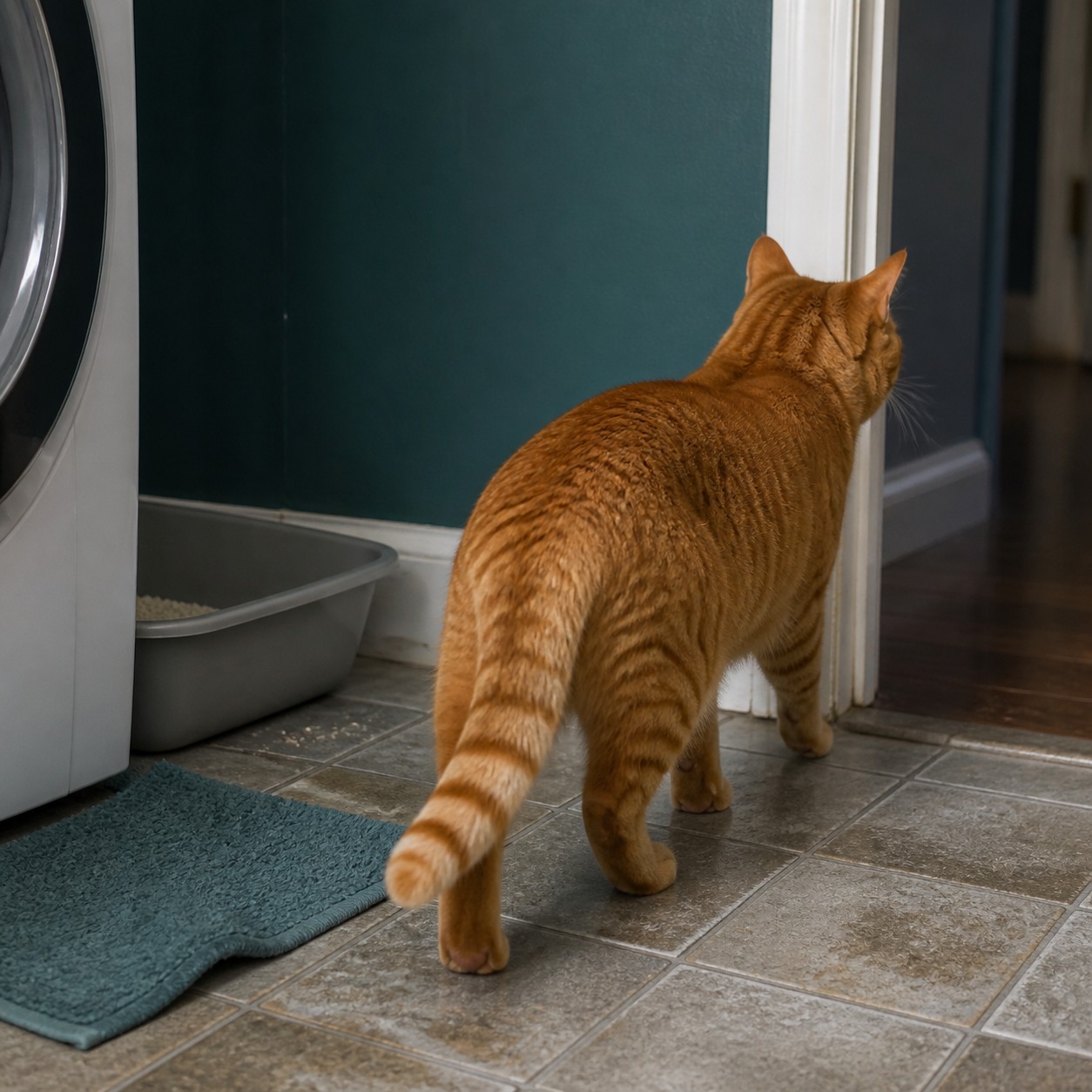
Everyone assumes the same thing. The litter box gets sharper, the room gets worse, and the mental sentence forms instantly: he has a UTI.
He almost certainly does not. In young and middle-aged cats, bacterial infection is behind only about 1 to 3 percent of lower urinary tract cases. Even in cats over 10, where it becomes more plausible, it is around 10 percent. The default diagnosis in most people’s heads is the rarest thing on the list.
That matters, because chasing the wrong answer costs time. Antibiotics do not fix a stress-driven bladder, and a wait-and-see week does not fix a diabetic one. So it is worth understanding what the smell actually is, and then what changes it.
First: why it stinks at all
Fresh cat urine, straight out of the cat, is not that offensive. The famous smell develops on a delay, and it develops on purpose.
Cat urine carries urea, which bacteria break down into ammonia. It also carries felinine, an amino acid cats produce that degrades into a sulfur compound with a name nobody needs to memorize (3-mercapto-3-methylbutan-1-ol) and a function that is more interesting than the chemistry: it is a pheromone precursor. Cat pee is, in part, a message. It is supposed to persist.
On top of that, cat urine is more concentrated than dog or human urine, meaning more waste and less water in every drop. Cats evolved from desert animals and hold onto water aggressively. The result is a small volume of intensely loaded liquid that gets worse with age.
That is your baseline. Bad, but stable.
The rule that actually matters: stable is the whole point
Your cat’s pee should smell like your cat’s pee. Consistently. Boringly.
The signal is not the absolute badness of the odor. It is the change. A sudden shift in strength, in character, or in how often your cat is going means something in the system moved. That is the sentence to keep, and it is the reason the list below is worth reading rather than skimming.
“Owners apologize to me for knowing what their cat’s urine smells like, and they should be doing the opposite,” says Dr. Lena Park. “You are the only person on earth with that baseline. When you tell me it changed three weeks ago, that is a real clinical finding, and it is usually the first one we get.”
8 reasons the smell got worse
1. A high-protein diet
Cats are obligate carnivores and need a lot of protein. That protein fuels them and maintains muscle, and it also generates waste urea, which becomes ammonia. More protein in, more ammonia out. A very high-protein food can make urine (and often stool) noticeably smellier without anything being wrong.
This is the benign explanation, and it is worth ruling in early, especially if you recently switched foods.
2. Dehydration
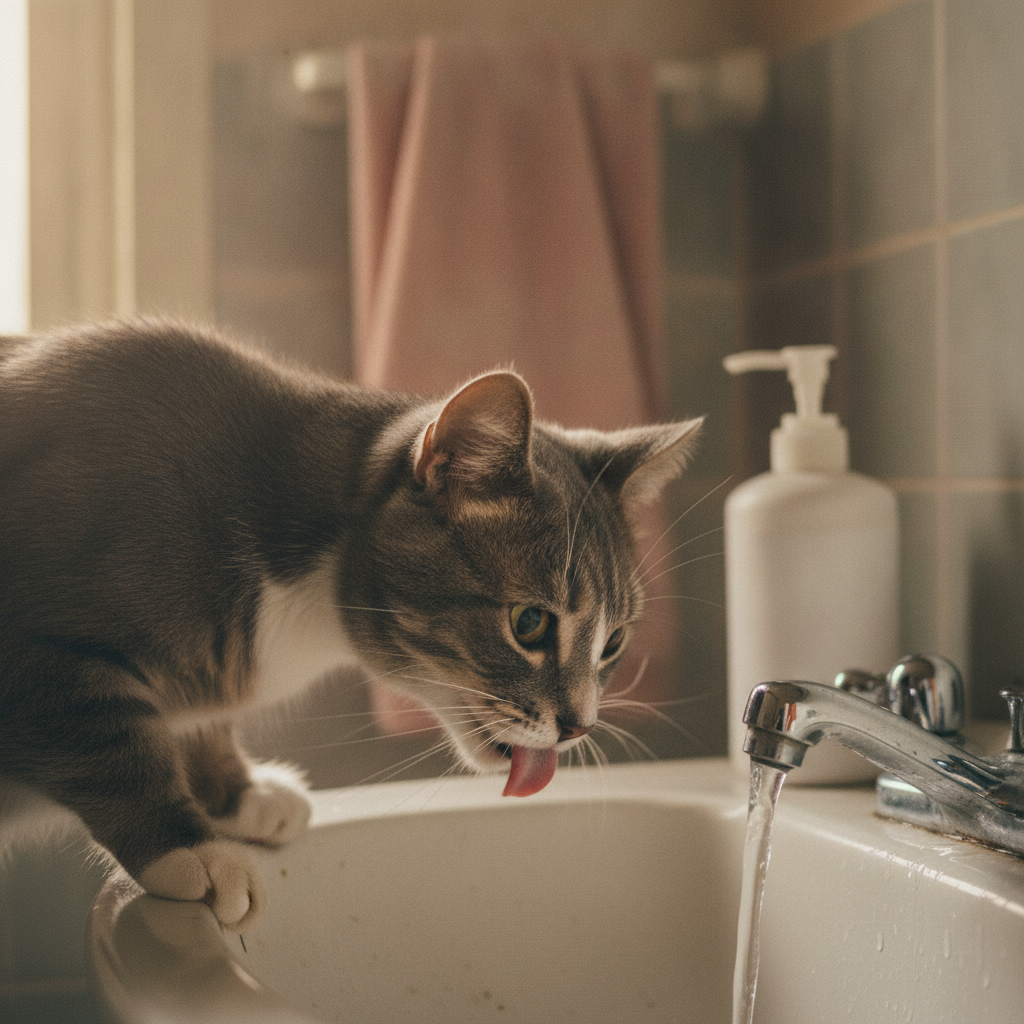
Already-concentrated urine gets more concentrated when a cat is not drinking enough. Less water, same waste load, stronger smell.
Do not treat this as a cosmetic issue. Dehydration escalates fast in a body that small, and it is frequently the visible edge of something else, like kidney disease. If your cat’s urine smell has gone up and the volume in the box has gone down, call your vet.
3. Feline idiopathic cystitis (the stress bladder)
This is the one the original conversation almost always skips, and it is the most common diagnosis in young cats with urinary signs.
Feline idiopathic cystitis is a sterile inflammation of the bladder wall. No bacteria, no stones, no infection to kill. It is closely tied to stress: a move, a new pet, a change in schedule, construction next door, a bully cat at the food bowl. The bladder becomes inflamed, urination becomes painful and frequent, small amounts land in odd places, and the urine’s character changes. Stress can also shift the urinary tract’s pH, which shifts the smell.
Antibiotics do nothing here. What helps is reducing the stress load, increasing water intake, and, in some cases, pain control from your vet. The environmental fixes matter more than any product will.
A hard safety line: if a male cat is straining in the box, producing nothing, crying, or vomiting, that is a suspected urethral obstruction and it is a same-day emergency. It can kill within a day or two. Do not wait to see if it improves.
4. A bacterial urinary tract infection
Genuinely possible, genuinely uncommon, and much more likely in cats over 10 or cats with another disease (kidney disease, diabetes, hyperthyroidism) that has changed the urine.
When it happens, some people describe a distinctly fishy smell and others just say it got stronger. The urine may look cloudy or bloody, and the cat may go frequently. Vets treat it with antibiotics, sometimes alongside a diet change, after confirming it with a urinalysis and ideally a culture.
The reason to confirm rather than assume: treating a sterile inflamed bladder with antibiotics does nothing except delay the treatment that would have worked.
5. Kidney disease
The kidneys are the organ deciding how concentrated the urine is, so when they lose efficiency the smell changes. Cats with chronic kidney disease often drink noticeably more and pee noticeably more, and the odor can intensify.
There is no cure, but it is manageable, sometimes for years, with diet, hydration support, and monitoring. Catching it early is worth a great deal, which is another argument for taking the smell seriously the first week instead of the third month.
6. Diabetes
Diabetes is a problem with insulin, the hormone that moves glucose out of the bloodstream and into cells. Without enough of it, blood glucose climbs until it spills over into the urine.
Two things happen. The cat pees more overall, and the urine can smell oddly sweet and feel sticky where it dries. Feline diabetes is treatable with your vet’s help, and in some cats it can even go into remission with the right diet and early management.
7. Hyperthyroidism
Common in older cats, and easy to miss because the cat looks good: eating constantly, active, sometimes yowling at 3 a.m. An overactive thyroid speeds up the whole metabolism, drives excessive thirst and urination, and can change the urine’s smell and volume along the way. It also frequently travels with kidney disease, which complicates the picture.
If your cat is over eight, losing weight while eating more, and the box smells different, this belongs on the list. A blood test settles it.
8. Marking
Male dogs lift a leg. Cats have a more theatrical option: they back up to a vertical surface, stand tall, quiver the tail, and spray backward.
The message is territorial (this is mine) or sexual (I am available). It is much less common in neutered males and spayed females, but not impossible in either. And sprayed urine tends to smell worse than box urine for a mechanical reason more than a chemical one: you do not find it right away. By the time you locate it behind the couch, the degradation has had a long, quiet head start.
When to see a vet
Any sudden change in your cat’s urine smell, color, or frequency earns a call. That is the entire rule, and it is deliberately low-threshold, because half the causes above are progressive and the other half are cheap to rule out.
An exam plus a urinalysis, and sometimes bloodwork or imaging, will sort infection from diet from diabetes from kidney disease from a stress bladder. From there, the treatment is specific: antibiotics for a confirmed infection, medication and diet for diabetes or kidney disease, pain relief and environmental work for cystitis, behavioral work for marking.
Go same-day, not tomorrow, if you see: straining with nothing coming out, crying in the box, blood, repeated trips producing tiny amounts, or a cat who is hiding, vomiting, or off their food.
Can you actually make cat pee smell better?
Not the pee itself. That chemistry is fixed. What you can do is keep the cat healthy, so the amplifiers never switch on, and keep the urine from sitting around.
Water, aggressively. Wet food, a fountain if your cat likes moving water, multiple bowls away from the food. Hydration is the single most useful lever you have, and it works on several of the eight causes at once.
Box hygiene, more than you think. Scoop daily, at minimum. The rule of thumb is one box per cat, plus one extra, and it is a rule of thumb because sharing is a stressor and stress is item three on this list. If scooping is losing to real life, an automatic box is a legitimate purchase.
A calm, predictable house. Same feeding times, same play times. Cats relax when they can forecast the day. Enough beds, enough toys, enough perches that nobody has to compete for anything. This is not soft advice; for a cystitis cat it is the treatment.
And when it lands outside the box
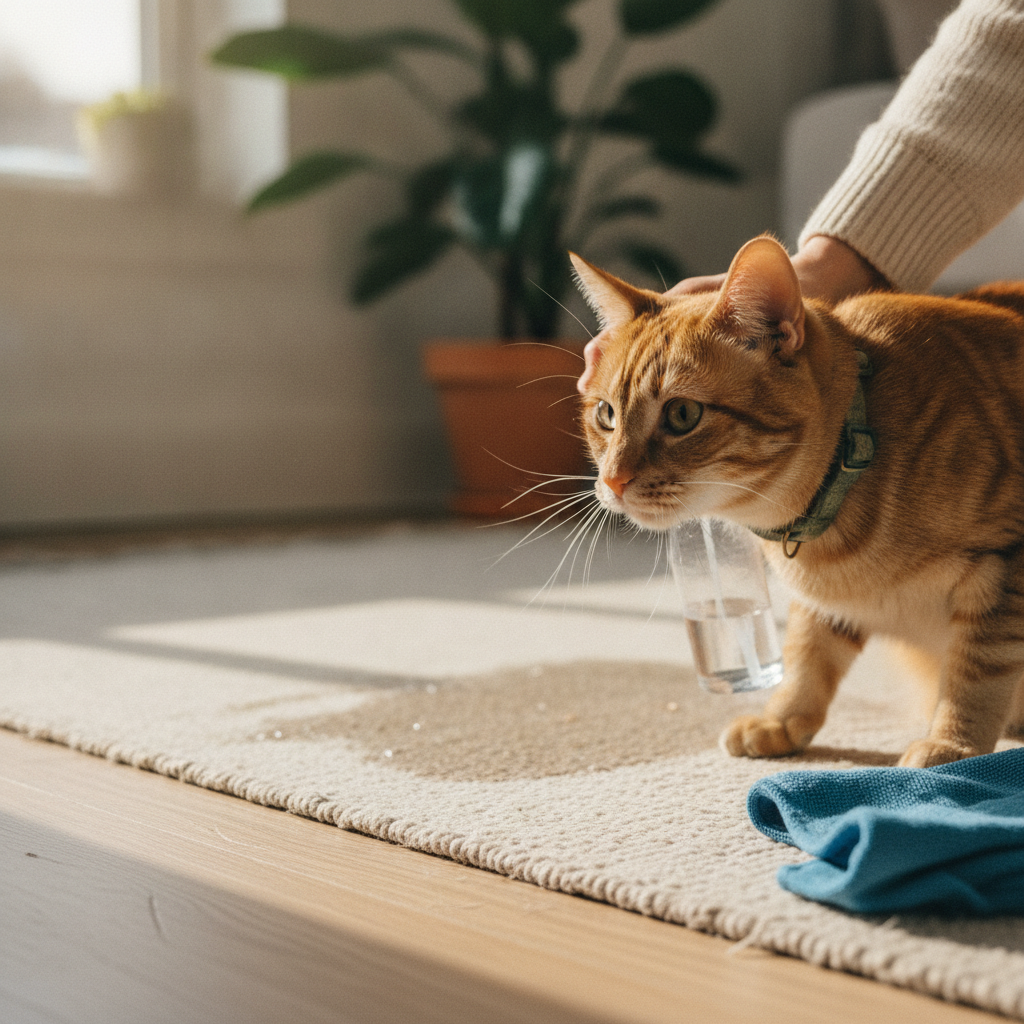
Cat urine is genuinely hard to clean because the same compounds that make the smell also bind into fabric and carpet fibers and stay there. Ordinary cleaners mask it; some of them, particularly ammonia-based ones, actively invite a repeat visit.
Blot up as much liquid as you physically can. Then apply an enzymatic cleaner, which breaks down the urine components rather than covering them. Let it dry fully, then vacuum or wipe. Rushing the drying step is the most common reason a spot “comes back.”
What newer research adds
The biggest change in how vets think about this is the demotion of infection. Reviews of feline lower urinary tract disease consistently find that idiopathic cystitis, not bacteria, is the leading cause in cats under 10, and that bacterial UTI is a small minority of cases. That has shifted the response away from reflexive antibiotics and toward urinalysis first, and toward treating the cat’s environment as part of the medicine rather than as an afterthought.
For you, that translates to two practical things. Ask for a urinalysis before anyone reaches for antibiotics. And if your cat comes back “no infection, nothing on the imaging,” do not treat that as a dead end. It is a diagnosis, and the treatment is water, calm, litter box logistics, and pain control.
References
- Cornell Feline Health Center. “Feline Lower Urinary Tract Disease.” https://www.vet.cornell.edu/departments-centers-and-institutes/cornell-feline-health-center/health-information/feline-health-topics/feline-lower-urinary-tract-disease
- Cornell Feline Health Center. “Chronic Kidney Disease.” https://www.vet.cornell.edu/departments-centers-and-institutes/cornell-feline-health-center/health-information/feline-health-topics/chronic-kidney-disease
- Cornell Feline Health Center. “Feline Diabetes.” https://www.vet.cornell.edu/departments-centers-and-institutes/cornell-feline-health-center/health-information/feline-health-topics/feline-diabetes
- Cornell Feline Health Center. “Hyperthyroidism in Cats.” https://www.vet.cornell.edu/departments-centers-and-institutes/cornell-feline-health-center/health-information/feline-health-topics/hyperthyroidism-cats
- Miyazaki, M., Yamashita, T., et al. “A major urinary protein of the domestic cat regulates the production of felinine, a putative pheromone precursor.” Chemistry & Biology, 2006. https://www.sciencedirect.com/science/article/pii/S1074552106003097