


Stop Measuring Your Dog's Food in Cups. Here's the Number That Matters.
A pound of kibble is about three to four cups, and that's the least useful way to feed your dog. Why the scoop lies, what a study found about our measuring habits, and the switch that fixes portions for good.
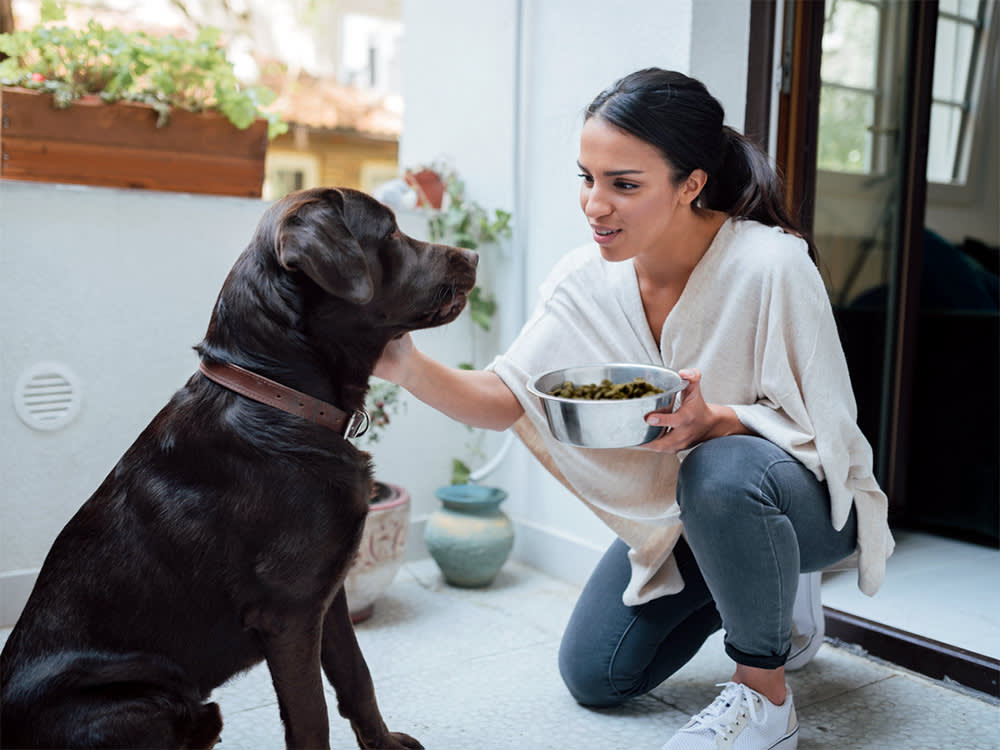
Here is the answer you came for, up front: a pound of dry dog food works out to roughly three to four cups. That’s genuinely useful for one thing, figuring out how long a bag will last, and close to useless for the thing that actually matters, which is feeding your dog the right amount. Cups are a convenient lie. They vary with the kibble, they vary with the scoop, and they quietly drive both the overfeeding that makes dogs heavy and the underfeeding that leaves them short. The fix is simple and a little unglamorous, and we’ll get to it. First, the math you asked for.
The cups-per-pound math (and why it wobbles)
It looks like a clean conversion, but it isn’t quite. The number of cups in a pound of kibble shifts with the food’s density, plus the size and shape of the individual pieces, which change how much air sits between them in a cup. Three to four cups per pound is the working estimate; your specific bag may run a little different, so the weight-to-volume guidance printed on the packaging beats any general rule.
From that estimate, the bigger bags scale predictably:
- A five-pound bag: about 15 to 20 cups (5 × 3 and 5 × 4).
- A ten-pound bag: roughly 30 to 40 cups. Multiply by ten, add a zero, done.
- A twenty-pound bag: somewhere around 60 to 80 cups, which is a lot of scooping and a decent forearm workout carrying it in.
Bags themselves range from tiny three-ounce sample packs up to hundred-pound sacks. Which size to buy comes down to storage space and how fast your household goes through it, with one firm guideline: don’t buy more than your dog can eat in about a month. Kibble goes stale, pests find their way in, and storage mishaps happen, so stocking up on a giant bag rarely pays off, tempting as a sale is.
The scoop is where accuracy goes to die
Even the humble measuring cup betrays you, and there’s research to prove it. Scientists have actually studied how accurately dog owners measure kibble using different tools, and the results were not flattering to the casual scoop. Part of the problem is a mix-up most people never think about: there are two kinds of measuring cups. A liquid measuring cup, the glass kind with a spout and printed lines, is built for water and milk, not solids, and it gives sloppy readings for kibble. A dry measuring cup, the sort sold in a nesting set, is what you want, and one level eight-ounce dry cup of food equals about one cup. It matters because most bags list feeding amounts by the ounce or by weight, not by the scoop.
When a dog is slowly gaining or losing weight and the owner swears nothing has changed, the culprit is almost always the measuring cup, an eyeballed, heaping scoop twice a day adds up to a different dog over a year. Switching to a small kitchen scale and weighing the food in grams is the single highest-impact change most owners can make for their dog’s waistline.
The number that actually matters: calories
Cups tell you volume. What your dog needs is energy, measured in calories, and portioning by calories is what keeps a dog at a healthy weight. The starting point is the feeding chart on the back of the bag, which lists recommended daily amounts by your dog’s weight. Because nutritional density varies brand to brand, that chart is a baseline, not gospel, and it’s worth researching your individual dog’s daily calorie needs based on their size and activity, then dialing the amount to hit that target. Online calorie calculators can help you land in the right range.
Feeding a mix of wet and dry? Don’t try to eyeball the combination. Work out the daily calorie requirement first, read the calorie content off both labels, and split the day’s calories between the two foods in whatever proportion you like. That way a scoop of kibble plus a spoon of wet food still adds up to the right total instead of accidentally doubling it.
How to tell if the amount is right
Numbers get you close; your dog’s body confirms it. You don’t want to overfeed, since canine obesity is linked to heart disease, joint problems, and cancer, but you don’t want a dog running short either. The two-minute check most vets rely on is body condition. You should be able to feel your dog’s ribs without pressing hard, but not see them jutting out; clearly visible ribs signal an underweight dog. Run your hands over their sides every week or so, use an online body-condition chart to calibrate your eye, and bring it up at annual checkups, when your vet can weigh in on whether the current amount is landing where it should.
What’s new since this was written
Home kitchen scales have gotten cheap and tiny, and weighing kibble in grams has moved from a fussy habit to mainstream advice precisely because the measuring-cup research made the case so clearly: volume is imprecise and weight is not. Pet-food labeling has also grown more transparent about calorie content per cup and per gram, which makes calorie-based feeding easier to do at home than it used to be. The throughline hasn’t changed. Cups will tell you how long the bag lasts; grams and calories will tell you how to keep your dog lean, and the scale is the honest referee between the two.
References
- Coe, J. B., et al. “Dog Owner’s Accuracy Measuring Different Volumes of Dry Dog Food Using Three Different Measuring Devices.” Veterinary Record. https://bvajournals.onlinelibrary.wiley.com/doi/full/10.1136/vr.105319
Common questions
How many cups are in a five, ten, or twenty pound bag?
About 15 to 20 cups in a five-pound bag, 30 to 40 in a ten-pound bag, and 60 to 80 in a twenty-pound bag, using the three-to-four-cups-per-pound estimate.
What's the most accurate way to measure dog food?
A kitchen scale that reads in grams. Weighing removes the guesswork that scooping introduces. If you do use a cup, use a dry measuring cup, not a liquid one, and level it off.
Not a substitute for your vet. Our guidance is educational. For urgent symptoms, contact a vet or emergency clinic right away. Editorial standards
Dr. Solis is a board-certified veterinary dermatologist with over twelve years of clinical experience. She advises on skin conditions, allergies, and grooming practices that affect coat and skin health. All dermatology and allergy content at The Pet Times is reviewed by her team before publication.
Meet our experts ↗Keep reading
 FoodYour Dog Has a Sweet Tooth. That's Exactly the Problem.Dr. Nina Kohl · 7 min
 FoodYou're Probably Guessing Your Dog's Portions. Here's the Math.Dr. Ravi Mehta · 8 min
 FoodHome-Cooked Dog Food Can Run $3 a Day. The Real Price Is Your Sundays.Dr. Amara Solis · 9 min
 FoodOnly 6% of Homemade Dog Diets Are Complete. Yours Is Probably in the Other 94%.Dr. Amara Solis · 12 min
 FoodWhy Adult Dogs Shouldn't Live on Puppy Food Comes Down to One MineralDr. Lena Park · 8 min
 FoodCan Dogs Eat Bacon? Why the Salty Strip Is a SkipDr. Lena Park · 5 min