


Flying With Your Dog Is Often the Worst Option. Drive.
When air travel turns into a mess of cancellations and cargo horror stories, a well-planned road trip is calmer, safer, and more fun for your dog. Here's the whole system, from lodging to the truck-stop dog run.
Affiliate disclosure. This article contains affiliate links. We may earn a small commission if you buy through a link, at no extra cost to you. How we handle recommendations.
At some point, most dog people run the numbers on flying with their pet and come away uneasy. Cabin size limits leave bigger dogs out entirely. Cargo holds come with genuine risk. Cancellations and delays turn a stressful travel day into a two-day ordeal with an animal in tow. And that is before you factor in a senior or medically fragile dog who cannot be handed off to a sitter for long.
The alternative is the one people underrate: drive. A road trip with your dog is not a consolation prize. Done well, it is calmer than an airport, safer than a cargo hold, and often the best part of the trip. It just requires a plan. Here is the one that works.
Map the route before you pack a thing
The difference between a good drive and a miserable one is made days earlier, on a map. Pick a route that dodges the worst weather for the season, even if it adds a little distance, and break the total into daily segments you can actually cover without white-knuckling it after dark.
As you plan each day’s endpoint, mark two things: a place to sleep that takes dogs, and the nearest emergency veterinary clinic. You will almost certainly never call the vet. Having the number saved anyway is the kind of ten-minute insurance that lets you relax for the whole trip. If you are not racing the clock, sprinkle in dog-friendly stops along the way, a state park, an easy trail, a lake, so the drive becomes something your dog experiences rather than endures.
Lodging is the part that trips people up
Not every hotel takes dogs, and the ones that do are not consistent. The single most useful habit is to call the specific location rather than trusting a chain’s national policy, because two hotels under the same brand can have completely different rules.
Watch for a few things when you call:
- Size and breed limits. Some properties cap weight or exclude certain breeds, which can quietly rule out your dog.
- How many pets are allowed. Plenty of hotels welcome one dog but not two, and some take dogs but no other species.
- Whether you must book ahead. During holidays and peak weeks, dog-friendly rooms fill fast, so reserve early. In the off-season and midweek, calling as you roll into town can score you flexibility and sometimes a lower rate.
If you are traveling with a cat, a rabbit, or anything that is not a dog, plan for extra friction, and confirm the property allows your particular animal before you count on the room.
Know the etiquette so the next dog is welcome too
Most hotels will not let you leave a dog unattended in the room, and policies differ, so learn the rule at each stop. Where dogs are allowed on furniture, bring a blanket from home and lay it down to catch the fur. Where they are not, keep them off. This is not just politeness. Every considerate dog guest is part of the reason the property still allows dogs at all, and every destroyed duvet is a reason another hotel stops.
Pack essentials, and do not skip the paperwork
Before you leave, call your vet and refill any prescriptions so you are not hunting for a pharmacy three states over. Ask for copies of your dog’s records too, which matters enormously if you are crossing an international border. Entering Canada, for example, a healthy dog over eight months old currently needs a rabies certificate signed by your vet. Confirm the current requirement for wherever you are headed before you go.
For the drive itself, pack the daily-life kit even if space is tight: food and pre-portioned meals, bowls, treats, a bed, a crate if you use one, toys, a leash and collar with up-to-date ID tags, and current microchip information. Add a canine first-aid kit and any medication your dog takes. Check the forecast at your destination and pack for it, including coats or sweaters if you are heading somewhere colder than home, plus a brush and nail clippers for longer trips.
The one non-negotiable: restrain your dog
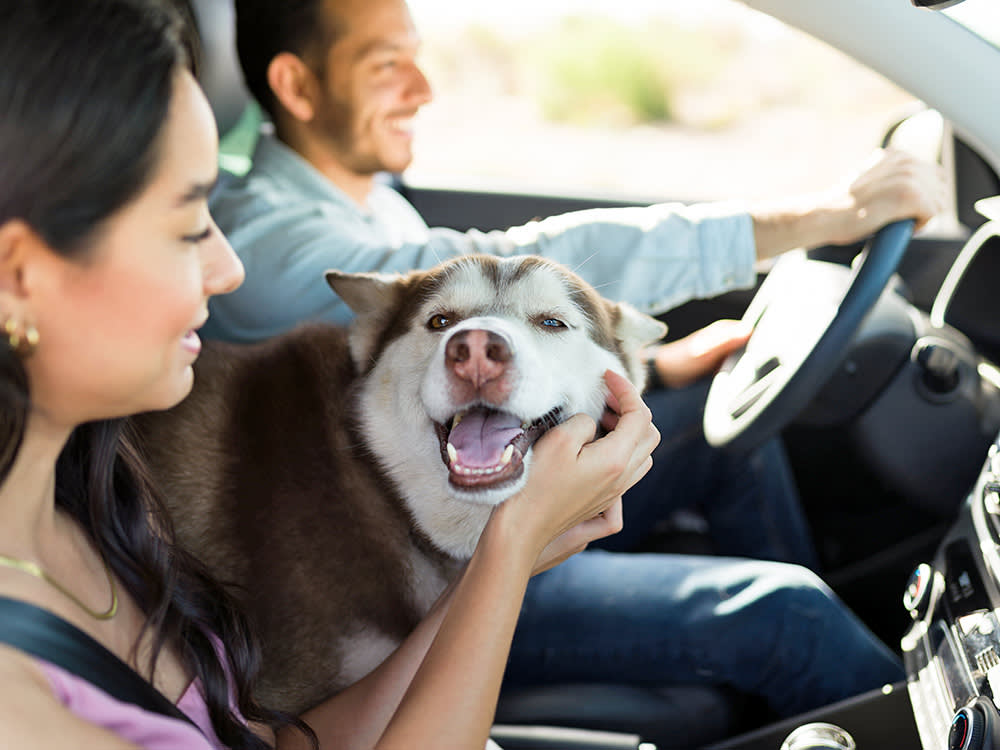
A loose dog in a moving car is a danger to everyone in it. In a hard stop or a crash, an unrestrained dog becomes a projectile, and even short of a collision, a dog wandering the cabin can distract the driver at exactly the wrong moment. Before a long trip, spend some time in the parked and then moving car so you know how your dog rides and can trust they are comfortable.
Then secure them. The two solid options are a crash-tested harness clipped into the seatbelt system in the back seat, or a crate anchored so it cannot slide. Not all harnesses are equal here: look for ones independently crash-tested by the Center for Pet Safety, which puts pet restraints through the same kind of testing used for child seats and publishes which ones actually pass. A well-reviewed certified option like the Sleepypod Clickit Sport is worth the money for a cross-country drive. Whatever you choose, let your dog wear it around the house and on short drives first so it is familiar before the big trip.
The mistake I see is people buying any harness with a seatbelt loop and assuming it’ll hold in a crash. Most won’t. Buy one that’s been crash-tested, put your dog in the back seat, and let them practice wearing it on the boring errands before you ever hit the highway.
Break early and often
Every two hours or so, pull over so both of you can get out, move around, hydrate, and reset. Rest areas and truck stops are ideal, since most have quiet grassy strips for a quick walk. A genuinely useful hack: many large truck-stop chains now have small fenced enclosures they market as dog runs. Even if you skip dog parks at home, an empty fenced run is a great place to let a road-weary dog burn off energy safely on a long day.
Advocate for your dog while you are there. If another traveler is about to enter a small enclosure while your dog is in it, there is nothing rude about asking them to hold off for a beat while you get your dog out safely. Your dog’s comfort comes first.
Make it fun for them, not just tolerable
The best part of traveling with a dog is watching them take in new places, so build a little of that in even when you are in a hurry. Take the extra walk. Let them sniff the unfamiliar parking lot. And lean into the road-trip ritual of the occasional drive-through treat, which dogs learn to love almost immediately. A few chains hand out freebies for the dog in the car:
- Starbucks: the Puppuccino, which is just a little cup of whipped cream
- Tim Hortons: plain Timbits, their little doughnut holes, offered dog-friendly
- KFC: pup strips at some drive-throughs
These are high-value splurges, not staples, so keep them occasional and skip them entirely for a dog with a sensitive stomach or a weight to watch. As a treat on a long haul, though, they turn the car into the best place your dog has ever been.
Build a nightly grab bag
If you are only sleeping a few hours before getting back on the road, you will not want to unload the whole car. Pack a small grab bag for each overnight with just what you need for the dog: a pre-portioned meal or two, any medication, collapsible bowls, and a favorite toy. That way you can settle your dog for the night without digging through suitcases, and get moving fast in the morning.
Driving a long way with a dog is tiring, and covering serious ground in a few days will wear you out. But it is also the kind of trip you remember, precisely because your dog was in it with you the whole way. Plan it, restrain them, take the breaks, and the drive stops being the thing you endure to get there and becomes part of the point.
Jordan Ellis is a certified professional dog trainer with a decade of experience working with rescue organisations and private clients. They specialise in anxiety, reactivity, and positive reinforcement methods, and review all training and behaviour content at The Pet Times.
Meet our experts ↗Keep reading
 Health & WellnessA Pool, a Lake, and the Ocean Will Kill Your Dog in Three Different WaysDr. Lena Park · 8 min
 LivingHalf the Dogs at the Beach Are Not Having Fun. Yours Might Be One.Dr. Mara Chen · 8 min
 First DaysThe Ride Home Is Your New Dog's First Lesson. Don't Blow It.Dr. Lena Park · 6 min
 TrainingYou Can't Train Your Dog in a Moving Car. Start in the Driveway.Dr. Ravi Mehta · 8 min
 LivingBring the Dog: 11 NYC Date Spots Where Your Pup Is the Best WingmanSasha Ford · 5 min
 LivingFor Andrew Knapp, the Dogs Are the Whole MapClaire Sutton · 7 min