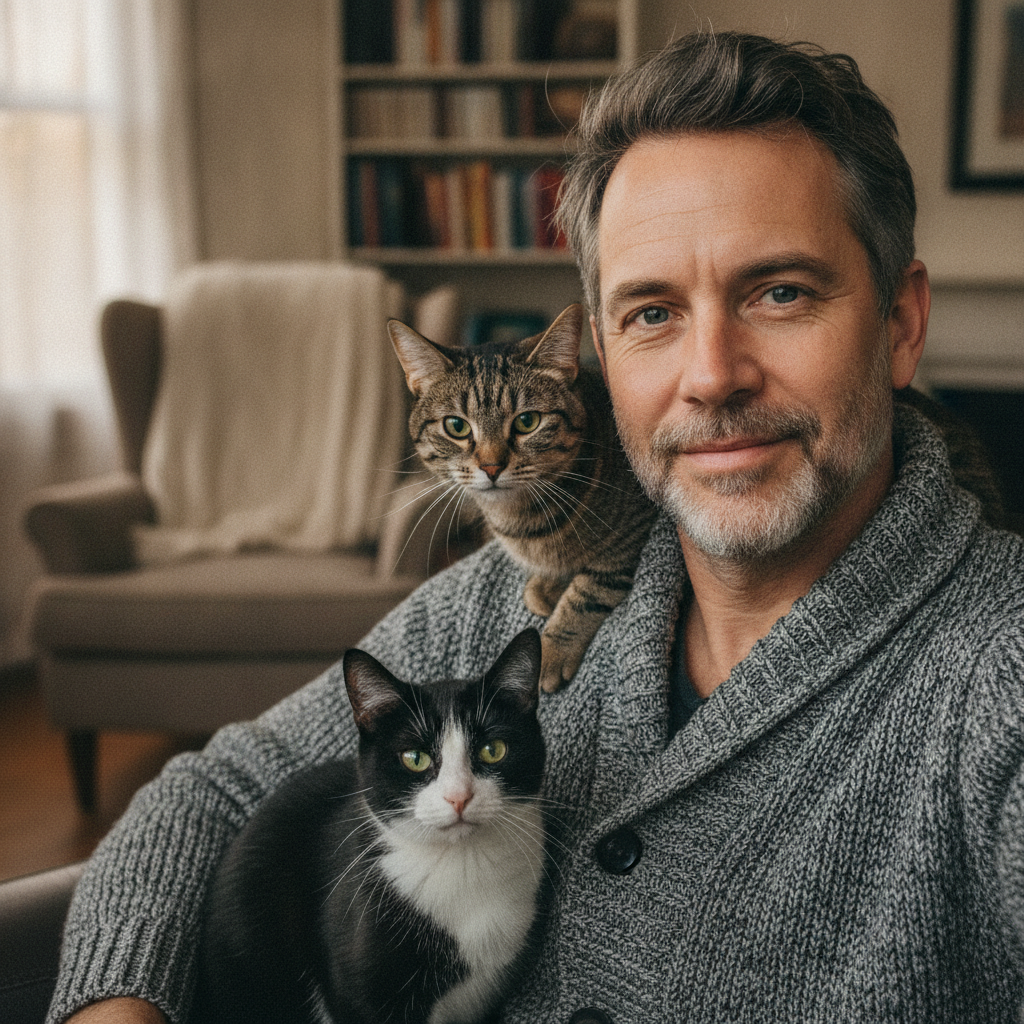
Scroll any adoption feed and you will see the slogans: adopt don’t shop, rescued is my favorite breed. Then you talk to someone actually thinking about it, and out come the doubts. Isn’t there a reason that dog got returned? Won’t a rescue come with baggage, or a vet bill, or a temperament nobody warned you about?
Here is the thing worth saying plainly: those doubts are not neutral. They are the reason wonderful animals sit in kennels for weeks longer than they should. Every myth below adds a little friction to an adoption that should have happened, and behind each one is a fact that points the other way. So let’s clear the whole pile, and let’s do it with current numbers, not vibes.
Myth 1: A shelter animal is there because something is wrong with it
This is the big one, the assumption underneath most of the others, and it is mostly untrue. Walk a kennel row and yes, some dogs bark and lunge, some cats press themselves into the back corner. That is not personality; that is a scared animal in a loud, strange place. It tells you almost nothing about who they are on a couch.
The real reasons animals land in shelters are overwhelmingly about the humans, not the pet. People move somewhere that won’t take animals. A landlord changes the rules. An owner dies, or gets sick, or hits a financial wall. A stray gets picked up and nobody ever comes. In the most recent national data, strays made up roughly 59 percent of shelter intake and owner surrenders about 30 percent, and surrenders are far more often about a person’s changing life than a dog’s bad manners.
Myth 2: Shelter animals are secretly sick
Reputable shelters won’t place an animal who is ill or hurt on the adoption floor at all. When one arrives with a health problem, it gets treated first and made available second. The pet you meet on the adoption floor has already been evaluated, vaccinated, and cleared.
If anything, the health math runs the other way. Animals from unregulated, high-volume breeding operations frequently arrive at their new homes with more medical problems, not fewer, because they were raised without real veterinary care.
“People picture a shelter animal as a health gamble and a breeder animal as a sure thing, and that’s backwards more often than folks realize,” says Dr. Nina Kohl, a veterinarian who writes for The Pet Times. “A good shelter has already done the workup, treated what needed treating, and told you what they found. That’s more transparency than you get with a lot of impulse purchases.”
Myth 3: They’re unsocialized and won’t know how to be a pet
Plenty of surrendered animals lived full lives with families and are perfectly used to people, other pets, and the rhythm of a home. And the ones who arrived with less? Modern shelters work hard to fill that gap with volunteer time, playgroups, field-trip outings, and foster placements that put animals in real houses. By adoption day, most are far more prepared for family life than the “blank slate” stereotype suggests.
Myth 4: A pet who was given up once won’t trust again
The fear here is emotional: that an animal who lost a home will hold back, or that an adult pet won’t love you the way one raised from a puppy would. Ask people who have actually done it and you’ll hear the opposite, again and again.
Animals are resilient, and trust is built, not inherited. A useful framework a lot of shelters share is the 3-3-3 guideline: give it about three days for a new pet to decompress, about three weeks to learn the routine and relax, and about three months to feel genuinely secure. Go in with patience and steady kindness, and the bond that forms is often the fiercest kind there is.
Myth 5: Shelters never have young puppies or kittens
You absolutely can. Shelters take in animals of every age, and that includes litters of puppies and kittens, especially during the spring and summer months when intake spikes. If your heart is set on a baby, your local shelter is a genuine option, not a consolation prize. (And it is worth at least a glance at the seniors while you’re there, who come with enormous upside and a much shorter line.)
Myth 6: No papers means no idea what you’re getting
Two answers here. First, a pedigree has never been a guarantee of health or temperament; plenty of “papered” animals develop the same problems as anyone else. Second, if paperwork genuinely matters to you, shelters still deliver, because purebred animals land in them all the time when their families hit a life change.
Myth 7: The shelter is wall-to-wall mixed breeds, so forget a specific breed
Think you’ll never find a purebred at a shelter? The most rigorous survey of the question found that roughly 5 percent of shelter dogs are unmixed purebreds, a figure often inflated to 25 percent in casual retellings. Five percent sounds small until you scale it: across millions of dogs in the shelter system, that’s a large number of purebreds cycling through at any moment. They also tend to get adopted quickly, so they move fast. Want a specific breed and don’t want to wait? Breed-specific rescue groups exist for nearly every breed on earth. And for the record, mixed breeds tend to bring a little extra genetic diversity, which often means sturdier health over a lifetime.
Myth 8: The adoption crisis is basically solved now
It is easy to assume all the “adopt don’t shop” energy fixed the problem. It didn’t, not entirely. The most encouraging recent numbers do show progress, and it’s real. But the work is not finished, which is exactly why knocking down the first seven myths still matters.
What the newest numbers actually show
Here is the hopeful part, and it is grounded in real data rather than a slogan. In the most recent national reporting, about 4.2 million dogs and cats were adopted in a single year, and shelter euthanasia has been trending down, from around 10 percent of animals in 2019 to about 8 percent in 2025. Intake dipped slightly year over year, too.
That is genuine movement in the right direction. But shelters still describe a squeeze: more animals coming in than finding the door out, plus staffing and veterinarian shortages and a rising share of pets who need extra medical or behavioral support. Translation for anyone on the fence: your adoption is not a nice-to-have. It is the outcome the whole system is straining toward. The myths make people hesitate. The facts, and the numbers, say go meet the animal.