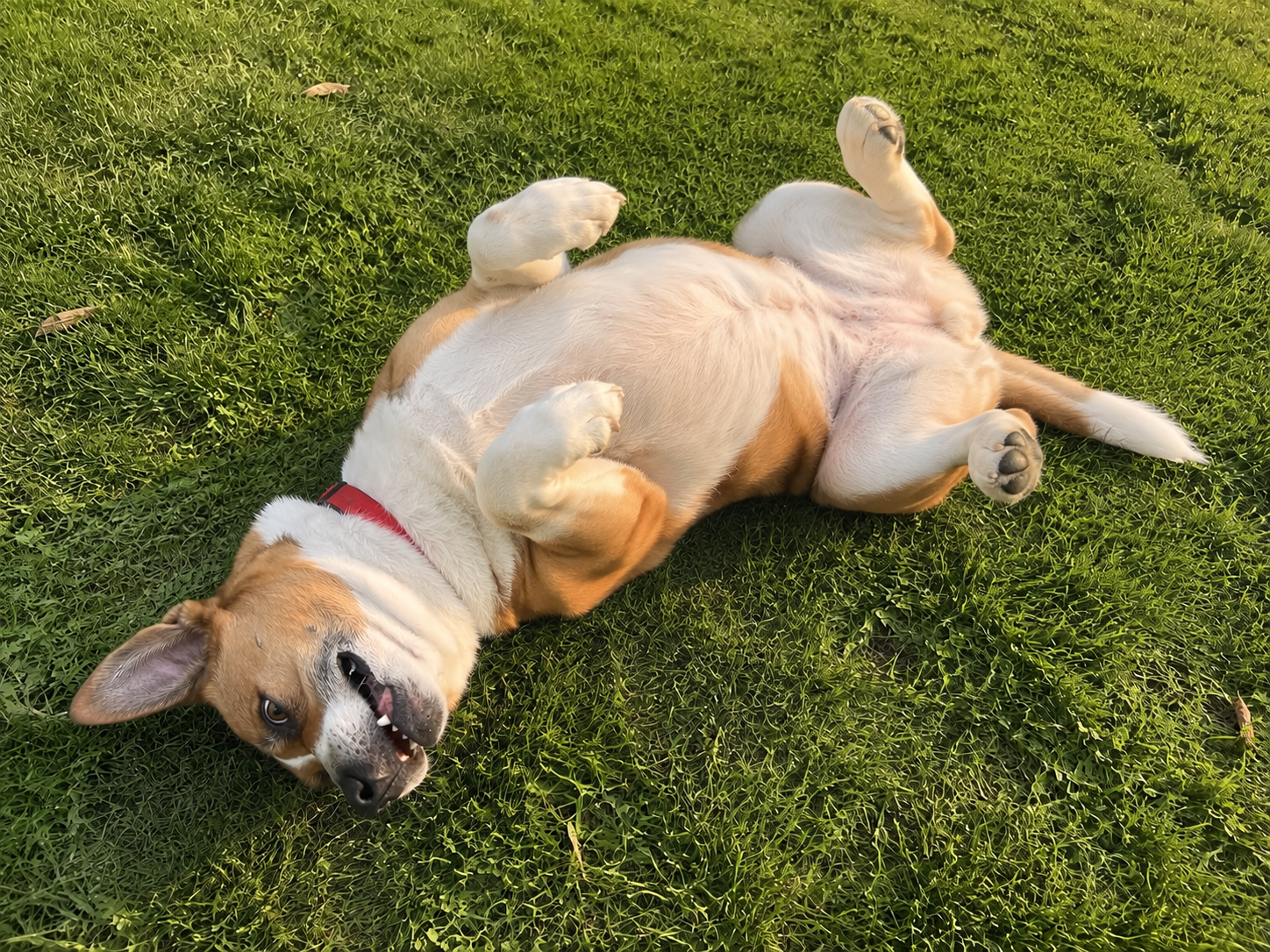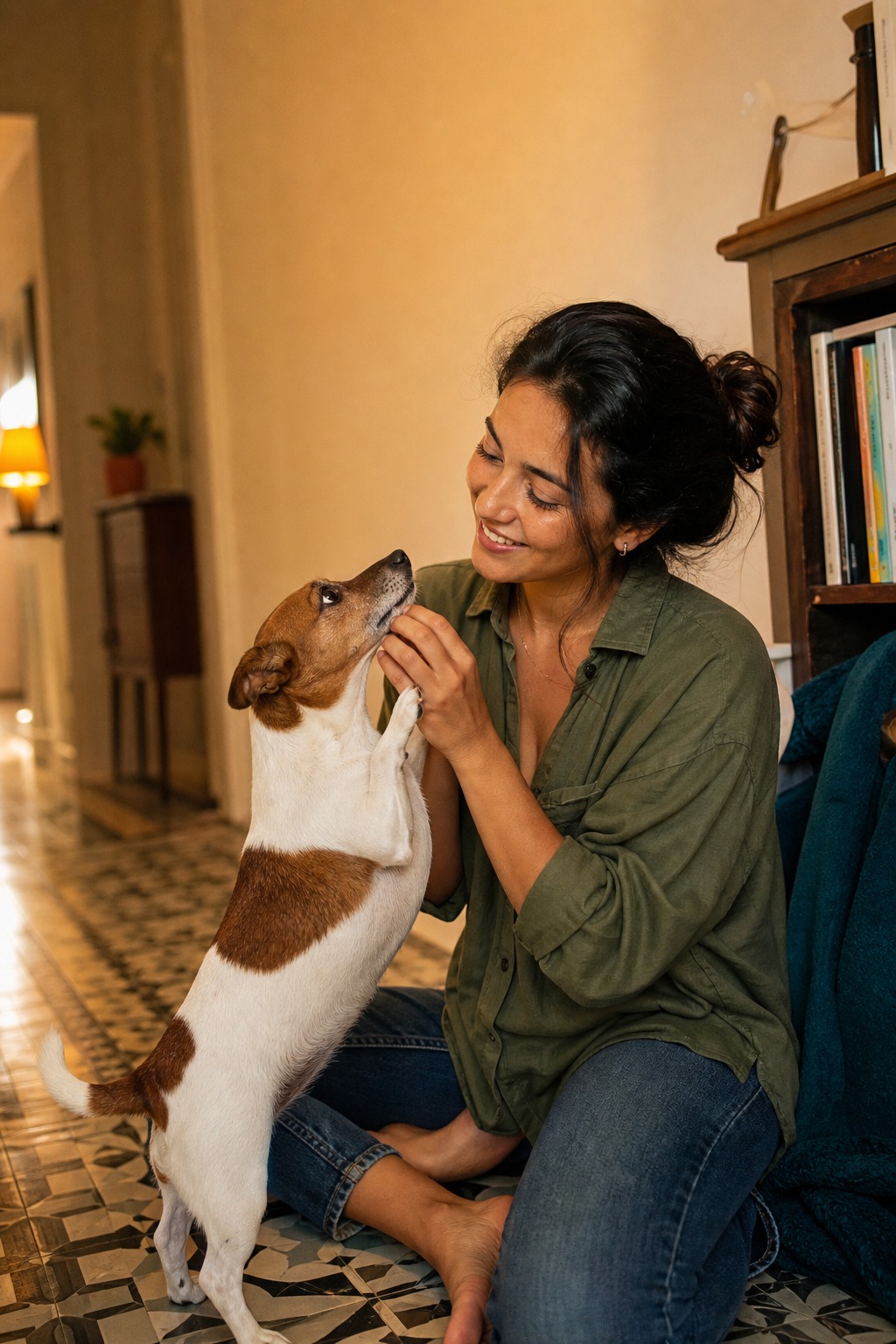
Most “look how much I spoil my pet” stories are really about excess. This one is about arithmetic. When your dogs are 14 and 12, the monthly total stops being a brag and starts being a maintenance schedule: kidney supplements, joint powders, a wellness plan that spreads the dental bills out, and a stroller for the days when the legs give out before the walk is done.
We asked a Portland, Oregon content strategist to track a full month of spending on two rescue dogs, Pico, a 14-year-old Poodle mix, and Spencer, a 12-year-old Whippet-hound mix, on a household income of $150,000. The month came to $694.98. What the receipts show is that spending on a senior dog is less about pampering and more about buying back comfort and time.
Who’s in the household
Pico came home from Oregon Dog Rescue back in the fall of 2012. His parent had gone to the adoption event to meet a different dog entirely, but a scraggly coat and a permanent puppy face rearranged those plans on the spot.
Spencer arrived from One Tail at a Time in March 2020, one day before Oregon shut down for the pandemic, as timing would have it. He was eight, had spent most of his life in a backyard on Kauai, and had never really lived indoors. He is still, by his parent’s own account, deeply suspicious of new people.
The upfront costs were modest and slightly comical: roughly $200 for Pico, most of it a crate he never touched, and less for Spencer, whose borrowed crate went equally unused.
The single largest one-time expense over the years wasn’t a vet bill at all. It was a $4,000 fenced front yard so Spencer could sit outside and watch the neighborhood go by. The most memorable emergency was Pico’s, at age nine: he stepped in a divot mid-sprint and tore a knee ligament, and the repair, complete with a plate and screws, ran about $5,000. He recovered completely. His bionic knee still shows up on unrelated X-rays.
The month, week by week
Week one: food and treats, $104.97
- Royal Canin senior dog food, $94.99. Spencer treats the same meal every day like a lottery win, spinning and hopping while he waits. After eight years fending for himself, a bowl that shows up on schedule is genuinely thrilling to him.
- Freeze-dried chicken treats (x2), $9.98. Spencer has made his preference for chicken extremely clear, and the household honors it.
Week two: mobility and kidneys, $258.93
- Pet stroller, $114.99. Pico’s legs tire long before he’s ready to quit, so the walk now has two modes: he trots until he slows, then rides. He took to it immediately, sitting up front like a small monarch surveying the boulevard.
- PetWellbeing liquid kidney supplement and Epakitin urinary powder, $143.94. Nothing fun to report here. Pico takes both without complaint, and the routine is a way to feel useful against a kidney disease that only moves one direction.
Week three: pain and joints, $75.94
- Pain medication from Banfield, $28.56. Arthritis meds are an easy sell when they arrive coated in peanut butter.
- Joint supplements, $47.38. Spencer inspects these with deep suspicion on their own, but folded into breakfast they vanish. His gait is already stiff; the goal is to keep it from getting stiffer.
Week four: the plan and the extras, $255.14
- Banfield wellness plans for both dogs, $129.93. These spread the predictable annual costs, such as dental exams and check-ups, across the year, and office visits come included. With two seniors who always seem to need something, that adds up in the household’s favor.
- Royal Canin renal-support canned food, $83.76. Wet food, prescribed for Pico’s kidneys, which he clearly considers a perk rather than a symptom.
- Lambchop Frisbee-shaped dog toy, $7.47. A completist purchase to round out the household’s Lambchop shelf. Spencer approves. Pico, who is short on teeth, cannot get a grip on the flat shape.
- Dematting comb, $15.99. Pico despises all grooming tools and grows more vocal about it with age. On this one he has a point, since it does tug.
- Only Natural Pet recycled poop bags, $17.99. Bought because Pico refuses to relieve himself anywhere but on a walk. These open easily even with the cold, wet hands that Oregon guarantees for much of the year.
Where the $694.98 went
- Wellness plan: $129.93
- Medications and routine care: $219.88
- Food: $178.75
- Walk accessories (stroller and bags): $132.98
- Grooming: $15.99
- Treats: $9.98
- Toys: $7.47
- Lounge and wardrobe: $0
The shape of that breakdown is the real story. Almost nothing here is decoration. Two-thirds of the total is medical care, mobility, and food, the non-negotiables of keeping old dogs comfortable. The stroller, which reads like an indulgence, is arguably the most practical line on the list, because it’s the difference between Pico getting a daily outing and getting none.
What a senior-dog budget actually buys
If you’re staring down your own dog’s later years, the useful takeaway from this month isn’t the number. It’s the categories. Recurring medical support (supplements, prescription food, pain management) tends to become the anchor of the budget, and it’s steadier and more predictable than the occasional emergency. Wellness or preventive-care plans exist precisely to convert lumpy annual costs into a flat monthly line, which is why so many multi-senior households use them.
The parent’s own advice is refreshingly boring: put pet expenses into your monthly budget as a fixed cost so the basics are always covered, and quietly build an emergency cushion, because with an aging dog the emergency is a matter of when, not if. Setting recurring supplies to auto-ship usually shaves a little off the top, too.
Asked how she feels about the total, she didn’t flinch. The spending is consistent and largely surprise-free at this stage, and measured against what two old dogs give back, she calls it one of the most justifiable expenses she has.
The families who handle senior care best tend to treat it like any other fixed household cost: budget for it, automate what they can, and keep a little set aside for the day something goes sideways.
A note on the numbers
Every dog’s later years look different. A 14-pound dog on two supplements and a large-breed dog on prescription food and mobility support will land in very different places. Treat this month as a template for the kinds of costs that show up, not a figure to match. The point isn’t that senior care is cheap or expensive. It’s that most of it is foreseeable, and foreseeable costs are the ones you can plan around.
This piece includes an affiliate link. If you buy through it, The Pet Times may earn a small commission, which never affects the price you pay or what we choose to feature.