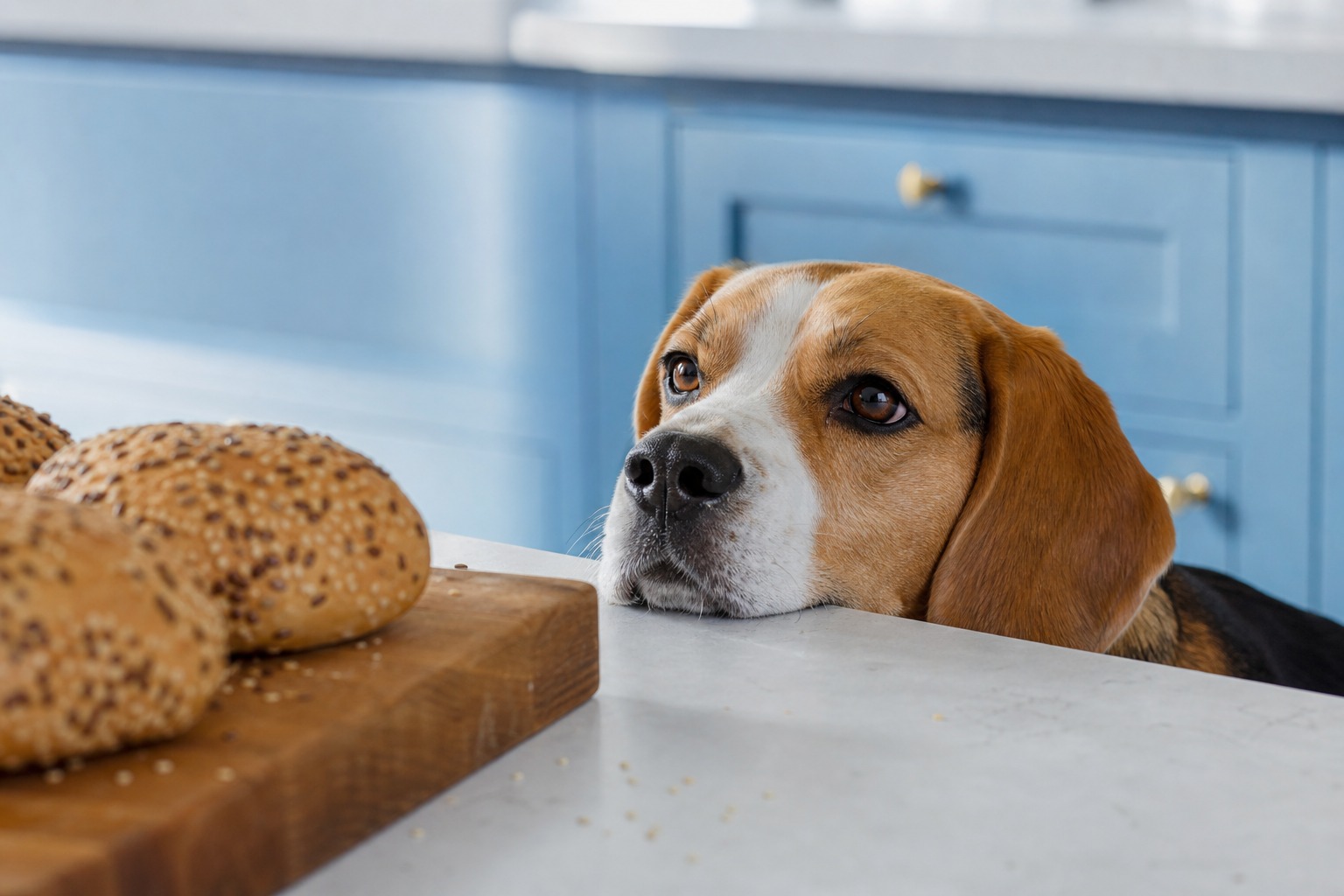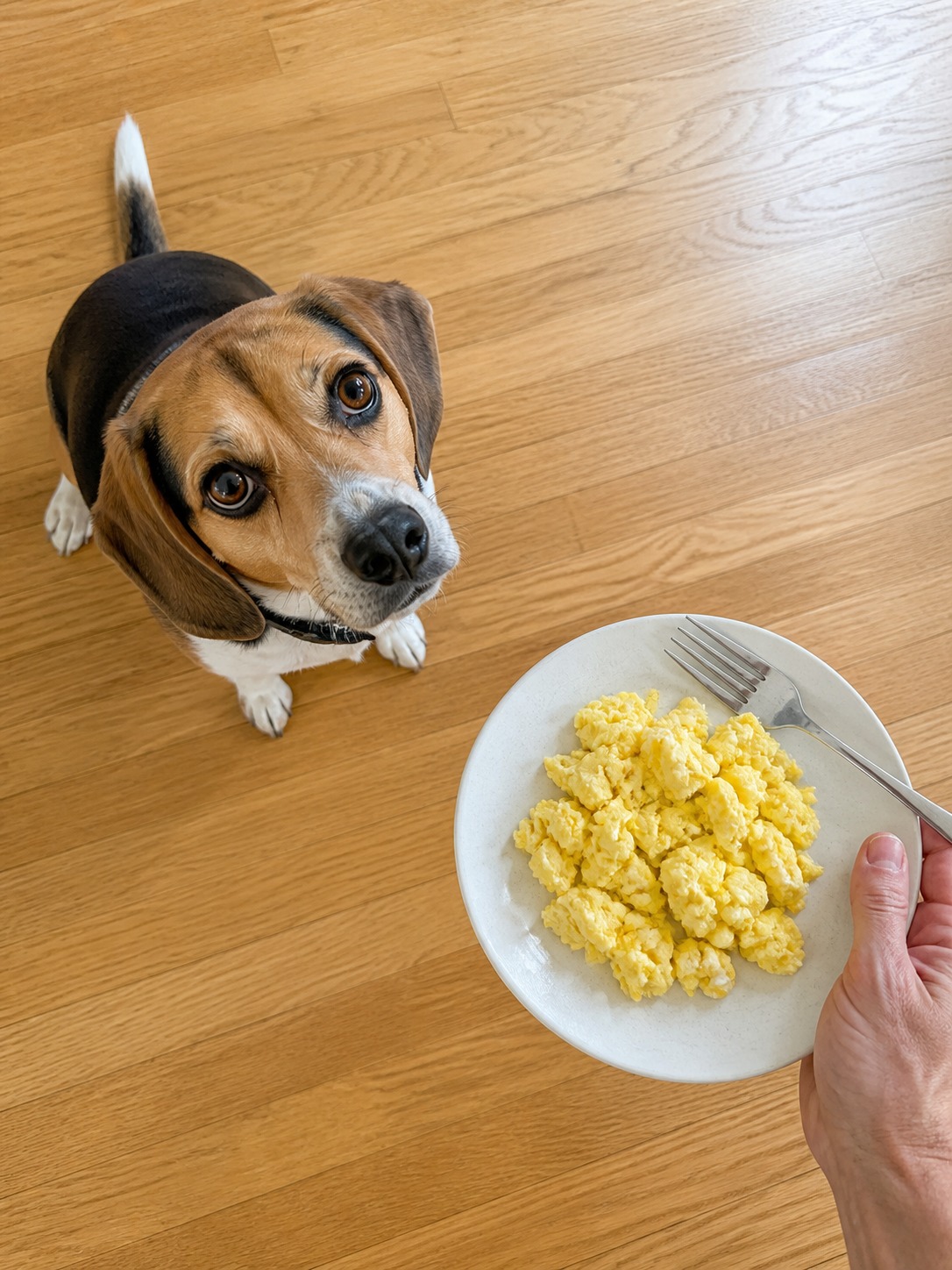
Those eyes. You are standing at the stove with a plate of scrambled eggs, and a dog is looking at you like you are personally withholding happiness. The good news is that eggs are one of the better things you can share off your plate. The catch is that “scrambled eggs” as most people make them, cooked in butter, salted, sometimes sharing a pan with onions or bacon, is not what your dog should get. The egg is fine. It is the recipe that gets dogs into trouble.
Here is how to give your dog the good part and leave out the risky part.
Why the egg itself is a win
A plain, fully cooked egg is genuinely nutritious for a dog. It delivers highly digestible, complete protein, the kind that supports muscle, tissue repair, and immune function, along with a useful spread of vitamins and minerals. Break it down and you get:
- High-quality protein with a full set of amino acids.
- Healthy fats in the yolk that carry energy and help the body absorb fat-soluble vitamins.
- Vitamins and minerals, including vitamin A, several B vitamins, selenium, and choline, which support skin and coat, nerve function, and metabolism.
- Real palatability. Dogs tend to love eggs, so a little stirred into dinner can coax a picky eater to the bowl.
- A gentle option for a recovering stomach. After a short bout of digestive upset, plain egg is often easy for many dogs to handle as food goes back in.
One number worth holding onto: a single large egg runs about 60 to 80 calories, with roughly six grams of protein and five grams of fat. On a small dog or a dog watching its weight, that adds up faster than you’d expect, which is why portion control matters as much as ingredients.
The 10 percent rule
Eggs are a treat or a topper, not a meal. The standard guideline is that treats should make up no more than 10 percent of a dog’s daily calories, eggs included. Practically, use the egg as an add-on to your dog’s regular food rather than a substitute for part of it, so it is easy to keep the math honest.
A rough size guide, staying inside that 10 percent:
- Toy (10 lb or under): 1 to 2 tablespoons, about a quarter of an egg.
- Small (11–20 lb): a quarter to half an egg.
- Medium (21–50 lb): half to a whole egg.
- Large (51–80 lb): about one egg.
- Giant (over 80 lb): one to two eggs.
Feed toward the lower end, or skip it, for any dog that is prone to pancreatitis, has a sensitive stomach, or is carrying extra weight.
The part that actually causes problems: the add-ins
This is where a good idea goes wrong. Keep the following out of any egg you share:
- Onions, garlic, chives, and leeks. None of these, in any amount, are safe; they damage a dog’s red blood cells.
- Salt and salty meats like bacon and ham, which pile on sodium and fat.
- Butter, oil, cream, milk, and cheese. Many dogs are sensitive to dairy, and the extra fat can set off an upset stomach or, worse, pancreatitis.
- Pepper and other spices, which can irritate the digestive tract.
- Artificial sweeteners, especially xylitol, which is toxic to dogs.
Notice that most of what makes scrambled eggs taste good to us is exactly what makes them a hazard for a dog. Plain and boring is the entire point.
How often, and when to skip eggs entirely
For most healthy dogs, eggs one to three times a week in small amounts is a reasonable rhythm, as long as you stay under that 10 percent calorie ceiling. Some dogs should not get scrambled eggs at all without a vet’s sign-off first: those with a history of pancreatitis, chronic gastrointestinal disease, kidney disease, or obesity. When in doubt, ask before you share.
“Eggs are one of the safest human foods to hand a dog, right up until someone cooks them the way they’d cook them for themselves,” says Dr. Mara Chen. “I’ve treated more than one dog for a fatty-food flare-up because breakfast came with butter and a little bacon grease. The egg was never the issue. Cook it plain, keep the portion honest, and it’s a great treat.”
Watch for a reaction
Egg allergies and intolerances do happen. A reaction can show up right after eating or build over time. Keep an eye out for:
- Digestive signs: vomiting, diarrhea, gas, belly discomfort, or a dip in appetite.
- Skin and ear signs: itching, face-rubbing, red skin, hot spots, or repeat ear infections.
- Acute reactions: hives, facial swelling, or sudden lethargy. If your dog has any trouble breathing, treat it as an emergency and go to the vet immediately.
If any of these appear, stop the eggs and check in with your veterinarian.
Good swaps if eggs aren’t a fit
If your dog does fine with eggs but you want variety, or if eggs are off the table, other simple toppers work:
- Plain boiled or poached eggs, same benefits, no pan fats needed.
- Lean plain boiled chicken or turkey breast.
- Omega-3-rich fish like unsalted sardines packed in water, or well-cooked, deboned salmon.
- Gentle carbs like plain canned pumpkin (not pie filling) or cooked white rice.
Offer these as extras, not as a replacement for your dog’s main, balanced meal.
What’s new since this was written
One reason to keep raw eggs off the menu has gotten sharper lately: highly pathogenic avian influenza (H5N1) has been circulating widely in poultry, and raw or undercooked eggs are among the products that can carry bacteria and viruses better handled by cooking. Fully cooking the egg neutralizes the usual concerns, so if the bird-flu headlines have you nervous, the answer is the same as always, cook it through, and don’t feed it raw.
Bottom line
Yes, dogs can eat scrambled eggs, when they are plain, fully cooked, and fed in moderation. For a healthy dog, a plain egg makes an excellent, protein-rich extra or meal-topper. Keep portions small, cook it thoroughly, leave out the fats and seasonings, count the calories against the day, and steer clear entirely for dogs with pancreatitis, kidney disease, or special diets unless your vet says otherwise.
References
- Davies, R. H., et al. “Raw Diets for Dogs and Cats: A Review, with Particular Reference to Microbiological Hazards.” Journal of Small Animal Practice, vol. 60, no. 6, 2019, pp. 329–339. onlinelibrary.wiley.com
- U.S. Food and Drug Administration. “Get the Facts! Raw Pet Food Diets Can Be Dangerous to You and Your Pet.” fda.gov
- U.S. Food and Drug Administration. “Questions and Answers Regarding Toxic and Poisonous Ingredients (Onions, Garlic, Xylitol).” fda.gov