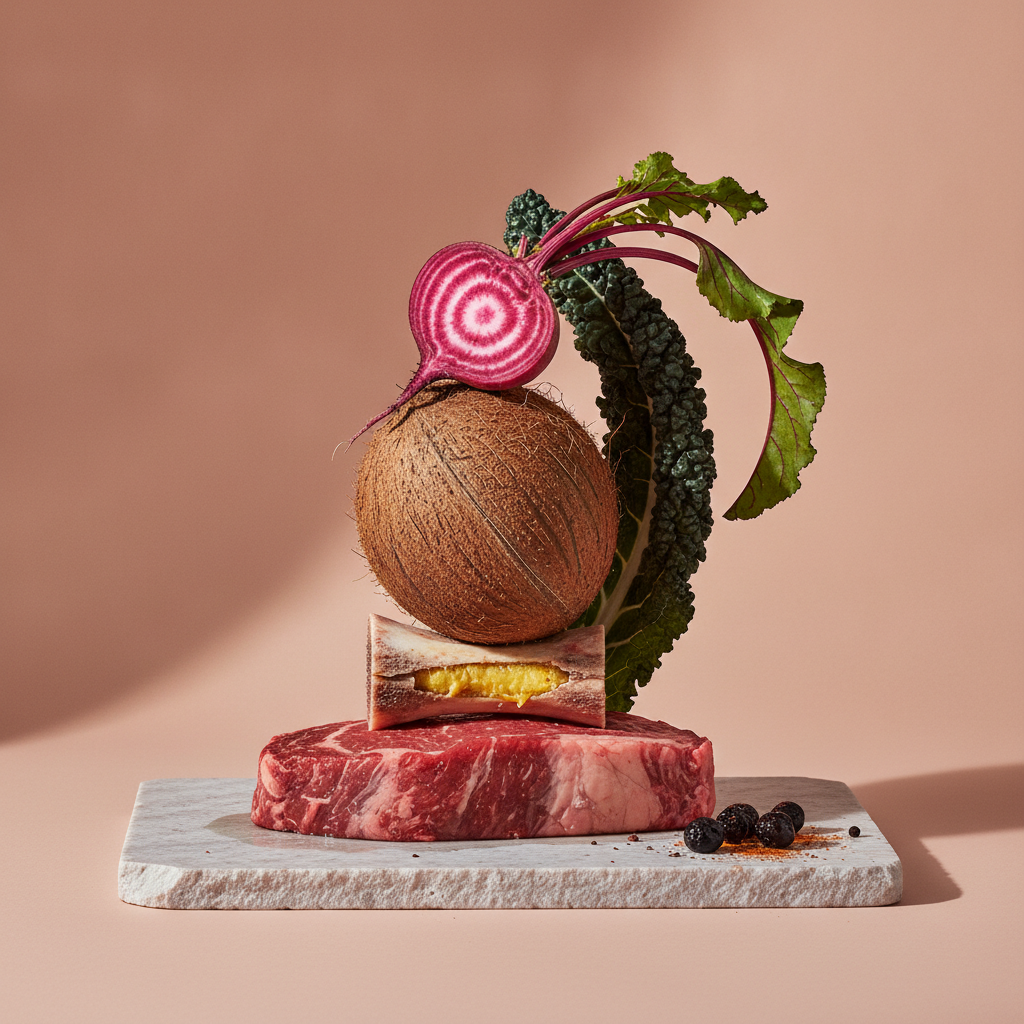
For years the raw feeding argument ran on vibes. One side said ancestral, natural, less processed. The other side said Salmonella. Both sides had a point, neither could really settle it, and the debate went in circles for a decade.
That argument is now over, and not because either side won. It is over because the ground moved.
Highly pathogenic avian influenza, H5N1, has been confirmed in commercially sold raw pet food. Cats have eaten it, become sick, and died. The FDA has issued recalls, and, far more consequentially, has determined that manufacturers using uncooked or unpasteurized poultry or cattle materials must reanalyze their food safety plans to treat H5N1 as a known or reasonably foreseeable hazard.
That last phrase is bureaucratic and enormously important. It converts a debate about philosophy into a question about process control. And it hands the ordinary shopper a single, sharp question that cuts through every ounce of the marketing:
What validated pathogen kill step does this food go through, and what did you change when H5N1 arrived?
A brand that answers that crisply is a serious operation. A brand that responds with words about ancestral diets, human-grade sourcing, and small-batch freshness has told you a great deal, none of it about safety. Sourcing is not a kill step. Freshness is not a kill step. Human-grade is a description of the meat’s origin, not of what happened to the pathogens in it.
Below, seven raw brands worth knowing, sorted by who each one is actually for, and then what raw feeding does and doesn’t do for your dog. But the question above is the thing to take with you, whichever you choose.
First, the honest case for raw, and against it
What people are chasing
A raw diet typically means organ meat, muscle meat, whole or ground bone, raw eggs, fresh fruit and vegetables, and sometimes dairy. The animating idea is that a diet closer to what a dog’s ancestors ate, with less processing, may be better for them.
The reported upsides, most of them anecdotal but consistently reported by owners: higher energy, better dental condition, and notably smaller stools.
There is also a more interesting hypothesis on allergies. The reasoning borrows from the hygiene hypothesis in human medicine, the idea that limited early exposure to microbes may raise allergy risk later. Applied to dogs, the theory is that the microbes present in a raw diet could provide immune stimulation that reduces the odds of developing allergies down the line. It is a plausible hypothesis. It is not settled science, and it should be filed as such.
And there is a genuine, underrated benefit that has nothing to do with ancestry: control. Raw feeding, particularly home-prepared, gives an owner unusual precision over exactly what goes into the bowl. That matters if you are managing a food allergy, working toward low fiber, or needing high digestibility for a dog with a delicate gut.
What people are risking
Bacteria, and now viruses.
Raw meat and eggs carry a substantially higher infection risk than cooked, and the risk concentrates in exactly the places you would expect. Ground meats are worse than whole cuts, since grinding distributes surface contamination through the whole mass. Poultry is a particular offender. And raw pork carries a meaningful risk of intestinal parasites.
Here is the part that reframes the whole risk conversation: most of this risk is user error, not raw-feeding-as-such. The single most dangerous version of raw feeding is the cheapest and most common one, which is buying supermarket chicken and putting it in a dog bowl. That is precisely what should never happen.
Commercial raw food exists, in large part, to solve this. Reputable manufacturers apply high-pressure processing and similar validated steps to knock down bacterial loads before the food ever reaches you. That is the actual value proposition of a raw brand: not the recipe, the process.
The rest of the risk lives in your kitchen, and hygiene is not optional. Wash the bowl properly. Wash your hands after handling the food and after handling the dog. Pick up and dispose of waste promptly. A raw-fed dog can shed pathogens in its stool, which is why this is a household issue and not merely a dog issue.
Which is why raw feeding is a poor fit for homes with infants, elderly or immunocompromised people. That is not squeamishness. It is a straightforward transmission-risk calculation.
“I do not tell people raw is forbidden. I tell them raw is a process-control problem that they have volunteered to co-own,” says Dr. Priya Nair. “If you are going to do it, buy from a company that can describe its kill step in one sentence, and run your kitchen like the food is contaminated. Because occasionally it is.”
The seven brands, ordered by how much they do for you
Two notes before the list. No brand here is being certified as safe; these are the ones worth evaluating, along with the questions to evaluate them on. And talk to your vet before switching any dog to raw, especially a puppy, a senior, or a dog with an existing condition.
The ordering principle is deliberate. It runs from the brands that carry the most of the burden themselves to the ones that hand the hardest decisions back to you. That axis, not price and not popularity, is the one that predicts whether raw feeding goes well in a normal household.
1. Primal Pet Foods — the lowest-commitment way in
$35
Start here, because Primal is the easiest name on this list to actually get hold of. The freeze-dried nuggets are stocked nearly everywhere, and they work as a full meal, a topper, or a treat, which means you can find out whether your dog even wants raw before you commit a freezer to it.
Primal builds around the BARF model, short for Biologically Appropriate Raw Food, which calls for roughly 60 to 80 percent of the diet as raw meat, with the remaining 20 to 40 percent made up of vegetables, meat, eggs, and dairy.
That model has a genuine wobble in it, and it is worth understanding before you trust the ratio. Raw meat varies enormously in its protein-to-fat ratio, and depending which vegetables go in, that 20 to 40 percent slice can swing wildly between carbohydrate and fiber. Two dogs on nominally identical BARF ratios can be eating quite different diets. If that bothers you, Primal will let you build your own bowl instead of accepting the ratio as handed down.
Best for: first-timers, and anyone who wants raw without a subscription. The tradeoff: freeze-drying is a preservation method, not by itself a validated kill step. Ask what else the food goes through.
2. Stella & Chewy’s — the one that leads with the process
Not on the original version of this list, and it earns a place for precisely the reason this article exists: it is among the more mainstream raw brands that talk openly about pathogen-reduction processing, and it is stocked widely enough that you can pick the bag up and read it before committing.
Freeze-dried patties and frozen formats both exist, at prices and availability that undercut the direct-to-consumer subscription brands.
Best for: owners who want the safety conversation printed on the box rather than buried in a support email. The tradeoff: broad availability means broad variation between product lines. Vet the specific product, not the brand name.
3. Smallbatch — competent, complete, unflashy
$40
If the instruction is to find a manufacturer with sound practices and genuinely complete, balanced formulations, this is the archetype. Meat, vegetables, and supplements, responsibly and locally sourced, without a story about ancestral wolves attached.
Best for: owners who want a well-run raw brand and are not chasing a specific clinical goal. The tradeoff: it is the least differentiated entry here, which in this category should probably be read as praise.
4. Maev — the one that answers the life-stage question for you
$179
The least glamorous requirement in raw feeding is also the most important: the food has to be complete and balanced for the life stage your dog is actually in. This is where raw feeding quietly goes wrong most often, and it is most dangerous in growing puppies, where the calcium-to-phosphorus ratio is not something anyone can eyeball.
Maev takes that decision off your plate. Pick chicken or beef, then pick adult, puppy, or senior. The brand will also assemble a custom blend aimed at particular issues, among them hip and joint, weight and digestion, anxiety, and skin and coat.
Best for: owners who want life-stage adequacy handled on the label instead of left to them. The tradeoff: by a wide margin the most expensive option here, and the custom-blend claims aimed at something like anxiety deserve to be read as marketing until evidence says otherwise.
5. State of Nature — the clinical pick, for elimination diets
$40
Out of New York’s Hudson Valley, on a fixed formula: five parts meat and bone, one part organ meat, one part plant mix, pressed into lean burger patties.
The formula is not the reason to care. The protein list is. Beef, chicken, turkey, rabbit, duck, and Atlantic mackerel is an unusually wide range, and crucially it contains genuine novel proteins. That is the most clinically useful thing on this page. If you are running an elimination diet for a suspected food allergy, a protein your dog has never encountered before is the entire mechanism, and duck or rabbit does something for you that a fourth chicken recipe cannot.
Best for: dogs with suspected food sensitivities, run under veterinary guidance. The tradeoff: the fixed ratio means less room to customize than Maev or a build-your-own bowl.
6. Viva Raw — a strong sourcing story, which is not a safety story
$26
Viva Raw commits to 100 percent human-grade, USDA-approved meat, raised without antibiotics or hormones, and ships in small batches to keep it fresh. It is also the cheapest per-unit entry on this list, which is why a lot of people start here.
It sits this far down for one reason, and it is the reason the kill-step question exists at all. Provenance is not sterility. Meat can be humanely raised, antibiotic-free, and human-grade and still carry pathogens, and this brand has been subject to recall before. That is not a case against the company. It is a case against reading a sourcing narrative as a safety guarantee, which is the single most common mistake buyers make in this aisle.
Best for: owners whose priority is how the animals were raised. The tradeoff: the marketing answers a question about ethics. It does not answer the one about process.
7. BJ’s Raw Pet Food — the most freedom, the most responsibility
$25
The broadest selection here by a distance: wild-caught Alaskan salmon, free-range chicken feet, whole rabbits. Sensibly, there are also ordinary blends and ground beef for people whose enthusiasm has a ceiling.
It ranks last not because it is worst but because it hands you the most. Whole-prey feeding demands real knowledge, and the burden of making the diet complete and balanced falls harder on the owner here than anywhere else on this page.
Best for: experienced raw feeders who want range and rotation. The tradeoff: this is emphatically not where a beginner should start.
What’s new since this was written
This is the section that should change how you shop, so it is worth being precise.
H5N1 got into the food supply. In 2025 the FDA notified pet owners that testing found H5N1 contamination in specific lots of RAWR Raw Cat Food Chicken Eats, with a cat that ate the affected product falling ill and being euthanized. Wild Coast Raw recalled lots of its frozen boneless free-range chicken formula over possible bird flu contamination, and Savage Pet recalled chicken product for the same reason. USDA testing confirmed the virus in recalled lots as genotype B3.13, the same type tied to earlier raw-poultry pet food cases that sickened and killed cats.
The rules changed. The FDA determined that cat and dog food manufacturers using uncooked or unpasteurized poultry or cattle materials must reanalyze their food safety plans to include H5N1 as a known or reasonably foreseeable hazard. That is a regulatory obligation, not a suggestion, and it means every serious raw manufacturer has had to look hard at its process in the last year.
Cats are the sharp end, but this is a household issue. The confirmed deaths have been in cats, which appear notably more vulnerable to H5N1 than dogs. But raw poultry is raw poultry, the same supply chains feed both categories, and people can contract H5N1 if live virus reaches the eyes, nose, or mouth. No human cases have been tied to raw pet food so far. The handling advice follows anyway.
So the practical upshot, and the new baseline for anyone feeding raw in 2026: ask about the kill step, buy from companies that will answer the question specifically, check FDA recall notices before you restock, and run your kitchen like the food is contaminated. The philosophical argument about ancestral diets is unchanged and unresolvable. The safety argument now has an answer, and it is a process question, not a marketing one.
References
- FDA: Cat and Dog Food Manufacturers Required to Consider H5N1 in Food Safety Plans
- FDA: Tests Show H5N1 Contamination in Certain Lots of RAWR Raw Cat Food Chicken Eats
- FDA: Voluntary Recall of Wild Coast Raw Boneless Free Range Chicken Formula Because of Possible Bird Flu Health Risk
- CIDRAP: FDA warns of H5N1 avian flu detection in raw cat food
- FDA: Get the Facts! Raw Pet Food Diets Can Be Dangerous to You and Your Pet
- American Veterinary Medical Association: Raw or undercooked animal-source protein in cat and dog diets