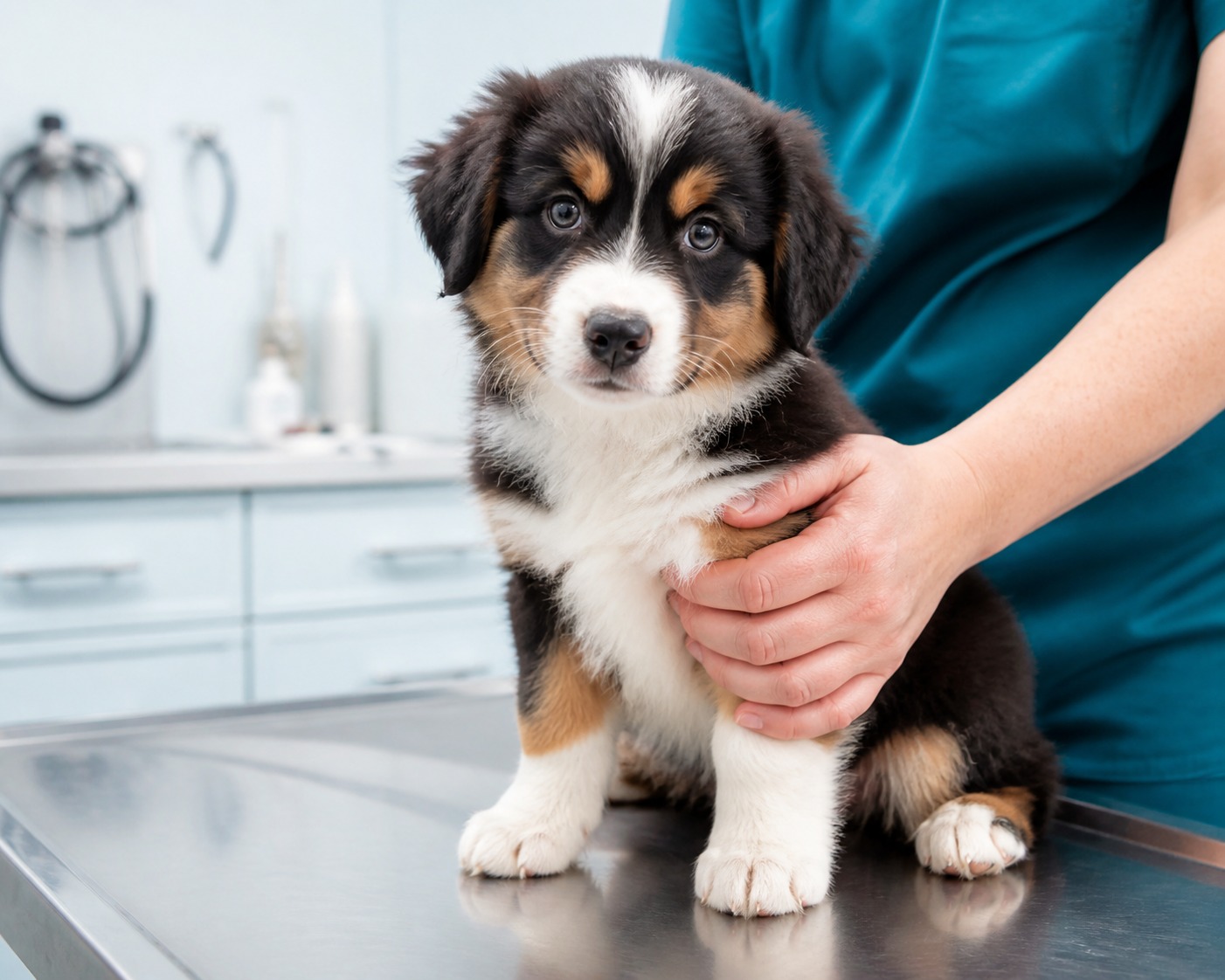
Nobody looks forward to a needle, and somehow it feels worse when it is going into a wriggling eight-week-old who trusts you completely. Add a wall of unfamiliar words, DA2PP, lepto, Bordetella, titers, and a brand-new puppy parent can feel like they are being handed a chemistry exam. You are not. The puppy vaccine schedule is actually short, logical, and mostly finished before your dog is five months old. Here is the whole thing, laid out plainly.
The one distinction that makes it all click
Every dog vaccine falls into one of two buckets, and once you understand the buckets, the rest is just dates.
Core vaccines are for every dog, full stop. They guard against diseases that are common, severe, or both, and when nearly all dogs get them, the whole population benefits from herd immunity. Rabies is the classic example.
Non-core vaccines are situational. They protect against diseases that only threaten dogs with certain lifestyles or in certain places, so your vet recommends them based on where you live and how your dog spends their days. A city apartment dog and a rural hiking dog can end up with different non-core lists, and both are correct.
Your vet builds the actual plan around your specific puppy: their age, their environment, and their real-world risk. Think of what follows as the map, not the verdict.
“The schedule looks like a lot on paper, but it is short, and almost none of it is optional guesswork,” says Dr. Lena Park. “The core shots protect against the diseases that actually kill puppies, and the rest is your vet reading your dog’s real life. Bring your questions to the first visit and let the plan be built around your puppy, not around a chart you found online.”
The core vaccines, one by one
Rabies
The one almost everyone recognizes. Most states legally mandate the rabies shot, and for a stark reason: the disease kills both animals and humans. Actual cases are rare thanks to widespread vaccination, but wildlife like raccoons and coyotes still carry it, so this is low risk, not no risk. That gap between low and none is exactly why the law refuses to make exceptions.
DA2PP (also written DHPP)
This is the workhorse combination shot, and it is priming your puppy’s immune system against a nasty lineup at once: distemper, adenovirus type 2, hepatitis, parvovirus, and parainfluenza. Because it is doing so much, it needs a few doses spaced about a month apart rather than a single injection.
The non-core vaccines worth knowing
Leptospirosis
Lepto is a bacterial infection spread through the urine of infected animals, often rats, either directly or through contaminated soil and standing water. It ravages a dog’s kidneys and liver, and the worst cases can be deadly. Vets frequently recommend it for dogs in rat-heavy cities and for any dog who drinks from puddles on walks. Some clinics offer it bundled into a DHLPP combination shot.
Bordetella
Bordetella is the most common cause of kennel cough, which spreads fast in group settings. It is treatable, but if your dog frequents daycare, dog parks, or boarding, the vaccine is smart, and most boarding facilities require it. Protection runs about six months, so boosters matter.
Canine influenza
Dog flu shots follow the same logic as Bordetella: they are recommended for dogs with active social lives at parks and daycare, where respiratory bugs pass easily from nose to nose.
Lyme disease
Ticks carry Lyme, which is debilitating for dogs and humans alike. It is a bigger threat in rural and wooded areas than in cities, so your vet will weigh how much time your dog spends in tick country, whether that is a rural home or weekend trips to the woods.
The actual schedule
Here is where the intimidating part turns simple. Puppies generally start their series at eight weeks, then get boosted every three to four weeks up to about sixteen weeks. If you adopted a rescue with an unknown birthday, your vet can estimate their age and start from there.
At eight weeks: first DA2PP dose, plus a first Bordetella dose if recommended.
At twelve weeks: second DA2PP dose and a Bordetella booster if you started it.
At sixteen weeks: the final DA2PP booster and the first rabies shot.
After sixteen weeks, your puppy is generally set until their first birthday.
Adult boosters, once the series is done
From about one year on, the rhythm settles into: Bordetella every six months if your dog’s lifestyle calls for it, DA2PP annually, leptospirosis and Lyme annually if recommended, and rabies every three years. This is the standard framework, but your vet may adjust it as your dog ages, since seniors or dogs with health conditions sometimes skip certain vaccines.
Adopted an adult dog with no records?
First, thank you. Many adult rescues arrive with no paperwork at all. In that case it is generally safe to start with the rabies and DA2PP core shots, plus any lifestyle-based vaccines your vet judges appropriate, with exceptions for ill or very elderly dogs. Alternatively, a titer, a simple blood test that measures existing antibodies, can tell you whether your dog is already immune and can skip a redundant shot.
What is the price tag?
Costs vary by clinic and region, but budget roughly $20 to $75 per shot. Many vets sell vaccine packages that bring the per-shot price down, and it is always worth asking your local shelter whether they run free or low-cost vaccine clinics. If affording care is a worry, several organizations exist specifically to help with veterinary bills.
Side effects: normal versus not
Some reaction after a shot is common and nothing to fear.
Soreness or swelling at the site is the usual one. Skip pressing on the spot and let your pup rest. Firm swelling under the injection site can linger, but call your vet if it lasts more than three weeks or keeps growing.
A mild fever can happen. For a dog, remember, anything over 103 degrees Fahrenheit counts as a fever, since dogs naturally run warmer than we do.
Lethargy rounds out the trio. Your puppy may nap more, eat a little less, or seem generally low. That should lift within a day or two.
What is not normal, and what means the vet right now: itchy skin and hives, persistent vomiting or diarrhea, swelling around the face, neck, or eyes, or any difficulty breathing. True allergic reactions are rare, but they move fast, so they are worth recognizing.
Missed a shot?
It happens. Call your vet promptly. If your puppy is only a few weeks behind, they can usually just get the booster and carry on. If months or years have slipped by, they will likely need to restart the series to be fully protected, though for some viral diseases a titer test can measure how protected they already are.
A note on timing your outings
For a few days after each vaccination, keep your puppy out of dog-crowded spots like parks, and give other species such as cats and rodents a wide berth too while their immune response ramps up. Once the series is complete, though, they are cleared to make all the park friends they want.
What’s new since this was written
The national vaccine guidance has shifted in one meaningful way worth flagging. The most recent American Animal Hospital Association canine vaccination guidelines were updated to reclassify leptospirosis as a recommended vaccine for essentially all dogs, rather than a purely lifestyle-based non-core shot. The reasoning is that lepto has turned out to be more widespread than the old “rural and city-rat only” picture suggested, showing up in suburban yards and among dogs with fairly ordinary routines.
In plain terms: do not be surprised if your vet now recommends the lepto vaccine even if your dog is not an obvious high-risk case. It is a reflection of newer data, not upselling. As always, your own vet’s read on your dog and your region is the one that counts.
The bottom line
The puppy schedule looks scarier written out than it feels in practice. Three rounds of core vaccines, a handful of lifestyle-based extras your vet will help you choose, and a mild off-day or two afterward. Get through the first sixteen weeks and your dog is protected, cleared, and ready for a very full social calendar.