


Your Puppy's Poop Looks Like Soft Serve. Here's When to Shrug and When to Call.
Mushy puppy stool sits in the gray zone between normal and diarrhea. The trick isn't panicking over one soft pile, it's knowing which three things turn 'keep an eye on it' into 'see a vet.'

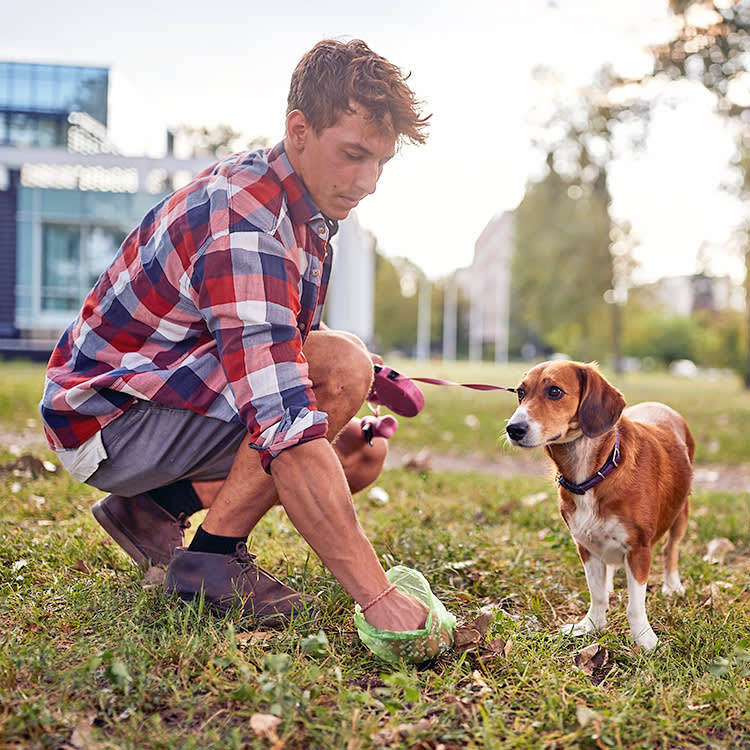
Puppies are built out of soft things: velvet ears, squishy paw pads, that impossibly soft belly. Their poop, ideally, is the exception. So when you scoop up something closer to soft serve than a proper log, the honest questions are the two you’re already asking. Is this normal? And is it a big deal? The answers are “sort of” and “usually not, but pay attention,” and the space between those is where a little knowledge saves you a lot of worry.
What healthy puppy poop actually looks like
A quick, unsqueamish baseline first, because your dog’s stool is one of the most useful health readouts you have, and no vet will flinch when you describe it. A good stool is brown, shaped like a log, and firm enough to lift cleanly without leaving much behind. Any shift in its color, firmness, or contents is worth a second look.
Between a perfect log and outright liquid there’s a wide middle ground, and that’s where puppies live. Younger pups carry more water in their stool to begin with, and they’re constantly absorbing new food, new surroundings, and new routines, so a mushy day here and there isn’t shocking. Most of the time it firms back up on its own. Your job is simply to notice whether “a little soft” is drifting toward “actual diarrhea.”
Soft stool is a data point, not a diagnosis. One squishy pile from a bouncy, hungry puppy tells me almost nothing. The same pile in a flat, off-food puppy tells me to move quickly. I’m always reading it alongside how the whole dog is acting.
Why your puppy’s stool went soft: the usual suspects
Most cases trace back to one of a handful of everyday causes.
Stress. Puppyhood is a firehose of new experiences: leaving mom and littermates, a strange house, unfamiliar people, first car rides, the confusing business of potty training. All of that excitement takes a toll on a young gut, and stress alone can loosen stool.
Diet changes. Moving from mother’s milk to solid food naturally softens things for a while, and every new food or treat can do it again. Exposing a puppy to different textures early is good for preventing pickiness later, but introduce each change slowly, over seven to ten days, to keep the transition gentle.
Overeating. Puppies do not know when to stop. Given the chance, they’ll inhale far more than their gut can handle, and the overflow shows up as soft stool. Use the label’s feeding guide, your puppy’s weight and energy level, and your vet’s input to land on the right amount, and call your vet if a pup overeats to the point of obvious discomfort.
Intestinal parasites. Soft, especially smelly stool can be an early flag for worms, which puppies pick up from infected feces, contaminated ground, or their own mother. A little looseness can be the first hint before a heavier load makes things worse.
Infection or organ disease. Sometimes the gut is just the messenger. Bacterial and viral infections, or problems in organs elsewhere in the body, can disrupt digestion even when the trouble doesn’t start in the intestines.
Eating things they shouldn’t. Puppies are relentless about swallowing the wrong stuff: plant bits, trash, another pet’s food, chunks of a toy. Rich or fatty human-food handouts count too, and any of it can loosen a stool the gut isn’t used to.
Food sensitivities. Puppies can start developing food allergies as young as six months. Allergies more often show up as itchy skin, but a true food intolerance, like trouble with dairy, tends to land in the gut and produce a mushier result.
How a vet gets to the bottom of it
When soft stool doesn’t sort itself out, here’s roughly how the workup goes.
History and physical exam. The conversation comes first: vaccine status, what and how much the puppy is eating, and whether they’ve gotten into anything. Then a nose-to-tail exam, where a pot belly and rough coat hint at parasites, and gently feeling the abdomen reveals whether the gut is full of gas or material.
Fecal exam. Puppies get wormy, which is exactly why deworming is routine, but standard dewormers don’t cover every parasite. A fecal test names the specific worm so the right, targeted medication can be chosen.
Parvovirus testing. Bloody stool is a classic parvo sign, but an ordinary soft pile can also be an early warning. Because parvo has no cure and early treatment saves lives, testing matters for puppies who haven’t had veterinary care, are behind on shots, or have been around a known case.
Imaging. If the history includes eating something questionable, X-rays can reveal a swallowed foreign object, food bloat, or an anatomical problem.
What newer research adds
Two things are worth folding into how you handle this. Veterinary nutrition groups have leaned into standardized fecal scoring, a simple 1-to-7 scale from hard pellets to pure liquid, and a validation study of that scale in weaning puppies showed how useful a consistent yardstick is. The practical takeaway for you: instead of “kind of soft,” snap a quick photo and note where it lands on the scale each day. A stool that climbs steadily toward liquid tells a very different story than one holding steady and slowly improving, and your vet can act on that trend far faster than on a vague description.
The other update is reassuring. Parvo, the scariest cause on this list, now has its first targeted treatment. A canine parvovirus monoclonal antibody, sold as Trutect, earned full USDA approval in December 2025, and in real-world use around 93 percent of treated puppies survived. It doesn’t replace vaccinating and deworming on schedule, but it means an early call about a suspicious soft stool in an under-vaccinated puppy can lead somewhere genuinely hopeful.
The bottom line
A soft pile from a puppy who’s eating, playing, and acting like themselves usually just needs a watchful eye and a day or two to firm up. Get your pup seen if the softness lasts beyond three days, tips into full diarrhea, or arrives with company like vomiting, low energy, or a fading appetite. Read the poop, but always read the whole puppy along with it.
References
- Validation of a Fecal Scoring Scale in Puppies During the Weaning Period — Grellet et al., Preventive Veterinary Medicine
- Cutaneous Food Allergy in Animals — Merck Veterinary Manual
- Elanco Announces USDA Approval of Trutect for Canine Parvovirus — Elanco
- Canine Parvovirus — American Veterinary Medical Association
Common questions
How long should I wait before taking my puppy to the vet for soft stool?
If your puppy is bright, eating, and playing normally, it's reasonable to watch for about three days to see if the stool firms up. Call sooner if it becomes full diarrhea, contains blood, or is paired with vomiting, tiredness, or a swollen belly, especially in a puppy who isn't fully vaccinated.
Can changing my puppy's food cause soft poop?
Yes. A sudden switch is one of the most common reasons for a loose stool. Transition to any new food gradually over seven to ten days, mixing a little more of the new in each day, so the gut has time to adjust.
Not a substitute for your vet. Our guidance is educational. For urgent symptoms, contact a vet or emergency clinic right away. Editorial standards
Dr. Mehta is a board-certified veterinary nutritionist who evaluates pet food formulations, ingredient quality, and the science behind dietary trends. He writes and reviews all nutrition content at The Pet Times, including our food rankings and feeding guides.
Meet our experts ↗Keep reading
 Health & WellnessNever Put a 2-Week-Old Puppy in the Bath. The Water Isn't the Danger, the Cold Is.Dr. Lena Park · 6 min
 First DaysEight Weeks Isn't a Feeding Milestone. It's a Behavior Deadline.Dr. Priya Nair · 9 min
 Health & WellnessThe 8-Week Puppy Bath Rule Has Nothing to Do With GermsDr. Mara Chen · 9 min
 Health & WellnessPuppy Breath Doesn't Go Bad. It Goes on Schedule.Dr. Mara Chen · 6 min
 First DaysYour Puppy's First Vet Visit Is Won Before You Leave the HouseDr. Ravi Mehta · 8 min
 Health & WellnessAnother Blue Ridge Beef Recall: Why This Keeps Happening to Raw-Fed PuppiesDr. Mara Chen · 4 min