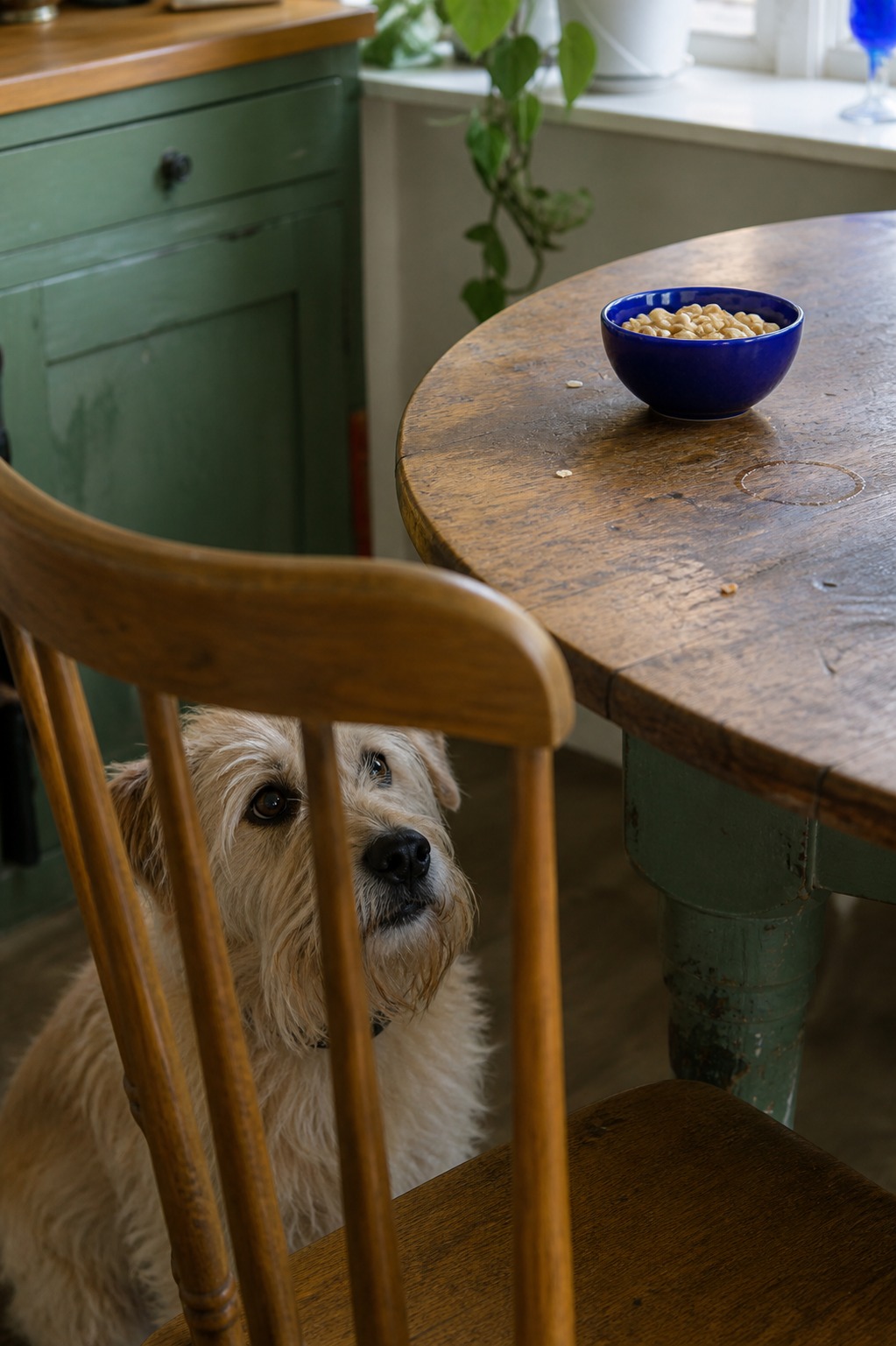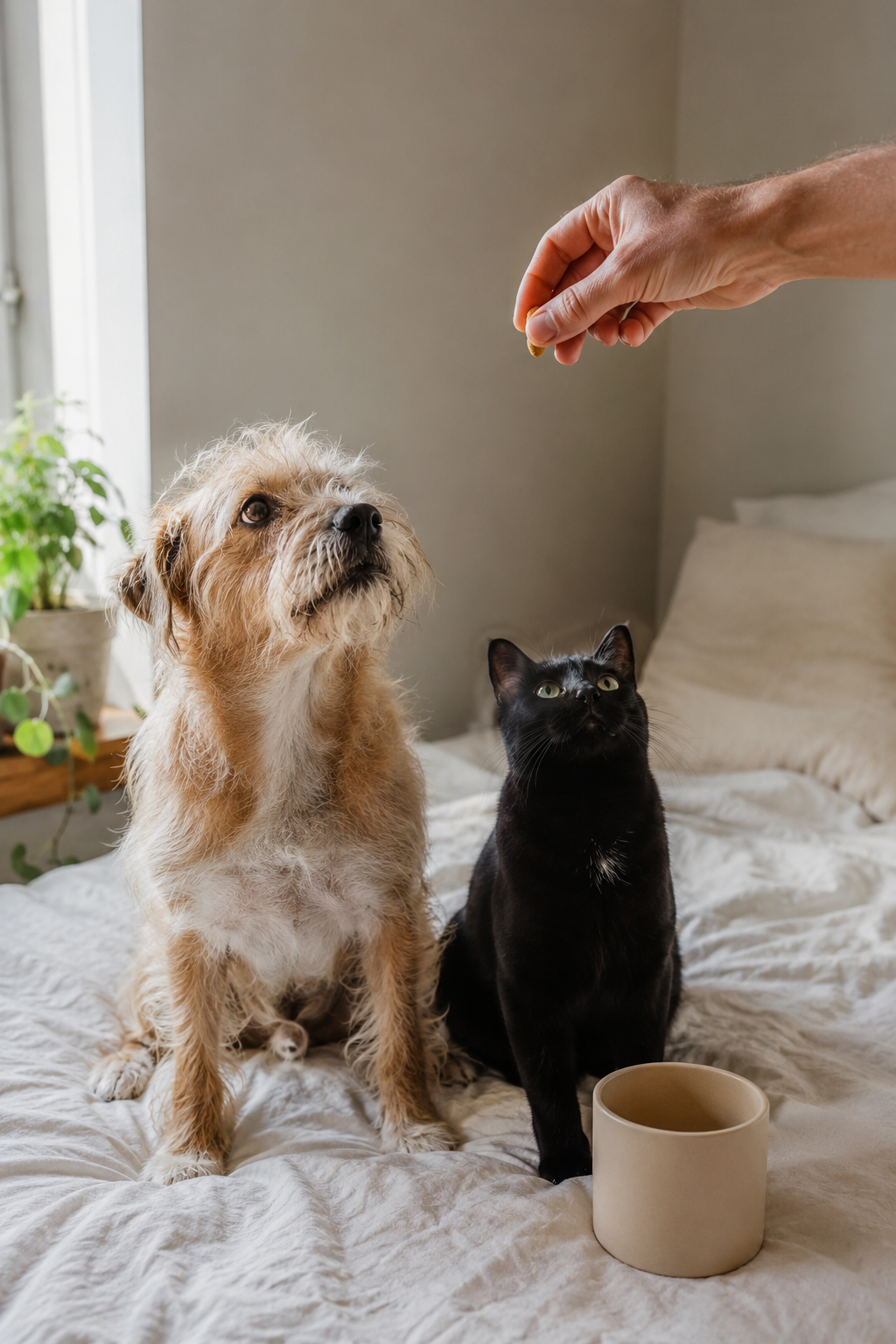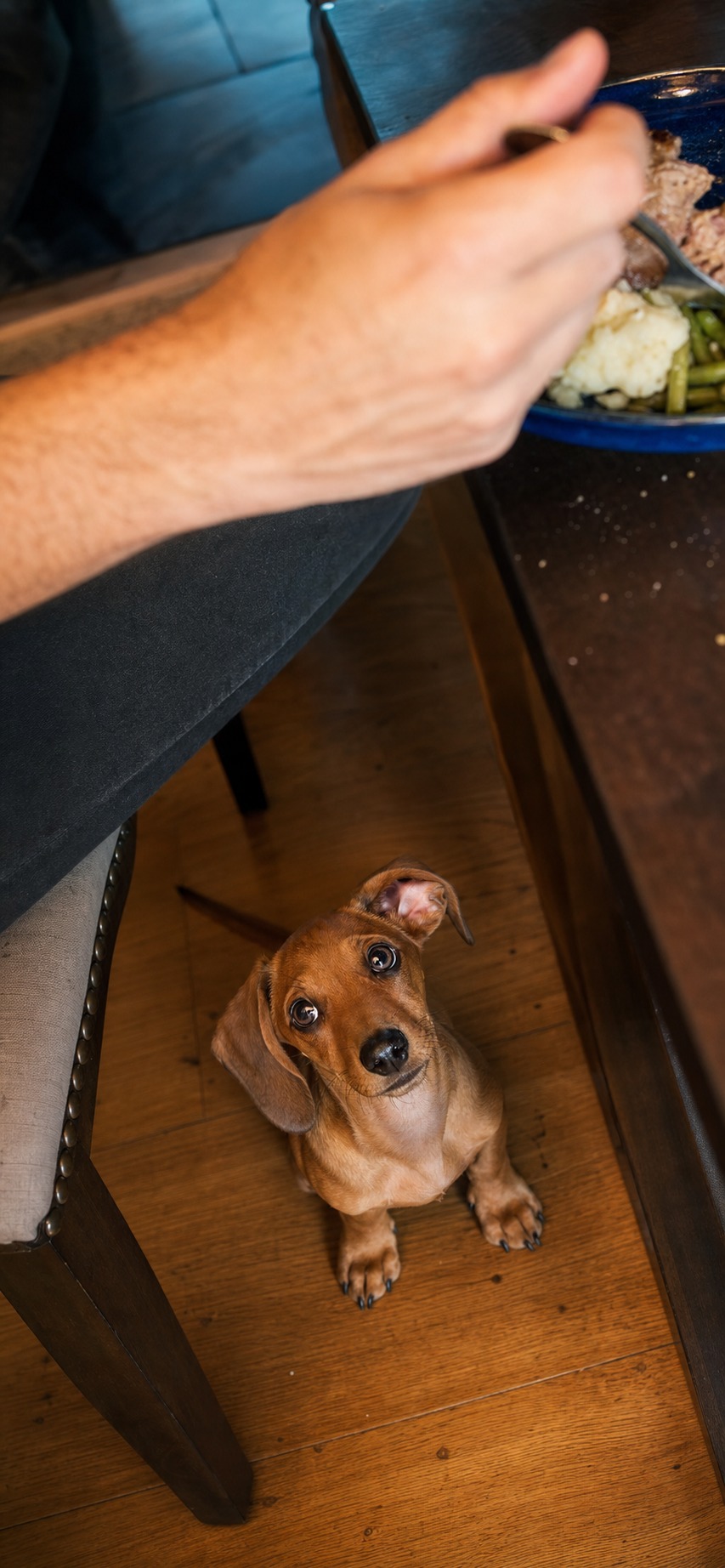
Here is a reassuring thing most puppy owners never quite believe: your puppy can safely eat a surprising amount of what is on your plate. The list of human foods that are fine in small amounts is genuinely long. Begging at the dinner table is not, by itself, a health emergency.
So if the safe list is the easy part, why does this topic cause so much anxiety? Because the two things that actually do damage are not on the obvious “toxic foods” poster. One is a math problem, and the other is a toxin that veterinary science only recently identified. Get those two right and the rest is mostly about portion sense.
First, why your puppy doesn’t need your food at all
A puppy’s diet has to cover six bases: protein, fat, carbohydrates, vitamins, minerals, and water. Set against what an adult dog needs, a growing puppy requires extra protein, extra fat, more calcium, and more DHA (an omega-3 fatty acid) to build a body correctly.
That list looks a little like an infant’s, but the resemblance is misleading. Human food and dog food are built differently. Your meals are made of parts, a protein here, a vegetable there, a grain on the side, because no single human food is complete on its own. A good puppy food is the opposite: everything the puppy needs, balanced, in one bowl. That is exactly why loading a puppy up with human food is risky in a way that has nothing to do with any single ingredient. If a puppy fills up on people food and skips their kibble, they miss the carefully balanced nutrition that bowl was designed to deliver.
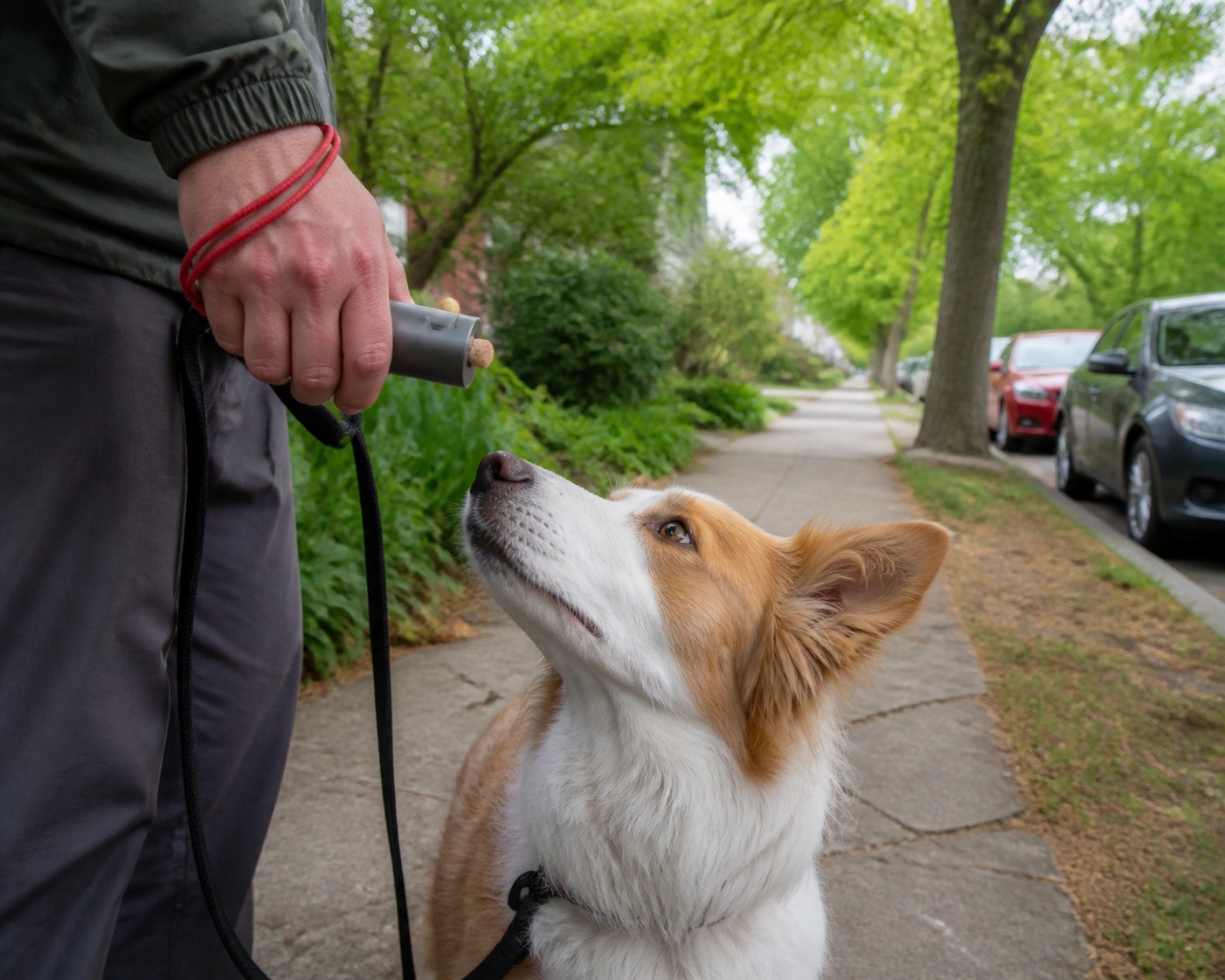
So treat human food as an occasional treat, mix-in, or training reward, not a food group. A useful rule of thumb: keep treats and extras under about 10 percent of daily calories, and let complete puppy food carry the other 90.
The safe list (in moderation, always plain)
With that framing, here is what is generally fine to share. Wash produce, remove pits, large seeds, rinds, and thick skins, cut everything into bite-sized pieces, and serve plain, no salt, sugar, oil, butter, or seasoning.
- Fruits (small amounts only, since fruit sugar adds up fast): apples, berries like raspberries, blueberries, and strawberries, banana, watermelon, honeydew, cantaloupe, pumpkin and squash, pears, peaches, plums, apricots, and unsweetened coconut.
- Vegetables (lower in sugar, still in moderation): carrots, sweet potato, green beans, peas, cucumber, spinach, plain popcorn, broccoli, and beets. Cooked veggies are usually easier for a puppy to digest than raw.
- Proteins (cooked plain, bones and excess fat removed): chicken, turkey, lean beef, lean pork, fish, eggs, and natural peanut butter, never the sugar-free kind, which can contain xylitol.
- Dairy (a little, if your puppy tolerates it): yogurt and cheese are lower in lactose than milk and can carry beneficial probiotics, but most dogs are somewhat lactose intolerant, so keep it to a bite every few days.
- Whole grains (cooked, plain, in small amounts): rice, plain oatmeal, and quinoa.
Any time you introduce a new food, watch for vomiting, diarrhea, stomach pain, or appetite loss, and for signs of a food allergy like itchy skin, recurring ear infections, or rashes. If a food causes a reaction, cross it off for good.
The absolute-no list
These are toxic or simply not worth the risk, even in small amounts: chocolate, grapes and raisins, onions and garlic (including powdered and dried), xylitol and other artificial sweeteners, avocado, cherries, citrus fruits, alcohol, anything with caffeine, macadamia nuts, raw eggs or meat, raw potatoes, ice cream, spicy foods, and cooked bones.
“Owners fixate on chocolate and forget about the grape that rolled under the table,” says Dr. Mara Chen. “For a small growing puppy, it’s the quiet ones, grapes, garlic powder in leftovers, a sugar-free gum in a bag on the floor, that send us the scariest cases.”
The two things people actually get wrong
Calcium and the growth math. This is the danger the safe-list posters miss. Puppies need more calcium than adults, but more is not better, and for large- and giant-breed puppies, too much calcium during growth is genuinely harmful. Excess calcium in a rapidly growing skeleton is linked to developmental orthopedic problems, the kind of bone and joint issues that follow a dog for life. This is why “just add some human food” is riskier for big-breed puppies than most people realize, and why a complete, appropriately formulated puppy food (and not a pile of supplements or dairy) should anchor the diet. If you have a large-breed puppy, this is a conversation to have with your vet specifically.
Grapes, and why the rules got stricter. For years, nobody knew why grapes and raisins poisoned dogs, only that they did, unpredictably. That mystery is now largely solved, which sharpens the warning rather than softening it.
What’s new since this was written
In 2021, veterinary toxicologists at the ASPCA’s Animal Poison Control Center published a finding in the Journal of the American Veterinary Medical Association identifying tartaric acid as the likely culprit behind grape and raisin toxicity in dogs. The clue came from an unexpected place: a dog poisoned by homemade play dough made with cream of tartar (potassium bitartrate) showed the same kind of kidney damage seen in grape poisonings.
Why this matters for a puppy owner: it means the danger is not limited to grapes and raisins. Tartaric acid also shows up in tamarind and in cream of tartar, and grapes themselves vary a lot in how much they contain, which is exactly why grape poisoning has always seemed so random. The practical rule is stricter than it used to be, treat grapes, raisins, and anything made with cream of tartar as off-limits, and do not try to guess a “safe” amount. When it comes to a growing puppy, the safe list is generous enough that you never need to gamble on the dangerous one.
References
- Wegenast CA, et al. “Unique sensitivity of dogs to tartaric acid and implications for toxicity of grapes.” Journal of the American Veterinary Medical Association, 2021. https://www.aspcapro.org/resource/toxic-component-grapes-and-raisins-identified
- Williams K, Downing R. “Feeding Growing Puppies.” VCA Animal Hospitals. https://vcahospitals.com/know-your-pet/feeding-growing-puppies
- Williams K, Downing R. “Adverse Reactions to Food in Dogs.” VCA Animal Hospitals. https://vcahospitals.com/know-your-pet/adverse-reactions-to-food-in-dogs
- WSAVA Global Nutrition Committee. “Feeding Large- and Giant-Breed Puppies.” https://wsava.org/global-guidelines/global-nutrition-guidelines/