


Steal the Popsicle's Best Idea for Your Dog, Skip Everything Else In It
A popsicle is a genuinely good delivery system for cooling and hydration on a hot day, and a genuinely bad one for everything a store version contains. Here's how to keep the format and build a better one.

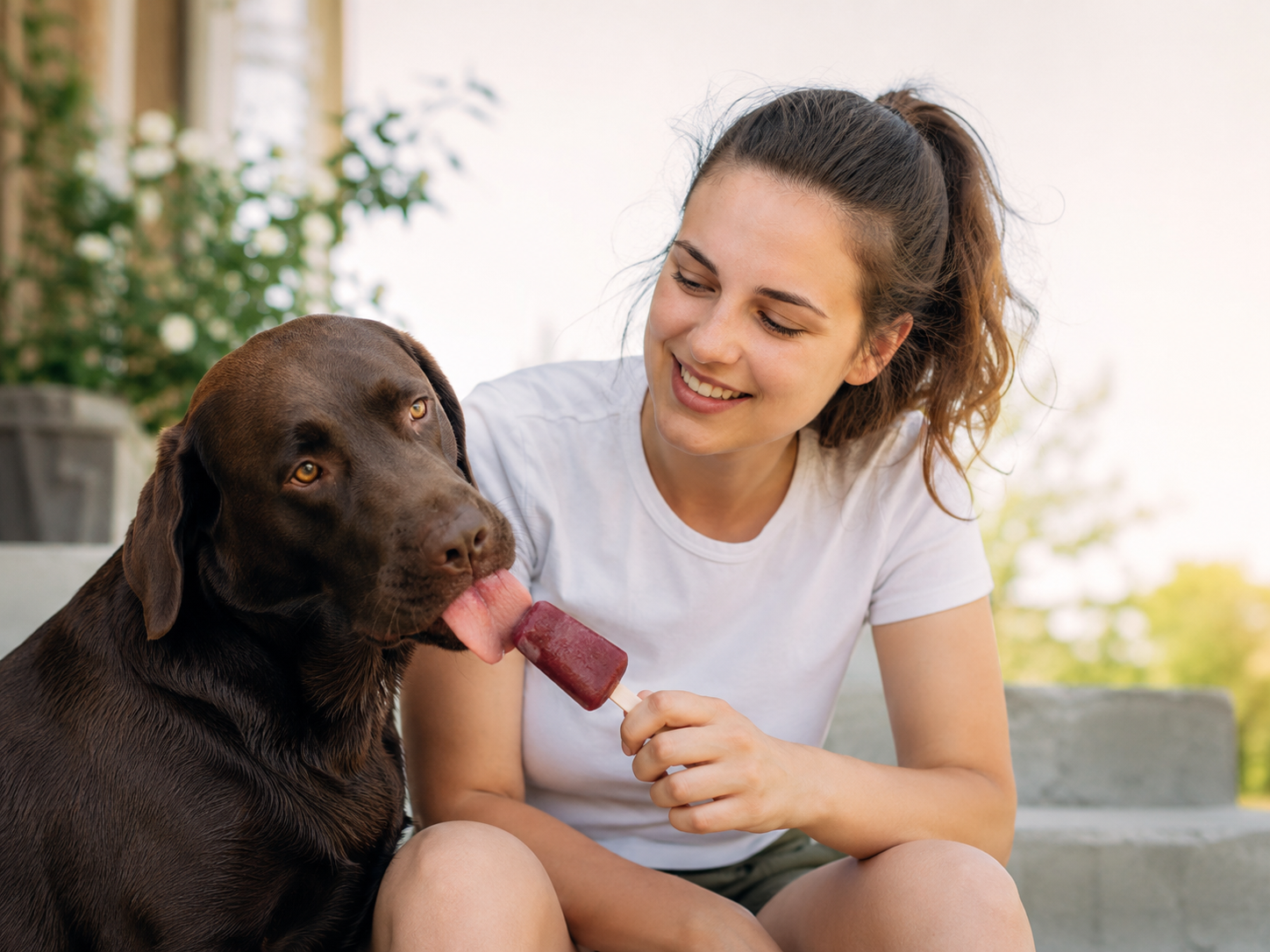
Here is the reframe that makes the popsicle question easy: a popsicle is not a food, it is a delivery system. It delivers cold and water in a form that is slow to finish and fun to work at, which on a hot day is genuinely useful for a dog. The problem is everything the manufacturer packs into that delivery system, the sugar, the dyes, and sometimes the outright toxins. So the smart move is not to ask whether your dog can have a store popsicle. It is to keep the format, which is the good idea, and throw out the contents, which are not. Once you see it that way, you are basically running a tiny hot-weather safety plan, with a treat attached.
Why the format is the good part
Two things a popsicle does are legitimately valuable when it is hot out.
Hydration. A popsicle is mostly water, so it is a sneaky way to get fluids into a dog who needs to drink more, whether because of the heat or a health reason. A dog will happily lick a cold treat long after they have wandered away from the water bowl.
Cooling and pacing. A frozen treat takes a while to finish, which means a stretch of the dog lying in the shade slowly working at something cold instead of tearing around in the sun. That pacing is the real benefit, and it matters most for the dogs most vulnerable to heat.
Who overheats fastest, and why it matters here
Cooling treats are not equally important for every dog, they matter most for the ones who struggle to shed heat. Keep a closer eye, and lean harder on cooling strategies, for flat-faced (brachycephalic) breeds like Bulldogs and Pugs, whose short airways make panting less effective; very young puppies and seniors, who regulate temperature poorly; and dogs with respiratory or heart issues. For these dogs especially, the plan is to limit outdoor time to short stretches during the coolest parts of the day, provide constant shade and cool fresh water, and watch for early heatstroke signs, heavy relentless panting, drooling, bright red gums, wobbliness, and lethargy. A frozen treat supports that plan. It does not replace it, and no popsicle will save a dog left too long in the heat.
The format of a popsicle is genuinely useful on a hot day. The contents almost never are. My advice is to keep the cooling-and-hydration idea and ditch the sugar by making something simple at home that you actually control, then treat it as one part of keeping your dog cool, not the whole strategy.
What’s wrong with the store version
Popsicles taste good because they are not health food. Most get their sweetness from added sugar or high-fructose corn syrup, which piles on empty calories that quietly add up over a summer and feed the obesity that drives diabetes and arthritis. Many also carry preservatives, stabilizers, and dyes, and some are dairy-based, which many lactose-intolerant dogs handle poorly.
The real red line, though, is hidden toxins. Some flavors include chocolate, grapes, or xylitol, any of which can seriously harm a dog. Because you cannot always tell from a lick, the safest rule is simply not to share human popsicles at all. And keep the stick out of reach even when you keep the popsicle to yourself, a chewed stick can splinter into the mouth or throat or lodge in the gut.
Build a better one
This is the part worth keeping. A dog-friendly frozen treat is almost effortless, and you control every ingredient. Freeze a dog-safe base plain, no sweeteners, in an ice-cube tray, a silicone mold, or stuffed inside a rubber chew toy for a longer project:
- Low-sodium broth (bone broth made for dogs, or plain unsalted stock) frozen into cubes.
- Low-fat plain yogurt, alone or with a few blueberries or a little mashed banana blended in.
- Xylitol-free peanut butter thinned with water and frozen inside a chew toy, always check that label for xylitol first.
- Plain pureed pumpkin or watermelon (seedless), frozen into small cubes.
Keep any of these under the 10 percent of daily calories all treats share, and serve them somewhere a melting, drippy mess is fine, outdoors or on a washable surface.
The store-bought dog popsicles
You will also find frozen treats made specifically for dogs, and those are safer than human popsicles because they use dog-appropriate ingredients. But “for dogs” does not automatically mean low-calorie, some are still high in fat and sugar, and dogs with dietary restrictions may need to skip them, so read the label and check with your vet if your dog has a condition. Used occasionally they are fine, they just add calories, so they count against the treat budget like anything else.
The bottom line
A popsicle’s best feature is its format, cold, watery, and slow to finish, which genuinely helps a dog on a hot day. Its worst features are its contents, the sugar and the occasional xylitol, chocolate, or grape. Keep the first and skip the second by freezing a plain dog-safe base at home, keep the stick away, fold it into the 10 percent treat budget, and remember it is one tool in a hot-weather plan built mostly on shade, water, and timing, not a substitute for any of them.
References
- American Veterinary Medical Association. “Warm Weather Pet Safety.” https://www.avma.org/resources-tools/pet-owners/petcare/warm-weather-pet-safety.
- U.S. Food and Drug Administration. “Paws Off Xylitol; It’s Dangerous for Dogs.” https://www.fda.gov/consumers/consumer-updates/paws-xylitol-its-dangerous-dogs.
- Hall, E. J., et al. “Incidence and Risk Factors for Heat-Related Illness (Heatstroke) in UK Dogs Under Primary Veterinary Care.” Scientific Reports. https://www.nature.com/articles/s41598-020-66015-8.
- Association for Pet Obesity Prevention. “Pet Obesity Statistics.” https://www.petobesityprevention.org/.
Common questions
What's the danger with the popsicle stick?
A chewed stick can splinter and injure the mouth or throat, and swallowed pieces can cause an intestinal blockage. Keep the stick out of reach even if you keep the popsicle to yourself.
How do I make a frozen treat my dog can actually have?
Freeze a dog-safe liquid or puree, low-sodium broth, low-fat plain yogurt, or a little peanut butter (xylitol-free), plain in an ice tray, a silicone mold, or stuffed inside a chew toy. Serve somewhere you don't mind a drippy mess.
Are frozen treats good for cooling a dog down?
They help as one piece of a cooling plan, not a fix on their own. The essentials are shade, constant cool water, and limiting outdoor time during the hottest hours, especially for flat-faced breeds, puppies, and seniors.
Not a substitute for your vet. Our guidance is educational. For urgent symptoms, contact a vet or emergency clinic right away. Editorial standards
Dr. Park is a board-certified emergency and critical care specialist. She reviews our health and safety content for clinical accuracy and contributes guides on recognising urgent conditions. Her focus is helping owners act quickly and correctly when it matters most.
Meet our experts ↗Keep reading
 FoodKale Is a 'Superfood.' For Dogs, It Comes With a Catch.Dr. Priya Nair · 5 min
 FoodA Marshmallow Is Harmless for Dogs, Until One Word Is on the BagDr. Mara Chen · 5 min
 FoodKiwi Is Safe for Dogs. The Skin Is the Part to WatchDr. Mara Chen · 4 min
 FoodYour Dog Can Have the Potato. It's the Fry That's the ProblemDr. Amara Solis · 5 min
 FoodWatermelon Is a Great Dog Treat. Two Parts Are NotDr. Priya Nair · 5 min
 FoodA Cherry Is Two Different Hazards. Know Which One You're FacingDr. Amara Solis · 8 min