


Your Cat's Plate-Begging Isn't Always Wrong. 8 Foods You Can Share.
A short, protein-first list of people foods that are genuinely fine for cats, the hard no's that never are, and the 10 percent rule that keeps 'a little bite' from becoming a problem.

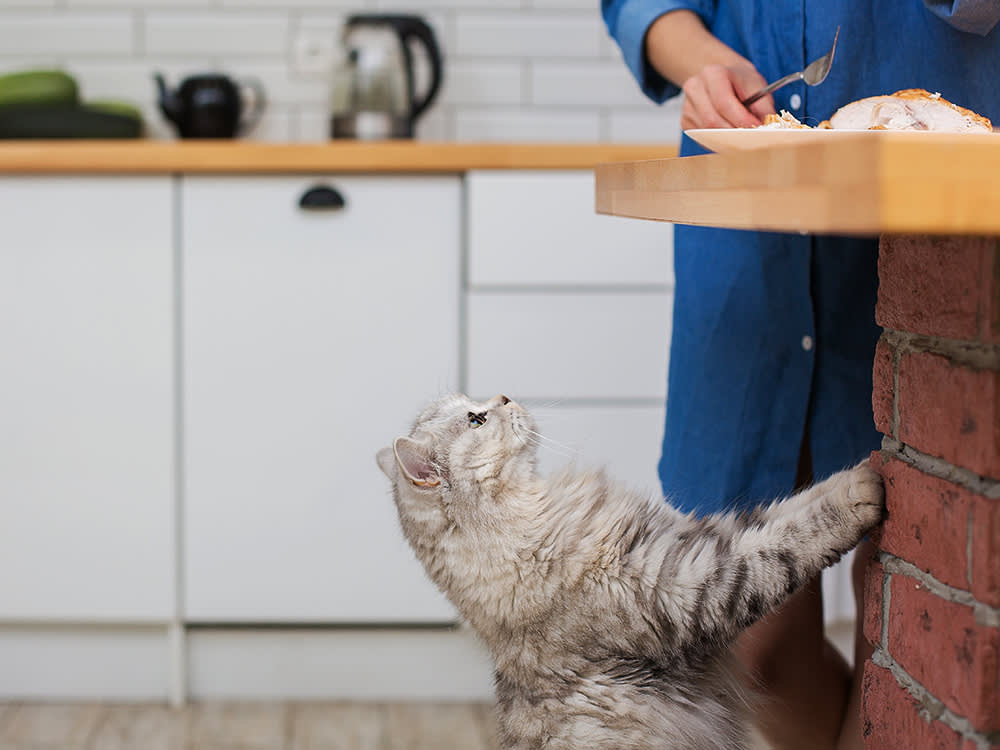
Let’s be honest about what happens at dinner. Your cat materializes at your elbow, fixes you with a stare, and you cave and share a bite. The guilt that follows is mostly unnecessary. A handful of everyday foods are genuinely safe to hand over, and your cat’s interest in your plate is not a character flaw to be scolded out of them.
But “some foods are fine” is not the same as “the plate is a buffet.” Cats are obligate carnivores with narrow nutritional needs and a short list of foods that can seriously hurt them. So the useful version of this is not a giant list of everything technically edible. It is a tight, protein-first set of foods worth sharing, paired with the two rules that keep sharing safe.
The question I get is always ‘can my cat have a bite of this,’ and my answer is usually yes, with two guardrails. Keep the extras under about a tenth of their daily calories, and memorize the true poisons, because those are the ones where ‘a little’ still matters. Do that and sharing is a joy, not a risk.
8 people foods that are genuinely fine to share
The theme here is deliberate. Cats thrive on animal protein, so the strongest picks are lean, plain, cooked meats and fish, with a few low-calorie plants that earn their spot. Everything below should be served plain, with no seasoning, salt, oil, garlic, or onion, and cut small to avoid choking.
1. Chicken. As obligate carnivores, cats need real animal protein, and chicken is a natural fit. Offer small amounts of cooked, boneless, unseasoned chicken breast. Skip deli chicken, which is loaded with sodium, and too much salt can trigger thirst, vomiting, diarrhea, and in extreme cases seizures.
2. Turkey. Turkey is another lean, protein-rich meat cats handle well, much the way they do chicken. Keep it boneless, cooked, and free of seasoning, and steer clear of deli turkey for the same salt reason.
3. Salmon. There is a reason salmon headlines so many commercial cat foods: it is rich in protein and omega-3 fatty acids. Serve it fresh and fully cooked. The canned, smoked, and cured versions tend to be salt bombs that can cause problems.
4. Sardines. Few foods pack more omega-3s than sardines, and they also deliver vitamin D and vitamin B-12, plus DHA that supports learning and coordination, which makes them especially nice for senior cats. Drain off any added oil, sauce, or brine first.
5. Fish oil. A little fish oil can boost skin and coat health thanks to those same omega-3s found in cold-water fish. Too much causes stomach upset, though, so ask your vet for the right dose rather than eyeballing it.
6. Pumpkin. Plain canned pumpkin is a genuinely useful pantry item for cats. It is a good source of soluble and insoluble fiber, and vets often suggest it for constipation. Stick with plain, cooked, canned pumpkin, not the spiced pie filling.
7. Green beans. Light on calories, generous with fiber, and carrying a touch more protein than most veggies, green beans make a solid snack. Raw or cooked is fine as long as nothing is added, and swapping them in for richer treats can even help an overweight cat trim down.
8. Broccoli. Broccoli brings antioxidants and digestive-friendly fiber. Raw is safe but can be tough to chew, so a quick steam makes it easier. Serve it plain, no cheese sauce, however tempting.
Notice what did not make the cut. Fruits like cantaloupe are safe in tiny amounts, and cats can nibble carrots, but for an obligate carnivore these are low-value novelties, not foods worth building a habit around. When you are choosing what to share, protein earns the spot.
Whatever you offer, keep portions tiny. Even the healthy picks are extras, not substitutes for a food formulated to balance everything your cat needs, and anything new in quantity can upset a stomach that is not used to it.
The foods that are never worth the risk
Some human foods belong nowhere near a cat’s bowl, and unlike the salt-and-portion cautions above, these are hard lines.
Outright toxins. Never give a cat chocolate. Garlic is severely toxic and can be fatal. Grapes and raisins can cause kidney failure. When in doubt about any food, confirm it is safe before you share, and check with your vet before making any real change to your cat’s diet.
High-fat and spicy foods. Rich, fatty foods like avocado are not always toxic, but they can bring on an upset stomach, gastritis, or pancreatitis, and over time they feed feline obesity, which drags a whole list of other health risks along with it. Spicy foods cause gastrointestinal upset, mouth and eye irritation, and a runny nose, and many contain capsaicin, which can lead to swelling, stomach trouble, and labored breathing.
Sweets and processed snacks. Sugar drives the same weight gain that fat does, and a high-sugar diet can push a cat toward diabetes. Keep the cookies and chips to yourself.
Alcohol and caffeine. Alcohol of every kind is extremely toxic to cats; as little as a teaspoon can cause serious harm, with symptoms from nausea to seizures to paralysis. Caffeine is nearly as dangerous, spiking heart rate and, at higher doses, causing arrhythmias, high blood pressure, tremors, vomiting, and seizures. Both belong far out of paw’s reach.
What newer guidance adds
The advice that has hardened in recent years is less about which single foods are safe and more about how much and how often. Veterinary nutrition groups now lean hard on the 10 percent rule, that treats and table extras should stay under a tenth of daily calories, precisely because the biggest diet problem most house cats face is not a toxic bite, it is slow, quiet weight gain. Keeping a cat at a healthy weight across their life is one of the highest-return things you can do for them, and it starts at the dinner table, with small portions and an honest eye on the scale.
Share the good stuff, skip the poisons, keep it small. Your begging cat is not wrong. They just need you to be the one who knows the list.
References
Common questions
How much human food can a cat have?
Treats and extras should make up no more than about 10 percent of your cat's daily calories. The rest should come from a complete, balanced cat food, because people food is a bonus, not a meal replacement.
What human foods are toxic to cats?
Never give a cat chocolate, garlic, onion, grapes, or raisins, and keep alcohol and caffeine completely away. Also skip high-fat foods like avocado, spicy foods, and sugary or heavily processed snacks.
Not a substitute for your vet. Our guidance is educational. For urgent symptoms, contact a vet or emergency clinic right away. Editorial standards
Dr. Chen is a small-animal veterinarian who leads health and safety coverage at The Pet Times. She writes and reviews the bulk of our illness, condition, and safety content, translating clinical guidance into clear, practical advice owners can act on at home.
Meet our experts ↗Keep reading
 FoodPumpkin Is the Rare 'Human Food' Your Cat Might Actually NeedDr. Lena Park · 5 min
 FoodCats Can Eat Eggs. Just Never Raw.Dr. Mara Chen · 4 min
 FoodRaspberries Are Safe for Your Cat. Your Cat Just Doesn't Care.Dr. Priya Nair · 5 min
 FoodRice and Cats: Safe to Share, but Not for the Reason You ThinkDr. Ravi Mehta · 7 min
 FoodThe Real Question About Cats and Cheese Isn't Whether, It's WhichDr. Mara Chen · 6 min
 FoodThe Real Problem With Feeding Your Cat Ham Isn't Toxicity. It's MathDr. Ravi Mehta · 4 min