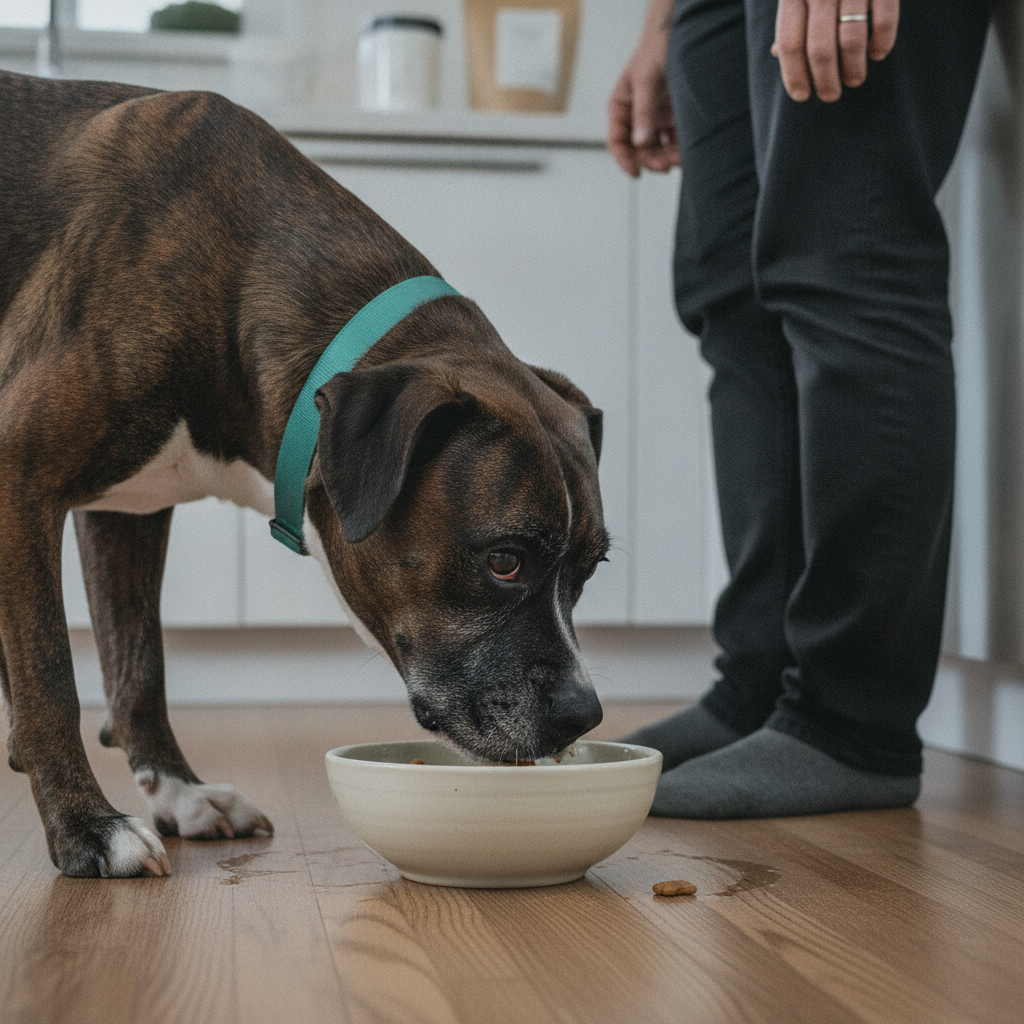
Most warnings about peanut butter and dogs get the danger backwards. The peanut butter is almost never the problem. A spoonful of the plain stuff is one of the safest, most useful treats in your kitchen. The problem is the jar you grabbed, and whether anyone read the label on the back of it.
That is the whole reason this recipe insists on one specific kind of peanut butter, and it is worth understanding before you make a single bite.
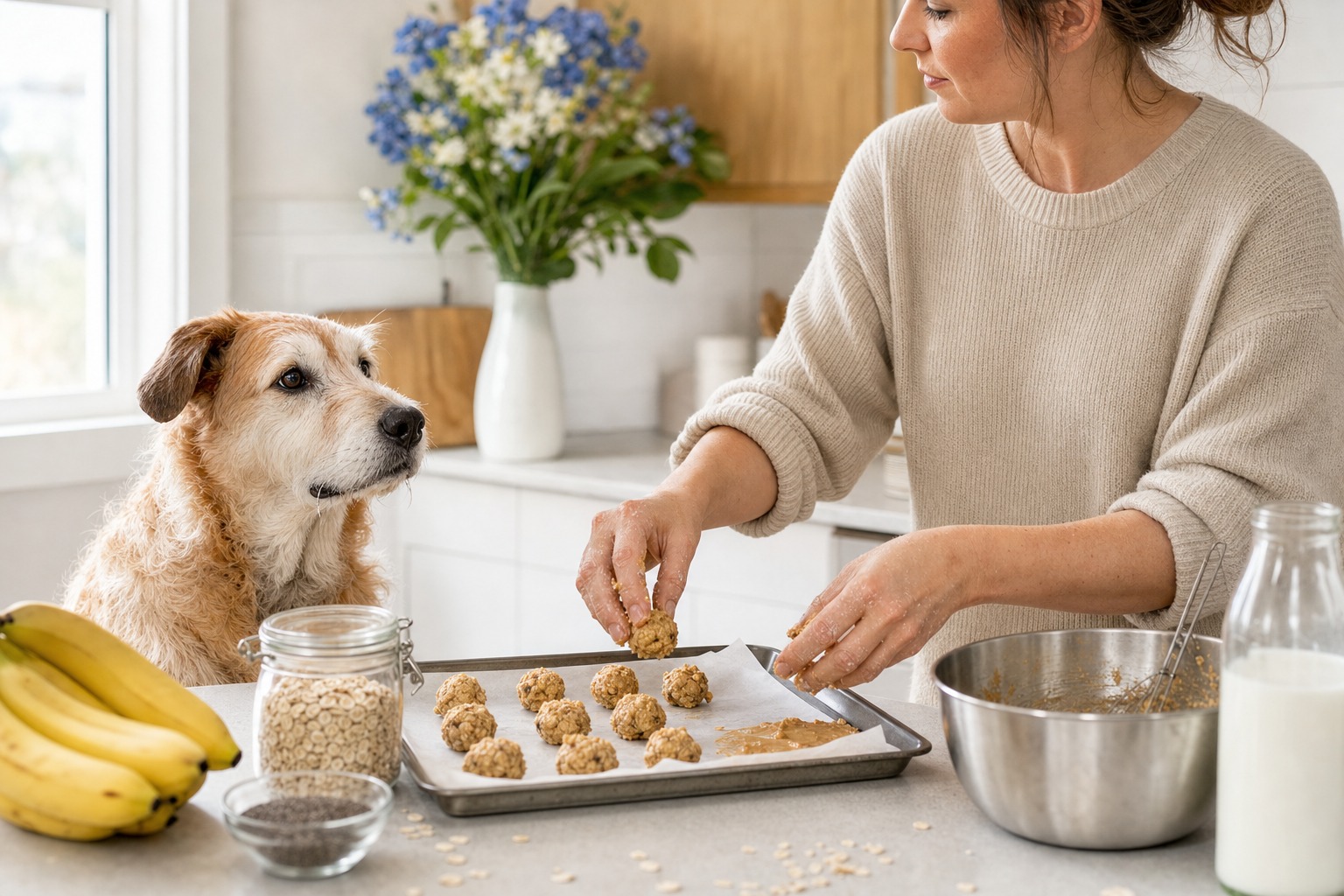
These are no-bake peanut butter and chia energy bites, a recipe from chef Caroline Artiss, and they are genuinely good: a five-ingredient, fridge-set snack that doubles as a training reward or a post-walk pick-me-up. You do not need to turn on the oven, though you can if you want a crunchier version. But the reason I want you to make them is that a homemade treat is a treat where you control every ingredient. And with peanut butter, control is everything.
The one ingredient that turns a safe treat deadly
Xylitol is a sugar substitute that shows up in some “no sugar added” and “natural” peanut butters, sugar-free gum, and diet baked goods. On labels it is sometimes listed as birch sugar. In people it is harmless. In dogs it triggers a rapid, dangerous drop in blood sugar and, at higher doses, liver failure. It does not take much. A dog does not need to eat a whole jar to get into trouble.
“People assume a peanut butter recipe is automatically dog-safe, and most of the time it is,” says Dr. Priya Nair. “The failure I see is at the grocery store, not the mixing bowl. One ‘lighter’ jar with xylitol in it, and a loving homemade treat becomes an emergency. Read the ingredient list every single time, because brands reformulate without telling you.”
So before anything else: pick a peanut butter whose only ingredients are peanuts, or peanuts and salt at most. Unsalted, unsweetened, and xylitol-free. If the label mentions xylitol or birch sugar, put it back.
Why peanut butter and chia earn their spot
Once you have the right jar, this is a nutrient-dense little snack rather than empty calories. Peanut butter brings protein and healthy fats that support energy and coat condition, along with iron, calcium, and vitamins E and K. Chia seeds are the quiet workhorse here: a tablespoon adds omega-3 fatty acids, fiber, and antioxidants that support skin, coat, and digestion. Rolled oats give slow-releasing energy and more fiber, and a mashed banana adds natural sweetness plus potassium. The optional teaspoon of turmeric brings mild anti-inflammatory and antioxidant properties, which is a nice touch for older or stiff dogs.
None of that makes these a meal. It makes them a treat you can feel good about handing over.
The recipe
Ingredients
- ½ cup natural peanut butter (unsalted, unsweetened, xylitol-free)
- 1.5 cups rolled oats
- 1 tablespoon chia seeds
- 1 ripe banana, mashed
- 1 teaspoon turmeric (optional)
Directions
- In a large bowl, mash the banana, then blend it with the peanut butter until smooth.
- Fold in the oats, chia seeds, and turmeric if using, mixing until the dough turns thick and sticky.
- Roll the dough into bite-sized balls or press into small rounds. Wet your hands with water if it starts sticking.
- No-bake: spread them across a parchment-lined tray, then chill in the fridge for one to two hours until set. Baked: warm the oven to 350°F (175°C) and give them 12 to 15 minutes for a firmer, crunchier treat.
- Let them cool completely before serving or storing.
How many is too many? The math nobody does
This is the part most treat recipes skip, and it is the part that actually keeps your dog healthy. Treats of any kind should make up no more than roughly 10 percent of your dog’s daily calories. The other 90 percent needs to come from complete, balanced food.
In practice, that means a 15-pound dog gets about one small bite, a 40-pound dog two, and a big 70-pound dog three or four. If you have a treat-motivated dog and you are training, make the bites smaller rather than feeding more of them. A pea-sized reward lands just as happily as a golf-ball-sized one.
Store the bites in an airtight container in the fridge for up to a week, or freeze them for a couple of months. The no-bake version is softer and best kept cold, while the baked version travels better in a pocket.
A note on portions for round little dogs
If your dog is already carrying extra weight, count these bites as part of the day’s food and trim their dinner slightly, rather than adding the calories on top. Extra pounds are the single most common preventable health problem I see, and treats are usually where they sneak in. Homemade does not mean unlimited.
What newer research adds
Chia has ridden a wave of “superfood” marketing, and it is worth being clear-eyed about what it actually does for a dog. The omega-3 in chia is ALA, a plant form that dogs convert to the active EPA and DHA fats only inefficiently. That does not make chia useless. Its fiber and antioxidants are real, and a tablespoon spread across a batch is a sensible amount. But if your goal is genuine skin, coat, and joint support from omega-3s, a fish-based source delivers the active fats more directly. Think of the chia here as a healthy bonus, not the main event.
The bigger, steadier finding in canine nutrition is unglamorous: portion discipline beats almost every trendy add-in. A dog kept at a lean body weight simply lives better and often longer. The best thing about a homemade treat is not any single ingredient. It is that you decide how big it is and how often it appears.