


Forget the Toxic Flavors. Plain Vanilla Is Already a Problem for Your Dog
Most warnings about dogs and ice cream focus on chocolate and raisins. But the bigger issue is the base itself: by their first birthday, most dogs can't digest dairy. Here's what that means, and the cold treats that actually work.

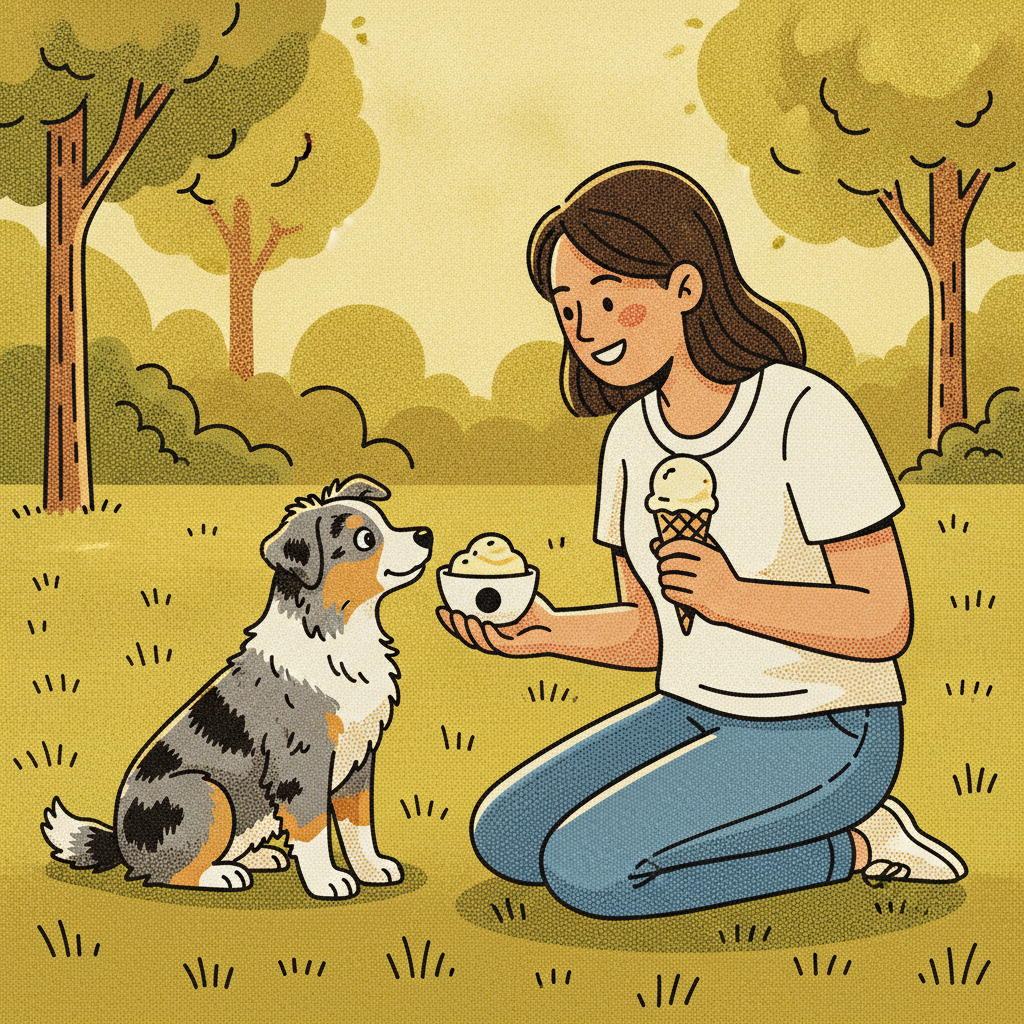
Almost every “can dogs eat ice cream” warning leads with the scary flavors: no chocolate, no raisins, no macadamia. That advice is correct, and it also lets plain vanilla off the hook far too easily. The truth is that the most basic scoop in the case, the one with nothing toxic in it at all, is already a poor fit for most dogs, and for a reason that has nothing to do with mix-ins.
The reason is dairy, and a bit of developmental biology most owners never hear.
The problem starts with a disappearing enzyme
Puppies drink their mother’s milk, so they are born making lots of lactase, the gut enzyme that breaks down lactose, the sugar in milk. Here is the part that surprises people: that ability is designed to switch off. Within weeks of a puppy starting solid food, lactase production drops steeply, on the order of 60 to 80 percent, and by roughly a year of age the majority of dogs, by some estimates around 70 percent, no longer make enough lactase to handle dairy comfortably.
When an adult dog eats ice cream, the undigested lactose sits in the gut, pulls in water, and ferments. That is the machinery behind the classic aftermath: gas, bloating, cramping, and diarrhea, typically 30 minutes to two hours later.
Owners are always braced for the dramatic poisonings, the chocolate and the xylitol, and those are real. But the thing that actually ruins most dogs’ evening after ice cream is much more mundane. It’s a dog whose body stopped making the milk-digesting enzyme a year into life being handed a bowl of concentrated milk sugar. Plain vanilla is enough to do it.
This is worth separating clearly from an allergy. Lactose intolerance is a digestive shortfall, not an immune reaction. It rarely turns dangerous, but it is genuinely uncomfortable, and it is the rule, not the exception, in adult dogs.
Then there’s everything else in the bowl
Even set the dairy aside, and a scoop of ice cream stacks up poorly for a dog.
- Fat. Ice cream is deliberately high in fat, which is what keeps it creamy instead of icy. High-fat foods upset many dogs’ stomachs and, in susceptible dogs, can trigger pancreatitis, a painful and sometimes serious inflammation of the pancreas. Fat is also calorie-dense, so a “little treat” is a lot of calories.
- Sugar. A regular sugar load adds nothing a dog needs and piles on calories, feeding the weight problems (and downstream diabetes and arthritis risk) that already affect a majority of pet dogs.
- The genuinely toxic mix-ins. This is where it crosses from unhealthy to dangerous. Chocolate, raisins, and macadamia nuts are all toxic to dogs. Coffee and espresso flavors bring caffeine. And any “sugar-free” or “no sugar added” product may contain xylitol, which is a hard stop: in dogs it triggers a rapid, dangerous drop in blood sugar at doses as low as about 0.1 gram per kilogram of body weight, with liver injury a risk at higher doses. Xylitol increasingly hides under the name “birch sugar” on labels, so it is easy to miss.
”Non-dairy” isn’t the loophole it sounds like
Swapping to a plant-based pint solves exactly one of these problems. Non-dairy ice cream drops the milk, but it rebuilds that creamy richness with other high-fat ingredients: coconut cream, cashew or almond bases, added cocoa butter. So the fat-related risks, stomach upset and pancreatitis, carry right over. And the same toxic mix-ins, chocolate, nuts, coffee, xylitol, still show up depending on flavor. A vegan chocolate pint is not safer for a dog; it may be worse.
Dog “ice cream”: better, still not health food
Frozen treats formulated for dogs are a real step up, because reputable ones leave out the toxic ingredients like chocolate. That removes the poisoning risk. What they usually keep is fat and sugar, sometimes plenty, to hit that appealing texture. So the honest verdict is: fine as a genuine once-in-a-while treat, not something to keep in the freezer as a nightly ritual.
If you do offer it, save it for an actual occasion, a birthday or an adoption anniversary, keep the portion small, and skip it entirely for any dog with a history of pancreatitis, diabetes, or another ongoing condition without your vet’s okay.
What dogs are actually after (and how to give it to them)
Here is the reframe that makes this easy: your dog is not craving ice cream. Your dog is craving cold and creamy and a little sweet. You can deliver all three without the dairy-and-sugar baggage.
“The cold and the creaminess are the whole appeal, not the ice cream itself,” Dr. Chen says. “A few frozen blueberries, plain unsweetened yogurt frozen into cubes, or a bit of frozen banana scratches the same itch and skips the fat and lactose.”
A few reliable swaps:
- Frozen blueberries straight from the freezer, a low-calorie, antioxidant-rich chew.
- Plain unsweetened yogurt, frozen into an ice tray. Yogurt’s live cultures pre-digest some of the lactose, so many dogs handle it better than ice cream, though sensitive dogs may still want to skip it.
- Frozen banana chunks, or banana mashed and frozen in a stuffable toy for a longer project.
- A “pupsicle” of dog-safe ingredients frozen in a mold, blended banana and a spoon of plain yogurt with a little water works well.
- A frozen stuffed toy, packed with a smear of plain yogurt or a bit of wet dog food, for a licking session that lasts.
Always confirm any peanut butter or “sugar-free” ingredient is xylitol-free before it goes in.
The bottom line
The usual advice, avoid the toxic flavors, is not wrong. It is just aimed at the smaller problem. The larger one is that most adult dogs simply cannot digest dairy well, so even a plain scoop tends to cause a rough couple of hours with nothing to show for it. There is no nutritional case for dog ice cream and an easy set of cold treats that dogs love just as much. Keep the scoop for yourself.
References
- “People Foods to Avoid Feeding Your Pets.” ASPCA Animal Poison Control. https://www.aspca.org/pet-care/animal-poison-control/people-foods-avoid-feeding-your-pets
- “Xylitol Toxicosis in Dogs.” Merck Veterinary Manual. https://www.merckvetmanual.com/toxicology/food-hazards/xylitol-toxicosis-in-dogs
- “Xylitol Poisoning in Dogs.” VCA Animal Hospitals. https://vcahospitals.com/know-your-pet/xylitol-toxicity-in-dogs
- “Pancreatitis in Dogs.” American College of Veterinary Internal Medicine. https://www.acvim.org/Animal-Owners/Animal-Education/Fact-Sheets/Small-Animal-Internal-Medicine/Pancreatitis-in-Dogs
Common questions
Why is dairy a problem for dogs when puppies drink milk?
Puppies make plenty of lactase, the enzyme that digests milk sugar, because they need it to nurse. After weaning, lactase production drops sharply, and by about a year most dogs no longer make enough to handle dairy comfortably. It's the same reason many adult humans become lactose intolerant.
Which ice cream ingredients are actually toxic to dogs?
Chocolate, raisins, and macadamia nuts are the serious ones, and coffee or espresso flavors add caffeine. Any product sweetened with xylitol (sometimes labeled 'birch sugar') is a medical emergency for dogs. These go beyond a stomachache into genuine poisoning.
What's a safe cold treat instead?
Frozen blueberries, a lick of plain unsweetened yogurt (which many dogs tolerate better than ice cream) frozen into cubes, or a bit of frozen banana all deliver the cold and the sweetness without the dairy and sugar load. Dog-specific 'ice creams' exist too, but they're still a treat, not health food.
Not a substitute for your vet. Our guidance is educational. For urgent symptoms, contact a vet or emergency clinic right away. Editorial standards
Dr. Chen is a small-animal veterinarian who leads health and safety coverage at The Pet Times. She writes and reviews the bulk of our illness, condition, and safety content, translating clinical guidance into clear, practical advice owners can act on at home.
Meet our experts ↗Keep reading
 FoodThe Potato Is Innocent. It's the Garnish That Hurts Your DogDr. Mara Chen · 6 min
 FoodHam Is One of the Saltiest Things You Can Feed a DogDr. Lena Park · 5 min
 FoodSalmon Is Great for Your Dog. Raw Salmon Can Kill Them.Dr. Ravi Mehta · 7 min
 Food"Dogs Are Basically Wolves" Is How Raw Chicken Gets Fed. Here's the Catch.Dr. Lena Park · 7 min
 FoodThe Olive Is Fine for Your Dog. The Brine Is the ProblemDr. Lena Park · 5 min
 FoodYour Dog Ate Grapes and Was Fine. That's the TrapDr. Lena Park · 5 min