


Take a Kitten Home Too Early and You'll Pay for It for 15 Years
Almost every piece of folk wisdom about kittens is wrong in the same direction: it tells you they need less than they do. Nine myths, and the specific adult cat each one produces.

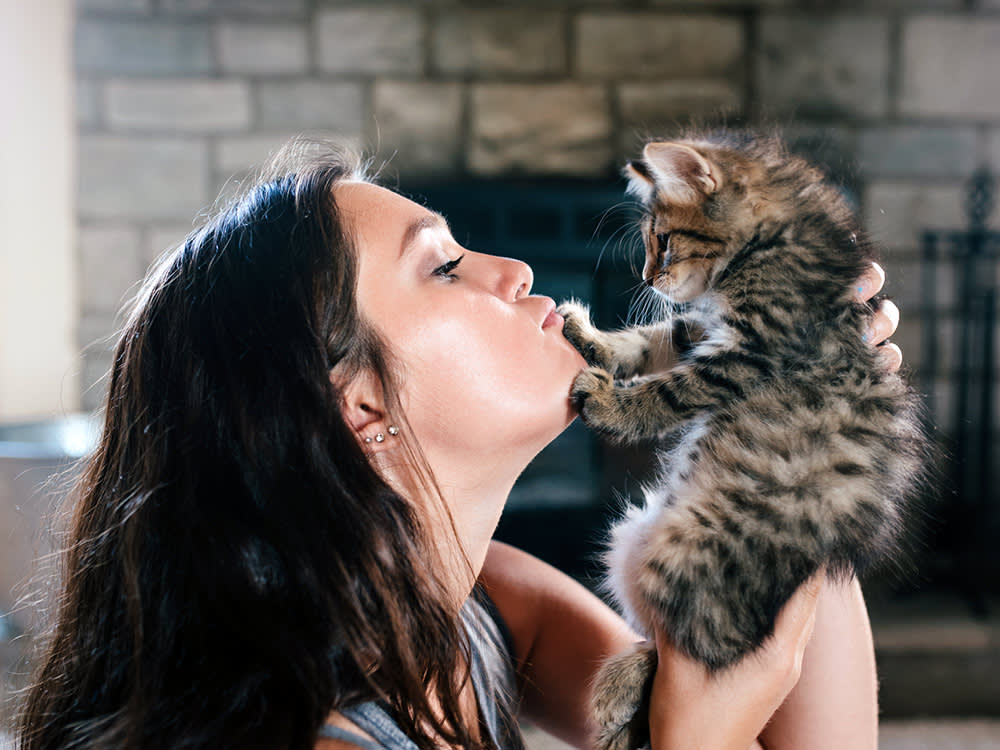
Every myth about kittens tells the same lie, and it is always the lie of less. Less time with their mother. Less training. Less socializing. Less of your attention. Kittens, the folklore says, are the easy pet: they raise themselves, they entertain themselves, and they will be fine.
They will not be fine. They will be an adult cat, for fifteen years, carrying whatever you did or did not do in a window that closes faster than almost anyone realizes.
Here is what each myth actually costs.
Myth 1: Get them as young as possible so they bond to you
This is the most damaging one on the list, and it is the one people believe most sincerely, because it sounds like love.
A kitten pulled from the litter before eight weeks has missed a curriculum that only a mother cat and a pile of siblings can deliver: the rules of play, the grammar of social contact, self-grooming, and, crucially, how hard is too hard. Staying to ten or twelve weeks is better still.
The bill arrives later, and it is specific. Cats who left too early carry a higher risk of fearfulness, poor stress tolerance, and rough play, and they are quicker to use teeth and claws on humans, strangers most of all. The list continues: eliminating outside the box, chronic yowling, sucking on blankets and fabric, and aggression.
Every one of those is an adult-cat problem that started as a well-meant early adoption.
And the premise is wrong anyway. A kitten who comes home at two or three months old is still extremely young and will bond to you deeply and completely. You gain nothing by taking them at five weeks. You just take a cat who never learned to be a cat.
Myth 2: Kittens are nocturnal, so nobody’s sleeping
Thankfully, no. If it were true, your schedules would be permanently at war.
Kittens, like adult cats, are crepuscular: their natural peaks are at dawn and dusk. Total sleep runs somewhere around 18 to 20 hours out of every 24, but, as the phrase “cat nap” implies, it comes in short instalments. They drop off and wake again all day and all night.
That tendency toward nighttime activity is real, and it is also completely modifiable, particularly as they mature. The plan:
- Load the day with play and activity, so they are not banking energy for 3 a.m.
- Have a big play session right before bed, and let them win at the end of it.
- Feed a meal late at night. Digestion helps them settle. Take that meal out of their daily ration rather than adding it on top.
- Do not reward nighttime pestering. If getting on your face at 4 a.m. produces attention, or produces breakfast, you have just trained the habit you are trying to break. It has to reliably not work.
Myth 3: Kittens can’t be trained
They can, they should, and this myth persists on nothing more than the fact that they are not puppies.
Cats of every age are trainable, and kittens are the easiest of all. Things worth teaching now: sitting on cue, going calmly into a carrier, using the litter box, going to a mat or spot on cue, playing with toys instead of your hands, responding to their name, coming when called, and fetch, which a startling number of cats will do enthusiastically if anyone bothers to ask.
The carrier one alone will save you a decade of misery. A cat who thinks the carrier is a den is a cat you can take to the vet.
Myth 4: Kittens can’t get along with dogs
They can. But the introduction has to be done properly, because you get one shot at it.
The usual failure is putting them in a room together and hoping. Even a sweet dog who loves cats may chase, and one chase is enough to teach a kitten that dogs are terrifying and untrustworthy. That lesson is very hard to unteach. There is also a straightforward physical risk: kittens are tiny and fragile, and a friendly dog can injure one without meaning to.
Do it in stages, and think in weeks and months, not days:
- Let them get used to the sight and smell of each other through a gate. Feed them, treat them, and play with them near the barrier so that the other animal’s presence predicts good things.
- Once both are calm and comfortable with that, remove the gate but keep the dog on a leash. Keep the experience positive with treats, petting, and toys.
- Only after repeated successful sessions over weeks should they be loose together, and even then, supervised, so that anyone who gets upset can be separated instantly.
One hard caveat: not every dog is safe around kittens. A dog needs to have been socialized to them and to be capable of behaving appropriately around them. Some dogs are not, and no amount of protocol changes that.
Myth 5: Kittens are low-maintenance
This myth has done a great deal of quiet damage, because for years it was the reason people who wanted a pet but not the work chose a kitten. Many of those kittens seemed OK. Their quality of life was nowhere near what it should have been.
A kitten needs grooming, sometimes daily. Their litter box needs cleaning often, ideally every day. They need regular veterinary care. They need enough attention that they are not bored, and enough activity for both body and brain.
You can meet all of that. It just is not “low-maintenance,” and calling it that sets people up to under-deliver on an animal who cannot ask for more.
Myth 6: Kittens are anti-social
Not remotely. Most kittens are intensely social, they go looking for company (feline and human alike), and they thrive on being groomed, petted, and snuggled.
The tide has turned enough on this one that adopting a pair rather than a single kitten is now common advice, and good advice. They teach each other play rules and bite inhibition, and they exhaust each other in ways you cannot.
The myth probably survives because kittens, like adult cats, also enjoy time alone. Both things are true. Expect a kitten who wants a great deal of company, and who will also tell you, clearly, when they are done and would like some space. Believing the second half of that does not require disbelieving the first.
Myth 7: Unlike puppies, kittens don’t need socializing
They do, and here is the part that should make you move: their window is earlier and shorter than a puppy’s.
The key period runs from roughly two to seven weeks of age. In that stretch a kitten’s brain is wide open, and it takes remarkably little: a handful of good encounters with something novel can settle a cat’s attitude to that thing permanently.
Seven weeks. Which means much of the most important socialization a cat will ever receive happens before most people even meet their kitten. If you are adopting, ask the shelter or breeder what the kitten was exposed to. If you are fostering or raising a litter, understand that you are holding the most valuable window in that cat’s life.
What to expose them to, gently and positively: a variety of people, dogs, and other cats. Household sounds, kitchen appliances, the vacuum, fans. Different walking surfaces. Different smells. Gentle handling all over the body. Time in every room of the house. The car, the carrier, the vet clinic, and the clinic staff. A brush, a collar, maybe a harness and lead, and nail clippers.
Use excellent treats, be extremely gentle, and stop before they are overwhelmed. A frightening exposure is worse than no exposure at all.
Myth 8: Kittens make their own fun
Partly true, and dangerously so, because the true part gives people permission to skip the rest.
Kittens do play independently, especially if you give them toys designed for solo play. They also need and deserve interaction with you, and they benefit from enrichment in every form you can provide: interactive toys, regular training sessions, vertical space, cat trees and condos, and places to climb and perch.
The independent play is a supplement. It is not the meal.
Myth 9: Kittens can drink cow’s milk
The saucer of milk is one of the most persistent images in the entire culture of cats, and it is wrong.
Most kittens lose much of their ability to digest lactose as they wean. Cow’s milk commonly causes diarrhea, which in a small kitten is not a minor inconvenience but a genuine route to dehydration.
What a kitten needs is fresh water and a complete, age-appropriate kitten food. Orphaned kittens who are not yet weaned need a proper kitten milk replacer, formulated for them, not something out of your fridge.
The through-line
Every one of these myths is a story about a cat needing less: less time with their mother, less training, less introduction, less socializing, less of you.
The truth runs the other way. Kittens are demanding, social, trainable, and, above all, on a clock. Almost everything that will define who your cat is as an adult is being set in the first few months, and much of it in the first few weeks.
Which is the good news, really. You do not have to be a perfect owner for fifteen years. You have to be a fairly attentive one for a few months.
References
- American Association of Feline Practitioners. Feline Behavior Guidelines.
- Ahola, M.K., Vapalahti, K., and Lohi, H. Early Weaning Increases Aggression and Stereotypic Behaviour in Cats. Scientific Reports, 2017.
- Casey, R.A., and Bradshaw, J.W.S. The Effects of Additional Socialisation for Kittens in a Rescue Centre on Their Behaviour and Suitability as a Pet. Applied Animal Behaviour Science.
- Karsh, E.B., and Turner, D.C. The Human-Cat Relationship, in The Domestic Cat: The Biology of Its Behaviour. Cambridge University Press.
- Cornell Feline Health Center. Feeding Your Cat.
Common questions
When should a kitten leave their mother and littermates?
Not before eight weeks, and ten to twelve is better. Kittens taken earlier are more likely to be fearful, to handle stress badly, to play too rough, to bite and scratch people, to eliminate outside the litter box, to yowl excessively, and to suck on fabric.
Are kittens nocturnal?
No. They are crepuscular, meaning they are naturally most active at dawn and dusk. They sleep 18 to 20 hours a day, but in short bursts around the clock rather than one long stretch.
Can kittens really be trained?
Yes, and they should be. Sitting on cue, going into a carrier, using a litter box, coming when called, responding to their name, playing fetch, and playing with toys rather than your hands are all trainable, and most of it is easier at this age than later.
Should I get one kitten or two?
Two, in most cases. Kittens are social, they learn play rules and bite inhibition from each other, and a pair usually settles better than a single kitten raised alone with humans.
Can I give my kitten cow's milk?
No. Most kittens lose the ability to digest lactose properly as they wean, and cow's milk commonly causes diarrhea. Water and an age-appropriate kitten food are what they need.
Dr. Park is a board-certified emergency and critical care specialist. She reviews our health and safety content for clinical accuracy and contributes guides on recognising urgent conditions. Her focus is helping owners act quickly and correctly when it matters most.
Meet our experts ↗Keep reading
 Training'My Cat Doesn't Like to Play' Is Almost Always a You ProblemDr. Lena Park · 8 min
 First DaysYour New Cat Isn't Aloof. They're Running a Background Check.Dr. Nina Kohl · 8 min
 TrainingThe Cat Your Kitten Becomes Is Mostly Decided by Week SevenDr. Nina Kohl · 7 min
 First DaysBy the Time Your Cats Are Hissing, You Blew the Introduction Three Steps AgoDr. Mara Chen · 9 min
 TrainingKitten Biting Has a Closing Window. This Is What You Do in It.Dr. Amara Solis · 6 min
 First DaysKittens Litter-Train Themselves. Here's How Not to Ruin It.Dr. Amara Solis · 5 min