


More Dogs Isn't More Chaos, If You Know What Actually Starts the Fights
Most multi-dog households run happily. When they don't, the triggers are surprisingly predictable, and the research on who fights, and why, tells you exactly where to intervene.

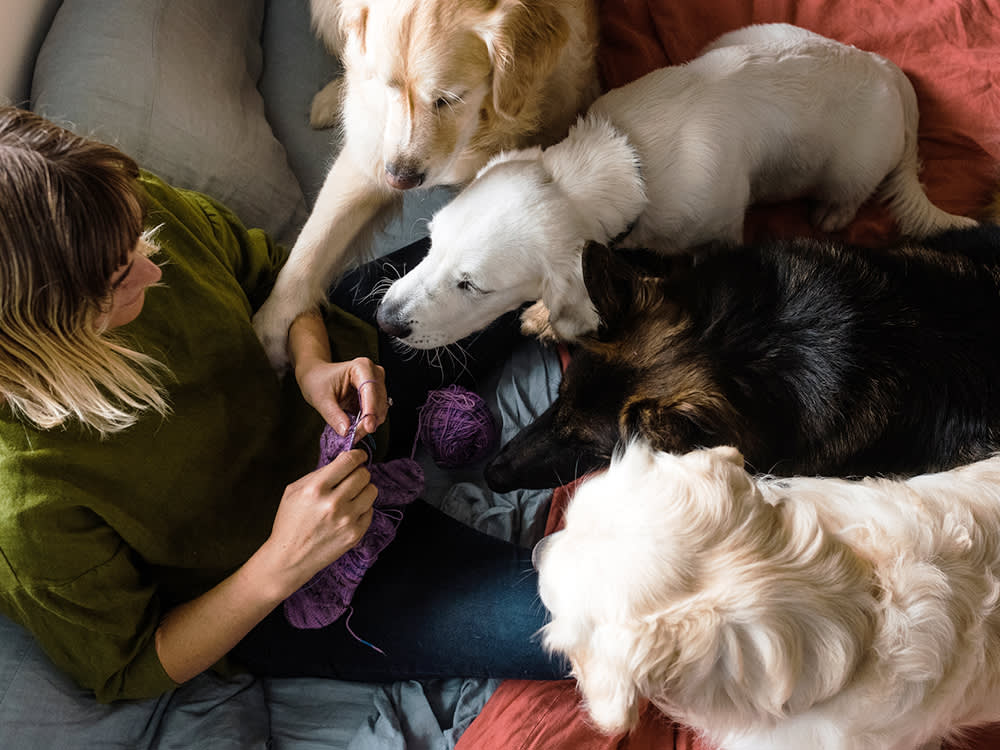
There’s a particular magic to a morning in a house full of dogs: the pile of them on the bed, the synchronized dash to the door, the way they wear each other out playing in a manner you could never replicate. Adding a second or third dog buys your existing dog a full-time companion, spreads the entertainment burden off your shoulders, and greets you at the door with a chorus of tails. For a lot of people, it’s the best version of pet ownership there is.
It also comes with costs that aren’t only financial. Twelve muddy paws to wipe and dozens of toenails to trim add up fast. Three leashes tangle in ways one never does. And training a group is genuinely harder than training a solo dog, especially for the things they love to do in unison, like erupting at the doorbell. But the fear that keeps most people from a third dog, that it’ll descend into constant fighting, is largely misplaced. Most multi-dog homes get along fine. The ones that struggle tend to struggle over the same short list of things, which is good news, because a predictable problem is a solvable one.
When dogs in the same house fight, it’s usually about resources
A lot of the growling and posturing between familiar dogs is ritual, a conversation rather than a threat, and it never comes close to a bite. But real intra-household aggression does happen, most often when a new dog enters the picture or a younger one matures. When behavior researchers dug into hundreds of these cases, clear patterns emerged.
In a 2020 study in the Journal of the American Veterinary Medical Association covering 305 pairs of housemate dogs, the single most common spark was resource guarding, involved in nearly three-quarters of fights. The resources were the obvious ones: food, a coveted found object, and, tellingly, the owner’s attention. Conflict clustered around the same sex, and female-female pairs stood out as the hardest cases. The instigator was usually the younger dog, and usually the newer arrival, the pattern you’d expect when a maturing or freshly added dog renegotiates the household order.
People assume the ‘dominant’ dog starts the fights, but the data points somewhere else. It’s usually the younger, newer dog pushing on the older resident, and it’s usually over something specific, a bowl, a toy, a spot on your lap. Find the resource and you’ve found the trigger.
Manage the flashpoints before they flash
Because the triggers are so consistent, you can engineer most of them out. The common ignition points are worth memorizing: guarding around food or toys, competition for closeness to you, the high-arousal chaos of greetings and departures, and tight quarters like a narrow hallway where dogs can’t give each other space. Feed dogs separately, pick up prized toys when you’re not supervising, keep greetings and goodbyes low-key, and make sure there’s room to pass without a standoff.
For cases that have already escalated, treatment can combine environmental management with a structured “nothing in life is free” routine, where dogs earn resources through calm, cued behavior, and in some cases anti-anxiety medication such as fluoxetine, prescribed and monitored by a veterinarian. One tempting strategy, always favoring one dog by feeding and greeting them first, is not reliably effective; behaviorist Patricia McConnell has argued it often backfires. A better bet is teaching dogs to wait their turn for a shared resource, so they learn that patience, not muscle, is what gets them what they want. When aggression is serious, loop in a certified behaviorist with real experience in housemate conflict rather than improvising.
Learn to read the room
Much of keeping the peace is catching trouble early, and dogs telegraph it if you know the signs. A dog who goes very still with a tightly closed muzzle is often a beat away from escalating; spot that and you can redirect before anything happens. Fluency in canine body language is one of the most underrated skills a multi-dog owner can build.
The part that makes it all worth it
Living with several dogs also hands you a front-row seat to something remarkable: their relationships with each other. Groups of dogs behave like systems, where a change in one shifts everything. Old friends who’d drifted apart may rekindle their play when a new dog arrives. And researchers have documented behaviors that look strikingly social. After a squabble, dogs, like wolves, often reconcile, approaching a former opponent to touch muzzles or invite play, especially when they value the relationship. In the same research, when the combatants didn’t make up quickly, an uninvolved third dog frequently approached the loser of the fight in a friendly way, as if to offer comfort.
You’ll see the loyalty in public, too. Housemate dogs routinely close ranks when a strange dog gets pushy with one of their own, and may physically step in to defend a companion, sometimes even one they don’t especially like at home. It’s a reminder that dogs aren’t just bonded to us. For most of the species’ history, dogs lived in mixed packs of people and other dogs, and a full canine social life is, in a sense, their inheritance. We give them a lot. Other dogs give them something we can’t.
References
- Wrightson, R., et al. (2020). Characteristics of intrahousehold interdog aggression and dog and pair factors associated with a poor outcome. Journal of the American Veterinary Medical Association, 256(3), 349–361.
- Cools, A. K. A., et al. (2008). Canine reconciliation and third-party-initiated postconflict affiliation. Ethology, 114.
- American Veterinary Society of Animal Behavior. Position Statement on the Use of Dominance Theory in Behavior Modification of Animals.
Dr. Chen is a small-animal veterinarian who leads health and safety coverage at The Pet Times. She writes and reviews the bulk of our illness, condition, and safety content, translating clinical guidance into clear, practical advice owners can act on at home.
Meet our experts ↗Keep reading
 LivingYour Dog Isn't Pulling. You're on the Wrong Outing.Dr. Mara Chen · 7 min
 TrainingThe Play Bow Is the Clearest Word Your Dog Knows. Learn to Say It BackDr. Lena Park · 5 min
 TrainingYour Dog Is Bored, Not Heartbroken. Build These 7 Activity Stations.Dr. Nina Kohl · 7 min
 LivingThe Bark Translator Isn't Sci-Fi Anymore. It Started With Human SpeechTom Hadley · 4 min
 LivingHis Dog Walks Into the Office at 5 P.M. and Ends the WorkdayJames Okafor · 6 min
 TrainingYour Dog Digs Up Your Sheets. The Timing Tells You Whether to Worry.Dr. Nina Kohl · 7 min