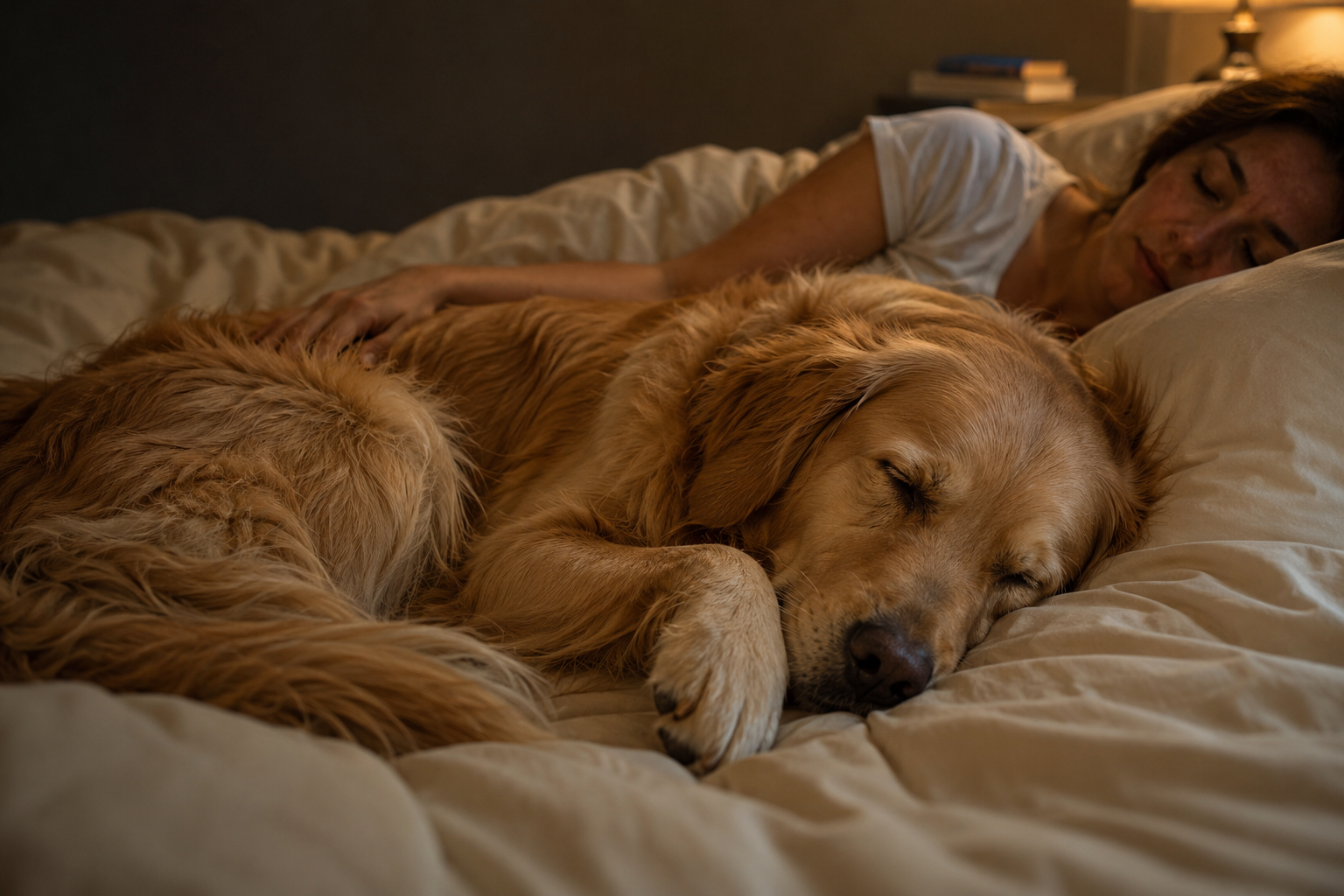
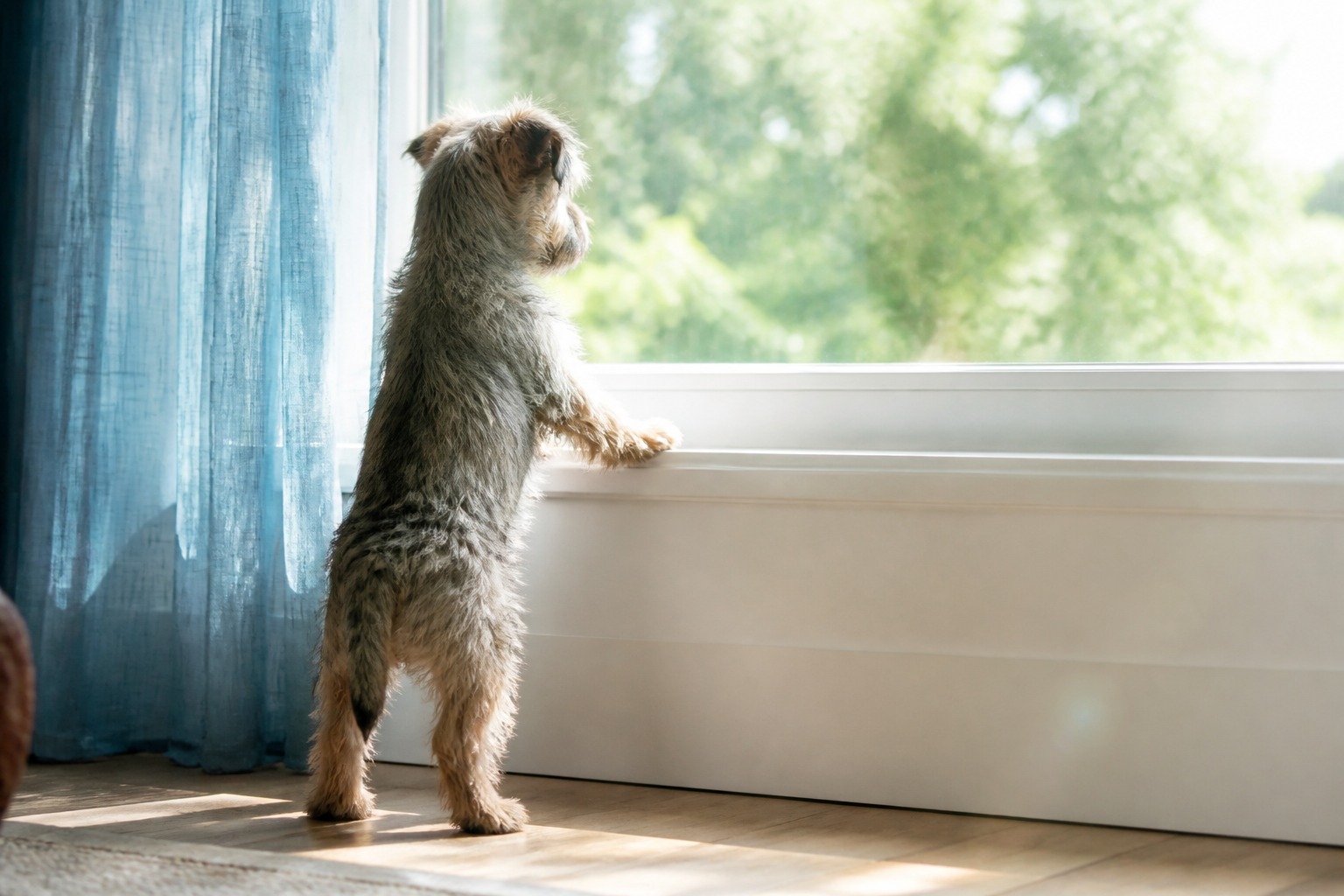
There is a neat little rule for how long you can leave a puppy alone: one hour for every month of age, topping out around eight to ten hours once they’re grown. It is a genuinely useful starting point, and it is also where a lot of new owners go wrong, because they treat it as a schedule to fill rather than a ceiling not to exceed. The number that actually governs your day is smaller and less catchy: how long your puppy can hold their bladder. Boredom is manageable. A full bladder is not, and pushing past it undoes house-training and stresses your puppy for nothing.
So keep the rule, but hold it loosely. Here is how to figure out your puppy’s real limit and stretch it the right way.
The age math, and its asterisks
At the very start of life, puppies need near-constant care, warmth, feeding every couple of hours, and help urinating and defecating, normally provided by their mother and, for orphans, by a person doing round-the-clock work. Most puppies come home later, around eight to twelve weeks, more independent but still needing plenty of supervision.
From there, the hour-per-month guideline kicks in, with the cap around eight to ten hours. But “every puppy is different” is not a throwaway line here; it is the whole point. House-training progress, food and medication needs, crate comfort, and anxiety all pull the real number down. A confident, well-trained five-month-old might manage a normal workday; an anxious one the same age might not last two hours. Let your individual puppy, not the formula, set the pace, and resist rushing them to fit a timetable that suits you more than it suits them.
Bladder, not boredom, sets the ceiling
House-training and alone time are the same problem wearing two hats. Nobody wants to come home to a puddle, and your puppy does not want to be stuck next to one either. In their first months, puppies can typically hold their pee for just two to three hours. That window widens as they mature, but crowding it is how accidents happen and house-training stalls.
“The hour-per-month rule is a fine ceiling, but I’d rather owners plan around the bladder than the clock,” says Dr. Amara Solis of the Pet Times team. “A young puppy holding it for two or three hours is doing well. Build the alone time up from that reality, and house-training tends to fall into place instead of falling apart.”
Two habits matter. First, always take your puppy out to potty right before you leave; an empty bladder buys you time. Second, when accidents happen, and early on they will, do not get angry or punish your puppy. They won’t connect your reaction to something they did earlier, and all they’ll actually learn is to be afraid of you. Clean it up, and get them outside sooner next time. Good house-training is built on a predictable rhythm of trips outside, not on correction.
The crate: a safe room, not a punishment
A crate gives your puppy a contained, safe place to rest where they can’t hurt themselves or destroy the house while you’re out. The catch is that it only works if your puppy sees it as a den, not a jail. Building that positive association takes patience.
The steps are in the how-to box above, and the logic is simple: make the crate a place where only good things happen, feed meals there, rehearse short departures, and extend the closed-door time gradually as your puppy stays calm. Rush any stage and you can sour the whole thing.
Some puppies fight the crate no matter what, and that’s fine, as long as you still confine them somewhere safe while you’re gone. Try a puppy pen, baby gates across a doorway, or a plain, puppy-proofed room where they’re comfortable resting. As always, change things slowly and follow what works for the individual dog in front of you.
Real separation anxiety versus normal fussing
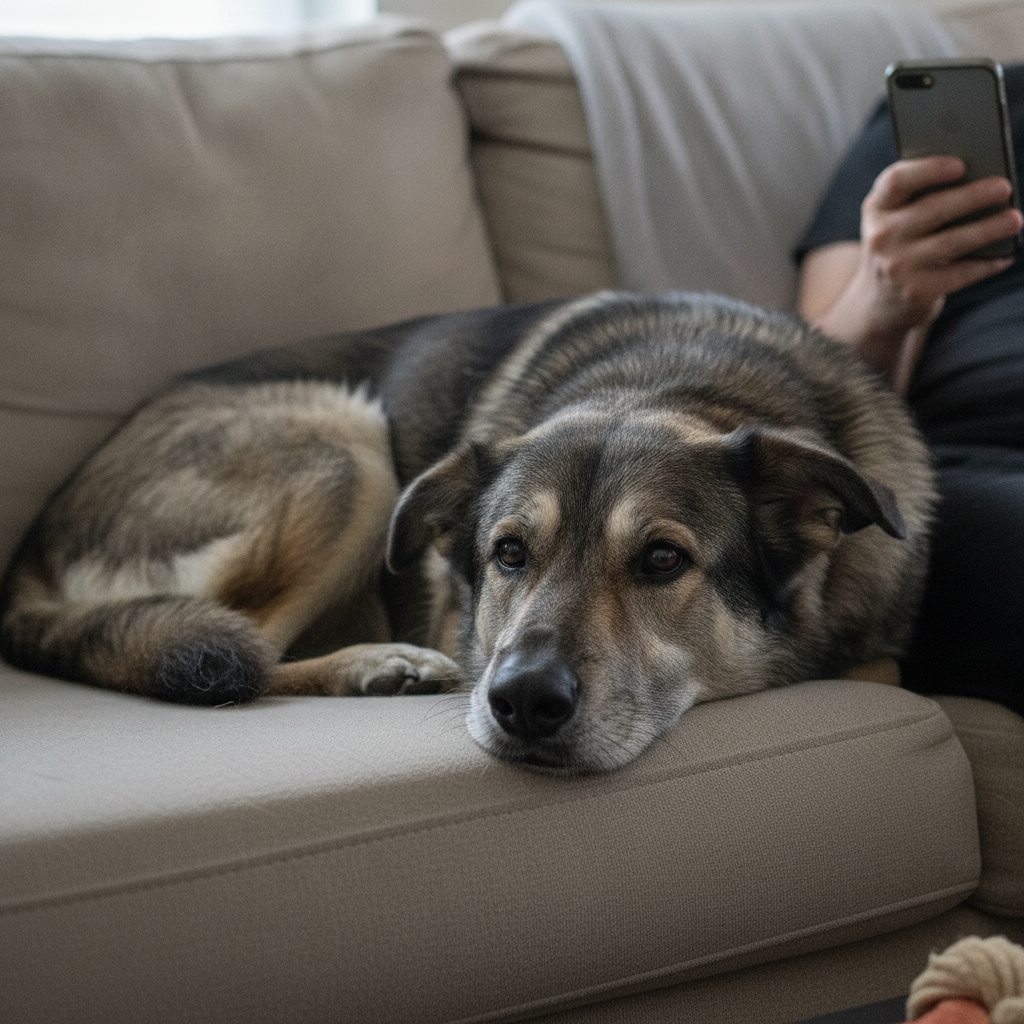
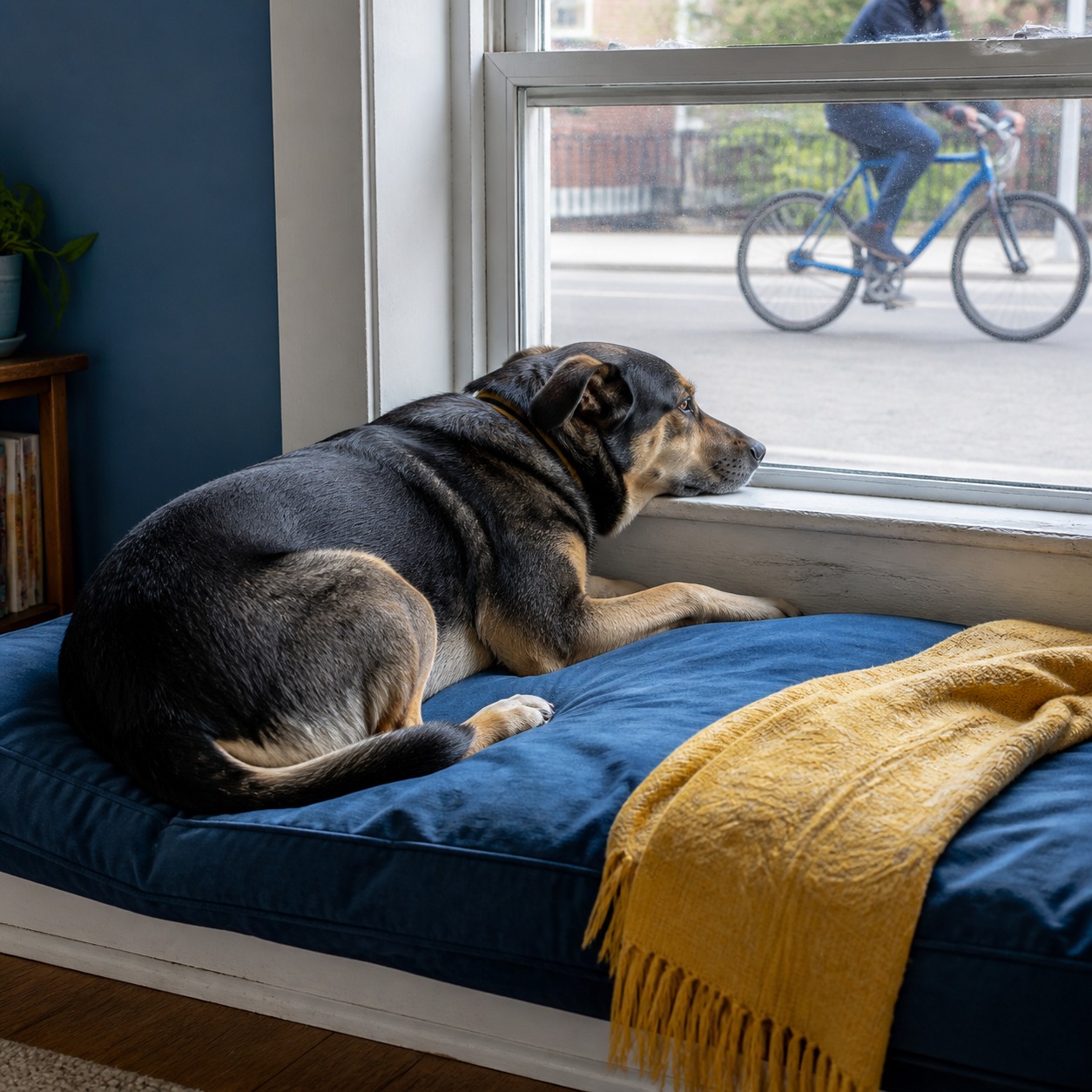
Almost every puppy will whine, bark, or protest the first times they’re left alone. That is normal, and it does not mean your puppy has separation anxiety or will never settle. Most gradually quiet down as the routine becomes familiar. A minority stay genuinely, persistently distressed.
If you suspect your puppy isn’t calming down after you go, set up a camera to record what they actually do and for how long. Signs that point toward true separation anxiety include:
- Vocalizing (whining, barking, howling)
- Trembling
- Destructive behavior
- Peeing or pooping despite being house-trained
- Restlessness or pacing
- Drooling
- Frantic clinginess
These may show up as you get ready to leave or while you’re gone. Separation anxiety can appear at any age but often first surfaces around three to four months, when a puppy is just starting to be left alone in a new home. The good news: with training, gradual conditioning, and sometimes medication, puppies can get past it. The key is not to wait and hope they’ll grow out of it. Talk to your vet or a veterinary behaviorist early, before an anxious pattern hardens into a lasting one.
Setting a puppy up to succeed alone
When you do leave, a little preparation goes a long way:
- Make the space safe. Keep your puppy away from toxic plants and foods, stairs, high surfaces, and electrical cords. A crate, pen, or small room is the surest way to keep them out of trouble.
- Give them something to do. A radio or TV playing something calm can provide comforting background noise, and a durable toy, ideally one hiding a hard-to-reach treat, offers safe stimulation.
- Watch and adjust. A video monitor lets you see how your puppy is really coping, what they gravitate toward, and how to tweak the setup. Ideally, most of their alone time is spent sleeping or relaxing.
What newer research adds
The science increasingly supports acting early and enriching the environment. Research on dogs left alone has found that appropriate chewing helps reduce stress, which is part of why a long-lasting chew or a treat-stuffed toy is more than a distraction; it is a genuine coping tool. Studies on dog-appeasing pheromones suggest they can ease anxiety and support socialization during a puppy’s training, a low-risk option worth discussing with your vet. And behavior specialists increasingly frame separation-related distress as something to prevent and treat promptly rather than tolerate, echoing the core message here: build alone time gradually, keep it positive, and get professional help at the first real sign of trouble instead of waiting for your puppy to sort it out alone.
References
- New, J. C., et al. “Health and Behavior Problems in Dogs and Cats One Week and One Month After Adoption from Animal Shelters.” Journal of Applied Animal Welfare Science. https://doi.org/10.1207/S15327604JAWS0301_5
- Denenberg, S., et al. “Managing Pets with Behavior Problems: Realistic Expectations.” Veterinary Clinics of North America: Small Animal Practice. https://doi.org/10.1016/j.cvsm.2008.04.008
- Gaultier, E., et al. “Effects of Dog-Appeasing Pheromone on Anxiety and Fear in Puppies During Training and on Long-Term Socialization.” Journal of the American Veterinary Medical Association. https://doi.org/10.2460/javma.234.9.1160