


Your Dog's Sleep-Twitching Is Almost Always a Dream. Here's When It Isn't.
Paddling paws and muffled barks in sleep are normal dog dreams. But a few signs mean it's a seizure, not a nightmare. Here's how to tell them apart.

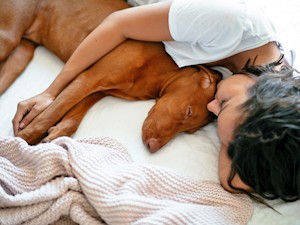
You wake up at 2 a.m. to your dog whimpering and paddling their legs in their sleep, and your first thought is a small panic: is this a bad dream, or is something wrong? Here is the reassurance to lead with, and then the one skill that actually matters. The reassurance: the vast majority of sleep-twitching, paddling, and muffled barking is completely normal dreaming, and it’s nothing to worry about. The skill: knowing the short list of signs that separate a harmless dream from a seizure, because that distinction is the only thing about this that’s genuinely important.
So this piece isn’t really about whether dogs dream, they do, and it’s charming. It’s about giving you a clear, calm way to tell the ordinary thing from the thing that needs a vet, so you can go back to sleep instead of lying awake wondering.
Yes, dogs dream, and it looks a lot like ours
If you’ve ever watched your dog’s legs move in a running motion while they sleep, you’ve watched them dream. Dogs experience REM sleep just like we do, and during it they act out muffled, low-key versions of their day. Those paddling legs probably mean they’re dreaming about something active, chasing a ball on the beach, romping with a friend, doing dog things. They’re almost certainly not having complex, stressful dreams about work; their only job is to be your baby.
Dream behaviors include muffled barks, whimpers, twitching paws, small thrashing movements, and sometimes crying-out sounds. This is all normal. Puppies and senior dogs tend to do it more, puppies because they’re processing a flood of new experiences, seniors for reasons tied to changing sleep patterns.
There’s also a real link between how much a dog sleeps and how they feel awake. Just as an overtired or oversleeping toddler gets dysregulated, dogs sit in a sweet spot too. In one study of canine sleep, dogs getting fewer than eight or more than ten hours of sleep showed more behavior problems, a reminder that good, sufficient rest matters for a dog’s emotional balance, not just their energy.
The one distinction that matters: dream versus seizure
Almost everything above is benign. The reason to pay attention at all is that a seizure can, at a glance, resemble a dramatic dream, and a seizure is a medical event. Here’s how they differ in practice.
A dream happens during sleep. The movements are relatively loose, twitching, paddling, soft vocalizing, and crucially, you can usually wake the dog out of it. Once awake, they’re oriented and themselves.
A seizure is different in ways you can learn to spot. There are two broad types. A generalized seizure involves loss of consciousness with stiffening or violent paddling of the body. A focal seizure may or may not involve loss of consciousness and shows consistent abnormal movement in one part of the body. Seizures often come with rigidity rather than loose twitching, drooling, and sometimes loss of bladder or bowel control, and, tellingly, you cannot rouse the dog during one. If you think your dog has had a seizure, contact your vet immediately, and keep an emergency vet’s number on hand.
The line I give people is this: a dreaming dog is soft and wakeable, a seizing dog is rigid and unreachable. If you call your dog’s name and gently get a response, you’re almost always watching a dream. If they’re stiff, drooling, maybe losing bladder control, and completely unresponsive to you, treat it as a seizure and call us. When in doubt, take a short video, it tells me more in ten seconds than a long description does.
That video tip is worth underlining. Filming an episode gives your vet real information about what’s happening and helps them tell a dream, a seizure, or another sleep disorder apart.
When a “nightmare” might point to a real condition
If your dog genuinely seems distressed in sleep, and especially if episodes are frequent or intense, a few underlying conditions are worth knowing about:
- Canine narcolepsy, where a dog loses muscle tone and may have sudden sleep attacks, sometimes right before eating or playing.
- Sleep-disordered breathing, seen especially in flat-faced (brachycephalic) breeds, where heavy snoring is accompanied by drops in oxygen levels.
- REM sleep behavior disorder, where a dog physically acts out dreams with violent movements, howling, growling, or biting, rather than the usual gentle twitching.
None of these are reasons to panic over a single twitchy night. They’re reasons to mention a pattern to your vet if you’re seeing consistently violent sleep episodes or a dog that has trouble waking up.
How to give your dog better, calmer sleep
If you want to reduce restless nights, the fix is mostly about security and routine. Create a genuinely safe, quiet place for your dog to sleep, a crate or a bed in a low-traffic spot. Dogs thrive on predictability, so if your household is going through a change, keeping their routine as steady as possible helps protect their rest.
And resist the urge to shake a dreaming dog awake. A dog startled out of sleep may snap or react defensively before they’ve fully surfaced, not out of aggression, but out of confused reflex. If you feel you have to interrupt a distressing dream, use a soft voice from a little distance rather than a hand on the body.
What newer research adds
The scientific picture of dog sleep has filled in encouragingly in the last few years, and it lands on the same practical message. Studies using EEG and behavioral monitoring continue to confirm that dogs cycle through sleep stages much as we do, and that they show the neurological and physical signatures consistent with dreaming, even if the actual content stays a mystery we’ll probably never crack.
The more useful thread of recent work is about sleep quality and daytime behavior. Research linking poor or dysregulated sleep to more behavior problems has strengthened the case that rest is a welfare issue, not just a cute quirk, meaning a dog who chronically sleeps too little or whose sleep is constantly disrupted may act more anxious or reactive during the day. So the modern takeaway is two-sided: relax about the ordinary twitchy, paddling dream, that’s a healthy dog processing a good day, but take your dog’s overall sleep seriously, and keep watching for the rigid, unwakeable episode that means it’s time to call the vet rather than the time to say “aww.”
References
- Sleep Characteristics in Dogs; Effect on Caregiver-Reported Problem Behaviours — Animals (MDPI)
- Sleep in the Dog: Comparative, Behavioral and Translational Relevance — Current Opinion in Physiology
- Seizures in Dogs — Merck Veterinary Manual
- Canine Idiopathic Epilepsy — American College of Veterinary Internal Medicine Consensus Statement
Common questions
How can I tell a dream from a seizure in my dog?
Dreams happen during sleep, involve loose paddling or twitching, and a dog can usually be woken from them. A seizure often involves rigid stiffening, violent paddling, drooling, loss of consciousness, or loss of bladder control, and the dog can't be roused. If you suspect a seizure, call your vet immediately.
Should I wake my dog from a nightmare?
It's usually best not to. A startled, suddenly-woken dog may react defensively before they're fully awake. Let them finish the sleep cycle, and if you must intervene, use your voice softly from a distance rather than touching them.
Why does my dog twitch and paddle in their sleep?
That's a normal sign of dreaming during REM sleep. Paddling legs often means your dog is dreaming about something active, like running or playing, from their day. It's harmless and common, especially in puppies and senior dogs.
Not a substitute for your vet. Our guidance is educational. For urgent symptoms, contact a vet or emergency clinic right away. Editorial standards
Dr. Mehta is a board-certified veterinary nutritionist who evaluates pet food formulations, ingredient quality, and the science behind dietary trends. He writes and reviews all nutrition content at The Pet Times, including our food rankings and feeding guides.
Meet our experts ↗Keep reading
 Health & WellnessYour Dog's Lip Lick Means Nausea or 'Please Back Off.' Learn to Tell.Dr. Priya Nair · 7 min
 TrainingOne Dog Licking Another's Ears Is Usually Fine. Two Things Make It Not.Dr. Ravi Mehta · 7 min
 Health & WellnessPaw Chewing Is a Loop, Not a Habit. Breaking It Takes Two Moves.Dr. Amara Solis · 8 min
 Health & WellnessA Quiet Dog Is Fine. A Newly Quiet Dog Is a Symptom.Dr. Ravi Mehta · 7 min
 TrainingA Shelter Dog Predicted a Stranger's Seizure With No Training. How?Dr. Lena Park · 6 min
 Health & Wellness'Is My Dog Depressed?' Skips the Question That Matters MoreDr. Amara Solis · 7 min