


Stop Handing Your Dog a Boring Kong. Stuff It Like This.
A Kong isn't a toy you give, it's a system you run. A trainer's method for layering, freezing, and batch-prepping so one rubber toy actually settles your dog.


Most people use a Kong wrong, and it is not their fault. They smear a little peanut butter inside, hand it over, and watch their dog lick it clean in ninety seconds and go right back to being bored. The Kong gets blamed for not working. The technique is what did not work.
A Kong is less a toy than a small system. Used well, it is one of the most useful objects in dog training: a way to occupy a dog, redirect a stressed one, manage a hard moment, and genuinely make a dog’s day better. The difference between a two-minute distraction and a forty-minute project is entirely in how you stuff it and how you prep. Here is the method.
Where the Kong came from
The now-ubiquitous snowman-shaped rubber toy started as an accident. Its inventor, Joe Markham, ran an auto shop and kept a dog named Fritz around to guard it. Fritz had a destructive chewing habit, and one day, rummaging in the shop, Markham handed him a rubber part off a vehicle. Fritz was smitten, and the bouncy, hollow, stuffable chew toy grew from there. The origin is worth knowing because it explains the design: it was built for a serious chewer who needed a job.
A stuffed Kong works because it gives a dog a species-appropriate problem to solve. Licking and working food out of a cavity is calming, it lowers arousal, and it engages the same foraging instinct a dog would use in the wild. That’s why a frozen one can talk a dog down off a thunderstorm the way no amount of ‘it’s okay’ from you ever will.
The stuffing ladder: basic, intermediate, advanced
Think of stuffing as three difficulty levels, and match the level to your dog.
Basic. The easiest fill is a couple of spoonfuls of peanut butter smeared around the inside. Almost every dog loves it, and it will occupy them for a bit. It is the training-wheels version, fine for a beginner or a young dog still learning the toy.
Intermediate. Now think in layers. Bury something irresistible at the very bottom, real chicken, a shred of cheese, a top-shelf treat, then build upward: a spoonful of canned food or pumpkin puree, a handful of kibble, another treat, repeat until full. An experienced dog earns a denser pack; more tongue-work per mouthful buys you a longer session. The first inch, though, should stay effortless, a loose layer they clear in seconds, because a fast early payoff is what convinces a dog the rest of the project is worth finishing.
Advanced. The point of advanced stuffing is duration and difficulty: a harder extraction means more mental exercise and the satisfaction of solving something tough. The single best upgrade is to freeze it. Frozen food is much harder to get out and takes far longer, so a frozen Kong can turn a snack into a long, absorbing project. Make sure a dog new to frozen Kongs actually succeeds and enjoys it, rather than giving up because nothing is coming out, so ease them in. For an even bigger challenge, change the shape of the opening: fill the Kong, squeeze it so the round opening becomes a long, thin oval, and freeze it that way. You can also gift-wrap the whole thing: roll the stuffed Kong up in a rag destined for the laundry, or drop it into an empty cracker or oatmeal box, and let your dog open the package before the real excavation begins.
Using a Kong to make life easier
The stuffing is only half of it. The other half is knowing when to deploy one.
Visitors. Not every dog is at their best when people arrive, whether from over-the-top enthusiasm or genuine fear. A stuffed Kong gives that dog a better thing to do. Depending on the dog, you might offer it in the main room, in the yard, or, for a dog who should stay away from guests, in a separate room with the door closed, keeping them apart but happy.
Fear and big noises. Kongs shine for minor thunderstorm nerves, the general horror many dogs feel about Halloween, and the stress of you leaving. A dog busy and content with a frozen Kong is a dog not spiraling.
The honest caveat. Handing your dog a Kong so you can skip spending time with them is fine once in a while when you are truly stuck, but it is not a substitute for the walks, training, play, and attention that make up a good day together. Use it to add to your dog’s life, not to replace your presence in it.
The logistics that make it effortless
The reason people give up on Kongs is not the dog. It is the hassle. Solve the logistics and the whole thing becomes automatic.
Batch-stuff and freeze. Prepping a Kong from scratch the moment you need one feels like a chore. Prepping a big batch at once and stashing them in the freezer means that when you suddenly need one, you just grab it, maybe top it with a dollop of peanut butter or wet food, and you are done. Keep different sizes and shapes in there so you can hand out a big project or a quick treat as the moment calls for.
Keep a variety of fillings on hand. Stock a range of Kong-friendly ingredients so stuffing a batch is easy. It is normal to use six or seven kinds of treats and a couple of wet options in one session, which also lets you make every Kong different, or all the same, depending on your mood.
Stuff them in a mug. Stuffing can be messy and annoying. Park each Kong in a coffee mug, wide end skyward: the mug does the holding, both your hands are free for the spooning, and the counter stays clean.
Make cleaning painless. Kongs are dishwasher-safe on the top shelf, which is a small revelation the first time you hear it. Hand-washing works too, but the dishwasher removes the last excuse.
Run it this way, batch-stuffed, frozen, and deployed at the right moments, and a single rubber toy stops being a ninety-second novelty and becomes one of the most reliable tools you own for a calmer, more contented dog.
References
- Kong Company, product and history. https://www.kongcompany.com/
- Herron, M. E., & Buffington, C. A. T. (2010). “Environmental enrichment for indoor and outdoor dogs.” Compendium/Clinician’s Brief. https://pubmed.ncbi.nlm.nih.gov/25082699/
Dr. Solis is a board-certified veterinary dermatologist with over twelve years of clinical experience. She advises on skin conditions, allergies, and grooming practices that affect coat and skin health. All dermatology and allergy content at The Pet Times is reviewed by her team before publication.
Meet our experts ↗Keep reading
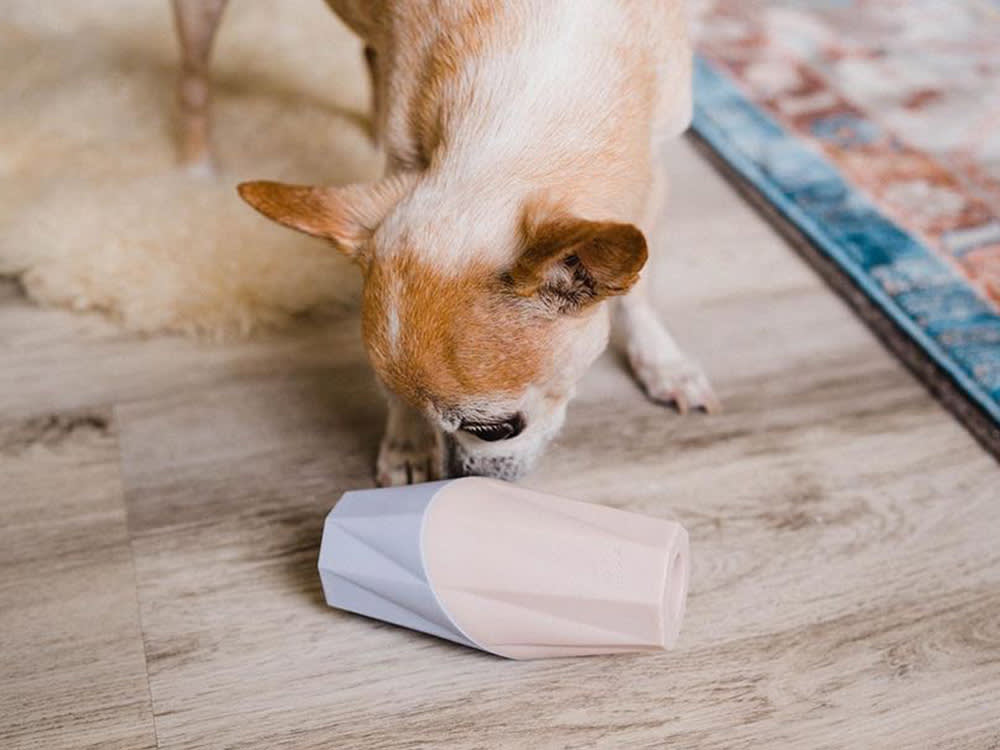 Product PicksYour Dog Doesn't Need Another Puzzle. They Might Need the Opposite.Sasha Ford · 7 min
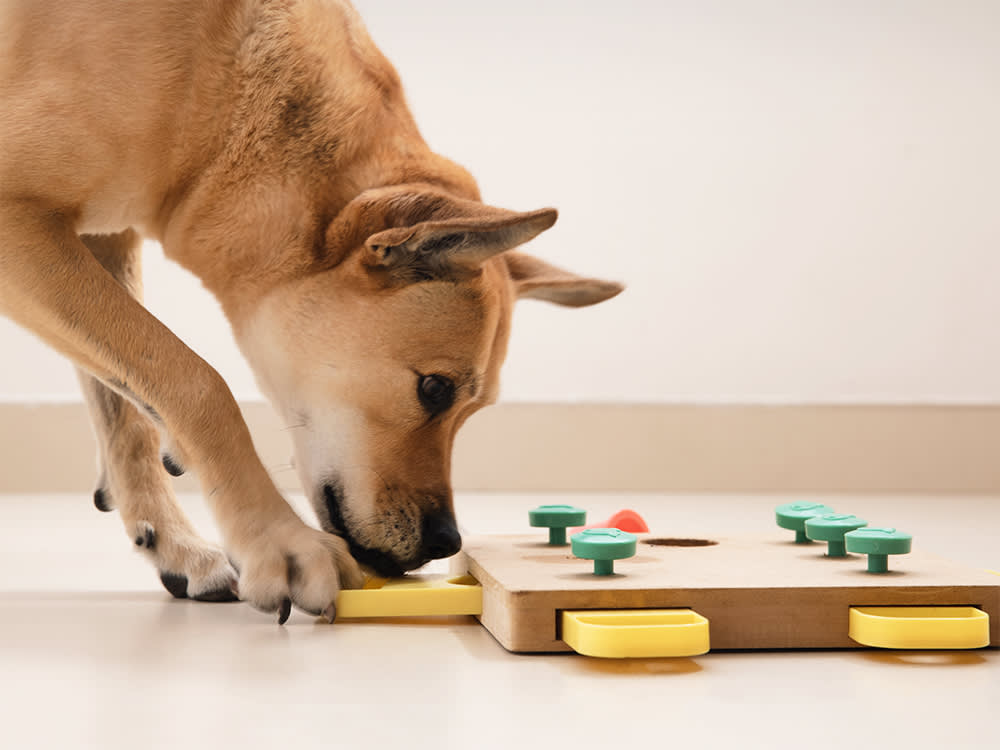 Product PicksYour Dog Isn't Being Bad. He's Bored. 13 Puzzle Toys That Fix ItSasha Ford · 8 min
 TrainingYour Dog Doesn't Love the Squeak. They Love Making It Stop.Dr. Ravi Mehta · 7 min
 TrainingYour Dog Isn't 'Bad With Toys.' Nobody Taught Them the Game.Dr. Lena Park · 7 min
 TrainingYour Dog Is Bored, Not Heartbroken. Build These 7 Activity Stations.Dr. Nina Kohl · 7 min
 TrainingYour Dog Isn't Rejecting Your Gift. They're Finishing a Hunt.Dr. Nina Kohl · 7 min