


"Kennel Cough" Isn't a Disease. That's Why Every Outbreak Feels Like the End of the World.
The name covers at least six different pathogens, which is why the vaccine "fails," why every few years a mystery illness sweeps the country, and why your vet sounds annoyingly vague. Here's how to actually think about it.

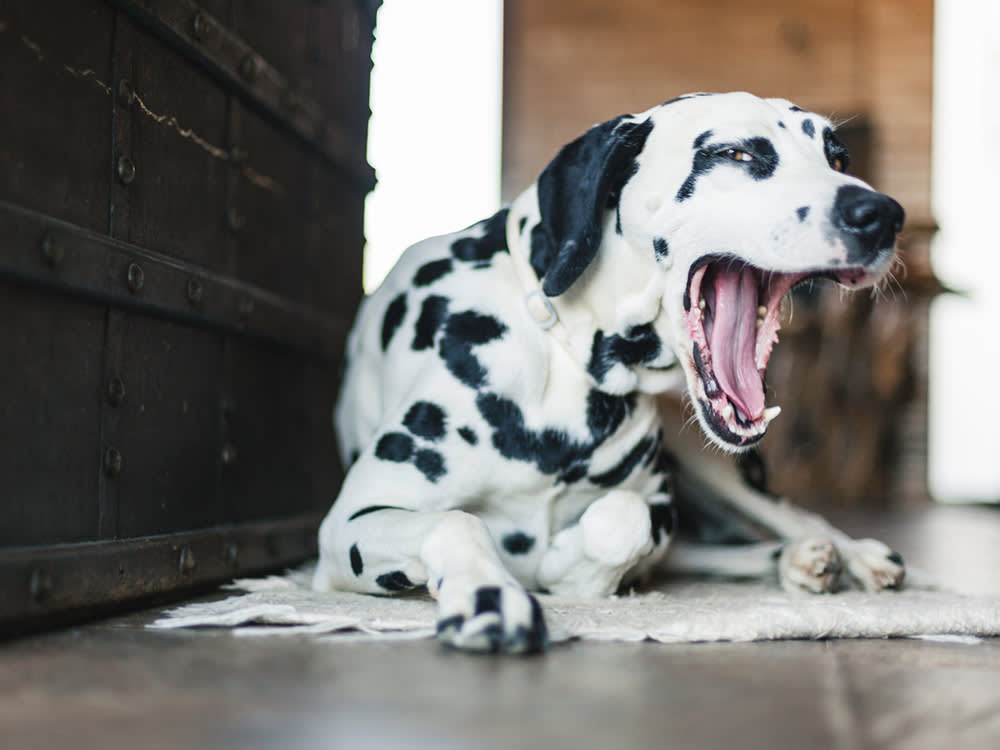
Every couple of years the same news cycle runs. A mystery respiratory illness is sweeping dogs across multiple states. Nobody knows what it is. Vets are baffled. Cancel your boarding reservation.
And every couple of years, the same thing turns out to be true: it is mostly not mysterious, the vaccine mostly worked, and the confusion is largely manufactured by a name.
“Kennel cough” is not a disease. It is a bucket. Veterinarians call it canine infectious respiratory disease complex, and the word doing the load-bearing work in that phrase is complex. It covers a whole set of pathogens that produce a similar-looking illness:
- Bordetella bronchiseptica, a bacterium, the one the vaccine is named after
- Canine influenza
- Canine parainfluenza
- Canine adenovirus type 2
- Canine distemper
- And a rotating supporting cast, including Mycoplasma species and several respiratory coronaviruses
Once you understand that, three things that seem outrageous stop being outrageous: why a vaccinated dog still gets sick, why an “outbreak” can be reported without anyone naming the pathogen, and why your vet keeps giving you an answer that sounds like a shrug.
Why the vaccine doesn’t do what you think
This is the single most common grievance and it rests on a misunderstanding.
The Bordetella vaccine does not induce full immunity. A vaccinated dog can absolutely still be infected. What vaccinated dogs get is milder illness, for less time. That is the deal, and it is a good deal, but it is not the deal people think they bought.
Worse, the vaccine that most boarding facilities require covers one organism in a bucket that holds at least six. Distemper, parainfluenza, and adenovirus type 2 are all covered in the core vaccine series that your dog should already be on. Canine influenza is a separate vaccine, and one many owners have never been offered.
So the honest sentence is: being “vaccinated for kennel cough” means you are partially protected against some of the causes of kennel cough. Which is worth doing. It is just not a force field.
What it actually looks like
The signature is a hacking cough, often with retching or gagging at the end of it, the sound owners describe as something stuck in the throat or a goose honk. Some dogs also get sneezing, eye discharge, or a runny nose.
Dogs pick it up wherever dogs share air. Boarding kennels, doggie daycare, dog parks, grooming salons, and shelters. If your dog was in one of those in the last week or two and starts honking, you have your explanation.
The good news is genuinely good: mild cases need no medical care at all, and the large majority of dogs are back to normal inside two or three weeks, unaided. Keep him eating and drinking, offer favorite foods if his appetite drops, and let it run its course.
The bad news is what hides inside “most.” A minority of dogs get seriously ill and need real intervention: antibiotics, fluids for dehydration, oxygen support. Those cases are not subtle.
Get to a vet if you see: fever, lethargy, refusal of food or water, labored breathing, or a cough that keeps escalating. Those are the signs of pneumonia and dehydration, and monitoring for them is the main reason a coughing dog should be seen at all.
Isolate him from other animals in the house. It does not spread to humans. It does spread readily to other dogs and, importantly, to cats.
“The thing I want owners to take away is that the cough itself is rarely the emergency,” says Dr. Lena Park. “It’s the dog who stops eating, or spikes a fever, or starts working to breathe. A dog who is honking, bright-eyed, and hungry is usually a dog you can nurse at home. A dog who is quiet is the one I want to see today.”
The outbreak pattern, explained by the bucket
Now go back to the news cycle with that in hand.
In 2023 a particularly rough strain of the complex moved through several states. Minnesota’s Board of Animal Health had suspected more than 200 cases by May of that year, with clusters across the state and a concentration in the Minneapolis metro area. Arkansas logged confirmed cases in the center of the state, in Conway, Benton, and Little Rock, and Pennsylvania reported them statewide. Local officials told owners to vaccinate and to isolate any dog showing signs.
Was it canine influenza? Some experts thought so. Was it something else in the bucket? Also plausible. And here is the point: it changed the advice almost not at all. Whatever the specific organism, the actions were identical. Core vaccines up to date. Bordetella if your dog is in group settings. Isolate a coughing dog. Watch for the escalation signs.
That is what a complex does. It makes the name unknowable and the response obvious.
What newer research adds
The 2023 wave turned into something bigger, and it is worth knowing how it played out, because it is the best real-world test of everything above.
Beginning in summer 2023, a cluster of about 200 cases around Portland, Oregon, kicked off a national scare over what got called atypical canine infectious respiratory disease, or aCIRD. It was eventually recorded in 19 states. The distinguishing feature was duration: dogs coughing for six to eight weeks rather than two to three, and a subset progressing to pneumonia and, in some cases, death.
The hunt for a novel pathogen produced conflicting answers, which is exactly what you would expect from a bucket. In December 2023, the USDA reported that genetic testing of the cases it investigated turned up the common, already-known causes of canine respiratory disease. Then in January 2024, the University of New Hampshire’s veterinary diagnostic lab reported finding a possible novel bacterial pathogen in about 14 percent of the samples it looked at. Both can be true. Neither settled it.
A 2025 observational study in the American Journal of Veterinary Research, built from US dog owners’ reports, gave the first real shape to the outcomes: case rates were highest in the Southeast (26.3 percent) and lowest in the Southwest (9.4 percent), while case fatality ranged from 6.7 percent in the Northeast to 17.9 percent in the Southwest. Those are owner-reported figures, not hospital records, so treat them as a sketch rather than a photograph. But they tell you the illness was real, it was worse than a normal season, and it was not evenly distributed.
What the whole episode did not produce is a single new villain. Three years on, aCIRD remains a syndrome of uncertain cause, which is the most honest and least satisfying answer available.
The practical lesson has not moved: if your dog develops a cough that is still going at week four, that is no longer a normal kennel cough and it needs a vet, an X-ray, and possibly a culture. The duration is the signal. The name never was.
References
- American Veterinary Medical Association. “Questions remain as canine respiratory disease cases fall.” avma.org
- Oregon Veterinary Medical Association. Reports of Severe Canine Infectious Respiratory Disease in Oregon. oregonvma.org
- American Journal of Veterinary Research, Vol. 86, Issue 10 (2025). “Characteristics and case fatality factors of atypical canine infectious respiratory disease: an observational survey using dog owners’ data in the United States.” avmajournals.avma.org
- “Detection of pathogens in dogs with respiratory disease during winter 2023–2024 using multiplex qPCR/RT-qPCR assays and next-generation sequencing.” PMC. ncbi.nlm.nih.gov
- Minnesota Board of Animal Health. Canine infectious respiratory disease. bah.state.mn.us
- Worms & Germs Blog, Ontario Veterinary College. “Update: Canine Infectious Respiratory Disease.” December 21, 2023. wormsandgermsblog.com
Common questions
My dog is vaccinated against Bordetella. Why is he coughing?
Because the Bordetella vaccine does not produce full immunity. Vaccinated dogs can still get infected; they tend to get milder, shorter illness. That is the vaccine working as designed, not failing.
How long does it take to get better?
Most mild cases need no medical treatment at all, and the large majority of dogs are back to normal inside two or three weeks. A cough that is still going strong after that, or that comes with fever or lethargy, needs a vet.
When is a cough an emergency?
Fever, difficulty breathing, refusing food or water, lethargy, or a cough that suddenly worsens. Those can mean pneumonia or dehydration, and they need same-day veterinary care.
Where do dogs catch it?
Anywhere dogs share air: boarding facilities, doggie daycare, dog parks, grooming salons, and animal shelters. If your dog has been in one of those places in the last week or two and starts hacking, assume that's why.
Not a substitute for your vet. Our guidance is educational. For urgent symptoms, contact a vet or emergency clinic right away. Editorial standards
Dr. Mehta is a board-certified veterinary nutritionist who evaluates pet food formulations, ingredient quality, and the science behind dietary trends. He writes and reviews all nutrition content at The Pet Times, including our food rankings and feeding guides.
Meet our experts ↗Keep reading
 Health & WellnessYour Dog Isn't Getting Lazy in Winter. Their Body Chemistry Shifted.Dr. Lena Park · 5 min
 Health & WellnessYour Tripod Dog Is Fine. It's the Other Three Legs You Should Worry About.Dr. Mara Chen · 9 min
 Health & WellnessOne Breed Is 31 Times More Likely to Get This Hidden Tumor. Catching It Early Changes Everything.Dr. Mara Chen · 6 min
 Health & WellnessYour Straining Dog Might Not Be Constipated at AllDr. Lena Park · 6 min
 Health & WellnessCheck Your Dog's Head Like a Vet Does: The 5-Minute Eyes, Ears, Nose, and Mouth ScanDr. Lena Park · 6 min
 Training8 Disgusting Things Your Dog Does. Only 3 Are Worth Worrying About.Dr. Ravi Mehta · 9 min