Photographer BriAnne Willis has taken portraits of more than 300 cats through her project Girls and Their Cats, a long-running visual love letter to cats and the people obsessed with them. Which means she has also photographed a lot of cats who wanted absolutely nothing to do with being photographed, the ones who vanish under the bed the second a stranger walks in.
That is the useful part for the rest of us. The trick to a good cat photo turns out to have very little to do with an expensive camera and almost everything to do with how you set up the room and how much you are willing to let the cat be in charge. You can run the same playbook at home with the phone already in your pocket. Here is how.
Prep the room before the cat is even involved
Willis sends clients a short prep list before a shoot, and it is worth copying. Keep a lint roller within reach, because cat hair finds every dark surface. Stock your cat’s absolute favorite treat ahead of time, the good stuff, not the everyday kibble. And tidy the space, or at least the corner of it you plan to shoot in: if you don’t want a laundry pile or a tangle of chargers in the photo, move it out of frame now, because you will not want to break the mood later to fix it.
One more item from her list, with a caveat: if you can gently close off your cat’s usual hiding spots, it is easier to keep them in the room. Only try this if it won’t wind them up. A cat who feels cornered is not a cat who photographs well, and pushing the issue can turn the afternoon stressful for everyone, or leave you hauling furniture aside to coax one terrified cat back into the light.
Let the cat run the session
Here is the counterintuitive core of it. The more you chase the shot, the worse the shot gets. Willis’s real skill is patience: she lets the cat decide the pace and tone, then works within it. On one shoot a notoriously shy Snowshoe cat hid for the first full hour and only surfaced once he decided the stranger was tolerable.
So sit down on the floor and wait. Let your cat come to the space, sniff the phone, lose interest, and drift back. A cat photographed on their own timeline looks relaxed. A cat photographed against their will looks exactly like what it is.
Bribery is a legitimate technique
The single most effective prop in cat photography is food. Willis’s clients keep a pocket of sliced deli turkey on hand, and it works like magic: a pea-sized piece held near the lens buys you a few seconds of a cat who is alert, ears forward, and looking right where you want them. A feather-and-bell toy does the same job for action shots, flicked just out of frame to spark that wide-eyed hunting focus.
And when a cat truly will not settle? Sometimes, Willis has found, you just pick them up and hold them for the photo. A calm, supported cat in your arms can make a lovely portrait even when they would never have posed solo. Scoop gently, support the back end, and don’t fight a cat who is struggling to get down.
The three settings that matter
You do not need to understand photography to get most of the way there.
Get low. Shoot from your cat’s eye level, not from standing height looking down. It instantly makes the photo feel like a portrait instead of a security-camera still.
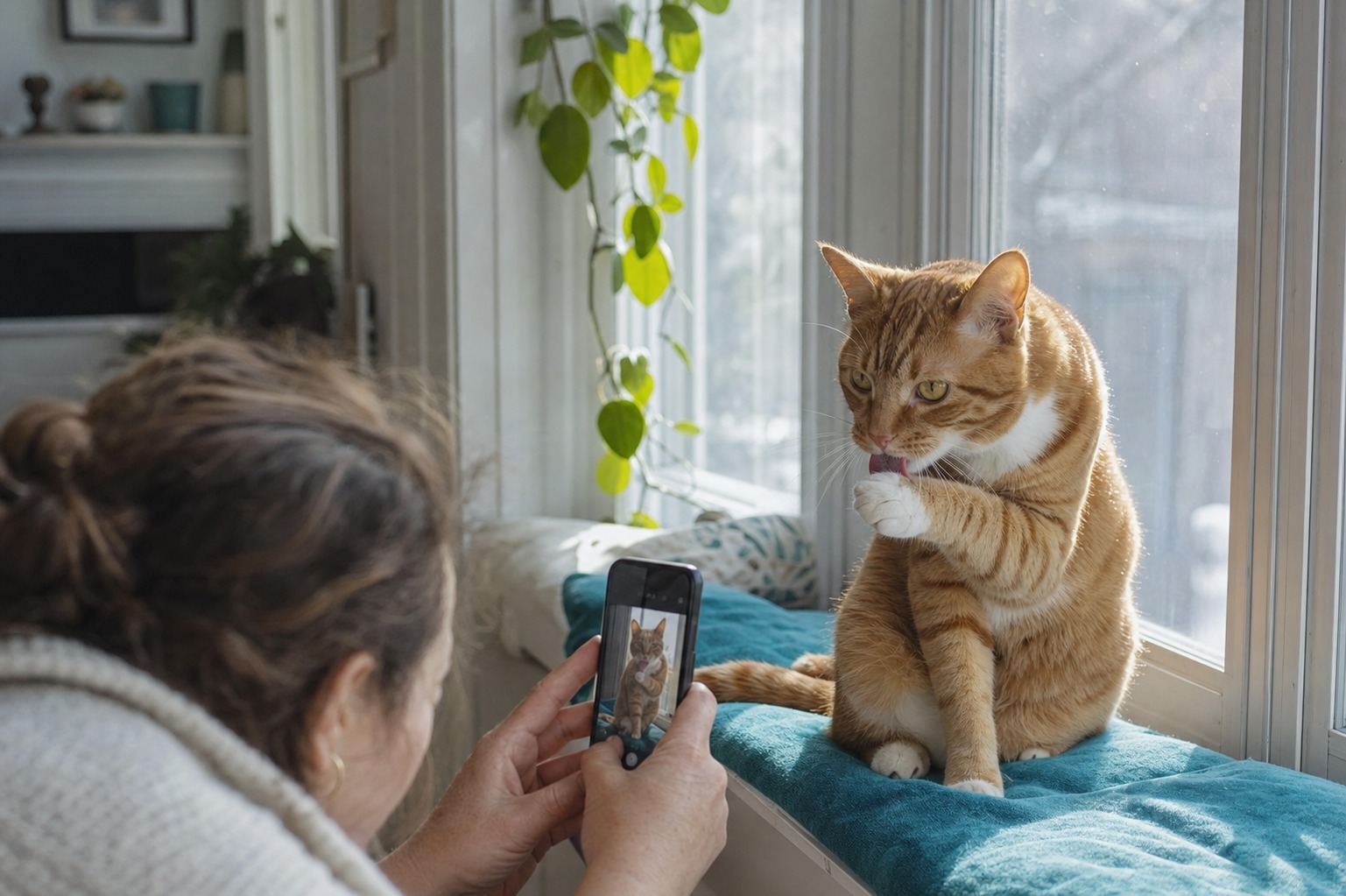
Use the light you have. Soft daylight from a window is the most flattering light there is, and it is free. Turn the flash off entirely, it startles cats and flattens their faces, and position your cat so the window light falls across them rather than behind them.
Shoot a lot. Put your phone in burst mode and hold the shutter. Cats move in tiny, fast increments, and the difference between a blink and a perfect alert stare is a fraction of a second. Fire off twenty frames and keep the one.
Read the cat, and know when to quit
The most important skill here is not framing, it is knowing when your cat has had enough.
“Cats tell you very clearly when a photo session has become too much, we just tend to override it because we want the picture,” says Dr. Nina Kohl. “A crouched body, a tucked tail, flattened ears, wide eyes, or a cat repeatedly trying to leave are all a request to stop. The best photographers are the ones who honor that request the first time.”
If you see those signals, end the session and try again another day. A great cat photo is a byproduct of a cat who feels safe, which is why the shy ones are so rewarding when it finally clicks. You are not just capturing your cat. You are proving to them that the weird afternoon with the phone was, in fact, survivable, which makes the next one easier.
References
- International Cat Care, Understanding Feline Body Language
- ASPCA, Cat Behavior and Body Language