


Your Pet Can't Talk at the Vet. That Makes You the Whole Story.
In the exam room, you're the only one who speaks your pet's language. Here's how to be a genuinely useful advocate, from what to disclose to the one thing to never leave without.

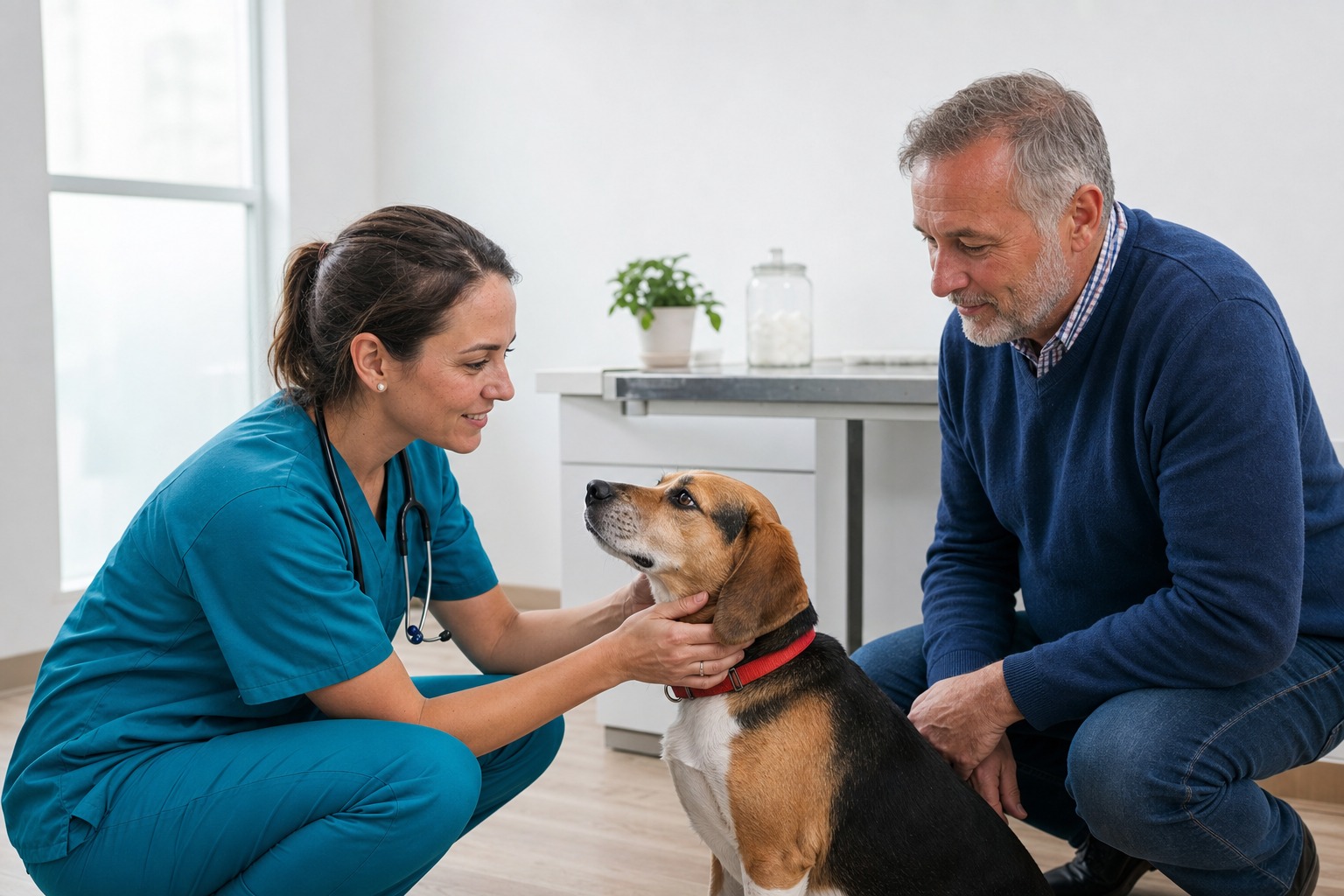
A vet visit has a lopsided cast of characters. There’s a doctor who can examine your pet but can’t ask them a single question, and there’s a patient who can’t describe the pain, the weird thing they ate, or the fact that they’ve been drinking twice as much water lately. Standing between them is you, the only one in the room fluent in both directions. Whether an appointment goes well or goes sideways often comes down to how well you play that translator role.
Being a good advocate isn’t about second-guessing your vet. It’s about showing up with the information they can’t get any other way, asking until you understand, and making sure you walk out with a plan. Here’s how to do all three.
The best appointments I have aren’t with the clients who defer to everything I say or the ones who fight me. They’re with the people who came prepared, told me the truth, and asked good questions until they actually understood the plan. That partnership is where good medicine happens.
Bring the history, because it’s half the diagnosis
An animal’s health history often points to the answer faster than the physical exam does. Before the appointment, take stock of what’s changed: appetite, thirst, energy, weight, bathroom habits, mood. Note any vomiting, diarrhea, coughing, sneezing, or drop in stamina, and roughly when it started. Vague impressions turn into useful clues when you’ve actually paid attention at home.
For a first visit to a new clinic, bring the paper trail: vaccination records, prior lab results, and any imaging from past problems. If your pet’s situation is complicated, a short written summary beats a shoebox of documents. There’s a real thing as too much, though. Your vet needs the meaningful pattern, not a daily diary of every bathroom trip, so aim for a clear timeline rather than an exhaustive one.
Get the medication details exactly right
If your pet is on any medication, bring it, the actual bottle, to every visit so the drug and dose can be confirmed. What your vet needs is the specific name and strength, not “the little white pill” or “the one from the blue bag.” Getting this wrong is more common than you’d think, and it can lead to a pet being given the wrong dose for months. The same goes for food: know the actual brand and formula your pet eats, because the color of the bag and the store you bought it at tell your vet nothing.
Tell the truth, even the embarrassing parts
This is the one that quietly matters most. If your dog has growled, snapped, or bitten before, say so before the exam starts, not after. A staff that knows can work safely with sedation, a muzzle, or simply giving a nervous animal space; a staff blindsided by a bite is a staff you’ve put at risk and probably won’t be welcomed back by. Bringing your own well-fitted muzzle for a reactive pet, far from being awkward, earns real respect.
The honesty extends past behavior. If your pet has been living on table scraps, if they got into your medication, if they slipped out of a harness and took a spill, if they polished off something they shouldn’t have, your vet needs to know. Nobody’s grading your pet parenting. They’re trying to treat an animal who can’t confess, and a withheld detail can send the whole visit down the wrong path.
Make them explain it so you understand
Vets, myself included, slip into medical shorthand without noticing, because the terms live in our heads all day. If a sentence lands as a wall of jargon, stop the conversation and ask for it again in plain English. “Renal insufficiency” is a lot clearer as “the kidneys aren’t filtering the way they should, and here’s what we can do about it.” If you take in information visually, ask to see the X-ray, the lab report, or a quick sketch. You cannot advocate for a decision you don’t actually understand, so never let confusion slide by unspoken.
Put money on the table early
Cost is awkward to raise and important to raise anyway. Ask for an estimate before treatment starts so nothing blindsides you, and if the number is hard, say so; most clinics can talk through payment plans, prioritizing which tests come first, or lower-cost paths. Framing your worries plainly, whether that’s the bill or a fear that something serious is being missed, helps your vet actually address them. They chose this work largely because they understand how much your animal means to you.
Be present, and be decent
Whenever you possibly can, be in the room. Being there lets you see the imaging, learn how to give a medication, and comfort an animal who, given the choice, would absolutely want you beside them rather than a stand-in. Skip dropping your pet off before work unless you’ve arranged it in advance, and silence your phone before the exam begins. And extend the same courtesy to the whole team: the front desk and the techs remember who was kind and who was sharp with them, and kindness has a way of coming back around in how your pet is cared for.
Never leave without the next step
Here’s the single habit that separates a good visit from a forgotten one: don’t walk out until you know exactly what happens next and when. Sometimes the plan is simple, a clean annual checkup means “see you in a year.” Sometimes it’s conditional: start this medication, and call in a week to report whether the cough cleared, with X-rays scheduled if it didn’t. Sometimes it’s a recheck, come back in two weeks to remove sutures and retest a sample. Whatever it is, get it in writing before you leave. Vets don’t always spell out the follow-up clearly, and even the most devoted owner forgets details on the drive home. A written next step is the thread that keeps your pet’s care from quietly unraveling between visits.
Not a substitute for your vet. Our guidance is educational. For urgent symptoms, contact a vet or emergency clinic right away. Editorial standards
Dr. Chen is a small-animal veterinarian who leads health and safety coverage at The Pet Times. She writes and reviews the bulk of our illness, condition, and safety content, translating clinical guidance into clear, practical advice owners can act on at home.
Meet our experts ↗Keep reading
 Health & WellnessYou're Not Allergic to Your Dog. You're Allergic to a Protein, and That Changes EverythingDr. Nina Kohl · 6 min
 Health & WellnessYour Vet Quoted You $12,000. That's Not the Only Number You're Allowed to Hear.Dr. Priya Nair · 5 min
 Health & WellnessYour Dog's 'Placebo Effect' Is Mostly YouDr. Amara Solis · 6 min
 Health & WellnessThe Vet Says Your Pet Needs Dental Work. Here's What Insurance Actually Pays.Dr. Priya Nair · 7 min
 Health & WellnessThe Flea and Tick Prevention Vets Actually Reach ForDr. Nina Kohl · 9 min
 Health & WellnessWhether Pet Insurance Covers the Vet Depends on One Question: Why Are You There?Leila Torres · 7 min