Almost everyone who owns a dog has heard the “10 percent rule”: treats should be no more than a tenth of what your dog eats in a day. It is good advice. It is also where most people stop, and that is the problem. The rule tells you the ceiling without telling you how to find it, so it quietly becomes permission to hand out cookies by feel. Treats do not sabotage dogs because owners give too many. They sabotage dogs because nobody counts the calories.
Once you count, the whole thing gets easy, and a little math buys your dog years of better health.
The math is smaller than you think
Here is the full equation, and it only has two inputs. First, the number of calories your dog ought to eat daily. Second, the calories packed into each treat you hand out. Your dog’s food label gives you a starting point for the first number, and a quick check with your vet dials it in for weight, age, and activity. Any packaged treat lists calories per piece for the second.
Put them together and the ceiling appears. Say you have a small dog who needs about 400 calories a day. Ten percent of that is a 40-calorie treat budget. If the treats you buy run 20 calories each, that is two per day, full stop. If they run 10 calories each, you get four. The exact same dog, very different treat counts, and the only thing that changed was the calorie density of what is in the jar. That is why counting treats by the piece will always mislead you, and counting by calories never will.
Training treats play by different rules
New owners usually panic here, doing the math and realizing their puppy will learn to sit sometime around its third birthday if two treats is the daily cap. Relax. Training treats are a separate category on purpose.
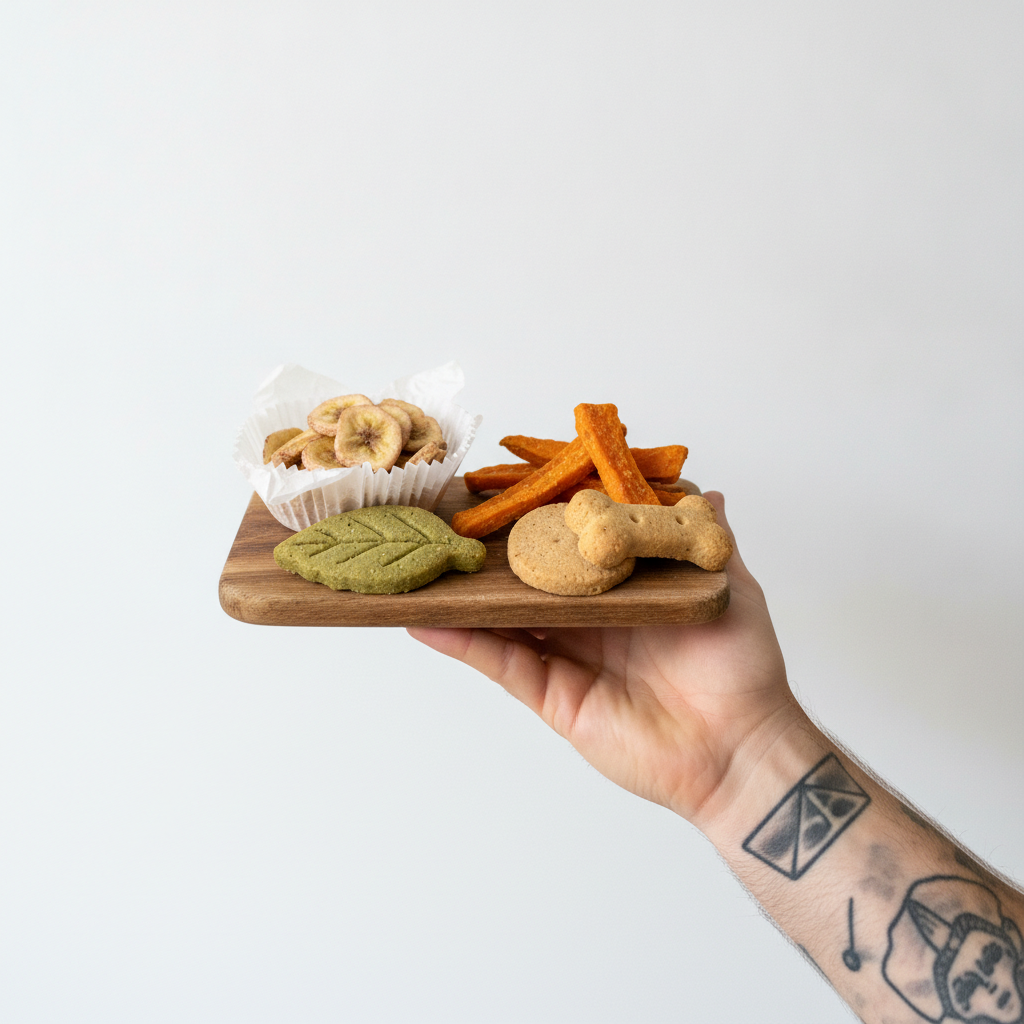
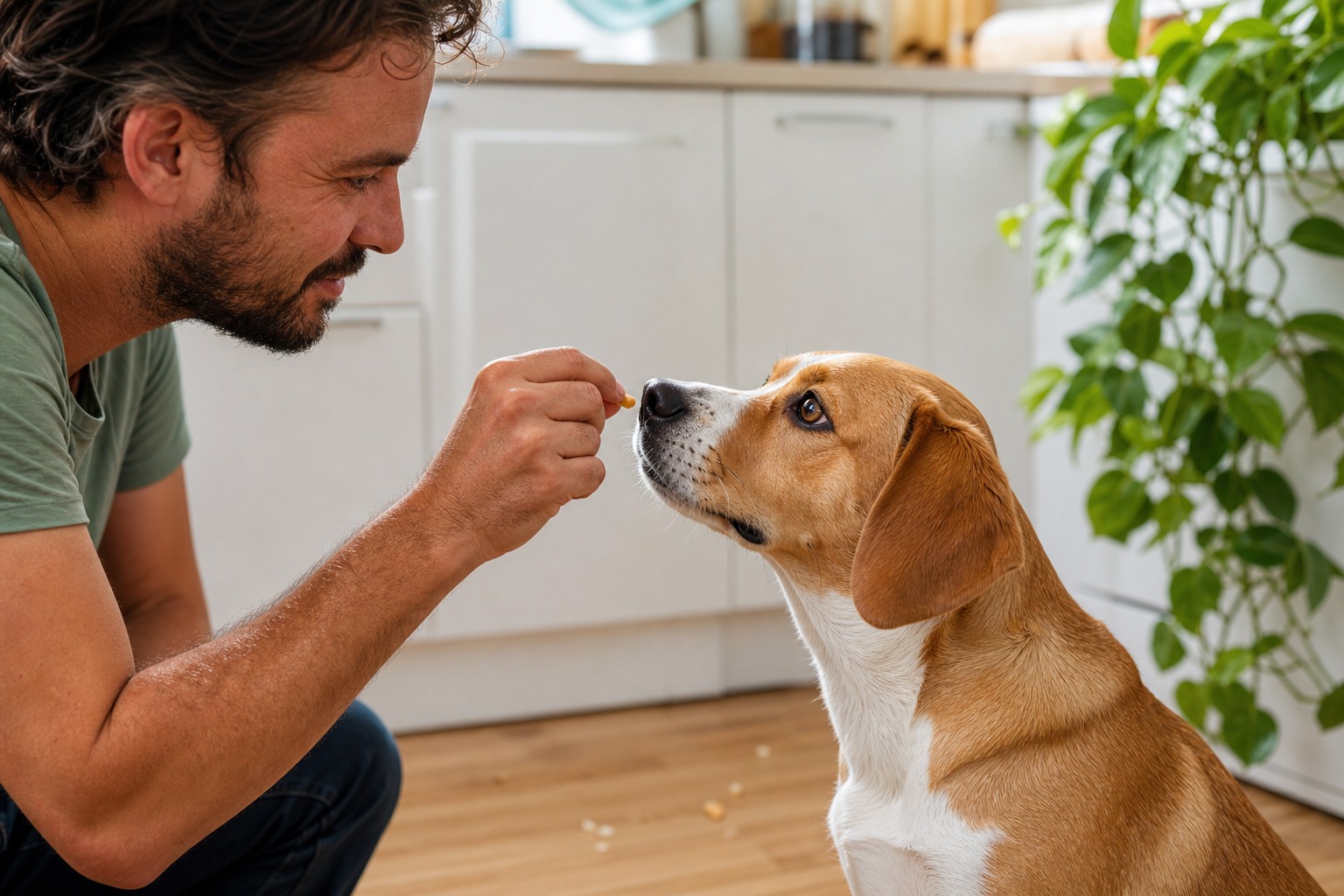
Treats made for training are meant to be handed out in volume, so they are tiny and very low in calorie by design. Used in a normal session or two, they are unlikely to make a real dent in your dog’s daily total. The everyday baseline for a trim, healthy dog is roughly two to four properly sized, pea-sized treats, but a focused training block using proper training treats is its own thing and generally will not tip the scale unless you are drilling multiple sessions a day. And remember that the reward is partly the moment, not just the morsel: the little hit of attention and success matters to your dog too, so praise and a game can stretch a small treat a long way.
One practical note, since dogs are relentless: keep training-treat bags sealed. The built-in seals often fail, so heavy-duty zip bags or a tight glass or ceramic container both keep the treats fresh and keep your determined snack thief out.
The hidden calories hiding in your fridge
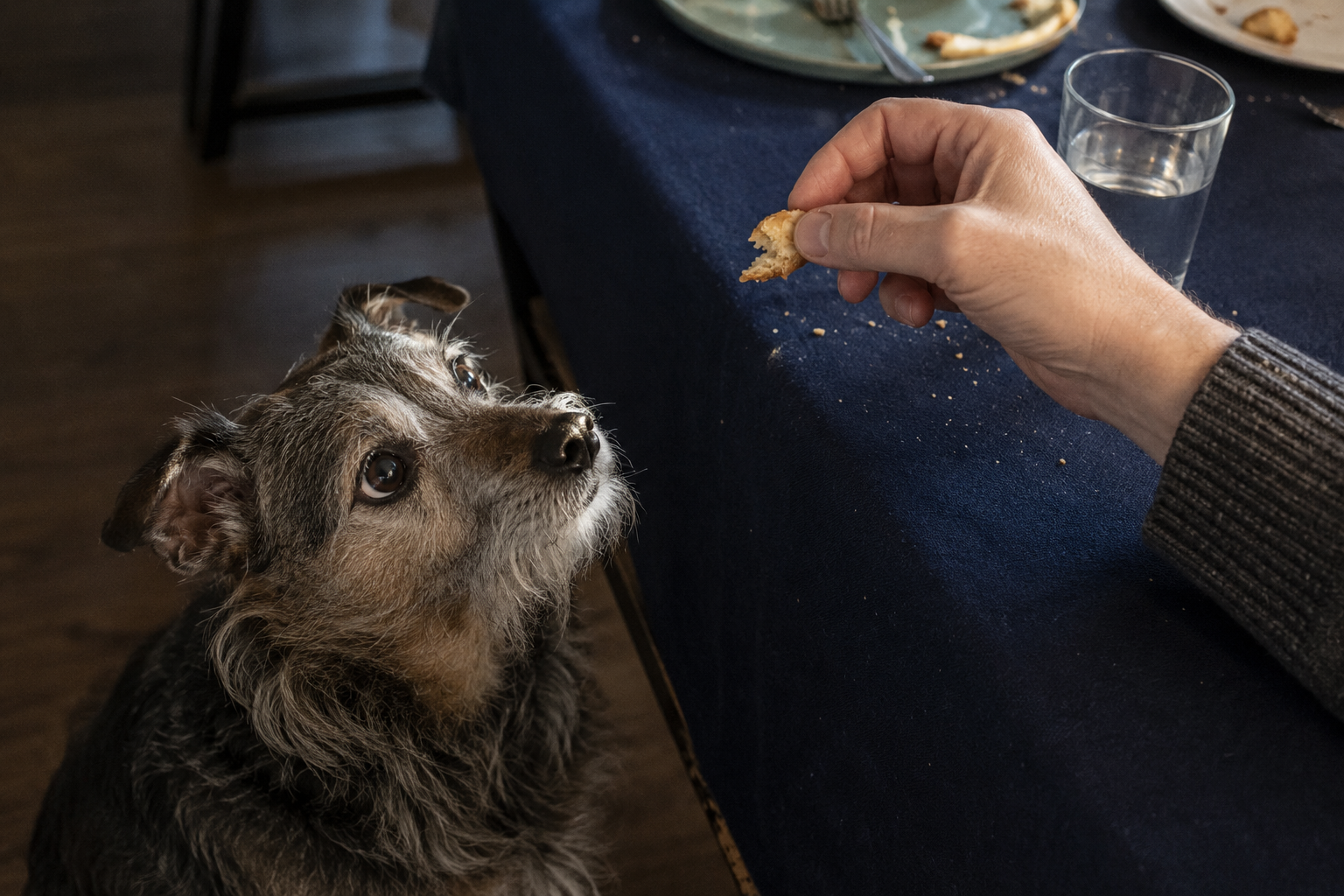
The treats that wreck a dog’s diet are usually not treats at all. They are people food, handed over with love and almost never counted.
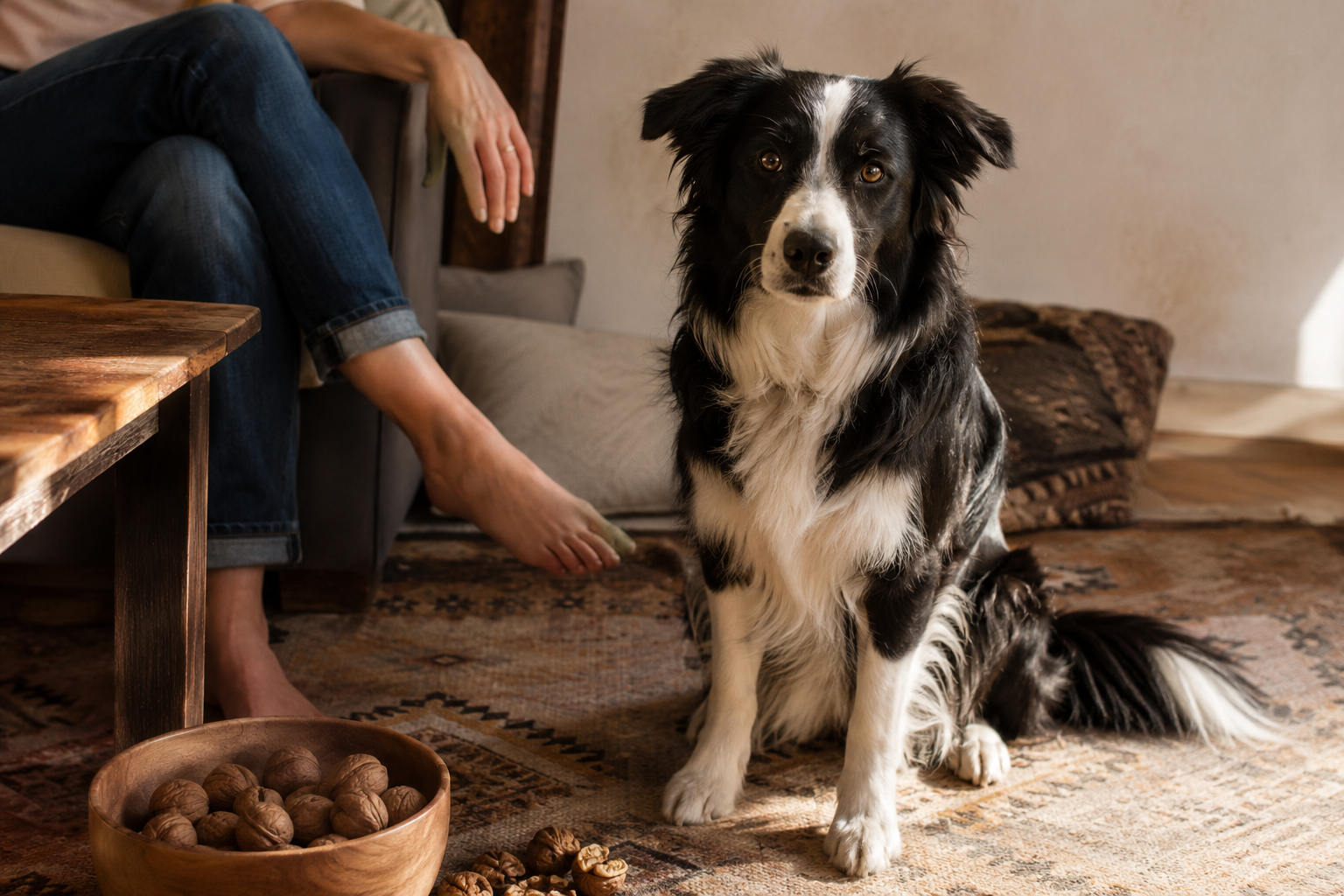
Human food tends to be far richer than dog food, so the calories stack up shockingly fast on a small body. One tablespoon of peanut butter can be around a quarter of a small dog’s entire daily calorie needs. An ounce of cheese can top 30 percent. Neither is toxic in a small amount, but a few “just a bite” moments a day can silently double a little dog’s intake. Even dental chews are calorie-dense in a way most owners never register, so they need to be counted against the daily total like anything else.
If you want to share from your own plate, reach for the lighter end. Plain white-meat chicken or turkey and vegetables like baby carrots, peas, and green beans are all reasonable. When you buy treats, read labels and lean toward whole-food ingredients and named meats, and skip products leaning on by-products and artificial colors, flavors, and preservatives. Treats that come in small pieces, or break down into smaller bits, are easier to portion honestly.
Watch the dog, not just the bag
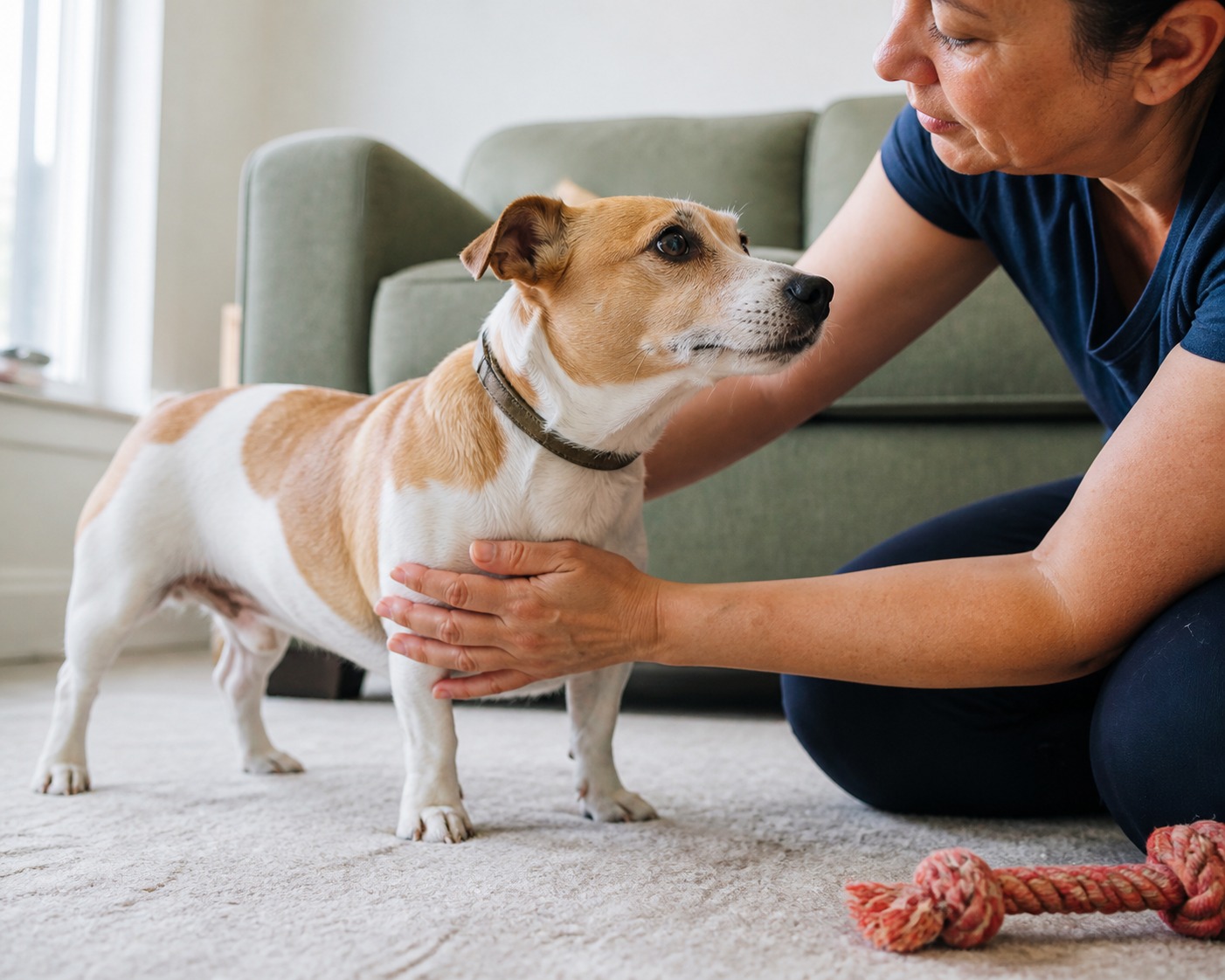
Calorie math sets the plan; your dog’s body tells you whether it is working. The most reliable home check is your hands. On a dog at a healthy weight you can feel the ribs under a light cover, feel the belly tuck up toward the groin, and feel a clear waist notch where the ribcage ends and the hip bones begin when you run your hands along the sides. It also helps to weigh your dog regularly and glance at their profile from above and the side every so often.
If the waist starts to disappear or the ribs get harder to find, that is the signal to trim calories before a few ounces become a few pounds. Swapping in lighter treats, using a portion of the day’s kibble as training rewards, and looping in your vet early all keep a small drift from becoming a weight problem. Reward with a “good dog” and a scratch as often as with food, and your dog honestly will not feel shorted.
“Owners tell me their dog barely gets treats, and then we add up the peanut butter, the crust off the toast, the dental chew, and the training bag, and it is a third of the day’s calories,” says Dr. Ravi Mehta. “Nobody is being irresponsible. They just never counted. The second they start counting, the weight problem usually solves itself.”
What newer research adds
The scale of this quiet problem keeps growing. In the Association for Pet Obesity Prevention’s 2024 survey, veterinary assessments put roughly 59 percent of dogs in the overweight-to-obese range, with about a fifth clinically obese. Owner awareness is part of the gap: fewer than half of dog owners said they were familiar with body condition scoring, and under a third recalled ever being given a score by their vet.
The encouraging flip side is that owners are paying more attention than they used to. In the same survey, over 60 percent of dog owners said they had tried to help their pet slim down, and the share who recognized their dog as overweight jumped sharply from the year before. Awareness is the first step, and counting treat calories is one of the simplest, most effective places to start.
References
- “2024 Pet Obesity Survey Results.” Association for Pet Obesity Prevention.
- “2014 AAHA Weight Management Guidelines for Dogs and Cats.” American Animal Hospital Association.