


Honeydew Is Mostly Sugar Water. That's the Catch for Dogs
Honeydew is a safe, hydrating summer treat for most dogs, but it's also naturally high in sugar, which changes the answer for diabetic and overweight pups. Plus the two parts you must remove first.

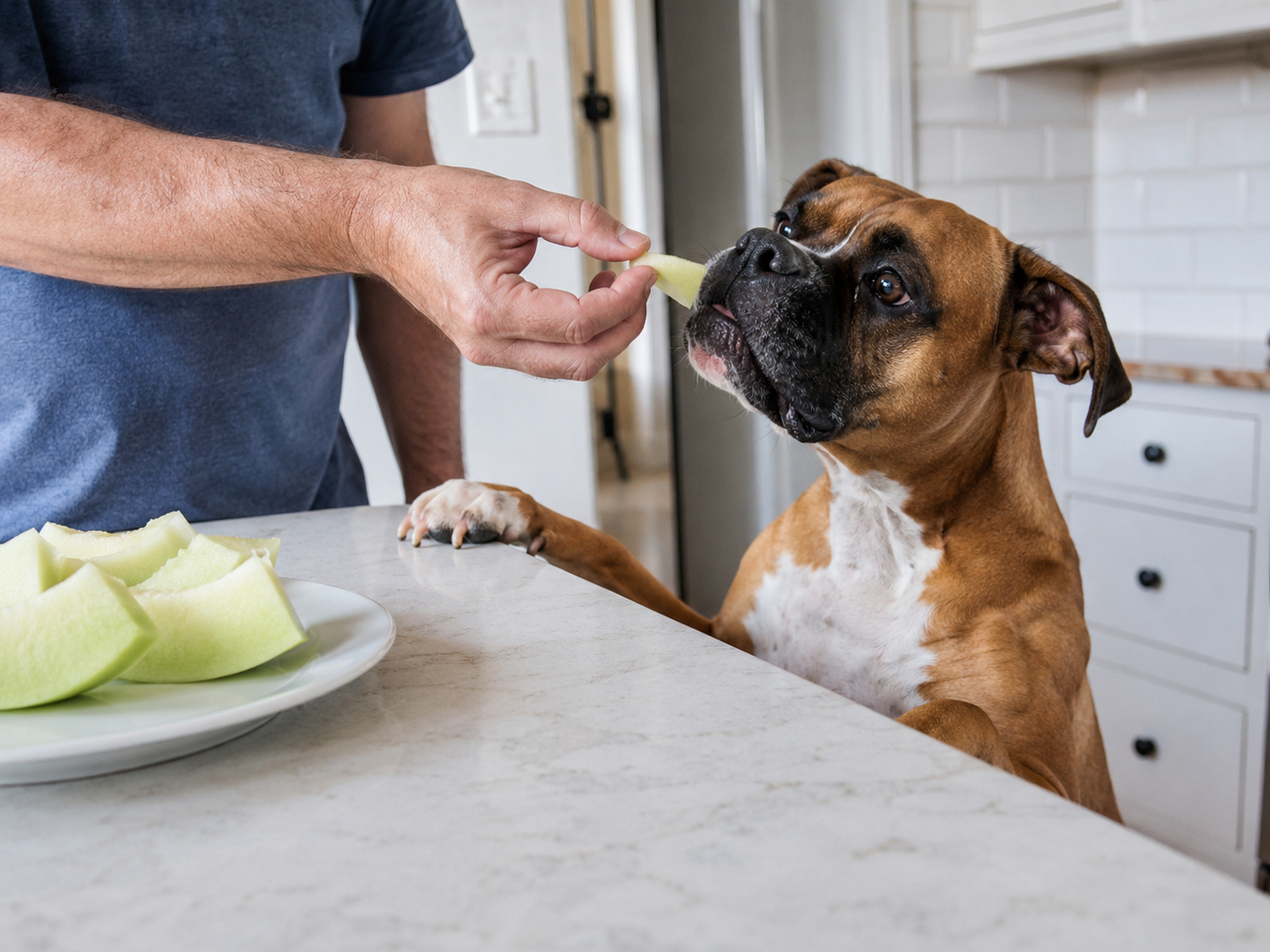
Honeydew is an easy yes for most dogs, and a genuinely good summer snack, so this is not a warning article. But it is worth being clear-eyed about what honeydew actually is, because the thing that makes it refreshing is also the thing that makes it a bad fit for some dogs. Honeydew is, in nutritional terms, mostly sweet water. That is wonderful on a hot afternoon and a problem if your dog is diabetic or carrying extra weight.
Why honeydew is a good treat
For a healthy dog, honeydew brings a lot to a small serving. Its high water content and low calorie count make it a great way to hydrate on a warm day. It is rich in dietary fiber, which supports digestion and helps a dog feel full. And it delivers potassium along with vitamins C and B6, nutrients that help support the immune system.
Honeydew is one of those treats that does a couple of useful things at once, hydration and a little nutrition, without many calories. The one thing I flag for owners is the sugar. For a healthy dog it’s a non-issue in small amounts, but for a diabetic or overweight dog, ‘natural’ sugar still counts, and it adds up faster than people think.
The sugar catch
Here is the tradeoff, stated plainly. Honeydew is naturally high in sugar, and that changes who it is right for. Fed sparingly to a healthy dog, that sugar is harmless. Fed often, or fed to the wrong dog, it can contribute to obesity and stomach upset. And for a dog with diabetes, honeydew is not a good treat at all, because the sugar works against exactly what you are trying to manage. If your dog has diabetes, hypothyroidism, or another health condition, talk to your vet before offering it.
The fix for a healthy dog is simple: keep it to a small handful of cut flesh, offered now and then rather than daily.
Remove the rind and the seeds, every time
The flesh is the only part your dog should get. Skip the rind entirely. It is hard to digest and can cause GI upset or, worse, an intestinal blockage. The seeds should come out too. They are not toxic, but they are hard to digest in quantity and can be a choking hazard for small dogs. Scoop out the seeds and cut away the rind before your dog ever gets near the melon, then cube the flesh to a size they can handle.
Other treats worth keeping in rotation
If you want to vary things or work around the sugar, a few options pair well. Green beans give you protein and fiber without the sugar, a nice contrast to honeydew. Mango, like honeydew, is rich in fiber and vitamin C but also high in sugar, so it lands in the same “moderation” category. Sweet potato is loaded with nutrients, vitamin C, antioxidants, potassium, fiber, and magnesium, and makes a more substantial treat.
And keep the usual danger list in mind, since sweet human snacks are often where dogs get into trouble. Chocolate sits at the top of the do-not-feed list. Ice cream is not a safe way to share a hot day with your dog. And pecans, easy for us, are highly toxic to dogs.
The bottom line
There are real human foods that are safe for dogs, and honeydew is one of them. Just introduce anything new slowly, keep treats to no more than 10 percent of the diet, and check with your vet first if your dog has an underlying condition. For a healthy dog on a hot day, a few cubes of seed-free, rind-free honeydew is a lovely thing to share. For a diabetic or overweight dog, it is one to skip.
What’s new since this was written
The context that has shifted is the weight conversation. Recent veterinary surveys put most U.S. dogs in the overweight-to-obese range, which sharpens the point about honeydew’s sugar: even a “healthy” fruit contributes calories and sugar that add up, so it belongs in the small-and-occasional column, especially for a dog you are trying to slim down. The upside is that honeydew’s high water and low calorie load still make it a smarter hot-weather treat than most biscuits, as long as the portion stays honest.
For diabetic dogs, the guidance has only gotten firmer as vets emphasize consistent, low-sugar diets. That keeps honeydew off the list for those dogs, and makes the “ask your vet first” step more than a formality if your dog has any condition affecting blood sugar or weight.
References
- “Melons.” UC Davis Veterinary Medicine, Nutrition Support Service. https://healthtopics.vetmed.ucdavis.edu/
- Association for Pet Obesity Prevention. “2024 Pet Obesity Survey Results.” https://www.petobesityprevention.org/2024-survey
- “Diabetes in Pets.” American Veterinary Medical Association. https://www.avma.org/resources-tools/pet-owners/petcare/diabetes-pets
Common questions
Is honeydew good for dogs?
In small amounts, yes. It's low in calories, rich in water, and delivers potassium, fiber, and vitamins B6 and C, which support hydration and immune function. The sugar content is the reason to keep it occasional rather than routine.
How much honeydew can a dog eat?
It depends on size, but a small handful of cut-up flesh is usually plenty. Like all treats, honeydew should stay under 10 percent of your dog's daily calories.
Can dogs with diabetes eat honeydew?
It's best avoided. Melons are naturally high in sugar, which makes them a poor fit for diabetic dogs. Check with your vet before offering any sweet fruit to a dog with a health condition.
Not a substitute for your vet. Our guidance is educational. For urgent symptoms, contact a vet or emergency clinic right away. Editorial standards
Dr. Nair is a veterinarian focused on diet and feeding. She covers everyday nutrition, treats, and the many "can they eat this?" questions owners ask, grounding each answer in what is actually safe and sensible for dogs and cats.
Meet our experts ↗Keep reading
 FoodGreen Beans Are a Great Dog Treat. The 'Green Bean Diet' Is NotDr. Priya Nair · 6 min
 FoodYou're Counting Dog Treats WrongDr. Ravi Mehta · 6 min
 FoodYour Dog Has a Sweet Tooth. That's Exactly the Problem.Dr. Nina Kohl · 7 min
 FoodThe 'Fattest Dog States' Ranking Went Viral. It Measures the Wrong Thing.Dr. Lena Park · 5 min
 FoodWhy Adult Dogs Shouldn't Live on Puppy Food Comes Down to One MineralDr. Lena Park · 8 min
 FoodCan Dogs Eat Bacon? Why the Salty Strip Is a SkipDr. Lena Park · 5 min