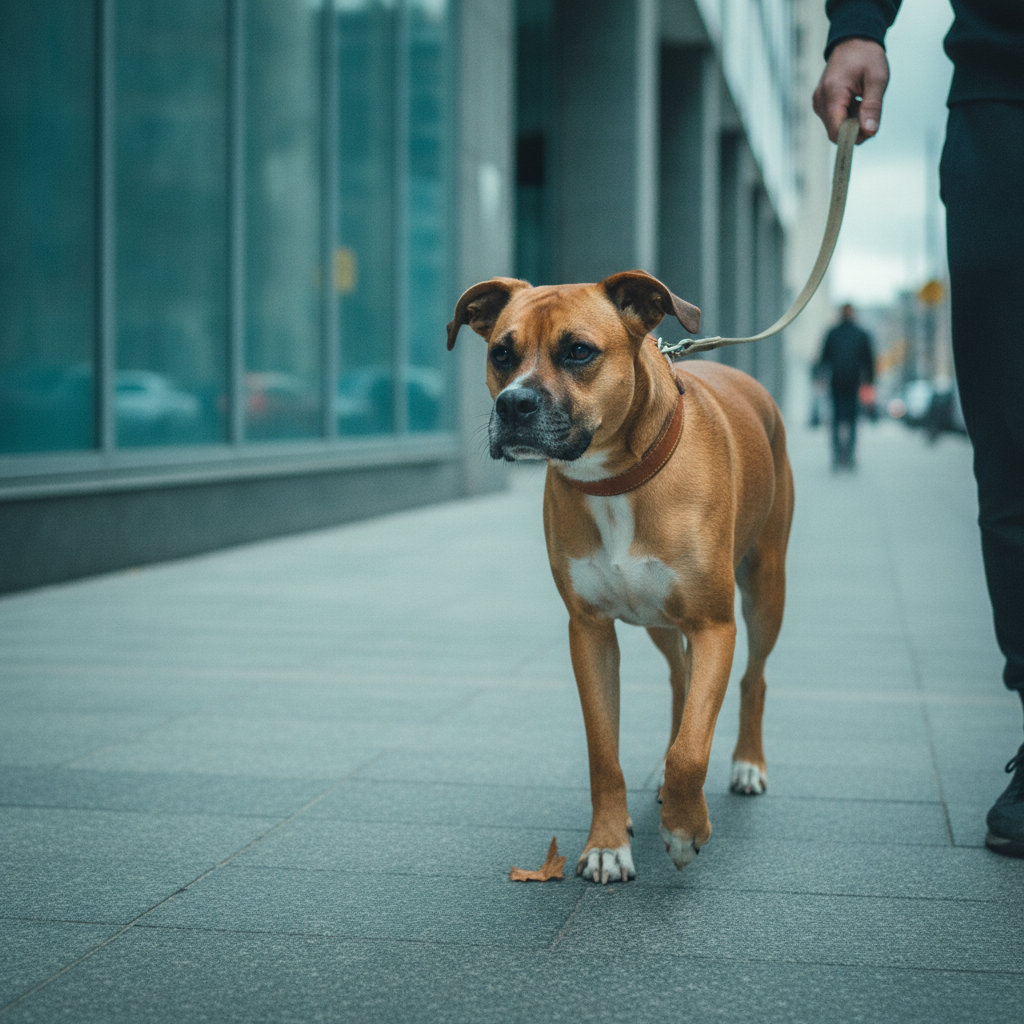
Every dog park has one. The dog who wants no part of the puppy chaos, tolerates exactly two sniffs before walking off, and gives the group play a look that says he is far too old for this. We tend to file that dog under “grouch” and move on. A study out of Hungary suggests we should be filing him under “gifted.”
The research, published in the journal Animals, set out to test whether a dog’s temperament changes how quickly it learns, and it landed on a genuinely surprising answer: the crankiest dogs in the sample were often the quickest studies, at least when the teacher was a stranger.
How you measure a dog’s grumpiness
The team, based at Eötvös Loránd University in Budapest and led by biologist Kata Vékony, first had to quantify something as slippery as a bad attitude. They did it with a questionnaire for the owners, and cleverly, they did not just ask “is your dog grumpy?” Instead they asked around it, probing how each dog behaved when groomed or bathed, whether it barked at situations it disliked, and whether it had ever snapped at or bitten a person or another dog. From those answers, each dog got an “irritability” score. Higher score, grouchier dog.
The test: a maze designed to annoy
Then came the task, which was essentially built to frustrate. Researchers placed a favorite treat or toy in plain sight behind a V-shaped wire-mesh fence. A dog’s first instinct is to charge straight at the thing it wants, nose to the mesh, which is exactly the wrong move. To win, the dog had to override that instinct and detour around the fence, all within a 60-second window.
The dogs tackled this in three different conditions. One group had to solve it alone, and most did not reach the prize before time ran out. A second group attempted it while their own owner offered guidance. A third group got help from a stranger instead.
The first result was itself a small surprise. When the helper was the owner, the agreeable dogs and the grumpy dogs performed about equally well. The researchers had expected dogs with smoother relationships with their people to learn better from them, and that difference simply did not appear.
The twist: grumpy dogs listen to strangers
The real finding came in the stranger group. There, the cranky dogs clearly outperformed the cheerful ones, solving the detour more successfully when a person they had never met showed them how.
The interpretation is where it gets interesting, and it is worth being precise about it, because “grumpy dogs are smarter” is not quite what the study says. What the data point to is not general intelligence or superior problem-solving. It is a specific talent for social learning. A dog who is sensitive and has little patience for uncomfortable or unfamiliar situations is, almost by necessity, watching those situations closely. And close attention is the raw material of learning from others.
“It fits everything we know about how animals learn,” says Dr. Ravi Mehta. “A dog who’s a little on edge around a new person isn’t tuning out, they’re tuned in, tracking every move that stranger makes. That vigilance looks like crankiness at the park, but in a learning task it becomes an advantage. The attentive dog picks up the cue faster.”
In other words, the same low tolerance that makes a dog hate the grooming table may make him a keen reader of the humans around him.
The caveats worth keeping
Good research says what it can’t conclude, and this study is careful. Breed was not factored into the analysis, so this is not a claim about which breeds are grouchy or gifted. Behavioral issues like genuine human or dog aggression and separation anxiety were also left out, because untangling those would have required a far larger sample. So treat the finding as a clean, narrow insight rather than a sweeping verdict on canine genius.
What to do with a grumpy dog
The practical upshot is reassuring for anyone living with a crab. A grumpy dog is not a broken or less-trainable dog. If anything, the research suggests these dogs can pick up cues quickly, as long as you work with their temperament rather than against it. That means not forcing them into the exact situations they hate, the crowded meet-and-greets, the itchy costumes, the relentlessly upbeat playgroups, and instead respecting that they know what they like and don’t. A dog who is comfortable being choosy is often a dog who is paying close attention to everything else.
So the next time your dog gives the dog park his signature glare, consider that he may not be antisocial. He may just be the smartest one there, quietly taking notes.
References
- Vékony, K. et al. “The Effect of Dogs’ Personality on Social Learning.” Animals, 2021.