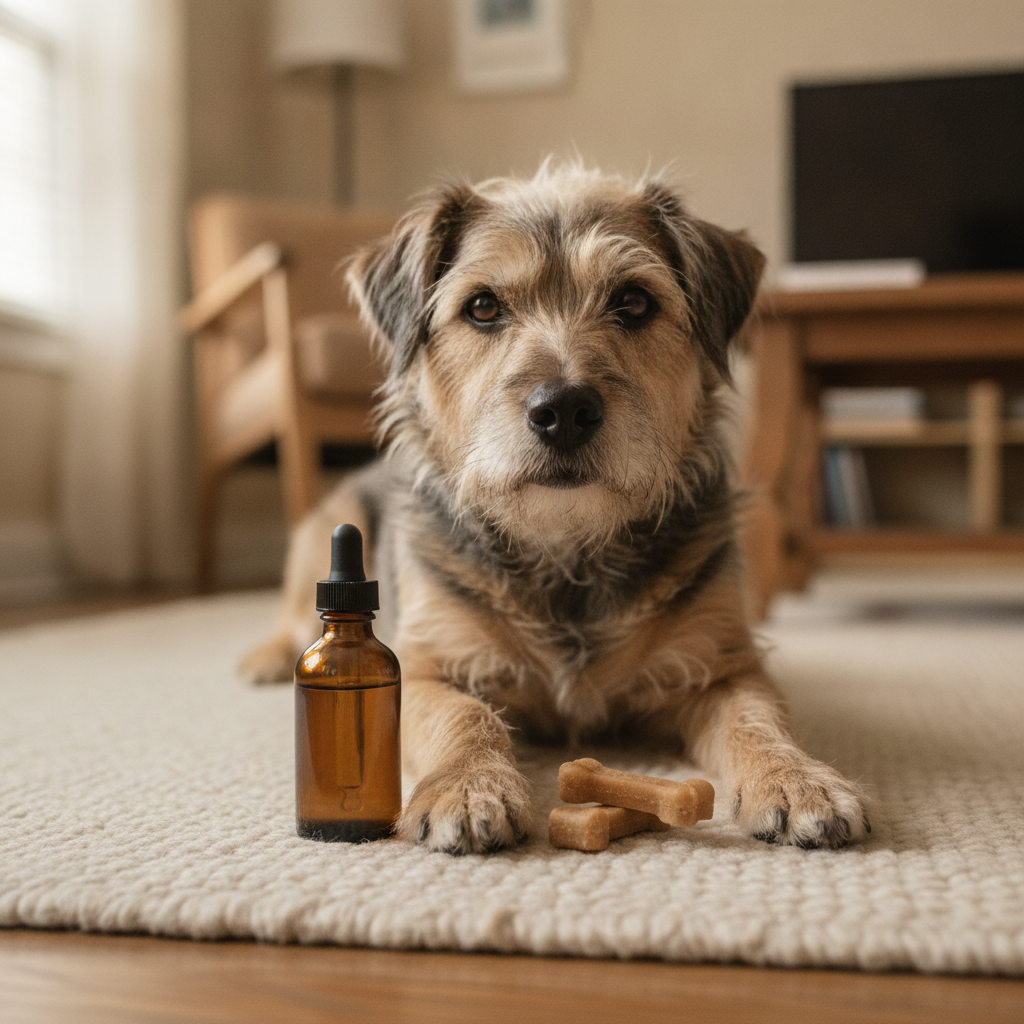
Most people know Greenies for dental chews, but the brand also sells a line of everyday supplements, and one of them is a digestive probiotic. It is genuinely useful. It is also, like every probiotic on the shelf, only worth buying if your dog has a reason to take it. So before we get to whether this one is good, the more important question: does your dog need a probiotic at all?
What a probiotic actually does
A probiotic is a dose of live, beneficial bacteria meant to support the microbiome, the enormous community of microbes living in your dog’s gut that helps digest food and keep stool firm. A healthy dog eating a complete diet already runs a balanced gut on its own. Where a probiotic earns its keep is when that balance gets knocked sideways: a course of antibiotics, a bout of stress-related diarrhea, a diet change, or a sensitive stomach that never quite settles.
The dogs who benefit most from a probiotic are the ones bouncing back from something, a round of antibiotics, a stressful move, a stomach that loose-stools at every new bag of food. For a healthy dog with normal poop, the money is usually better spent elsewhere.
— Dr. Priya Nair, DVM
If that sounds like your dog, a probiotic is worth trying. If your dog is thriving with normal, firm stool, you are not doing anything wrong by skipping it.
Where Greenies lands
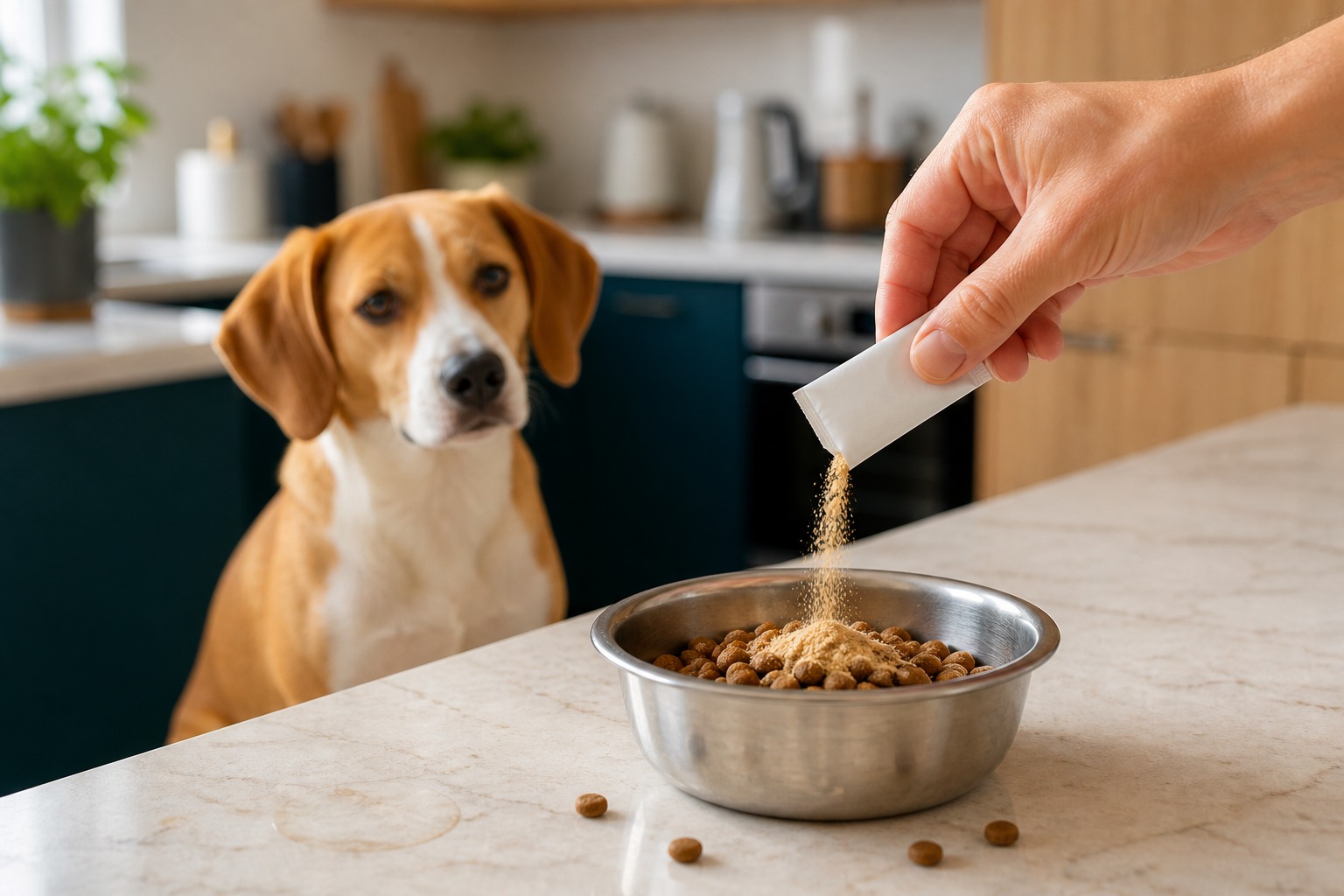
The Greenies Digestive Probiotic Supplement Powder comes as a single-serve powder you sprinkle over food, which is the format most dogs accept without a fight. It is labeled for dogs of all ages, each box holds 30 packets, and the routine is simple: one packet a day. It runs about $19 for the box. Greenies says it was developed with nutritionists, a veterinarian, and researchers, and the formula skips artificial colors, flavors, and preservatives.
A few specifics worth knowing, because they are the parts of a probiotic that actually matter. Greenies pairs its probiotic strain with a prebiotic and a postbiotic, which the brand calls a Biotic Blend. That combination is the sensible design: the prebiotic is essentially food for the good bacteria, which helps them survive the trip through the stomach. The brand also sells a chewy version in 40- and 80-count pouches for dogs who would rather take a treat than a topper; that format is built around a measured dose of Bacillus subtilis, a spore-forming strain that holds up well on a shelf.
How to read any probiotic label
This is the part the packaging rarely makes easy, so here is the shortlist to check on Greenies or any competitor:
The strain, not just “probiotics,” should be named, and the number of live organisms (measured in CFU, or colony-forming units) should be listed per serving. A spore-forming strain like Bacillus subtilis is a plus because it survives storage better than more fragile strains. A prebiotic in the mix helps the bacteria actually establish. And a shelf-stability or “guaranteed through” note tells you the live count means something at the end of the box, not just the day it was packed. Greenies checks these boxes, which is the real reason it is an easy recommendation over a mystery tub of “gut support.”
One honest caveat: probiotics are not a fix for a sick dog. Ongoing vomiting, bloody stool, weight loss, or diarrhea that lasts more than a day or two is a vet visit, not a supplement.
The bottom line
If your dog’s gut needs a hand, Greenies’ powder is a reasonable, affordable, sensibly formulated pick that is easy to give. If your dog is already doing fine, the best digestive supplement is often no supplement at all. Match the product to a real reason, and you will get more out of it than you would chasing “gut health” for its own sake.