


Her Comics Name the Anxiety. Her Three Pugs Interrupt It.
Illustrator Gemma Correll built a following drawing her own depression and anxiety, and a life around a trio of rescue Pugs. The two aren't separate hobbies. They're the same coping system.
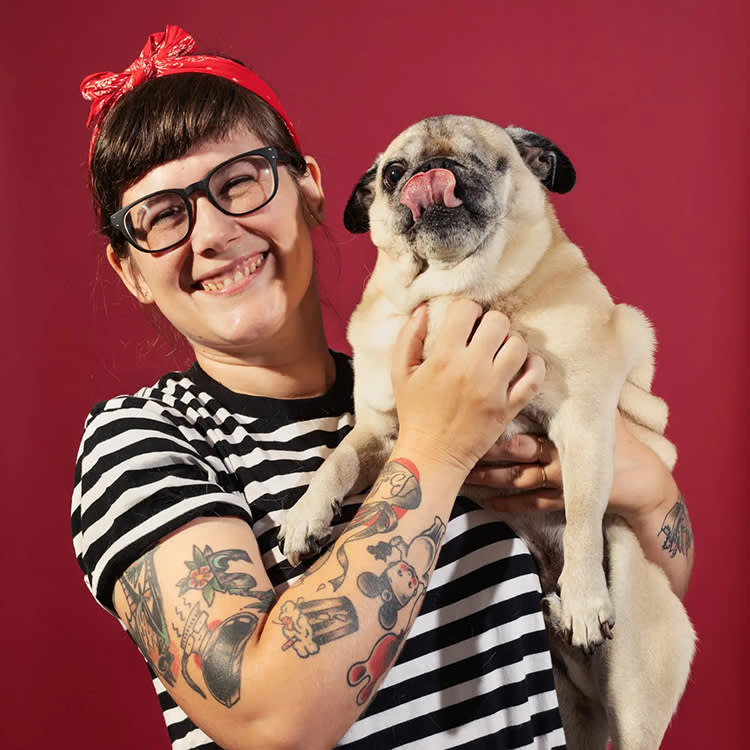
There are two things Gemma Correll is known for, and at first glance they look unrelated. One is a body of witty, painfully relatable cartoons that put the anxiety and depression she lives with on the page. The other is an unwavering devotion to Pugs, specifically and exclusively Pugs. Spend a little time with how she talks about both, though, and the line between them dissolves. The comics and the dogs are not two interests that happen to overlap. They are two halves of the same machine for staying afloat.
A park, fifty Pugs, and no going back
The obsession has an origin story, and it’s a good one. On an early trip to the United States with the man who would become her husband, the UK-born illustrator wandered into a San Francisco park in the middle of a Pug meetup, dozens of the little goblins careening around together. She had barely seen one in the flesh before. That was the end of it. The combination of enormous personality packed into a tiny, rarely-aggressive body did her in on the spot, and it has defined a good chunk of her life and career since, running through books like A Pug’s Guide to Etiquette and Doodled Dogs.
Today she shares her life with three rescue Pugs, delightfully named Mr. Pickles, Bean, and Zander, the last of whom is, technically, half Chihuahua. And by her own account, they do a surprising amount of quiet work on her mental health.
What the dogs actually do
The help isn’t abstract. For an admitted introvert who would happily stay indoors around the clock, the dogs are the reason she gets outside at all. They pull her into daylight and movement she knows is good for her but wouldn’t reliably choose on her own. That’s not a small thing dressed up as a big one; getting a low-mood, over-thinking brain up and moving is one of the most reliable interventions there is.
Then there’s the interruption. Correll describes a mind prone to sitting and stewing, spiraling on an idea or a worry. The Pugs break the loop, sometimes just by jostling around, sometimes because one of them decides it urgently needs to go outside and drags her, and the spiral, out of the chair with it. When she’s feeling low, one will climb up and settle on her or lick her face, and it is nearly impossible to stay locked in a dark thought with a wheezing potato demanding your attention an inch from your nose.
And there’s the plain physical comfort. She half-jokingly calls them weighted blankets, warm, heavy little bodies that pile onto her, and the comparison is more apt than it sounds. Deep pressure is genuinely calming for a lot of nervous systems. Hers just happen to snore.
Why this tracks with the science
None of what Correll reports is unusual or mystical, which is part of what makes it useful. The mechanisms she’s describing have names. Getting outside and active with a dog is a form of behavioral activation, a first-line, evidence-backed approach for low mood that works precisely because it interrupts the sit-and-ruminate cycle. The physical warmth and weight of an animal against you can down-regulate a keyed-up stress response. Her insight isn’t that Pugs are magic. It’s that three of them, needing walks and lap space and attention, force the exact behaviors a therapist might otherwise have to coax out of her.
How they end up on the page
The dogs bleed into the work, too. Correll’s comics are personal, so the Pugs slip into them constantly, sometimes as the subject, sometimes just loitering in the corner of a panel, because they’re with her most of the time. Literally with her: she’ll describe having a proper studio room and then working on the couch anyway, drawing tablet balanced on her lap, because all three Pugs want to be piled on her at once, jostling for the closest spot. “Velcro dog” is a phrase that gets used about clingy breeds; she describes a household that took the concept somewhere new.
Paying it back
That love has an outward-facing side. Correll has worked with a number of Pug rescues, and the way she helps is with the thing she’s got, her art. She’s designed shirts for rescues across the US, Canada, and the UK, donated pieces and pet portraits to fundraising events, and painted murals, including a wall of dancing Pugs to brighten a plain fence at a rescue’s new location near Los Angeles. It’s a tidy summary of the whole picture: the same dogs that keep her head above water are also the reason she keeps giving her work away to help more of them find homes.
The takeaway isn’t “get a Pug and cure your anxiety.” It’s subtler and more honest than that. For one artist, three small, demanding, loving animals turned out to be a set of daily nudges toward the behaviors that keep her well, and a bottomless source of material besides.
Sasha Ford is a certified cat behaviour consultant who has worked with shelters, catteries, and private clients across the country. They review all feline behaviour content at The Pet Times, with expertise in multi-cat households, indoor enrichment, and stress-related disorders.
Meet our experts ↗