Walk into any pet store’s “sustainable” aisle and you’ll find bamboo bowls, hemp collars, and poop bags stamped with green leaves. Buy all of it and you’ll have spent real money to shrink your pet’s environmental impact by almost nothing. That’s the uncomfortable truth about eco pet parenting: the swaps that feel the most virtuous are usually the ones that matter least, and the changes that actually count are the ones that don’t fit neatly on a hangtag.
So this isn’t a shopping list. It’s a triage. If you’re going to spend effort being a greener pet parent, spend it where the footprint actually lives, and skip the feel-good gestures that let a marketing team do your thinking for you.
Where the pawprint actually comes from
Start with the honest accounting, because it reshapes everything below. The single biggest driver of your pet’s environmental impact is not their toys, their bed, or their poop bags. It’s their food, specifically the meat in it.
A widely cited 2017 UCLA analysis put hard numbers on this. It estimated that feeding America’s cats and dogs generates on the order of 64 million tons of greenhouse-gas emissions a year, and that the waste those pets produce rivals the annual trash output of about 6.6 million people. The dominant factor was the animal protein in pet food, because raising livestock is land-, water-, and fuel-intensive before the food ever reaches a bag. Toys, furniture, litter, and packaging all add up, but they’re rounding errors next to what’s in the bowl. Gregory Okin, the environmental scientist behind that study, has noted that the industry is at least starting to respond, with reformulated products, alternative proteins, and anti-waste efforts, but the physics of the problem still points straight at food.
Keep that hierarchy in mind as you read. The list below is ordered by how much each move actually accomplishes, not by how good it feels.
1. Feed the right amount (the swap nobody wants)
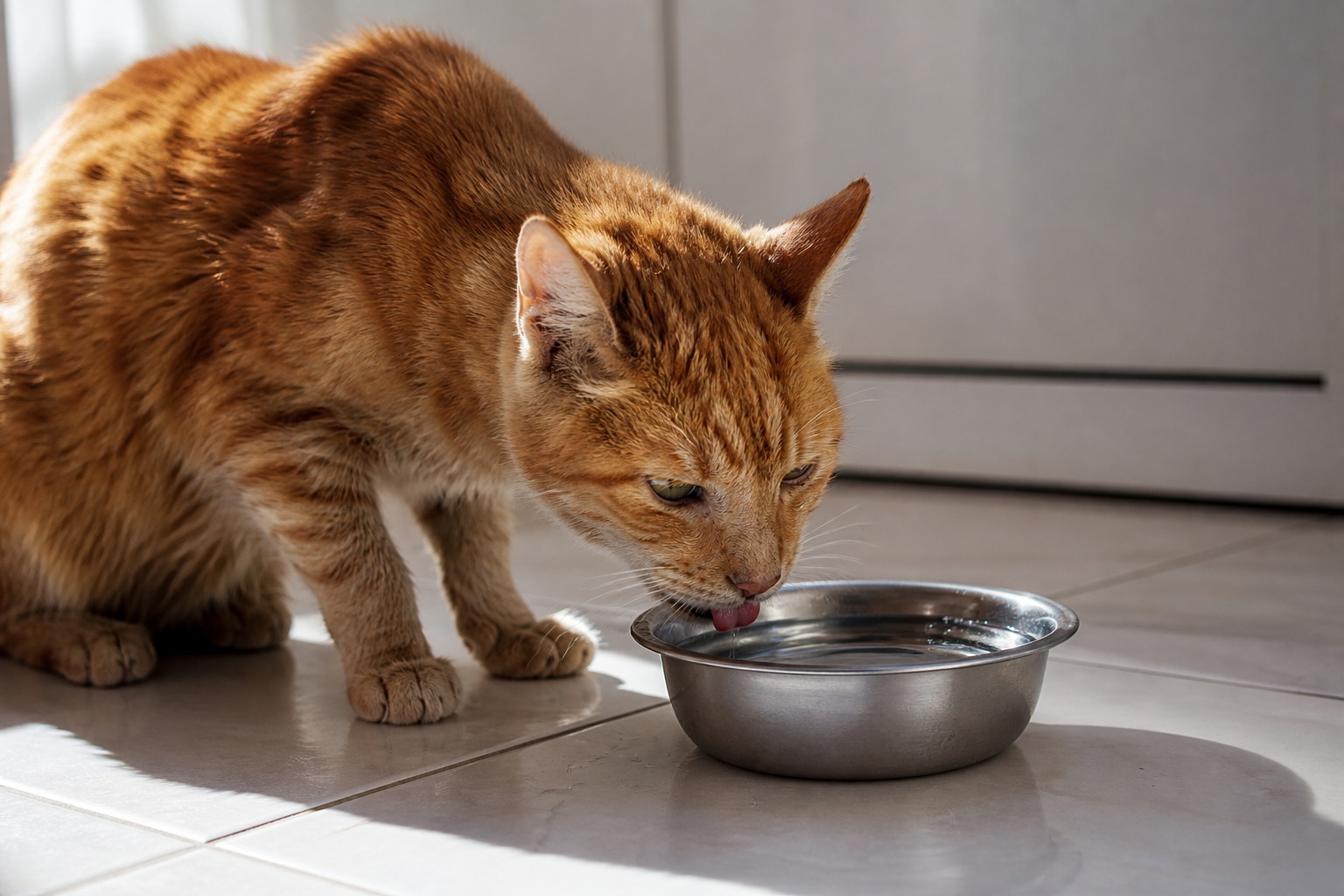
The highest-impact change costs nothing and requires no shopping: stop overfeeding. Every extra scoop and casual handful of treats has an environmental cost, because you’re producing and shipping food your pet’s body doesn’t need, and it has a health cost that’s arguably worse.
The scale of the problem is enormous. The Association for Pet Obesity Prevention’s most recent surveys estimate that well over half of U.S. dogs and cats carry excess weight, with a large share clinically obese. Those extra pounds are tied to a grim list of consequences: arthritis, diabetes, heart disease, joint problems, and shorter lives.
“Overfeeding is the one environmental problem I can fix in the exam room, because it’s the same conversation as the health problem,” says Dr. Ravi Mehta. “Every unneeded scoop is food that got grown, shipped, and packaged for no reason, and it’s also a step toward a heavier, sicker, shorter-lived pet. Measure meals against your pet’s actual needs, not the scoop that feels generous, and you help the planet and your dog in a single move.”
So “measure the food, skip the extra handful” is the rare move that cuts your pet’s pawprint and lengthens their life in the same gesture. If it helps, think of it less as depriving your pet and more as not manufacturing a health problem one treat at a time.
2. Rethink the protein
Because meat is the footprint, the food bowl is where a real dent gets made. A growing number of pet foods now use novel or lower-impact proteins, insect-based kibble, and thoughtfully formulated plant-forward diets among them, that can lower the emissions baked into every meal.
Two cautions keep this honest. First, this is a genuine diet change, so loop in your vet before overhauling what your pet eats, especially for cats, who are obligate carnivores with strict nutritional needs. Second, “sustainable” on a label is not a regulated promise; look for a food that meets established nutritional standards rather than one that just markets green. Done right, though, shifting even part of your pet’s protein toward a lower-impact source moves more carbon than every bamboo accessory you could ever buy.
3. Adopt instead of buying
Bringing a pet home is itself an environmental decision. Choosing a shelter or rescue animal over a breeder-bred one means you’re not adding to the total population of pets that need feeding, which is the thing driving the footprint in the first place. It also supports a local organization instead of a breeding operation, and it’s usually easier on your budget.
There’s a bluntness worth quoting here from environmental writer Paul Greenberg, whose work on climate and consumption has argued that greening the pet industry means little if we keep breeding ever more animals to begin with. The most sustainable pet, in other words, is often the one already waiting in a shelter.
4. Buy food in bulk, and locally when you can
Once you’ve got the food itself sorted, how you buy it matters. Purchasing in larger quantities cuts down on packaging per meal and on the emissions from frequent shipping and delivery. Buying from a nearby source trims transport further. A caveat aimed at the subscription-box trend: services built around a steady monthly stream of new stuff can quietly encourage accumulation, which works against you. Fewer, bigger, closer purchases beat a constant drip of small shipments.
5. Choose litter that isn’t strip-mined clay
For cat households, litter is a real and overlooked lever. The default, clay-based clumping litter, is cheap and everywhere, but it’s typically strip-mined and doesn’t break down. More sustainable options do the same job: litters made from corn or other reclaimed food byproducts, from kiln-dried wood shavings salvaged from lumber production, or from recycled paper. Switching won’t rescue the planet single-handedly, but it removes a genuinely extractive product from your monthly routine, and many of the alternatives biodegrade where clay simply doesn’t.
6. Buy toys and gear made to last (or from waste)
Here’s where “sustainable” shopping finally earns a spot, with a condition: the greenest product is the one you don’t have to replace. Look for toys, beds, and furniture built from recycled or upcycled materials and, above all, built to survive your pet. Some makers use post-consumer recycled plastic for bed filling; others turn reclaimed fabrics and salvaged materials into durable gear. The environmental win comes less from the eco-label and more from durability, one tough toy that lasts years beats a bin’s worth of cheap ones that shred in a week. Buy less, buy sturdier, and the recycled-materials angle becomes a bonus rather than the whole story.
7. Deal with poop honestly (and skip the greenwashed bags)
Waste is last on this list on purpose, because it’s where the most greenwashing happens for the least real payoff, but it’s still worth doing right. The trap: many bags marketed as “biodegradable” or “compostable” are made from bioplastics that don’t meaningfully break down in a landfill, so you’re paying a premium for a feeling. And most municipal compost facilities won’t take pet waste anyway, because it can carry pathogens, cat waste in particular can contain a parasite that survives ordinary composting and poses a human health risk, so it should never go in a food-garden compost.
The realistic move is a recycled-content bag, ideally one made largely from post-consumer plastic. The bag itself is still landfill-bound, of course, but at least you’ve given old plastic a second life instead of buying a false promise. The ambitious can build a dedicated backyard pet-waste digester kept well away from anything edible, but for most people, “buy the recycled bag and ignore the compostable marketing” is the honest answer.
The one-line version
If you do nothing else on this list, do the first two: feed the right amount and rethink the protein. Together they touch the actual source of your pet’s footprint, the food, and everything below them is a smaller, supporting move. Being a greener pet parent isn’t about buying a shelf of eco-labeled stuff. It’s about spending your effort where it counts and refusing to let a green leaf on a package stand in for the work.
What’s new since this was written
Two developments have sharpened this picture recently. The lower-impact pet food space has matured well past novelty, insect-protein and plant-forward diets that once sounded fringe now sit on mainstream shelves and are backed by a growing body of nutritional research, making swap number two more practical than it was even a couple of years ago. At the same time, pet obesity numbers have kept climbing rather than improving, which is why “feed the right amount” has only become more important, not less. The tools are getting better; the temptation to overfeed hasn’t budged.
References
- Okin, G. S. (2017). “Environmental impacts of food consumption by dogs and cats.” PLOS ONE. Link
- Association for Pet Obesity Prevention, 2024 Pet Obesity Survey Results
- Knight, A., et al. (2022). “Vegan versus meat-based dog food: Guardian-reported health outcomes.” PLOS ONE. Link
- U.S. Composting Council, Guidance on pet waste and compost