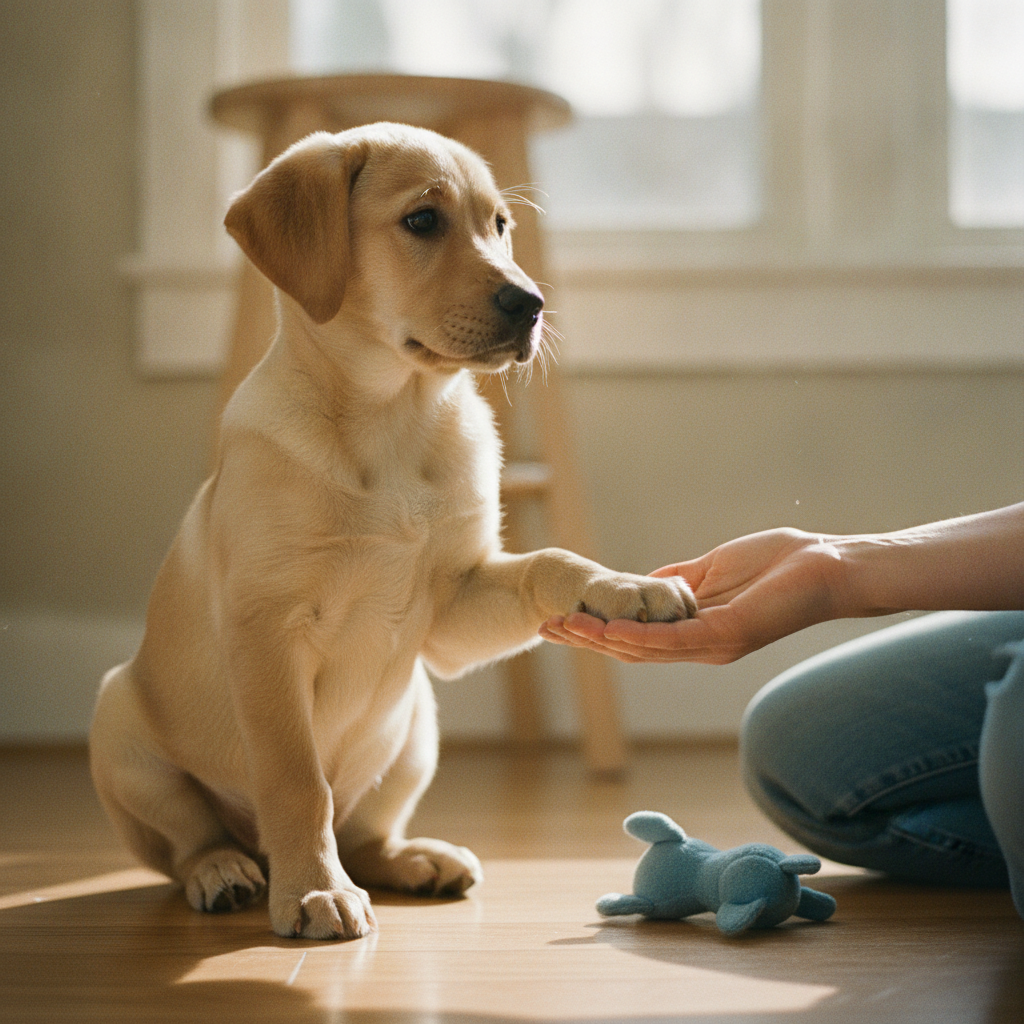
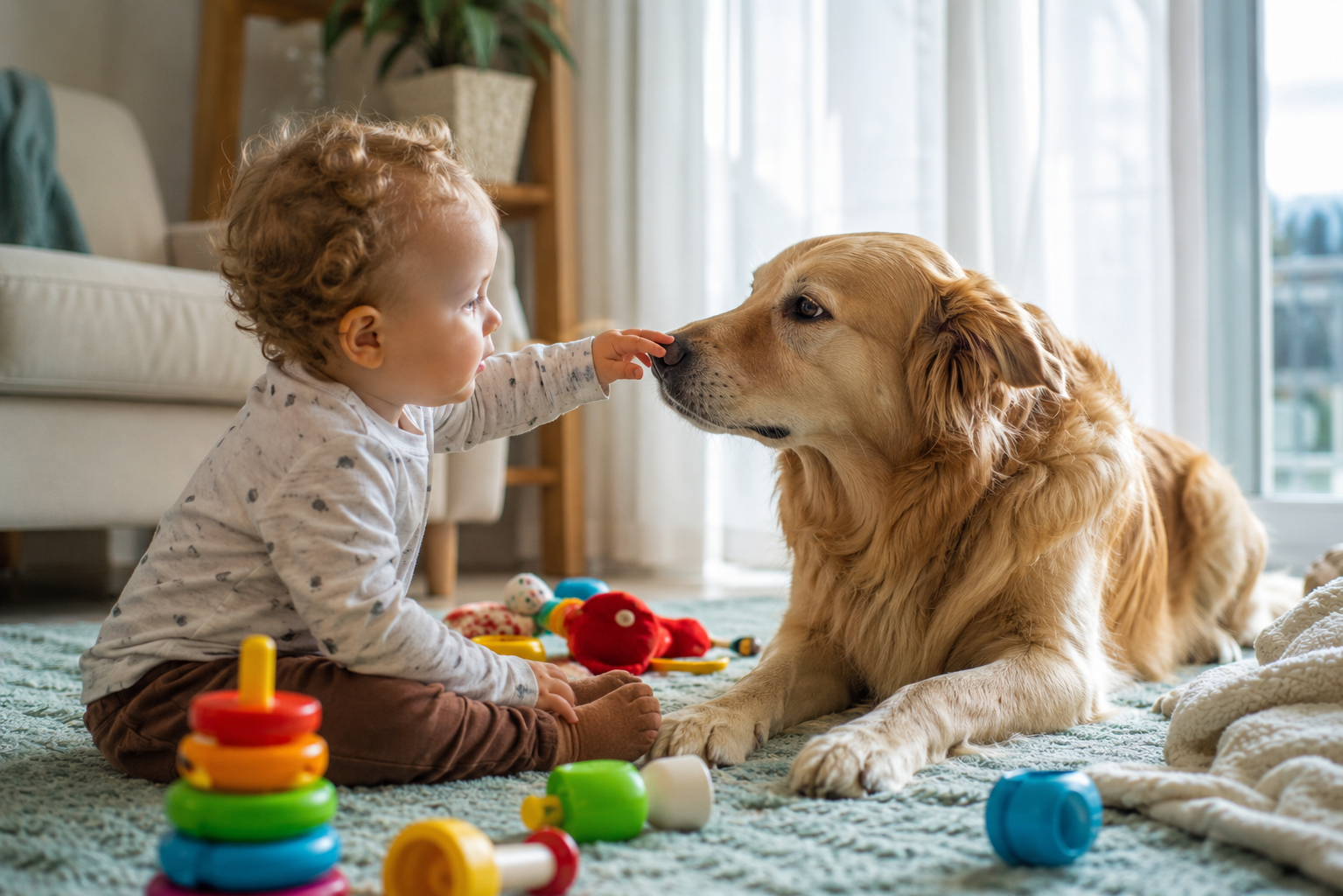
Dog trainers have said it for years: think of your dog like a toddler. It turns out that comparison is more literal than the cliché suggests. A study published in September 2025 in Current Biology found that certain word-savvy dogs can do something we used to think was a young-child specialty. They can group objects by what the objects are for — is this a tug toy or a fetch toy? — even when the toys share no color, shape, or texture in common. And the striking part is how they learned it: not through drills, but through ordinary play.
The headline that ran everywhere was “dogs are like babies.” The finding underneath is more useful than that, and it has a practical payoff for anyone with a dog and a toy box.
What the researchers actually did
The work came out of the Family Dog Project at Eötvös Loránd University in Budapest, led by Claudia Fugazza with colleagues Andrea Sommese and Ádám Miklósi. They worked with a rare group of dogs known as “gifted word learners” — dogs who, just through normal play with their owners, pick up the names of dozens of individual toys and remember them over time. Seven such dogs took part, six border collies and a blue heeler.
The team wanted to know whether these dogs could go beyond memorizing names and instead sort objects by function, the way a small child sorts “things you eat with” from “things you write with.” So the owners taught their dogs two categories through play alone. One set of toys, all different from one another, got used for fetch. Another set, again with nothing physical in common, got used for tug. No formal training sessions, just five to thirty minutes of everyday play a day.
Then came the test. The dogs were handed brand-new objects they had never seen, with no shared features and no names, and the owners engaged them in either a tossing game or a pulling game with each. Finally the dogs were asked to fetch “a tug one” or “a fetch one” from a pile — and they could do it, correctly sorting the new objects into the function-based category they had only ever experienced through play.
Why this matters more than the “like a baby” line
Before this, the ability to classify objects with no shared physical features had only been shown in what researchers called “language-trained animals,” like specific African grey parrots and apes, and usually in one exceptional individual at a time. Seeing it in a group of ordinary pet dogs, learned casually through play, is genuinely new.
“What lands for me isn’t that dogs are secretly geniuses,” says Dr. Amara Solis. “It’s that a real cognitive skill — sorting the world by function — grew out of nothing but play and attention. These weren’t lab-drilled animals. Their owners just played with them consistently and talked to them while they did it. That’s the takeaway I’d want every dog owner to sit with.”
That is the part worth holding onto. The dogs did not get there through a rigid training program. They got there because their people played with them a lot, named things while they did, and stayed consistent. Enrichment and conversation, not flashcards.
How to try a version at home
Your dog does not need to be a certified prodigy to start down this road. Every gifted word learner began as a dog who knew zero toy names. The path is the same for any dog: build a vocabulary first, then layer function on top. The steps are in the box above — name one toy, repeat across short play sessions, add more toys one at a time, then start pairing toys with a type of game and watch whether your dog begins generalizing.
Two honest caveats. First, not every dog will become a word wizard; the “gifted” dogs are unusual, and that is exactly why they are interesting to scientists. Second, the point is not to produce a party trick. It is to give your dog more of the thing that clearly drove the whole result: engaged, playful, verbal interaction with you. Even if your dog never sorts a single tug toy from a fetch toy, the daily play that this experiment runs on is enrichment your dog benefits from either way.
What newer research adds
This study is itself the newest word on the subject, and it extends a growing body of work from the same Budapest group on gifted word learners — dogs who defy the old assumption that canine “vocabulary” tops out at a handful of commands. The open questions now are the interesting ones: how common the underlying ability is across the wider dog population, whether it can be coaxed out of dogs who are not natural word learners, and how far the function-based sorting can stretch. For now, the practical headline holds: play is not just play. For a dog, it is one of the main ways they come to understand their world.