


Yes, Male Dogs Have Nipples. The Part That Actually Matters Is Cancer.
How many nipples a dog has is trivia. Why you should know your own dog's nipples by heart is not: they're the baseline that helps you catch mammary cancer early, and they tie into a spay decision most owners never hear explained.

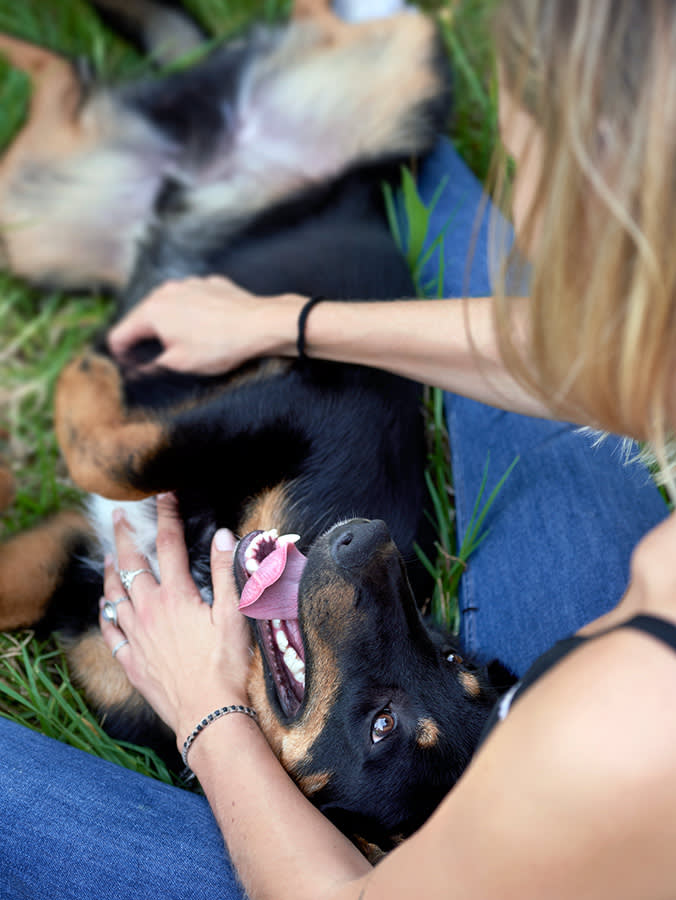
Somewhere during a long belly rub, your hand finds a small bump on your dog’s underside, then another, and a little jolt of worry goes through you. Then you count, spot the matching bumps marching down each side, and relax: nipples. Both jobs your dog’s nipples do for you are wrapped up in that moment. They are a mild curiosity, and they are a health baseline. The count is the fun part. The baseline is the part that can save your dog’s life.
The trivia, handled
Let us dispatch the questions everyone actually types into a search bar, because they are quick.
How many? Most dogs carry six to ten, in two rows from chest to groin. There is no blueprint number. It does not have to be even, and dogs are allowed their variation.
What decides the count? Less than you would think. No breed holds a record, and pure versus mixed makes no difference on its own. The one loose pattern is size: bigger dogs tend to have more nipples, smaller dogs fewer, roughly in proportion to the body. Beyond that it comes down to the individual dog, and there is not a lot of hard science pinning down why. A Rottweiler tends to land at eight to ten; a tiny dog may sit at six. Nobody should be counting nipples to guess a breed.
Do males have them, and why? They do, in the same spots, just smaller and completely nonfunctional. The reason is a quirk of development: in the embryo, nipples form before the genitals differentiate into male or female. They show up first, they do no harm, so evolution simply left them in place on males. Not everything in biology has a purpose. Some things are just leftovers.
Odd numbers? Possible. Pairs are the norm, but during development one half of a pair can fail to form, or a dog can sprout an extra. Uncommon, and nothing to fret over.
That is genuinely all the nipple math worth knowing. Now the part the internet lists tend to bury.
Why you should actually know your dog’s nipples
Here is the reframe. The reason to get familiar with your dog’s nipples is not so you can win a trivia night. It is so that you own a mental map of what is normal on your dog’s belly, because that map is your early-warning system for one of the more common and dangerous problems in unspayed female dogs: mammary cancer.
Nipples are typically small and flesh-colored to pinkish, tucked under the hair where you would not notice them until a belly rub. That very ordinariness is why a real problem can hide among them. So the move is simple and worth doing this week: run your hands along both rows and learn what your dog’s normal feels like. Location, size, symmetry, texture. Once you know normal, an abnormal is loud.
I tell owners to treat the belly like they’d treat their own baseline at a skin check. You’re not looking for anything on any single day. You’re building a memory of normal, so that the day something new shows up, you catch it in week one instead of month three. With mammary tumors, that head start genuinely changes the odds.
The numbers that make this urgent
This is the net-new part most nipple explainers skip, and it is the reason the belly rub matters. In female dogs, mammary tumors are common and often serious:
- Roughly half of all canine mammary tumors are malignant.
- More than a quarter of unspayed female dogs will develop a mammary tumor in their lifetime.
A new lump beside or on a nipple in an intact or older female is therefore never a “watch it for a few months” situation. It is a “get it checked” situation, because a tumor found small and early is a far more manageable problem than one found large.
The spay-timing angle nobody frames this way
The mammary-cancer risk also ties directly into a decision most owners make for entirely different reasons, and it deserves to be on the table. Spaying, and specifically when it is done, has a striking effect on that lifetime tumor risk:
- Spayed before the first heat, a dog’s mammary-cancer risk is about 0.5 percent.
- Spayed after the first heat, it climbs to roughly 8 percent.
- Spayed after the second heat, about 26 percent.
- By around two and a half years of age, spaying no longer reduces the risk at all.
A 2025 systematic review continues to support pre-pubertal spaying as one of the most effective ways to lower mammary-tumor risk. Spay timing is a real medical conversation with several factors, including breed and size and joint health, and it is one to have with your vet rather than settle from an article. But the mammary-cancer piece belongs in it, and a lot of owners have never once heard it framed as cancer prevention.
Nipple, skin tag, or tick?
Because nipples are small bumps in a line, they get confused with other small bumps, and the confusion runs both ways: a real growth mistaken for a nipple, or a nipple mistaken for something sinister. A few checks sort it out. Nipples come in symmetrical pairs, so if you feel a lump, look straight across the midline for its twin; a lone bump with no partner deserves a second look. Compare color, size, and texture to your dog’s known nipples. And if you are worried it is a tick, check for legs and movement, and watch whether it grows: a feeding tick swells quickly over hours, a nipple does not. Skin tags and other growths can masquerade too, which is one more reason the baseline map pays off.
What changes, and what doesn’t
For most male and spayed female dogs, nipples stay quietly the same for life, which is exactly why any change stands out and is worth a vet call: new lumpiness, swelling, pain, or a shift in size, shape, or color. In intact females, expect some normal change, nipples can enlarge during a heat cycle and noticeably during pregnancy, so context matters. And if a nursing mother has more puppies than nipples, the litter usually sorts out a rotation on its own; your job is to watch each puppy’s weight and supplement any that are getting crowded out.
The bottom line
Count your dog’s nipples once for fun, six to ten, in pairs, males included, and then forget the number. What is worth keeping is the habit behind it: knowing your dog’s belly well enough that a new lump registers instantly. In female dogs especially, that familiarity is a real cancer-screening tool, the spay-timing decision is a genuine lever on the same risk, and any change in a nipple is a reason to call your vet rather than wait and wonder.
Common questions
Do male dogs have nipples?
Yes. Males have nipples in the same location as females, just smaller and nonfunctional. They form early in fetal development, before the genitals differentiate, and since they cause no harm, evolution never bothered to remove them.
Can a dog have an odd number of nipples?
It happens. Nipples usually come in symmetrical pairs, but one of a pair can fail to develop, or a dog can grow an extra (supernumerary) one. Both are uncommon and generally harmless.
When should a change in my dog's nipple worry me?
Any new lump, swelling, discharge, or change in size, shape, or color, especially in an unspayed or older female, warrants a prompt vet visit. In females, mammary lumps can be tumors, and roughly half of canine mammary tumors are malignant, so early is always better.
Not a substitute for your vet. Our guidance is educational. For urgent symptoms, contact a vet or emergency clinic right away. Editorial standards
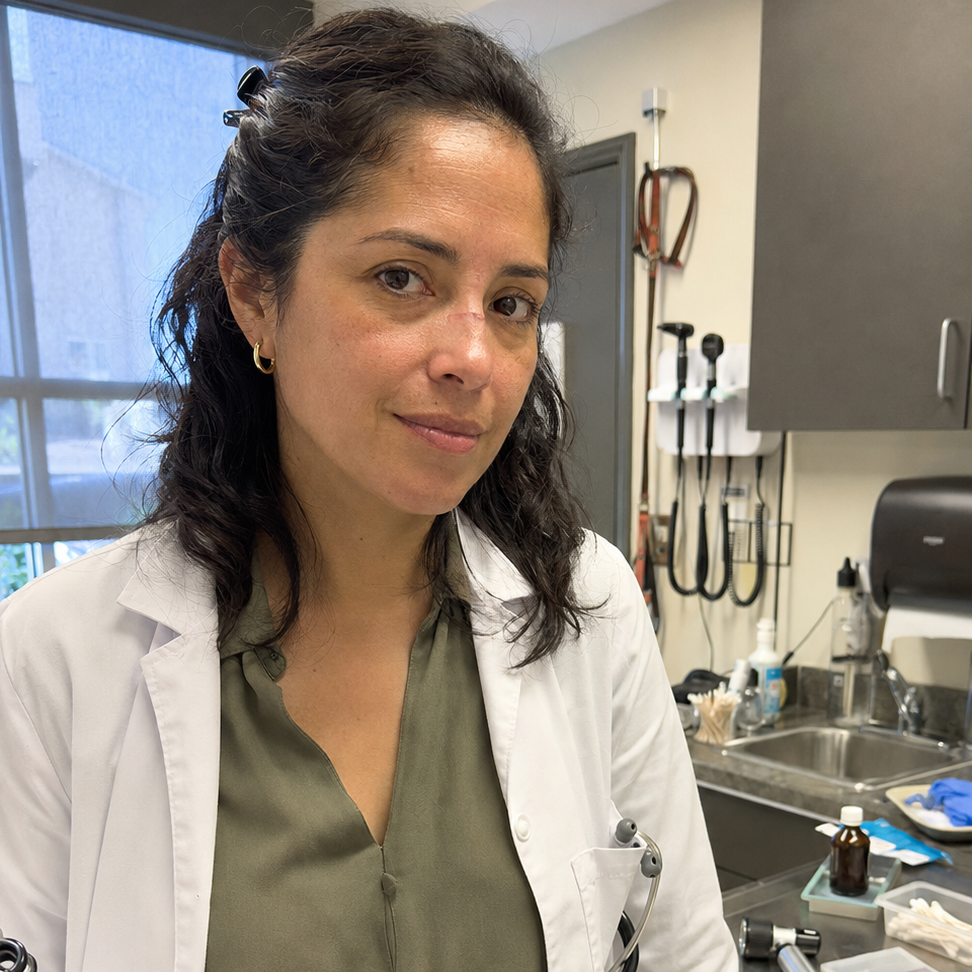
Dr. Solis is a board-certified veterinary dermatologist with over twelve years of clinical experience. She advises on skin conditions, allergies, and grooming practices that affect coat and skin health. All dermatology and allergy content at The Pet Times is reviewed by her team before publication.
Meet our experts ↗Keep reading
 Health & WellnessYou Can't Eyeball a Dog Pregnancy. Here's What Actually Tells You.Dr. Mara Chen · 6 min
 Health & WellnessThe Scary Part of Roundworms Isn't in Your Dog. It's in Your Yard.Dr. Mara Chen · 6 min
 Health & WellnessYour Dog Can't Have Down Syndrome. What You're Seeing Is Still Real.Dr. Amara Solis · 8 min
 Health & WellnessEye Gunk Is Normal. The Color and the Count Tell You When It Isn't.Dr. Ravi Mehta · 9 min
 Health & WellnessYour Dog Can Smell the Setup. How to Actually Get a Pill Down.Dr. Ravi Mehta · 8 min
 Health & WellnessLeptospirosis Used to Be a Country-Dog Problem. Now It's Hunting City Dogs.Dr. Ravi Mehta · 8 min