


Your Dog Isn't Being Difficult. They Might Be Wired Differently.
The dog who can't settle, won't focus, or melts down at the park may not need more discipline. A growing body of research suggests some dogs are neurodivergent, and it changes how we should train them.

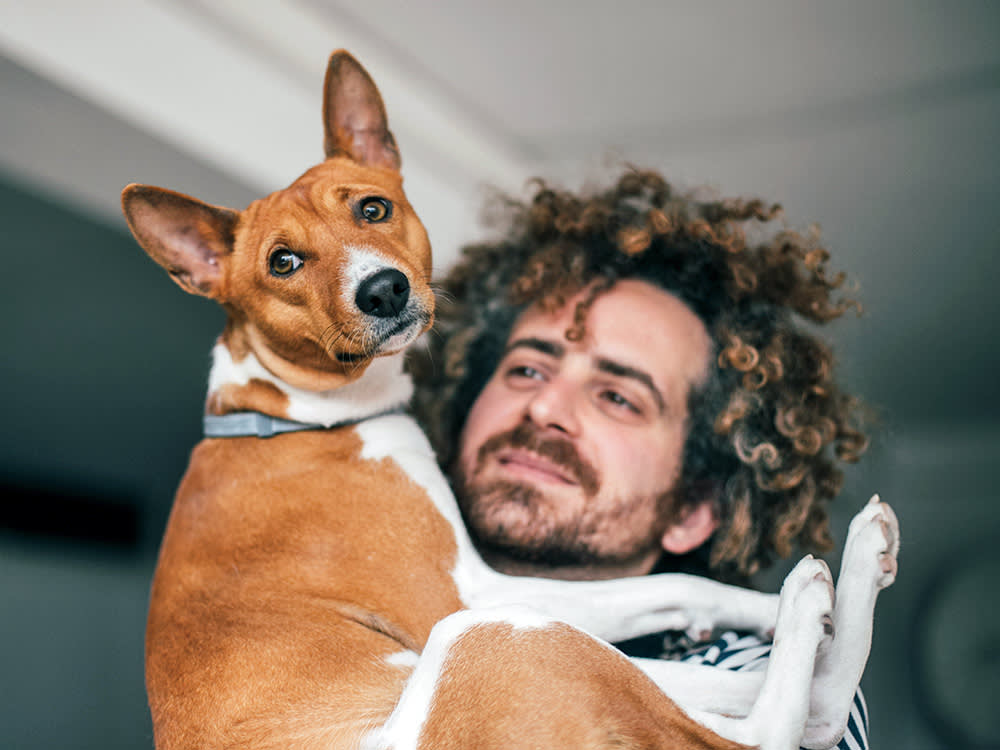
Most of us carry a picture in our heads of how a dog “should” act. Calm on a leash, focused during training, unbothered by a crowded park. When a real dog fails to match that picture, the usual verdict is that they are stubborn, badly behaved, or in need of a firmer hand. There is another explanation that the science is only now catching up to: some dogs simply have brains that work differently, and no amount of correction will train that difference away.
The word making the rounds for this is neurodivergence. It started as a way for people to describe brains that are wired outside the typical range, the kind of self-understanding that has spread widely as mental-health literacy has grown. Researchers are increasingly asking whether the same idea applies to the animals sharing our couches. The early answer is a careful yes, and it has real consequences for how you live with and train the dog in front of you.
What researchers can actually say about a dog’s brain
Let’s be clear about the limits first, because they matter. There is no formal diagnosis of ADHD or autism for dogs, and there may never be one. A dog can’t narrate their inner world, so we can’t line their experience up against ours the way a clinician can with a person. That gap is exactly where owners get into trouble, projecting a human feeling onto a wagging tail and reading intent that isn’t there.
Within those limits, though, scientists have found genuine overlap. Dogs show the same three traits that define ADHD in people: hyperactivity, trouble paying attention, and impulsivity. Researchers have built validated questionnaires to measure those traits, and the dogs who score high on impulsivity tend to have lower levels of dopamine and serotonin, the very same chemistry that drives impulsive behavior in humans. Dopamine helps a dog hold focus; serotonin helps keep their moods on an even keel. When those run low, a dog struggles with both.
The autism parallel is even more striking at the genetic level. Some dogs carry a mutation in a gene called Shank3, which is one of the best-studied autism-linked genes in humans. Dogs with that mutation tend to want less social contact. In studies, they avoid looking at human faces and respond more flatly to them than dogs without the variant. Separate work has pinpointed genetic markers tied to the opposite pattern too, the intensely social, almost demanding friendliness that some dogs show, which researchers connect to the same stretch of DNA involved in a hypersocial condition in people.
None of this means your dog “has autism” or “has ADHD.” It means the raw ingredients of a differently wired brain, the genes, the neurochemistry, the behavior, show up in dogs in ways we can measure. That is a reason for humility, not a label to hang around your dog’s neck.
The most useful thing this research does is take the moral judgment out of behavior. When an owner stops asking ‘why is my dog being bad’ and starts asking ‘what is my dog’s brain actually doing right now,’ the whole training relationship changes for the better.
There was never one “normal” dog to begin with
Here is the piece that gets lost in the neurodivergence conversation, and it reframes everything. Even before you get to individual brain chemistry, there is no single baseline dog to deviate from. We spent thousands of years breeding dogs for specific jobs, and those jobs left fingerprints on temperament that outlast the work itself.
A herding breed was shaped to lock onto a human handler and check in constantly. A terrier was built to make independent decisions down a burrow with no one telling it what to do. Many working and guarding breeds were selected to be indifferent or suspicious toward strangers. Almost none of our dogs do that original work anymore, but the instincts ride along anyway. So a Border Collie who can’t stop staring at you and a terrier who ignores your recall aren’t two ends of a good-to-bad scale. They are two different defaults, each perfectly normal for the animal it lives inside.
Stack individual variation on top of breed-level variation, and the idea of a “neurotypical dog” mostly dissolves. What you have instead is a specific animal with a specific nervous system, and your job is to train that animal rather than the average one in a textbook.
How to train the brain you actually have
The practical payoff of all this is a shift from forcing conformity to working with the grain of your dog’s wiring. A few patterns come up again and again.
The dog who can’t stop scanning the environment. If every leaf and jogger yanks your dog’s focus away, don’t start training where the distractions live. Teach a new skill somewhere calm, like your living room, until it’s solid. Then raise the difficulty in small steps: a quiet sidewalk, an empty parking lot, and only much later a busy park. For a dog whose attention is always half-elsewhere, better treats help too. Save your dog’s absolute favorite reward for the moments you’re competing with the whole outside world.
The dog whose mind wanders in two minutes. A short attention span is not a training failure, it’s a design spec to work around. Skip the long drilling sessions. Two or three minutes, a few times a day, will teach most dogs far more than one grinding half-hour. Break skills up with a burst of play so the session feels like a game with pauses, not a lecture. The play both rewards the dog and resets their focus for the next round.
The dog who tips into overwhelm. Some dogs are simply more sensitive, whether by temperament or because a bad experience left a mark. With these dogs, your goal in every session is to keep stress low. If you see the early signs of a dog coming apart, ask for one easy, well-known cue like a sit, pay generously, and stop there. If something in the environment is the trigger, add distance. Space is one of the most underused tools in dog training. From a comfortable distance a worried dog can watch, settle, and slowly close the gap on their own timeline. You are never trying to flood them into coping.
Across all three, the throughline is that a struggling dog is not a defiant dog. They are meeting the world with the only skills and the only nervous system they have. Read the difficulty as information about what to change, not as a character flaw to punish out of them.
When it’s worth bringing in help
One honest addition the “just be patient” advice usually skips: sometimes patience isn’t enough, and that’s not your failure either. If your dog’s impulsivity or reactivity is severe, escalating, or putting anyone at risk, that’s a reason to loop in a certified professional dog trainer or, for the harder cases, a veterinary behaviorist. Low serotonin and dopamine aren’t only training targets; for some dogs they’re a medical picture a vet can actually address, sometimes alongside behavior work. Knowing the line between “we can shape this at home” and “this needs a professional” is part of meeting your dog where they are.
What newer research adds
Since this idea first started circulating, the science has kept moving, and it’s pushed in an interesting direction. In late 2025, researchers writing for a general audience made the case that we may have quietly bred neurodiversity into our pets: the very domestication that made dogs so attuned to us also widened the range of brains they come with. Under that view, a neurodivergent dog isn’t a glitch, it’s a predictable result of how we shaped the species.
There’s also new evidence about the dog-human bond itself. Studies using brain recordings have found that when a dog and a person hold each other’s gaze, their neural activity begins to sync up, and dogs carrying the Shank3 variant show less of that syncing, mirroring the reduced social pull seen in the gene’s human counterpart. In one striking follow-up, a single dose of a psychedelic compound temporarily boosted attention and that brain-to-brain coupling in Shank3 dogs, which researchers are studying less as a dog treatment than as a window into human autism. The takeaway for owners is smaller and kinder than any headline: your dog’s capacity to connect runs partly on machinery you can’t see, and some dogs are working with a different setup than others.
The bottom line
Understanding that dogs can be neurodivergent doesn’t hand you a diagnosis or a shortcut. What it hands you is a better question. Instead of asking why your dog won’t be normal, you get to ask what this particular dog needs to succeed. Train to their strengths, respect their limits, and the sessions get more effective and, honestly, more fun. Honoring the way your dog is actually built is one of the few things in training that pays off every single time.
References
- Bunford, N., et al. “Associations between owner-reported ADHD-like traits and behavioral and physiological measures in dogs.” Translational Psychiatry, 2019.
- Tiira, K., et al. “Impulsivity, inattention and hyperactivity in dogs: links with serotonin and dopamine metabolites.” Applied Animal Behaviour Science / behavioral genetics literature.
- Tian, R., et al. “Modeling SHANK3-associated autism spectrum disorder in Beagle dogs via CRISPR/Cas9 gene editing.” Molecular Psychiatry, 2023.
- vonHoldt, B. M., et al. “Structural variants in genes associated with human Williams-Beuren syndrome underlie stereotypical hypersociability in domestic dogs.” Science Advances, 2017.
- Dodman, N., et al. “Autistic dogs? Neurodiversity in our pets and what it might mean for us.” The Conversation, November 2025.
Dr. Kohl is a board-certified veterinary dentist with a particular interest in preventive oral care. She reviews all dental health content at The Pet Times and contributes practical guides on home dental routines, professional cleaning, and oral disease prevention.
Meet our experts ↗Keep reading
 First DaysYour Puppy Isn't Manipulating You. Stop Letting Them Cry It Out.Dr. Nina Kohl · 6 min
 TrainingThe Algorithm Rewards Bad Dog Training. Here Are 10 Tells.Dr. Mara Chen · 7 min
 TrainingYour Dog Isn't Being Rude. He's Cornered.Dr. Amara Solis · 8 min
 TrainingSending Your Dog to Its Crate as Punishment Ruins the One Room That's TheirsDr. Amara Solis · 7 min
 TrainingYour Dog's Favorite Toy Isn't a Toy. It's a Coping Tool, and You Can Use It.Dr. Amara Solis · 7 min
 TrainingYour Dog Between Your Legs Is Either a Cuddle or a Cry for HelpDr. Mara Chen · 6 min