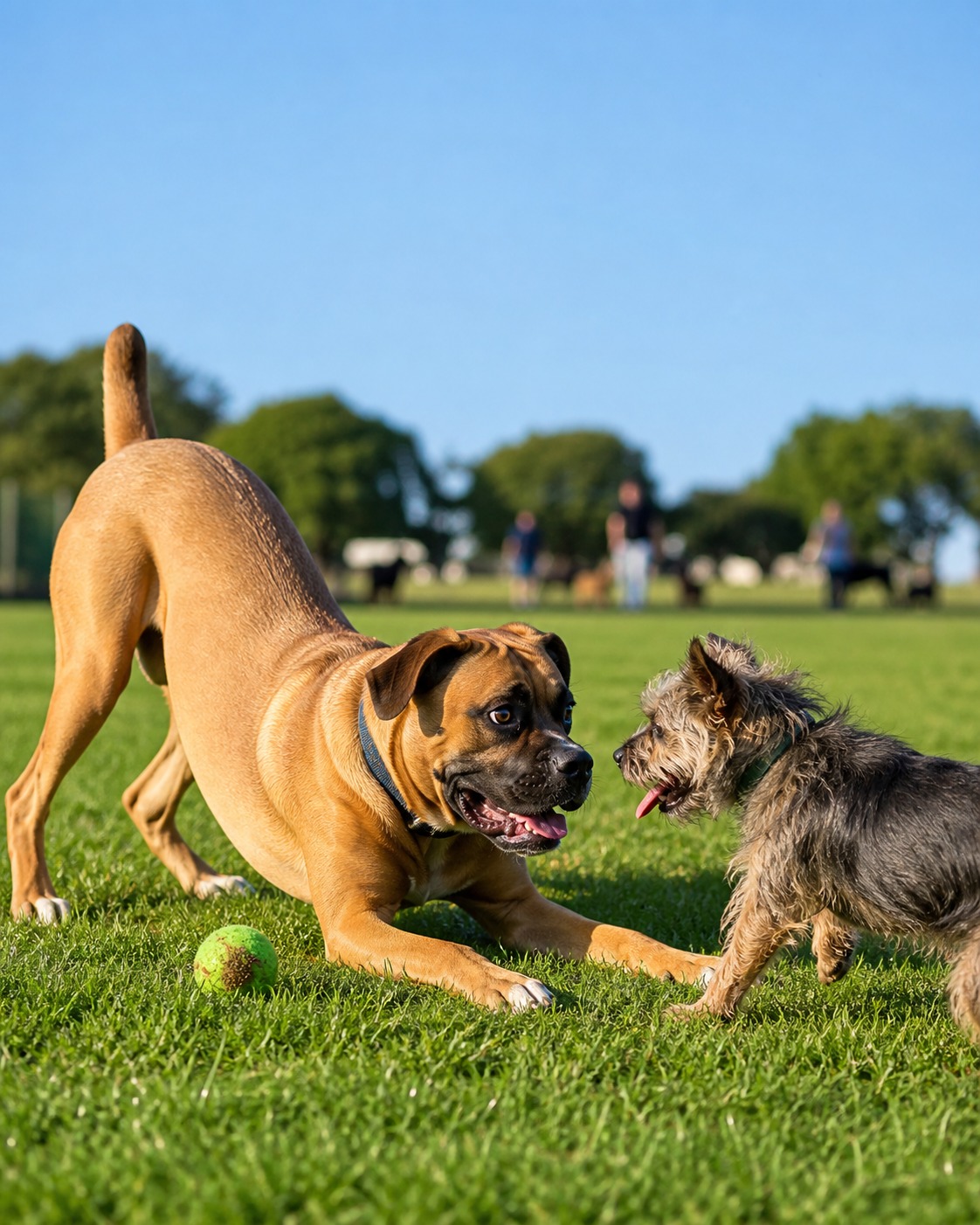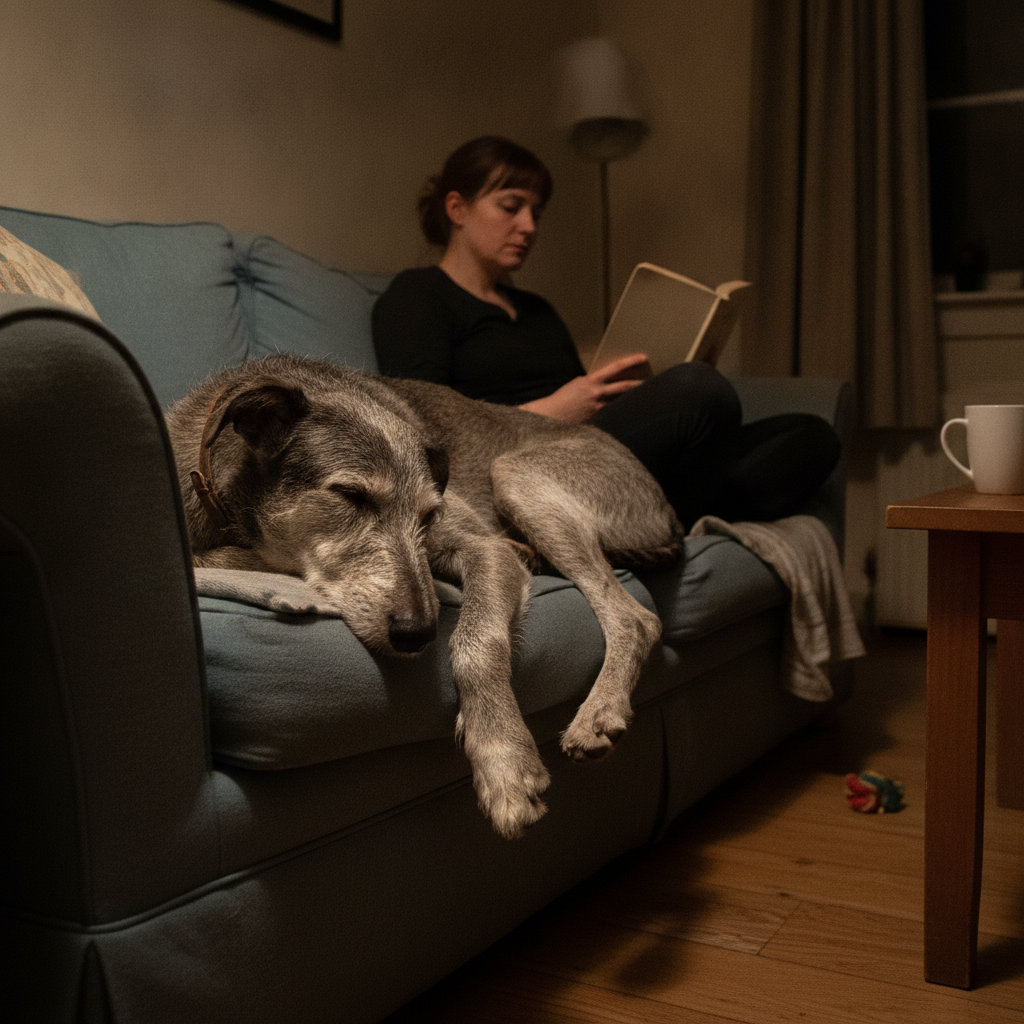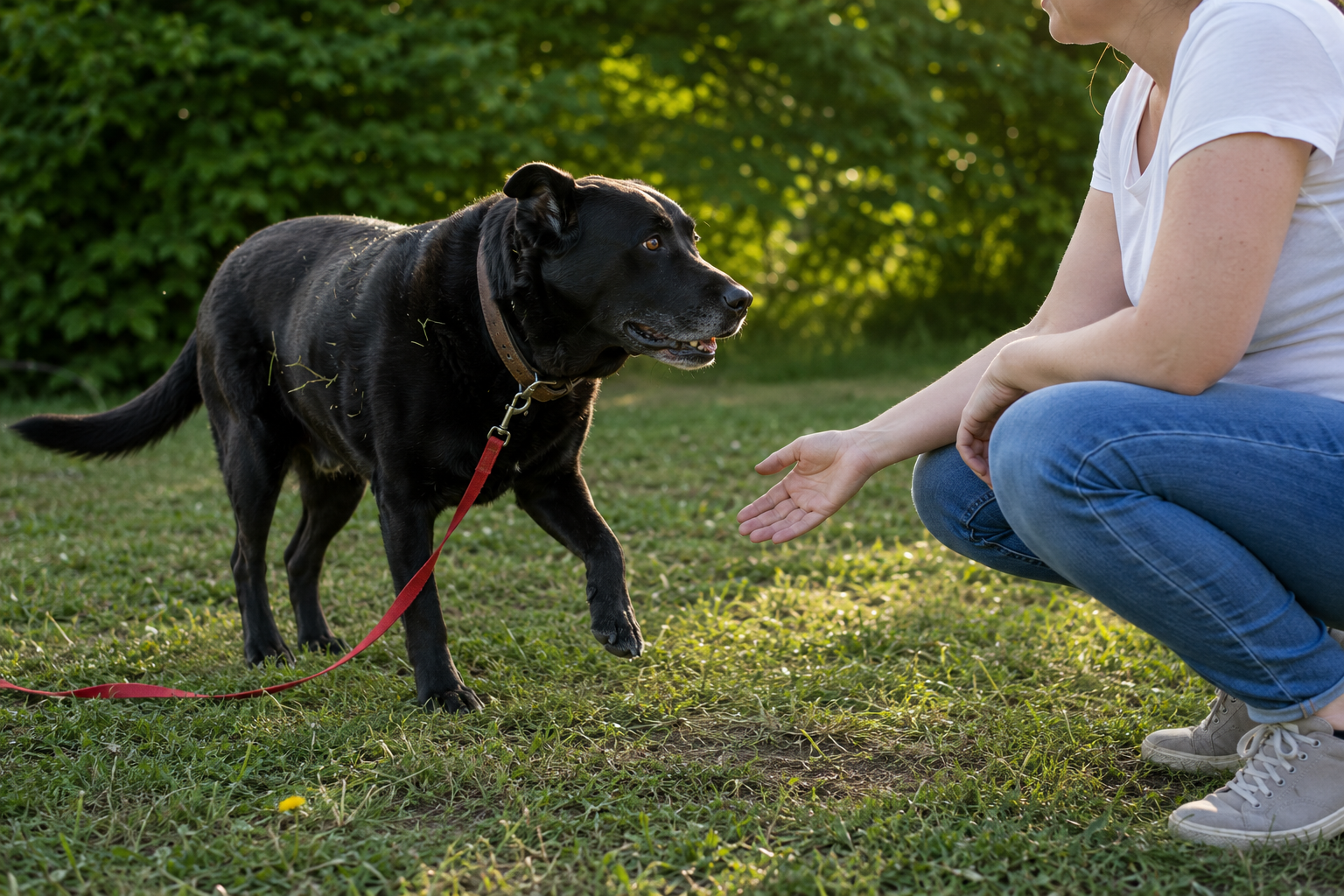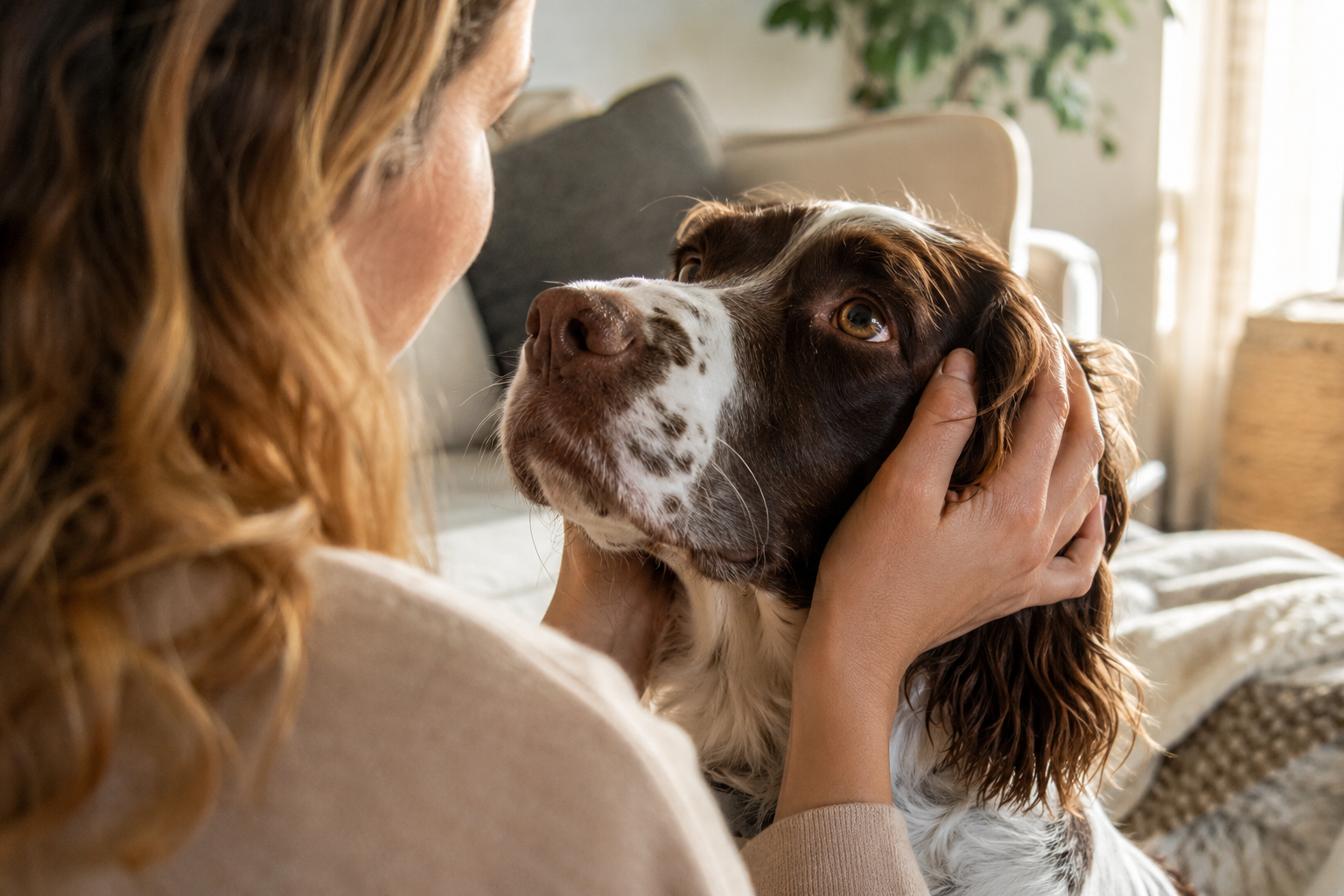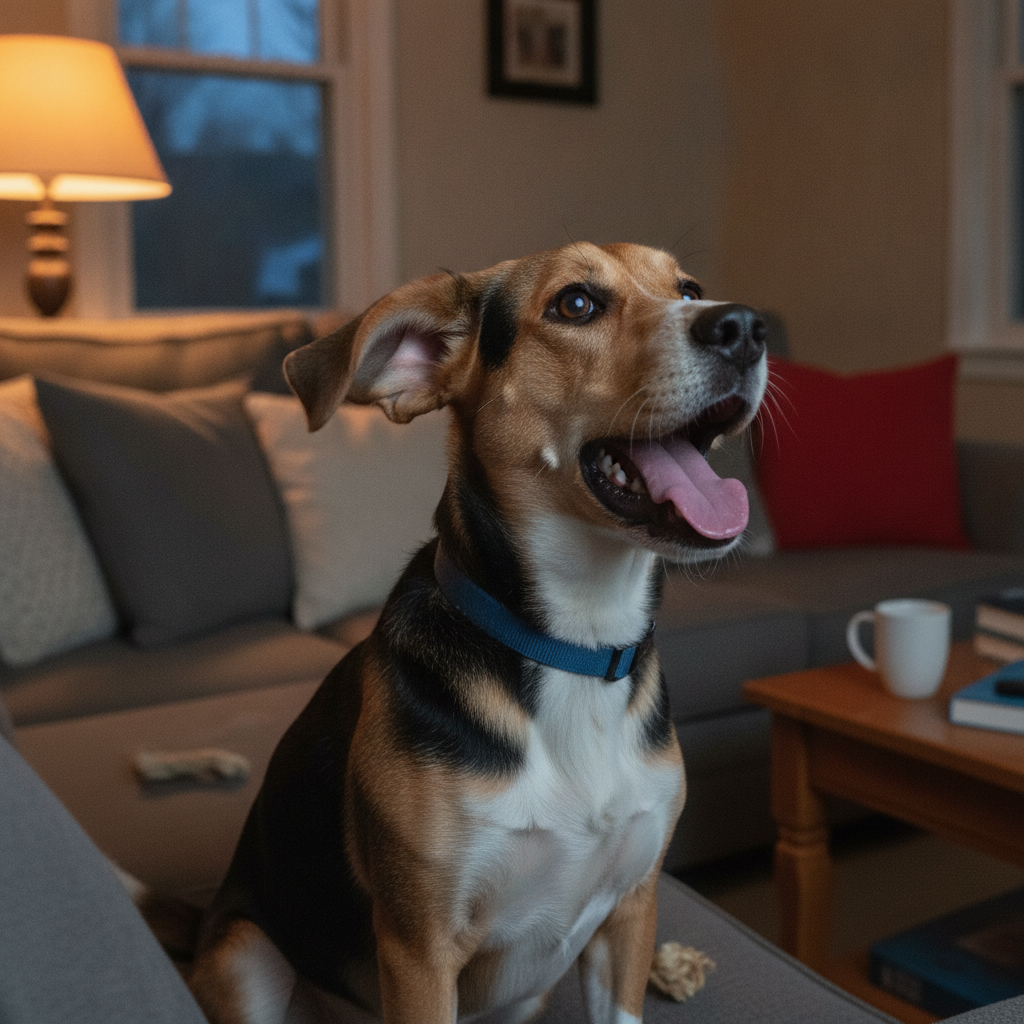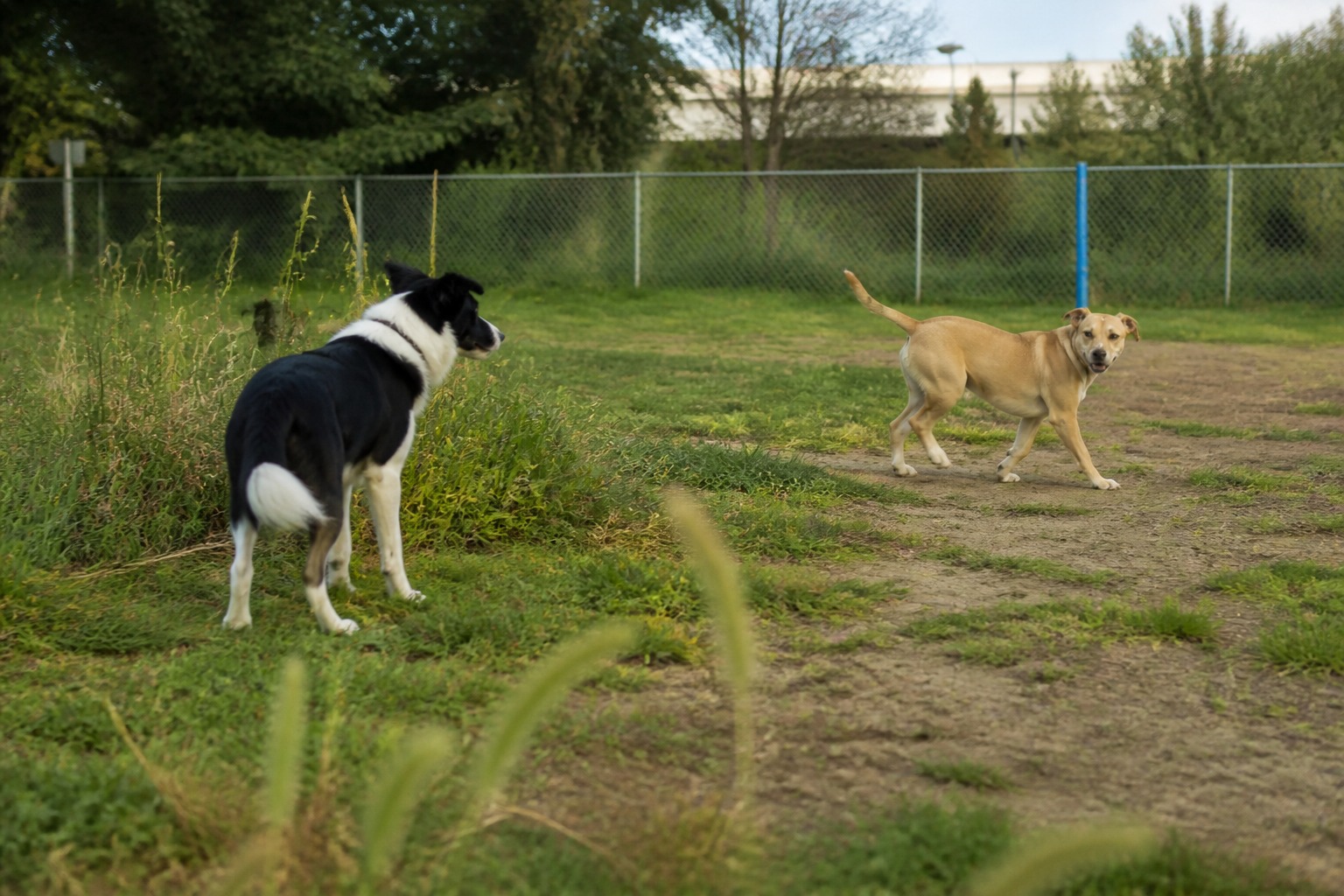
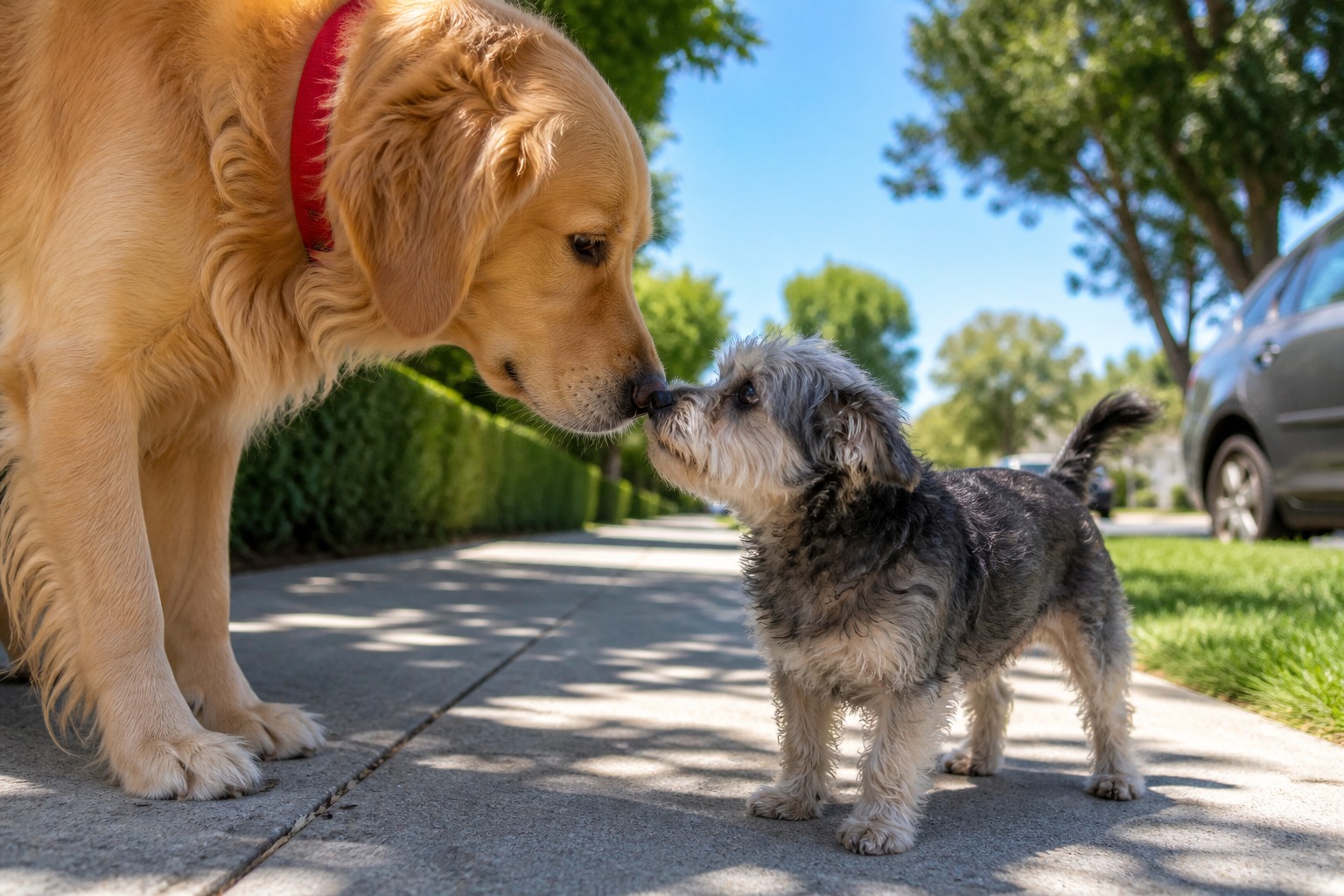
We tend to picture a great dog greeting as a warm, drawn-out meet-cute: two pups nose to nose, tails going, deciding to be best friends. So it can be a little deflating to learn what researchers actually see when they watch dogs meet. The healthy greeting is fast. It is often mutual for only one of the two dogs. And a surprising amount of the time, the best greeting is the one that never happens.
If you want your dog to have good manners with other dogs, the most useful thing you can do is understand what a good hello really looks like, and then get out of the way.
Greetings are dense little information exchanges
A greeting between dogs is not small talk. It is a rapid download. When two dogs who don’t know each other meet, they are sorting out a stack of questions at once: male or female, altered or intact, young or old, healthy, friendly, playful, worth knowing. Dogs who are already friends have far less to figure out, so their reunions are more about feeling than fact-finding. Underneath it all, greetings do real work: easing uncertainty and arousal, gathering scent information, sometimes signaling status, and smoothing over the tension of two animals sharing space.
Which is why the sniffing matters so much. Dogs zero in on the scent-rich, glandular areas, sometimes touching noses first, sometimes going straight for the back end. The behaviorist John Bradshaw noted a tidy pattern in who checks what first: males tend to head for the area under the tail, while females more often start at the head.
The 6-second truth
Here is the finding that should reset your expectations. When behaviorist Camille Ward watched 52 dogs greeting at a dog park, and set aside the chaotic mob scenes at the entrance gate, she found the typical greeting lasted only about six to eight seconds before the dogs simply went their separate ways. Brief. Businesslike. Done.
Two more results from that study are worth tattooing on every dog walker’s brain. Only about 12 percent of those greetings led to play, so the assumption that a good hello should blossom into a wrestling match is mostly wishful thinking. And more than 80 percent of greetings were not even reciprocated, one dog was interested, the other wasn’t, and that was fine. Notably, Ward saw no aggression at all across the study. Dogs of similar size were the most likely to greet each other mutually.
The takeaway is freeing: when dogs are left to their own devices, they greet quickly and move on, and plenty of them opt out entirely. A dog who sniffs once and walks away, or who never engages in the first place, is not being rude or antisocial. That is normal dog behavior, and it deserves to be respected rather than corrected.
What a greeting going wrong looks like
Trouble has a vocabulary, and it pays to learn it. A dog who beelines, rushes, or jumps on another dog is being pushy at best and overwhelming at worst. Watch for tension anywhere in the body, an anxious face, or a tail that is stiff, tucked, or twitching slowly at just the tip. Draping a head or a paw over another dog’s shoulders is rude and provocative; a hard, intense stare crosses from rude into threatening. High-pitched yelping usually means a dog is not enjoying this, and muzzle punches, growling, or biting are well past the line. One more red flag: a dog who insists on sniffing but won’t let the other dog sniff back is stacking up tension that can tip into conflict.
The animal ruining the greeting is often you
This is the uncomfortable part. Dogs are exquisitely tuned to our bodies, and the humans on the leashes routinely make things worse without meaning to. We tense up, hold our breath, and telegraph nerves. We plant our feet and stand still, which traps the dogs in an interaction neither one chose to prolong. We crowd them, we crank the leash tight, we insist in stern voices that they “be nice” and work it out.
Most of the ‘bad greetings’ I’m called about are really two nervous humans holding tight leashes and holding their breath. The dogs are reading all of that. Loosen the leash, keep your feet moving, and you solve half the problem before the dogs even touch noses.
Do the opposite. Loosen the leash, keep your voice light, and, above all, keep moving. Motion is the pressure-release valve of a bad greeting: a breezy “this way!” and a few steps in another direction give both dogs permission to disengage. You are not abandoning the introduction. You are letting it end the way dogs prefer, quickly.
Set the stage so it can go right
The best greetings happen when no dog feels cornered. If you can, introduce dogs off-leash in an open space where either one can leave. When that isn’t possible, loose leashes are the next best thing, and sometimes simply dropping the leashes works. Confined areas and tight leashes strip dogs of the ability to move away, which is exactly what raises the stakes.
Open outdoor space also unlocks a clever bit of dog diplomacy. Behaviorist Anneke Lisberg observed that dogs entering a park often trotted away from the crowd swarming the gate and then urinated at a distance. The other dogs would come investigate the spot instead of the newcomer, buying the new dog some breathing room. Peeing, in other words, can be a socially graceful way to break tension and communicate without being sniffed head-on. Force two housetrained dogs to meet indoors and you rob them of this “pee-and-flee” escape hatch entirely.
And old friends? Dogs who know each other well may skip the formalities and launch straight into play, which is lovely, right up until they try the same flying tackle on a stranger who wants no part of it. What works with a best buddy is not a template for meeting someone new. Dogs, like us, need different manners for different company.
What’s new since this was written
The research finding that greetings should be short has hardened, in the training world, into a practical tool: the “three-second rule,” also called consent-based greeting. The idea is to let two dogs interact for just a few seconds, then calmly guide them apart so each can decide whether to re-engage. It sounds almost too simple, but it does something important, especially for anxious or reactive dogs. A dog who feels it can leave at any moment doesn’t have to escalate to create space, and over repeated low-pressure meetings, confidence grows instead of dread.
Trainers have also gotten more nuanced about on-leash greetings. The old advice was often “never let dogs meet on leash,” but many now argue the goal is flexibility: teach a dog both to greet politely and to walk calmly past another dog without saying hello, so that sometimes you greet and sometimes you don’t. The through-line connecting the newest advice to that old dog-park study is the same. Keep it short, keep it optional, and trust the dogs to know when they’re done.
References
- Ward, C., et al. “Third-party interventions and greeting behavior in domestic dogs.” Behavioural studies of dog-park greetings. Accessed July 2026. https://pubmed.ncbi.nlm.nih.gov/
- Bradshaw, J. W. S. “Dog Sense / In Defence of Dogs.” Accessed July 2026. https://www.johnbradshaw.info/
- Lisberg, A. E., and Snowdon, C. T. “Effects of sex, social status and gonadectomy on countermarking by domestic dogs.” Animal Behaviour, 2011. https://www.sciencedirect.com/science/article/abs/pii/S0003347210004811
- ASPCA. “Dog-to-Dog Introductions.” Accessed July 2026. https://www.aspca.org/pet-care/dog-care/common-dog-behavior-issues