Here is the uncomfortable truth behind that familiar “dog breath” smell: it usually is not just breath. It is the first thing you can notice of periodontal disease, the most common illness veterinarians diagnose in dogs, and by the time a dog is three years old, the large majority already have some form of it. Left alone, it moves from odor to inflamed gums to receding gums, infected roots, loose teeth, and real pain.
The part almost nobody tells you is how preventable this is. Gum disease is close to 100 percent avoidable with a combination of brushing at home and professional cleanings when your vet recommends them. And the home half of that equation takes about 30 seconds a day. The reason so many people give up on it has nothing to do with the brushing itself, which is easy. It is that they try to brush before the dog has agreed to the idea. Win the dog’s cooperation first, and the rest is trivial.
Why the smell matters more than you think
A popular myth holds that dog saliva is antibacterial and self-cleaning. It is not. The film you feel on a neglected tooth is a living colony of bacteria. Left in place, it mineralizes into tartar, the hard yellow-brown crust that a toothbrush can no longer remove, and it drives the gum inflammation that defines periodontal disease. Brushing works because it disrupts that bacterial film before it hardens and before it can push the disease into its later, painful stages.
There is a bonus for you, too. Every face-lick transfers some of that mouth bacteria onto your skin, so a cleaner dog mouth is a small favor to the whole household.
The supplies that actually work
You need two things, and neither is fancy. For the brush, a veterinary toothbrush works, but a soft rubber finger brush is often easier to steer inside a small mouth, and an extra-soft children’s toothbrush from any pharmacy does the job well because it is small and gentle. For the paste, use a product formulated for dogs.
This is the one hard safety line: never use human toothpaste. Many human formulas contain xylitol, which is toxic to dogs, and fluoride meant to be spat out rather than swallowed. Dog toothpaste is made to be eaten and comes in flavors like poultry that make the whole thing feel like a treat.
When you shop, look for the seal from the Veterinary Oral Health Council. The VOHC maintains a list of dental products, from toothpastes to chews to water additives, that have been tested and shown to actually slow plaque or tartar. That seal is the difference between a product that works and marketing.
“The mistake I see most is people buying the toothbrush and skipping the buy-in,” says Dr. Mara Chen. “If the very first time that brush shows up your dog is getting pinned down, you have taught them to dread it. Spend a week just letting them lick the paste, and you will spend the next ten years with a dog who trots over when they see it.”
The 30-second routine, built the slow way
Making brushing a habit can feel slow at the start, and that is the point. Rush it and you lose the dog. Move at their pace and, with enough treats and praise, most dogs become willing, and a few actually get excited.
Start by gathering your dog-safe brush and paste and picking a consistent time of day, ideally attached to something that already happens daily so you do not forget. For the first sessions, do not brush at all. Just let your dog lick the toothpaste off your finger so the flavor becomes a reward on its own.
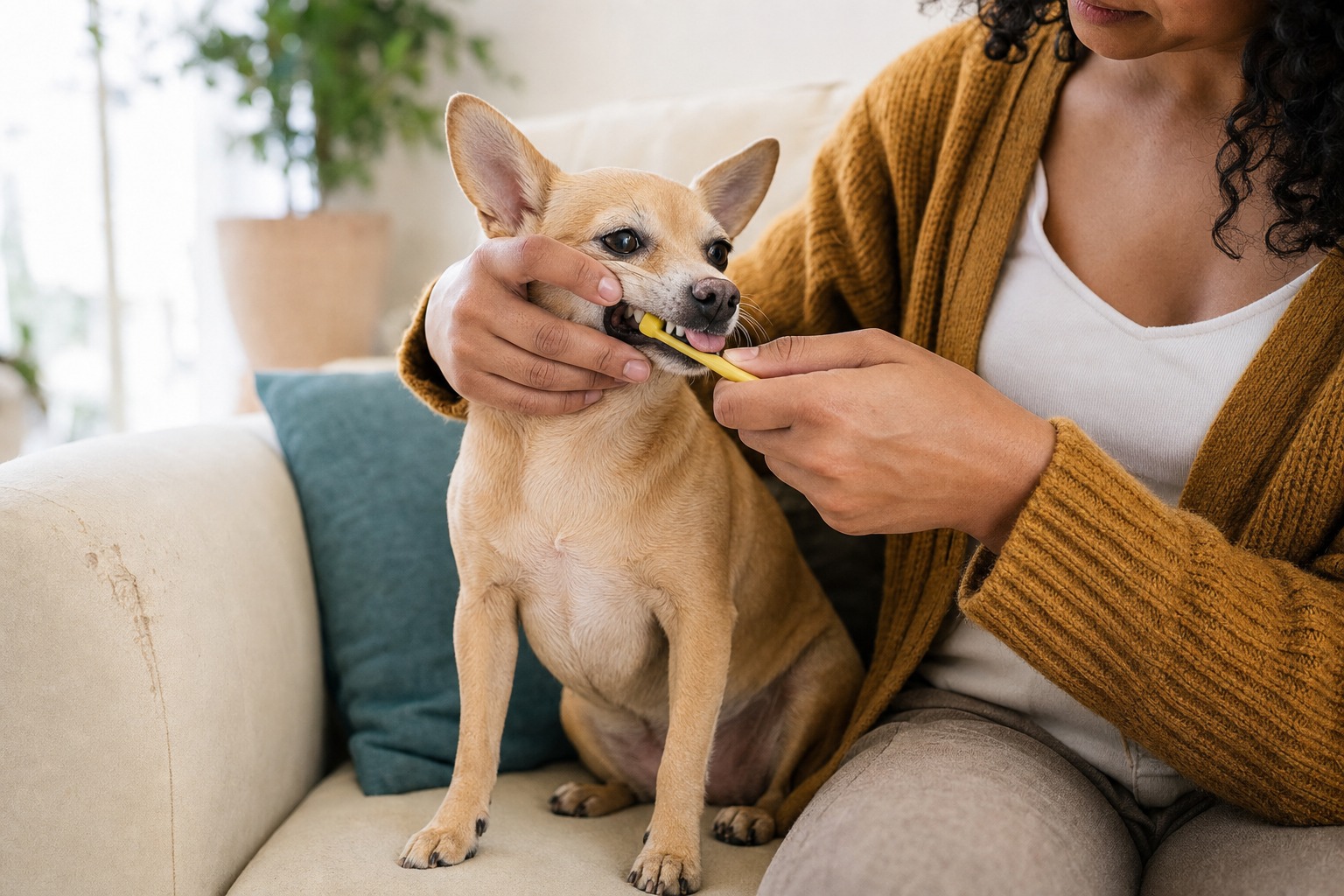
Once they like the paste, get into a low-stress position, sitting next to your dog rather than over them, on the couch, the floor, or their bed. Reward every small cooperation: a sniff of the brush earns a treat, letting the bristles touch a tooth earns another. When you do brush, lift a lip and focus on the gumline, where tooth meets gum, since that is where plaque gathers, and keep the pressure light enough that you never draw blood.
Use small circular motions on the outer surfaces of the teeth. Most dogs tolerate the outsides far better than the insides, and conveniently, that is where plaque accumulates most, so you get the biggest payoff from the easiest part. On the first day you might brush a single tooth and stop. Over days or weeks you build toward the full mouth. Always end on a good note with a reward, so the session reads as a treat and not a trap.
How often, really
Aim for daily. Plaque starts hardening into tartar within a couple of days, which is why brushing once a week does far less than brushing every day, and why the monthly brush at the groomer, while a nice gesture, barely moves the needle. If daily is genuinely impossible, every other day still helps, but the ritual you are building is a small, boring, everyday one.
What newer research adds
Two developments are worth knowing since this advice first circulated. First, the evidence for the once-a-day standard has only firmed up: veterinary dentistry groups now treat daily brushing as the gold standard because the plaque-to-tartar clock is that fast, and studies continue to show that less-frequent brushing gives much of the benefit back.
Second, a caution about a service marketed as an easier alternative. “Anesthesia-free dental cleanings,” offered at some groomers and pet stores, scrape visible tartar off the crown of the tooth to make it look clean but cannot address what is under the gumline, which is where periodontal disease actually lives. Veterinary dental organizations warn that these cosmetic cleanings can give owners false reassurance while disease progresses out of sight. A real cleaning happens under anesthesia at your vet, with X-rays. Brushing at home plus those professional cleanings, on your vet’s schedule, is the combination that keeps the disease away.
References
- American Veterinary Dental College. “Periodontal Disease.” avdc.org/avdc-veterinary-dental-topics/
- Veterinary Oral Health Council. “VOHC Accepted Products for Dogs.” vohc.org/accepted-products/
- WSAVA Global Dental Guidelines. World Small Animal Veterinary Association, wsava.org/global-guidelines/dental-guidelines/
- Colorado State University Veterinary Teaching Hospital. “How to Brush Your Dog’s Teeth.” vetmedbiosci.colostate.edu/vth/animal-health/how-to-brush-your-dogs-teeth/
- American Veterinary Medical Association. “Pet Dental Care.” avma.org/resources-tools/pet-owners/petcare/pet-dental-care