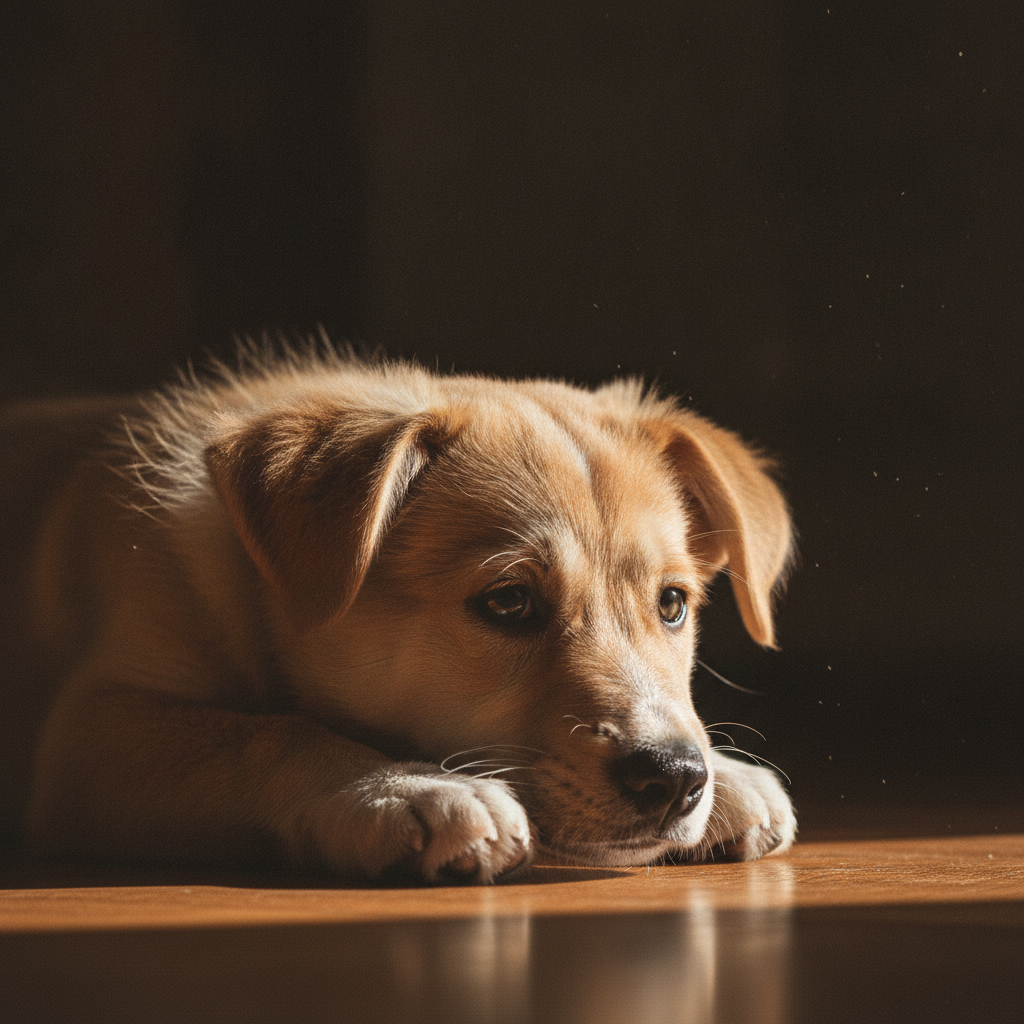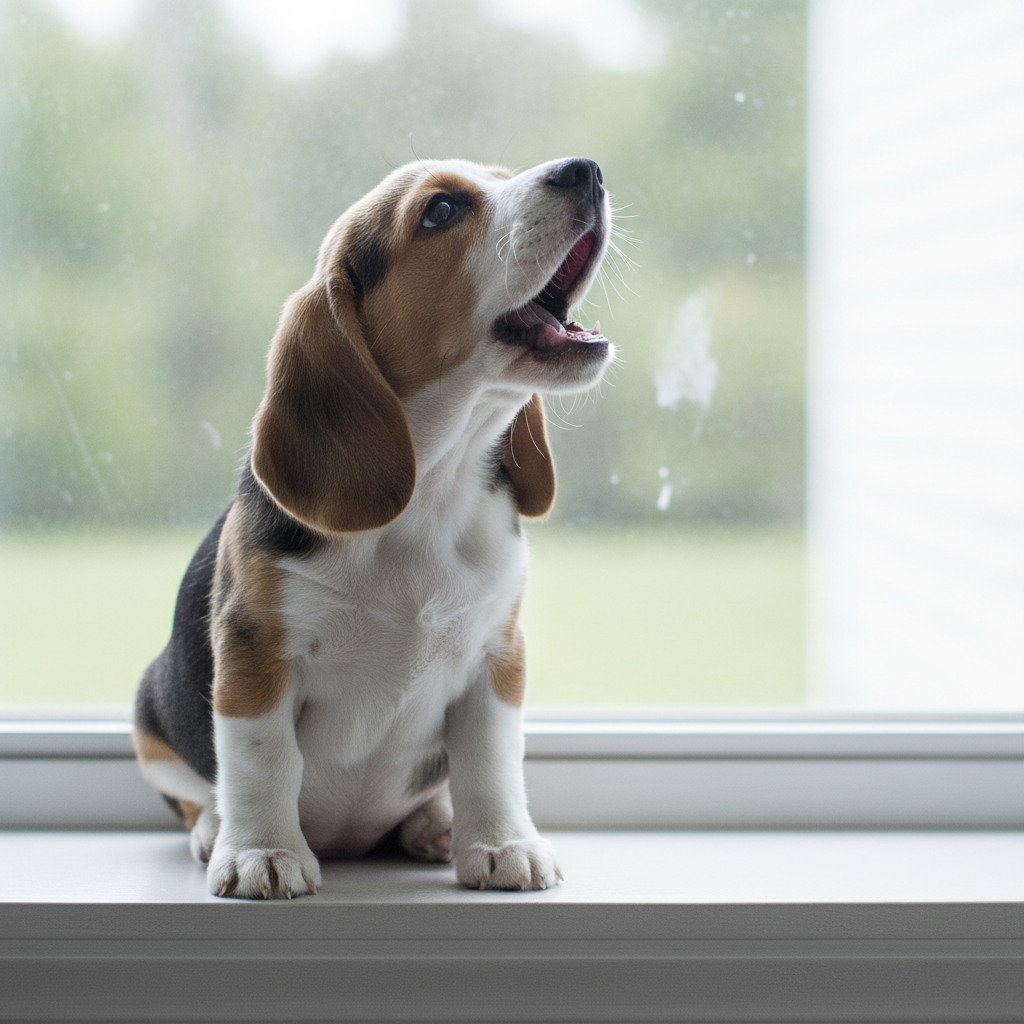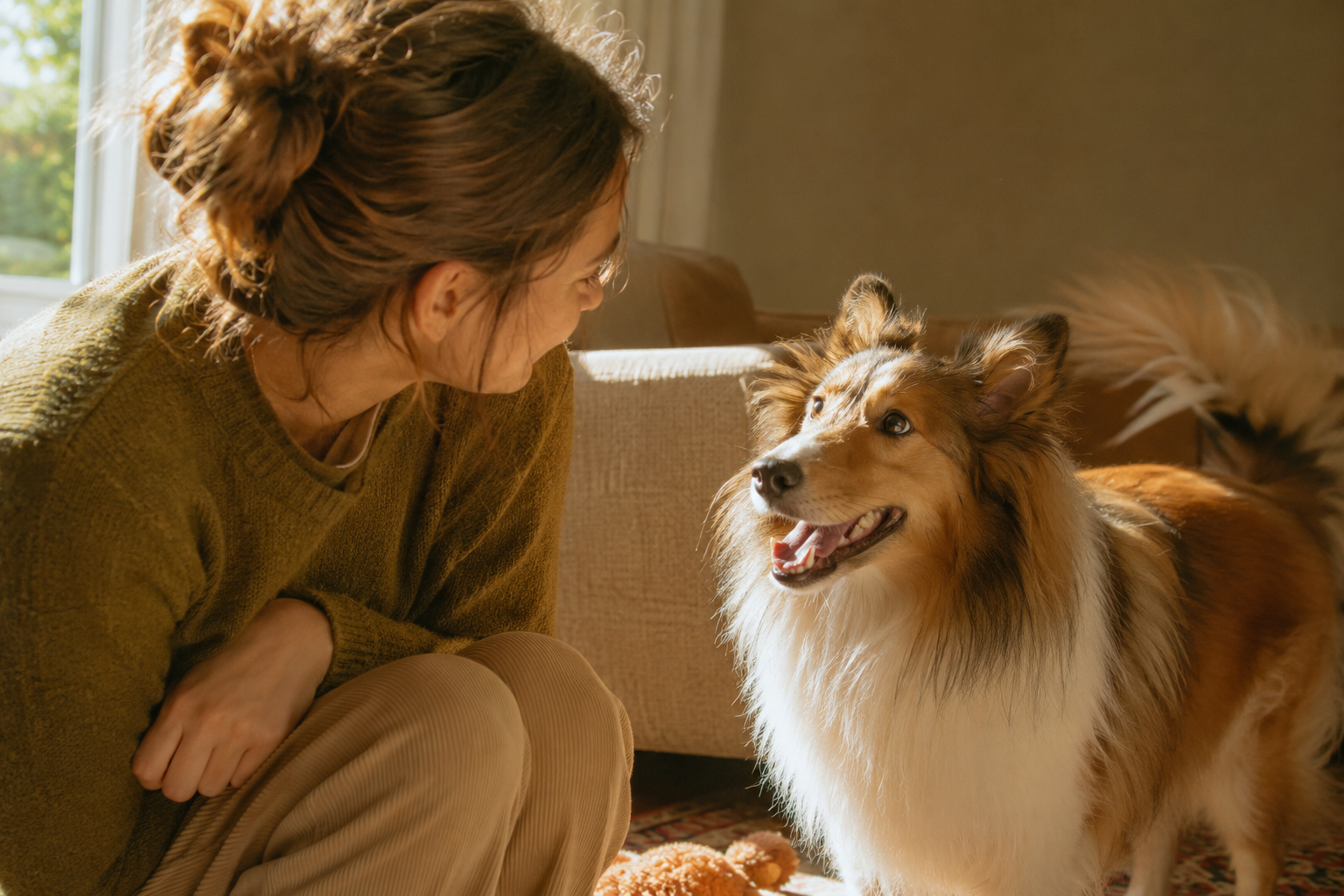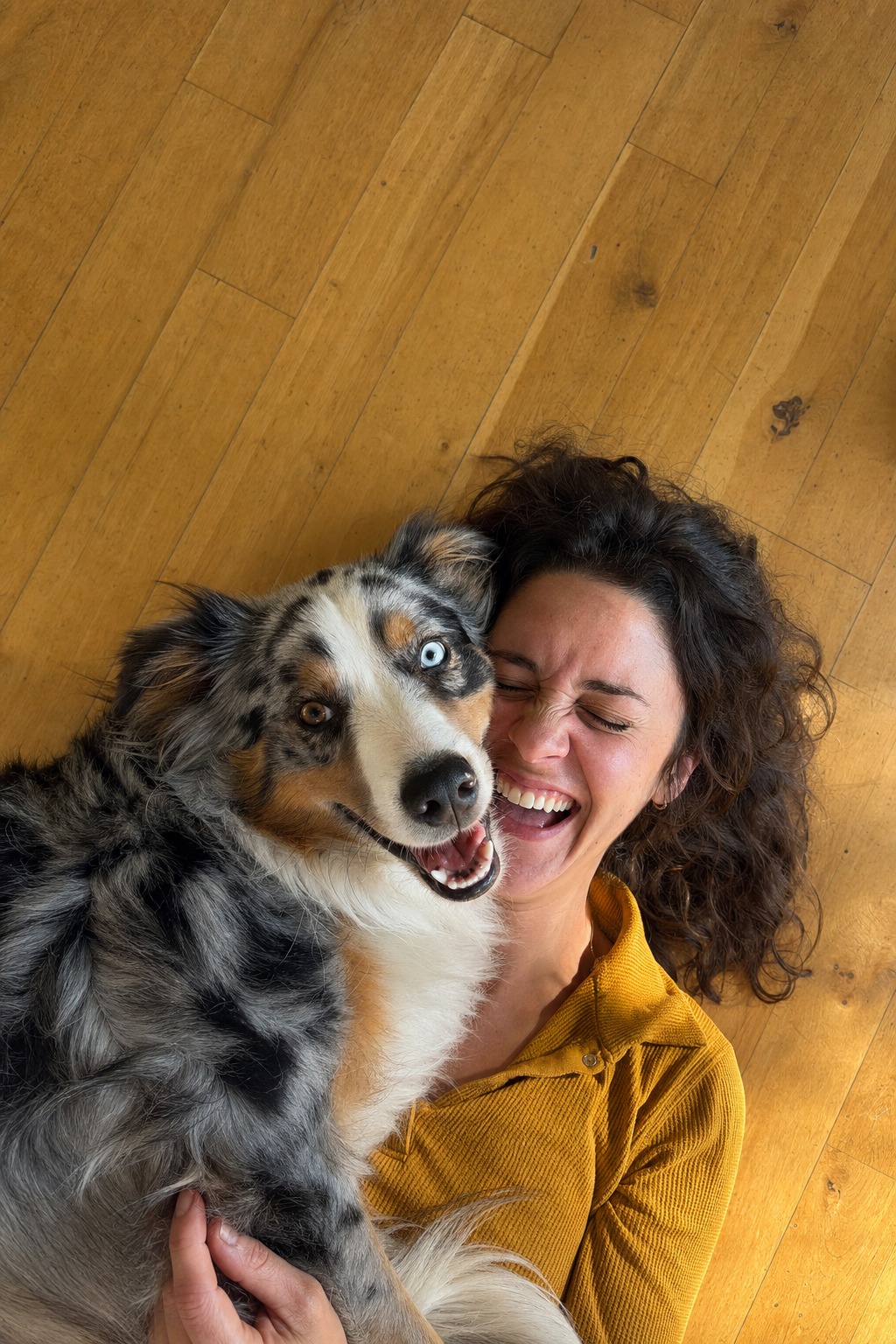
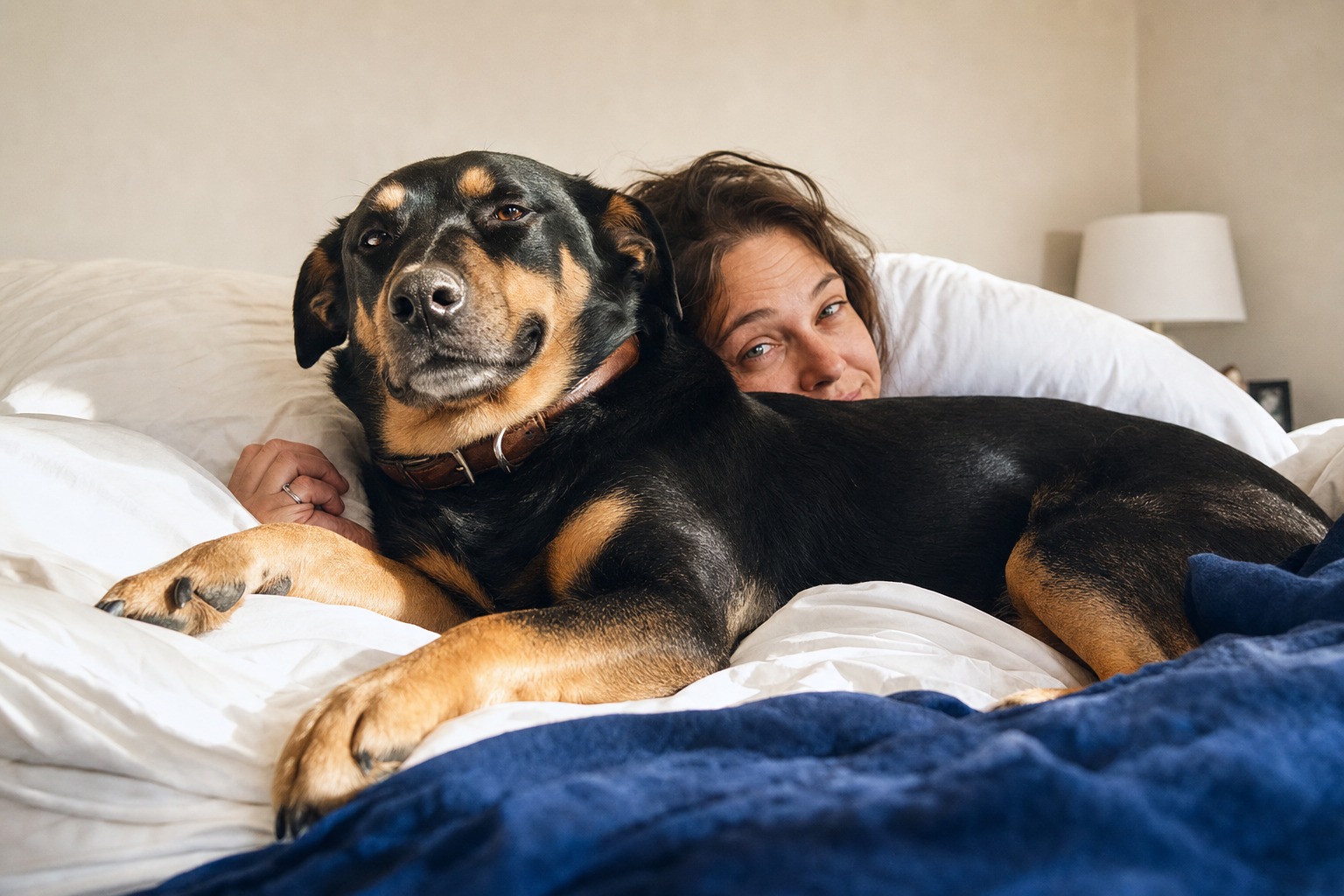
Your dog has claimed your side of the bed, sprawls across the couch like they pay rent, turns their nose up at anything but the fancy food, and barks until you cave. It’s easy to look at all that and conclude the obvious: they think they’re in charge, and you’ve let them.
It’s a satisfying story. It’s also almost certainly wrong, and believing it can send you down exactly the wrong training path.
The “my dog is dominant” explanation borrows from a decades-old, long-debunked idea that dogs are constantly jockeying to be pack leader and will seize control of a household the moment you go soft. Modern behavior science has taken that theory apart. What actually drives most so-called bossy behavior is far less dramatic and far more fixable: a dog whose needs aren’t fully met, and a dog who has learned, thanks to us, that certain pushy behaviors work.
“When a dog looks like they’re running the house, it’s rarely about power,” says Dr. Ravi Mehta, a veterinary behaviorist with Pet Times. “It’s usually a dog who feels like they have to manage everything themselves because nobody’s given them enough structure to relax, plus a pile of habits we accidentally paid for. Neither of those gets better by trying to ‘show them who’s boss.’”
Reframing it this way changes everything, because the fix stops being about winning a battle of wills and starts being about meeting needs and changing what gets rewarded. Below, the behaviors that get labeled “dominant,” what they’re really telling you, and what to do instead.
When the “bossiness” is really a bid for your attention
A whole category of this behavior is just your dog, loudly, asking for you.
The dog who paws, licks, climbs, and never stops soliciting affection can look like they’re calling the shots. More often, they simply can’t self-regulate, they don’t know how to switch off and settle on their own. The dog who mugs every guest at the door with a full-body jump is doing something similar: it’s demanding, self-rewarding, and honestly not a state most dogs enjoy being stuck in. And the dog who whines, barks, and nags until dinner appears or the ball gets thrown has learned the most reliable lesson of all, that persistence pays.
Here’s the uncomfortable part: we build these habits. When we give in, out of guilt, exhaustion, or because the pawing is kind of cute, we teach the dog to push harder next time. Even scolding counts, because to an attention-starved dog, negative attention is still attention.
The way out isn’t to freeze your dog out coldly. It’s to stop rewarding the pushy version and start rewarding the calm one. Don’t deliver affection on demand the instant your dog insists; wait for them to settle, even briefly, and reward that. For the door-jumper, enlist your guests: no one gets to greet the dog until four paws are on the floor and the dog is calm. Dogs repeat what works. Make calm the thing that works.
When your dog is trying to manage the whole environment
The other big cluster looks less like attention-seeking and more like control, and it’s often the more serious one.
Some dogs dig in about furniture, insisting on the couch or the bed no matter how many times they’re moved, occasionally even stiffening or snapping when displaced. Others try to police every interaction in the home, guarding you, guarding doorways, sometimes escalating to aggression toward other pets or people. And many guard objects, hunkering over a toy or food bowl as if it’s about to be stolen.
It’s tempting to read all of this as a dog asserting rank. It’s better understood as a dog who doesn’t feel safe or settled. Resource guarding, in particular, usually grows out of insecurity or anxiety, a dog convinced that something valuable is about to disappear, so they’d better defend it. Over-controlling behavior toward other pets often comes from over-arousal or fear, a dog who feels they have to run the show because no one else is. That last category, real aggression toward animals or people in the home, can be genuinely serious and is worth looping in a qualified behavior professional early rather than waiting.
The antidote is consistency and clarity. Dogs feel secure when the rules don’t move. Pick a furniture policy and hold it, either the couch is always allowed or it never is, because the maddening middle (sometimes yes, sometimes no) is what breeds conflict. For guarding, trade the standoff for structure: rather than letting your dog free-feed on high-value items in a corner, control access so the good stuff flows through you. Teaching a dog that fun and food reliably come from their human, rather than from hoarding, quietly dismantles the need to guard.
When your dog seems to be driving
Then there’s the dog who acts like they hold the keys, ignoring cues they clearly know and dictating every walk (we’re going this way; no, we’re done now), stopping, pulling, unable to focus.
Blowing off a familiar cue looks like defiance. It usually isn’t. A dog who “ignores” you is frequently confused, distracted, stressed, or simply hasn’t practiced that skill in the chaotic real world, only in your quiet kitchen. And a dog who won’t walk with you, or insists on calling every turn, is often a dog who doesn’t feel safe or supported out there, not one plotting a takeover.
Both respond to the same thing: patient, real-world practice. Proof your cues in gradually harder settings so “come” means come at the park, not just at home. And if walks are a daily tug-of-war, it’s worth working with a trainer to find a rhythm where both of you feel steady, rather than escalating corrections.
The one habit that helps across the board
If you take away a single technique, make it this: control your comings and goings. Arrive and depart calmly, and greet your dog only once they’re relaxed, even if that means waiting five seconds by the door doing nothing. Rewarding a calm, settled state, over and over, teaches your dog that chill is the default that gets them what they want. It’s a small ritual, and it does more to dissolve “bossy” behavior than any amount of asserting yourself ever could.
What newer research adds
The dominance framework didn’t just fall out of fashion, it was actively retired by the field. The original wolf-pack “alpha” research was based on unrelated captive wolves and later disavowed by the very biologist who popularized it; wild wolf packs are simply families, with parents and offspring, not gladiators competing for rank. Leading veterinary behavior organizations now explicitly warn against dominance-based training, noting that confrontational methods (pinning, “alpha rolls,” intimidation) tend to increase fear and aggression rather than resolve it.
For pet parents, the modern consensus is genuinely good news. You don’t have to win a power struggle your dog was never actually waging. You have to meet their needs for exercise, enrichment, and predictable structure, and be careful about which behaviors you feed with your attention. Do that, and most of the “who’s the boss” drama simply evaporates, because it was never really about who’s the boss.
References
- American Veterinary Society of Animal Behavior. “Position Statement on the Use of Dominance Theory in Behavior Modification of Animals.” https://avsab.org/resources/position-statements/
- Mech, L. David. “Alpha Status, Dominance, and Division of Labor in Wolf Packs.” Canadian Journal of Zoology, vol. 77, 1999, pp. 1196–1203. https://www.fws.gov/publications/alpha-status-dominance-and-division-labor-wolf-packs
- American Veterinary Medical Association. “Dog Behavior Problems.” https://www.avma.org/resources-tools/pet-owners/petcare