


Your Dog Misses Your Ex. Don't Call Him.
After a breakup, it's normal for a dog to mope, sniff around, and seem off. Yes, your dog can grieve a person who left. But the fix isn't awkward visits with your ex, it's replacing what that person actually did.

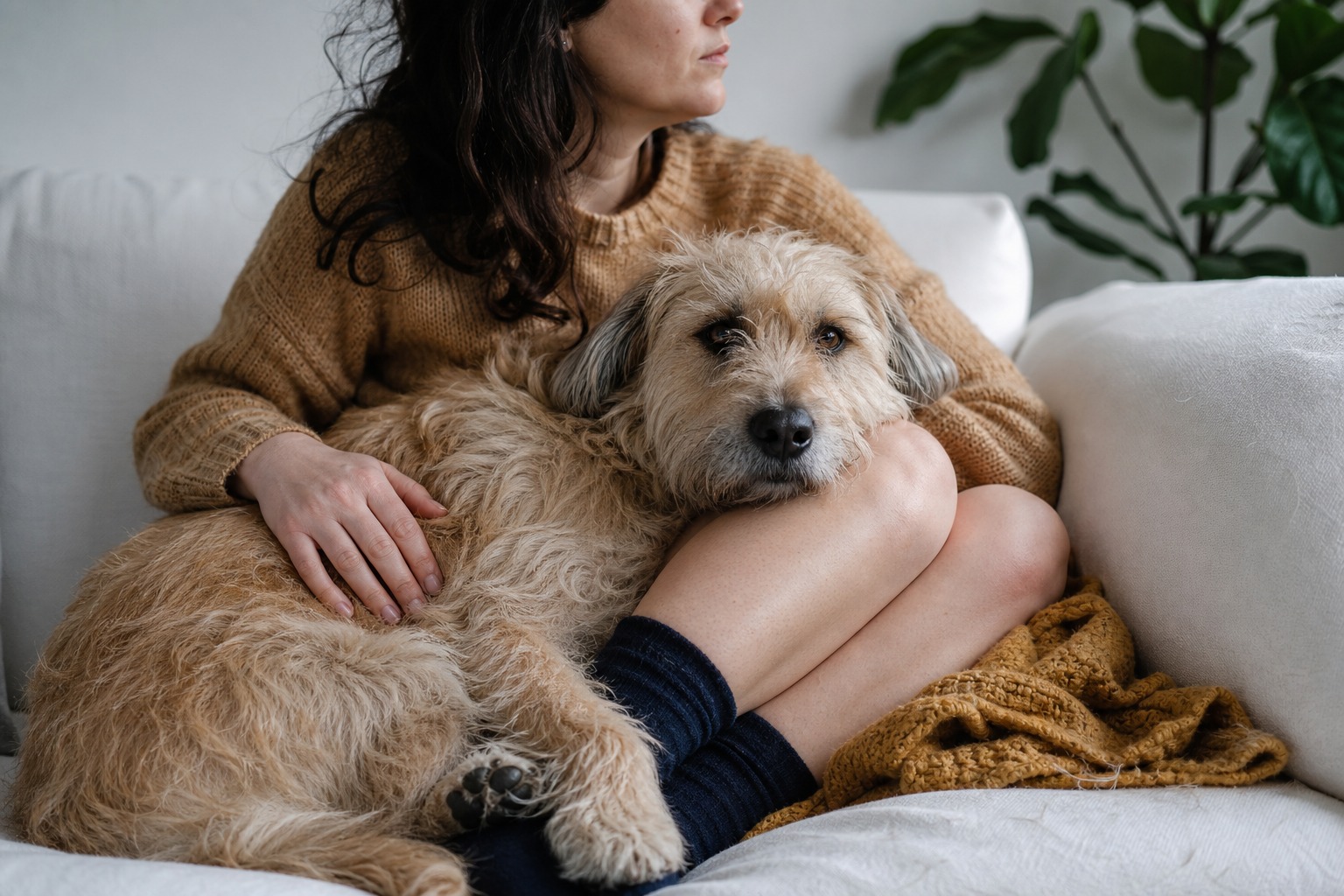
A breakup is rarely clean, and it is even less clean when a dog is involved. Maybe the person who left was the one who handled the evening walks, or sat with your dog through thunderstorms, or simply became a fixture your dog loved. Now they are gone, and your dog is moping, drifting to the spot where that person used to sit, sniffing the empty closet, and generally seeming a little heartbroken. So you face two questions at once: is my dog actually grieving, and should I let my ex come visit for the dog’s sake?
The short version: yes, your dog can genuinely miss someone who left, and no, the answer usually is not standing visits with your ex. The better answer is to figure out what that person did for your dog and replace it.
Can a dog really grieve a person?
Dogs are social animals who form real attachments, and losing a significant figure can register. How hard it hits depends largely on the role that person played. If your ex delivered a big share of the attention, exercise, and comfort, and that supply suddenly dried up, the change is real and your dog feels it. Trainers describe a kind of canine low mood after major disruptions, where a dog loses interest in play and food and sleeps more than usual, not unlike how a person withdraws when they are down. You might also see an uptick in anxious behaviors when someone who mattered is simply not there anymore.
The science backs the intuition. In a 2022 study published in Scientific Reports, researchers surveyed owners whose dogs had lost a companion animal and documented clear behavior shifts, more seeking of attention, less play, reduced appetite, more sleep, and increased fearfulness. The loss was a fellow pet rather than a person, but it establishes the broader point: dogs respond behaviorally to the disappearance of a bonded individual. Your dog moping after a breakup is not you projecting.
When a dog seems to fall apart after someone moves out, owners tend to reach for the most complicated fix, which is bringing the person back around. Almost always the dog isn’t grieving the person in the abstract. They’re missing the walk, the routine, the calm hand during a storm. Rebuild those, and the dog usually recovers without ever seeing that person again.
The move that actually helps
Here is the reframe that solves it. Your dog is not mourning your relationship. Your dog is missing a set of functions your ex used to perform. So do the math on what those functions were, and cover them, with substitutes rather than with the person.
Did your ex handle the evening walk? Add a second walk, or make the one you do longer and more interesting. Were they the one who soothed your dog through storms? Build a storm-comfort routine of your own: a safe den, a favorite chew, background noise, calm attention, maybe a vet-recommended anxiety aid for the worst nights. Did they bring the roughhousing and play? Schedule dedicated play sessions, add a puzzle feeder, or set up a standing playdate with a dog friend. The specific fix matters less than the principle: identify the gap and fill it directly.
There is a bonus here, and it is not small. The very things that help your dog through this, the extra walks, the play, the deliberate structure, help you through it too. A dog imposes a shape on your days when everything else feels shapeless, and the comfort runs both directions. Leaning on your dog for companionship while you rebuild your routine is not a consolation prize; it is one of the healthiest things you can do after a breakup.
The case against the standing visit
It is worth being a little skeptical of the visits idea, and not only for your own sake. When an ex is insistent about seeing the dog, the request can be exactly what it appears, pure dog love, or it can be a way to keep a thread of the relationship intact. Only you know which, but it is worth being honest with yourself about it before you agree to years of coordinating handoffs.
If the arrangement genuinely serves you, some people do make a version of it work, the ex as an occasional and very convenient dog-sitter when you travel, for instance, which can become a nice new routine for your dog and a free perk for you. Ask for the arrangement that actually fits your life, and if your ex agrees, great. But if visits mostly function to keep a door open that you have decided to close, that is not a healthy setup for you, and your dog does not need it. A clean break is often the right call for someone trying to start fresh, and your dog will adjust to the new normal faster than you expect, especially once the walks and the comfort and the play are all still there, just coming from you.
This piece touches on dog behavior and anxiety; if your dog’s low mood, appetite loss, or anxious behavior is severe or lasts more than a couple of weeks, check in with your veterinarian or a qualified behaviorist.
Dr. Kohl is a board-certified veterinary dentist with a particular interest in preventive oral care. She reviews all dental health content at The Pet Times and contributes practical guides on home dental routines, professional cleaning, and oral disease prevention.
Meet our experts ↗Keep reading
 LivingNew York's Hottest Club Is a $795 Dog RunNina Vasquez · 8 min
 TrainingA Therapy Dog Isn't a Service Dog. Here's Where They Do Their Best Work.Sasha Ford · 7 min
 TrainingBaby-Talking Your Dog Isn't Silly. It's Science.Marcus Webb · 5 min
 TrainingYour Dog's Love Language Isn't About Their Breed. Not Really.Sasha Ford · 8 min
 Training'Imprinting' Is the Wrong Word for What Your Dog FeelsDr. Ravi Mehta · 8 min
 TrainingYour Husky Isn't Arguing With You. It's Doing the Job It Was Bred For.Dr. Ravi Mehta · 6 min