


The Christmas Food That Sends Dogs to the ER Isn't Chocolate. It's the Gravy.
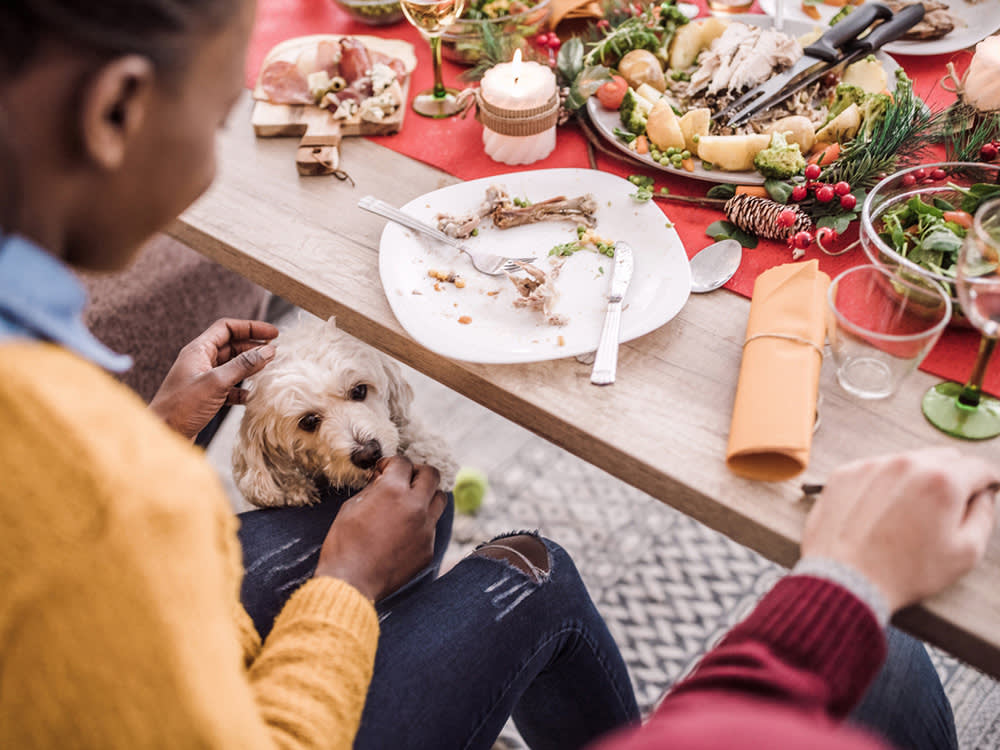
Everyone guards the chocolate and then hands the dog a plate of skin, drippings, and buttered potatoes. Emergency vets see a pancreatitis spike every holiday, and it comes from fat, not from the famous toxins.

Every December, the same article runs everywhere: don’t give your dog chocolate, don’t give your dog onions, don’t give your dog a bone.
All true. All widely known. And almost none of it is what actually fills emergency clinics between Christmas Eve and New Year’s Day.
The thing that puts dogs in the hospital over the holidays is not a famous toxin. It’s fat. A dog gets a plate of turkey skin, a ladle of gravy, some buttered potatoes, a bit of cheese, and a sausage wrapped in bacon, and thirty-six hours later they’re vomiting, hunched over, refusing to move, and running a bill that will ruin January.
The condition is pancreatitis, and it is the single most common serious holiday emergency in dogs. It comes from a normal, loving, generous impulse: sharing dinner.
So this guide is organized around the actual risk, not the famous one. Fat first. Then the toxins. Then, at the end, the short list of things your dog can genuinely enjoy.
The fat problem, explained properly
The pancreas produces the enzymes that digest food, and it keeps them safely inactive until they reach the intestine. A sudden, large load of dietary fat can trigger those enzymes to activate early, inside the pancreas itself.
At which point the organ begins, in the most literal sense, to digest itself.
That’s pancreatitis. It is agonising. Signs typically appear within 24 to 72 hours of the meal and include repeated vomiting, a painful and tense belly, a hunched stance or the “praying” position with the front end down and the rear end up, lethargy, refusal to eat, and often diarrhoea. Severe cases become life-threatening, and treatment means hospitalisation, IV fluids, pain control, and anti-nausea medication for days.
The dogs most at risk are the ones most likely to be handed a plate: small breeds, overweight dogs, seniors, and dogs with a previous episode, who are far more likely to have another. Miniature Schnauzers, Yorkshire Terriers, and Cocker Spaniels are over-represented, and any dog on a prescription or low-fat diet is in the danger zone by definition.
Here is the part that catches everyone. The dose that triggers it is not large. A single generous plate of rich holiday food, handed to a 15-pound dog, is a colossal fat load relative to their body size. It does not take a raided bin. It takes one guest being kind.
So the practical rule for the whole day:
Whatever you give your dog must be plain. Not “mostly plain.” Plain. No skin. No gravy. No butter. No oil. No pan drippings. No seasoning.
The toxins, in order of how likely you are to meet them
Alliums, the ones actually hiding in your dinner
Onions, garlic, leeks, shallots, and chives destroy dogs’ red blood cells, causing potentially life-threatening anaemia. Every cook knows this.
What people miss is where alliums actually live on a Christmas table: stuffing, gravy, stock, bread sauce, roast potatoes done in the pan juices, and almost every leftover with a sauce on it. Dried onion and garlic powder are far more concentrated than the fresh vegetable, so a small volume of seasoned food carries a large dose.
That is why stuffing is the single most dangerous-looking harmless thing on the table. It is rich, it is oniony, and it is exactly what a guest will slip under the table.
And the anaemia is delayed, typically appearing over one to several days. “He ate it and he seems fine” is not reassurance. If your dog eats a meaningful amount of anything in the onion family, call your vet that day.
Chocolate
The famous one, and it deserves its reputation. Theobromine, a caffeine relative, overstimulates the heart and nervous system, and dogs metabolise it very slowly.
Two things determine severity: how dark, and how much per pound of dog. Dark and baking chocolate carry far more theobromine than milk chocolate; white chocolate is essentially irrelevant on this axis (though it is still a fat and sugar bomb). A Labrador who eats one milk-chocolate coin is in a completely different situation than a Chihuahua who eats a bar of 85% dark.
If it happens, don’t wait for symptoms. Note the type and the amount, keep the wrapper, and call your vet or the ASPCA Animal Poison Control Center at (888) 426-4435. Early decontamination is far easier than treating a dog who is already tremoring.
The ones nobody warns you about
- Raisins, sultanas, and currants. This means Christmas pudding, mince pies, stollen, fruitcake, and panettone. Grapes and their dried forms can cause acute kidney failure in dogs, the toxic dose is unpredictable, and some dogs are catastrophically affected by a very small amount. Treat any ingestion as an emergency. This is genuinely one of the most dangerous items in a British or American Christmas kitchen, and it’s on far fewer lists than chocolate.
- Xylitol. In sugar-free desserts, some baking mixes, sugar-free gum, and increasingly in peanut butter. It causes a sudden, dangerous drop in blood sugar and can cause liver failure. Fast-acting and easy to miss.
- Alcohol. Including the brandy in the pudding and an unattended glass of mulled wine at dog height.
- Macadamia nuts. Cause weakness, tremors, and hind-limb wobbliness. Nut bowls at coffee-table height are a bad idea.
- Cooked bones. Splinter into sharp fragments that can lodge in or puncture the digestive tract. Turkey neck bones are small, tempting, and exactly the wrong shape. The wishbone is not a toy.
The other emergency: the thing they swallowed
Worth saying plainly, because it accounts for a large slice of holiday ER visits and has nothing to do with food.
Foreign-body obstruction. Tinsel, ribbon, string from the turkey, a squeaker from a new toy, a chunk of plastic packaging, a chewed-up bauble. New toys are exciting and unfamiliar and get destroyed faster than old ones, and a dog left alone with a new plush on Christmas morning can have the stuffing and the squeaker out of it in twenty minutes.
Supervise new toys. String and ribbon are surgical emergencies, particularly if any of it is still visible: never pull it.
What your dog can actually have
With all of that said, the answer to “can I give my dog anything?” is a genuine yes. Keep it plain, keep it small, and keep it to a few bites rather than a plate.
| Food | Verdict | The condition |
|---|---|---|
| Turkey | Yes | White meat only, no skin, no bones, no gravy. Dark meat and skin are where the fat is. Plain white meat is a genuinely good protein. |
| Turkey giblets | Yes | Cooked plain, chopped small. Skip the neck, small bones. |
| Roast potatoes | Yes, carefully | Only if cooked plain, without fat, salt, or seasoning. Realistically this means setting some aside before they go in the pan. Never raw or green (solanine). |
| Parsnips and carrots | Yes | Cooked, peeled, plain. Genuinely good fibre. Skip the honey glaze. |
| Brussels sprouts | Yes | Cooked, plain, one or two. Raw ones cause gas and stomach upset. Everyone will regret excess. |
| Green beans, peas | Yes | Plain, cooked or raw. Among the best options here. |
| Plain cooked squash or pumpkin | Yes | Not the pie filling, which is sugar and spice. |
| Cheese | Small amounts | Lower-fat options like cottage cheese, mozzarella, or a nibble of cheddar. No blue cheese (roquefortine C is toxic to dogs), and nothing with garlic, herbs, or add-ins. Skip it entirely if your dog is lactose-sensitive or has any pancreatitis history. |
| Stuffing | No | Onion, garlic, fat, salt. The worst item on the table. |
| Gravy, drippings, skin | No | The pancreatitis engine. |
| Chocolate, raisins, xylitol, alcohol, macadamias, cooked bones | No | See above. |
| Any of it, for a dog eating a vet-prescribed food | No | Clear it with your vet before a single bite. |
The dogs I hospitalise over the holidays are almost never the ones who got into something toxic. They’re the ones whose family loved them and gave them a plate. The chocolate makes the headlines, but the gravy fills the kennels. If you want your dog to have a Christmas dinner, give them plain white turkey and a spoon of plain vegetables, and then have the harder conversation, which is with your uncle.
The guest problem
This is the actual failure point, and it is not about food knowledge. It’s about crowd control.
Your dog does not overeat because you made a bad decision. Your dog overeats because nine people each gave them one small thing, and every single one of them thought they were the only one.
So the fix is social, not nutritional:
- Say it out loud, once, to everyone. “Please don’t feed the dog. I’ve already made her a plate.” People comply happily if you give them the rule and a reason.
- Make the dog a plate, actually. Plain turkey, a few plain veg, in their own bowl, at the same time as everyone eats. This gives generous relatives an approved outlet and gives the dog something to do.
- Bin management. The turkey carcass in an open kitchen bin is the single most attractive object in the house. Put it somewhere with a door.
- Give the dog a job. A stuffed frozen toy in a quiet room during the meal solves the begging, the counter-surfing, and the guests all at once. A dog who is asleep in another room at 3pm is a dog who is not being fed nine times.
- Have your emergency clinic’s number on the fridge, and know its holiday hours, before you need it.
What’s new since this was written
The most useful development for owners is the growing consensus about what the holiday spike actually consists of.
Veterinary emergency data consistently shows the same pattern each December and January: a rise in pancreatitis and dietary indiscretion, well ahead of the classic toxicities. Poison-control lines report their holiday call volumes climbing, but the hospital admissions that follow are dominated by the fat-and-rich-food cases, not the chocolate ones. Chocolate calls are common; chocolate hospitalisations, for most dogs at most doses, are less so.
The practical translation: everyone is guarding the wrong thing. The chocolate is behind a cupboard door and the gravy boat is on the table at nose height.
The other update worth having is on raisins and grapes. The likely toxic agent has been proposed as tartaric acid, which explains why the toxic dose has always looked so erratic between dogs and between batches of fruit. It doesn’t change the advice, which remains to treat any ingestion as urgent, but it does explain why “he ate a few last year and was fine” is not a safe basis for anything.
FAQ
Can dogs eat turkey? Yes, plain skinless white meat, in small amounts. Not the skin, not the dark meat, not with gravy, and never the bones.
My dog ate stuffing. What now? Call your vet today, even if your dog seems perfectly fine. Onion-family toxicity causes anaemia that can take one to several days to appear, and the fat load is a separate concern.
How much chocolate is dangerous? It depends on the type and your dog’s weight. Dark and baking chocolate are far more dangerous than milk chocolate. Don’t calculate it yourself in a panic. Keep the wrapper, call your vet or ASPCA Animal Poison Control at (888) 426-4435.
Is it safe to give my dog a bone from the turkey? No. Cooked bones splinter and can perforate the gut. This includes the neck bones, which are small enough to look harmless.
My dog eats a vet-prescribed food. Can they have a little something? Check with your vet, and don’t be surprised when the answer is no. A dog whose diet is doing medical work, or who has ever had pancreatitis, is precisely the dog for whom one rich plate can end in an overnight stay. Wrap them something they can chew on instead and keep the food out of it.
References
- “Pancreatitis in Dogs.” VCA Animal Hospitals. https://vcahospitals.com/know-your-pet/pancreatitis-in-dogs
- “Onion, Garlic, Chive, and Leek Toxicity in Dogs.” VCA Animal Hospitals. https://vcahospitals.com/know-your-pet/onion-garlic-chive-and-leek-toxicity-in-dogs
- “Chocolate Poisoning in Dogs.” Pet Poison Helpline. https://www.petpoisonhelpline.com/poison/chocolate/
- Wegenast, C.A., et al. “Acute kidney injury in dogs following ingestion of cream of tartar and tamarinds and the connection to tartaric acid as the proposed toxic principle in grapes and raisins.” Journal of Veterinary Emergency and Critical Care, 2022. https://onlinelibrary.wiley.com/doi/10.1111/vec.13234
- “Animal Poison Control Center.” ASPCA. https://www.aspca.org/pet-care/animal-poison-control
- “Xylitol and Your Dog: Danger, Advice.” U.S. Food and Drug Administration. https://www.fda.gov/consumers/consumer-updates/xylitol-and-your-dog-danger-advice
Not a substitute for your vet. Our guidance is educational. For urgent symptoms, contact a vet or emergency clinic right away. Editorial standards
Dr. Nair is a veterinarian focused on diet and feeding. She covers everyday nutrition, treats, and the many "can they eat this?" questions owners ask, grounding each answer in what is actually safe and sensible for dogs and cats.
Meet our experts ↗Keep reading
 Health & WellnessYour Dog Ate Chocolate. The Word 'Toxic' Won't Tell You What to Do. The Math Will.Dr. Ravi Mehta · 8 min
 FoodYour Meatloaf Could Hospitalize Your Dog. This One Won't.Dr. Lena Park · 7 min
 FoodSalmon Is Great for Your Dog. Raw Salmon Can Kill Them.Dr. Ravi Mehta · 7 min
 Health & WellnessThe Onion Danger to Your Dog Is the Wait, Not the BiteDr. Mara Chen · 6 min
 Health & WellnessWhite Chocolate Skips the Poison. It Keeps the Trap.Dr. Mara Chen · 6 min
 FoodGingerbread's Real Danger to Dogs Isn't the SugarDr. Nina Kohl · 6 min