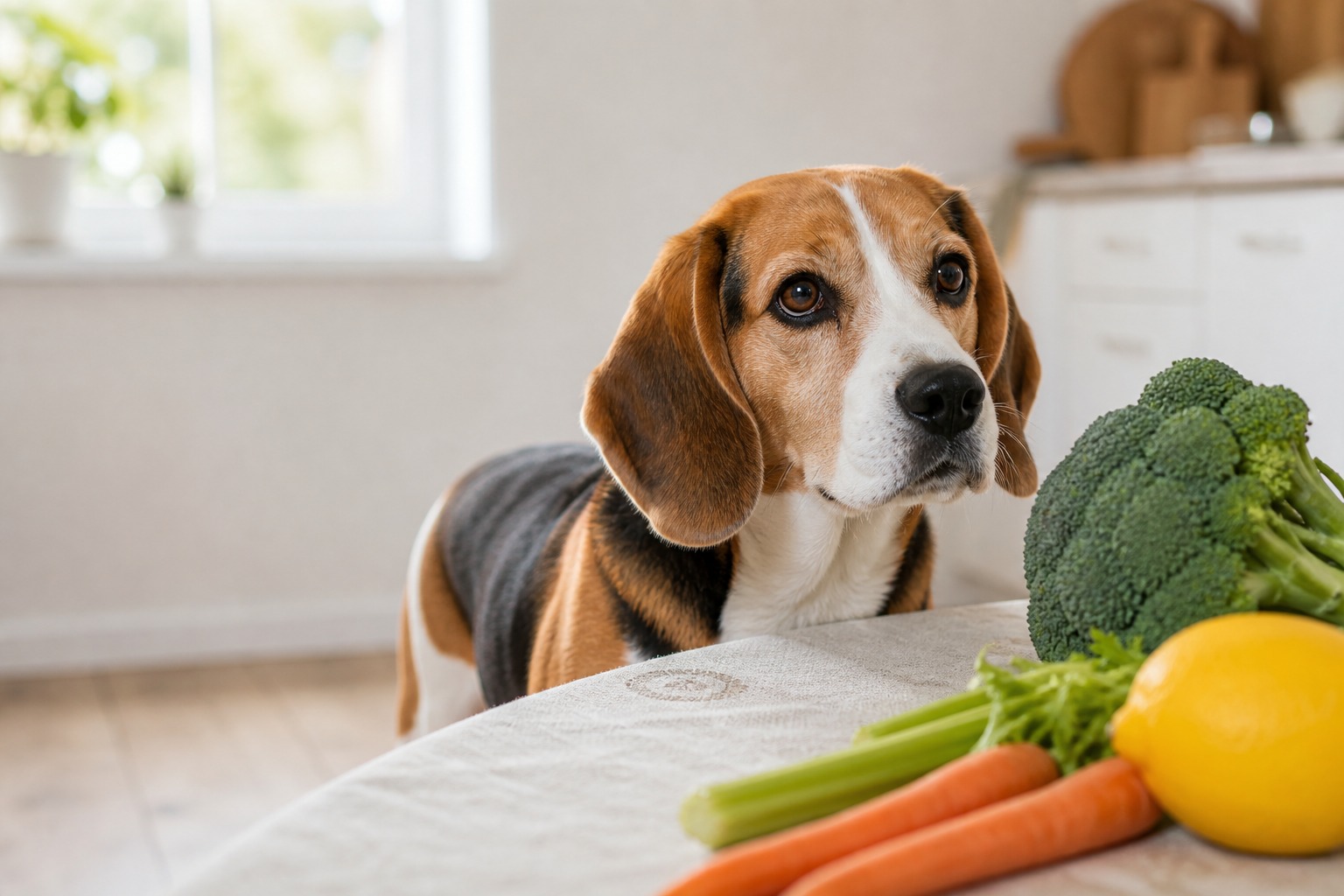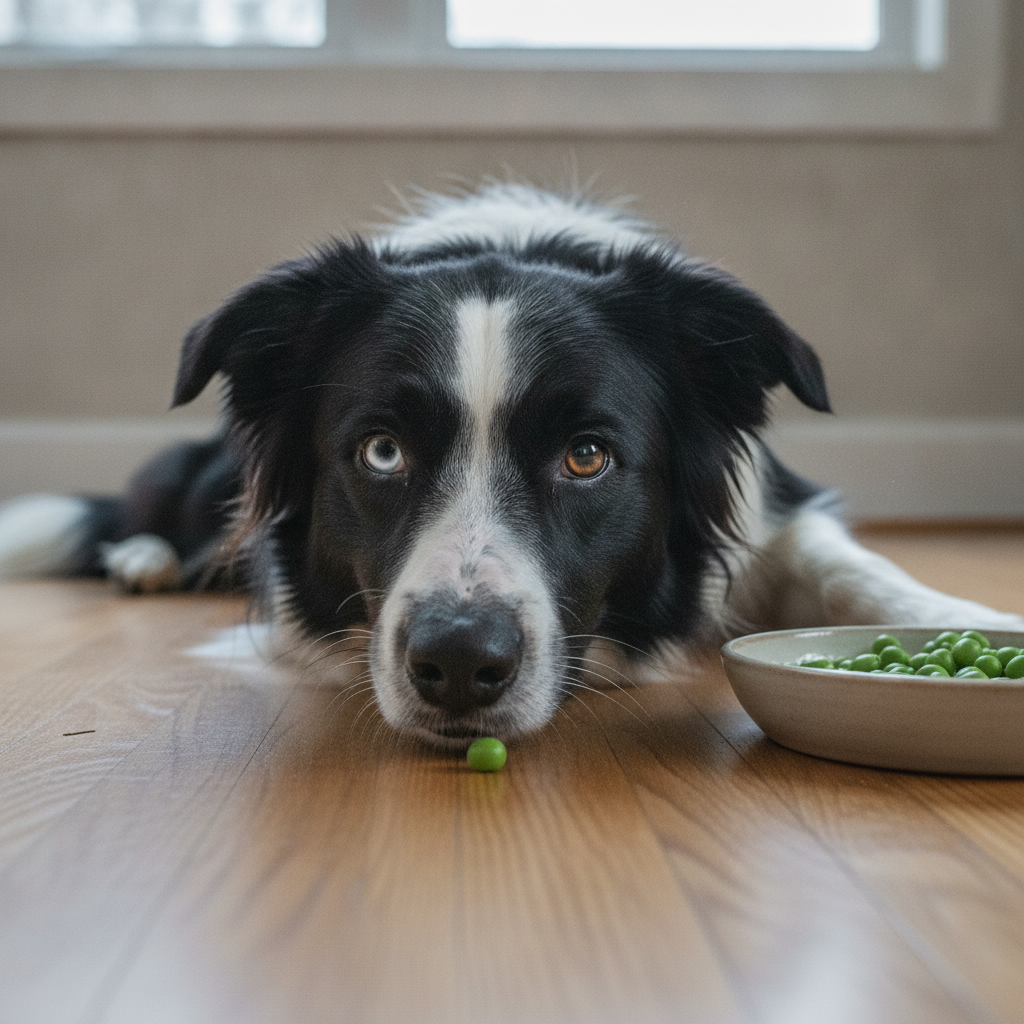
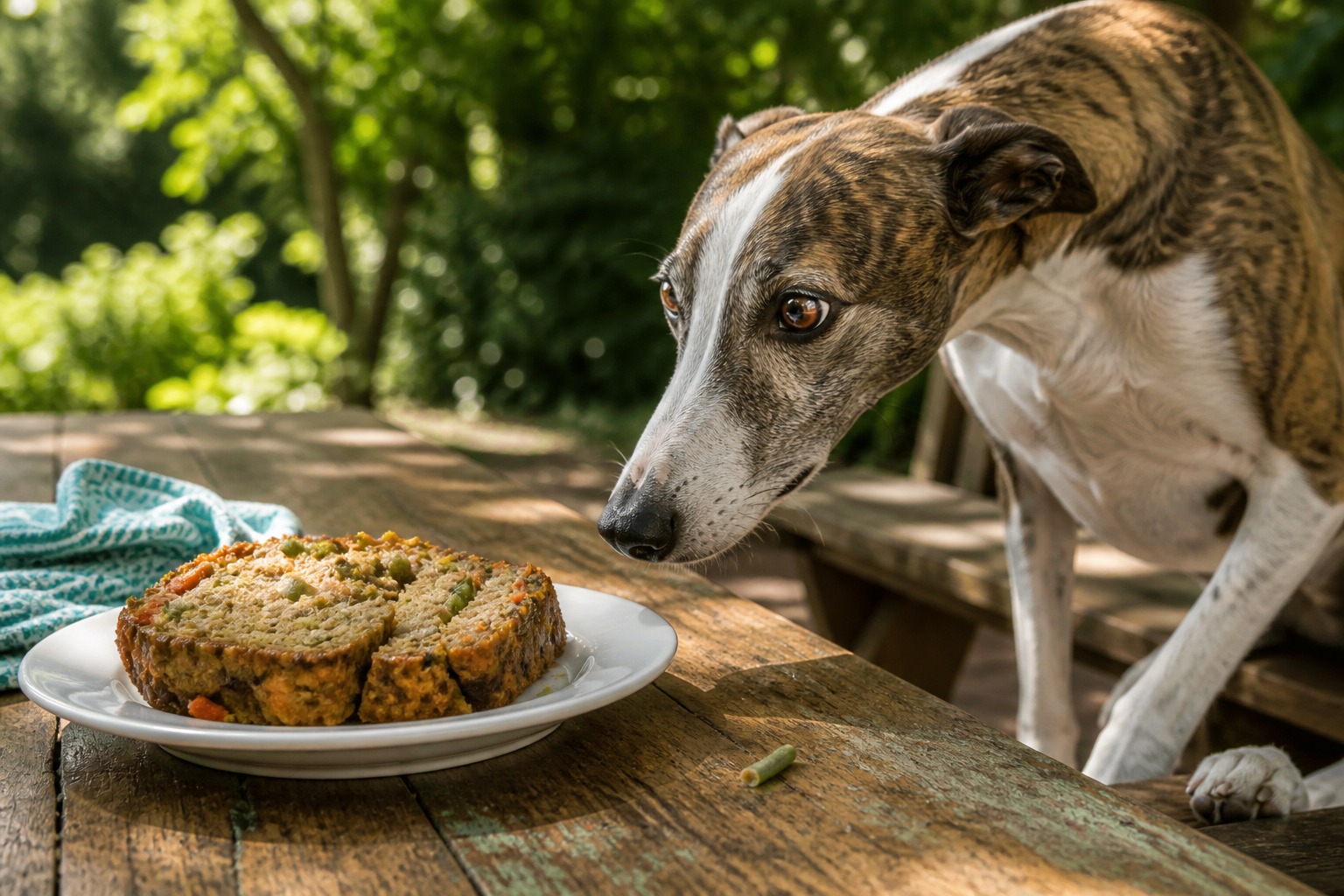
Your dog is standing at your knee, watching the meatloaf come out of the oven, doing the thing with the eyes. Don’t.
Not because a bite of meat would hurt them. Because of what is in your meatloaf. The recipe you actually cook almost certainly contains onion, probably garlic, likely a glaze, and that combination ranges from a bad night to a genuine emergency. The meat was never the problem. The company it keeps is.
Which is a fixable problem, and the fix is one loaf pan away.
The three things in your meatloaf that hurt dogs
Alliums. This is the big one, and it is the reason “just a small piece” is bad advice with meatloaf specifically. Onions, garlic, leeks, chives, and shallots all belong to the allium family, all of them are staples of human cooking, and all of them are toxic to dogs. Leticia Fanucchi, who teaches veterinary clinical sciences at Oklahoma State University, has flagged the consequence: alliums can destroy a dog’s red blood cells, producing hemolytic anemia. Almost every human meatloaf recipe on earth starts with diced onion.
Xylitol. Some processed meatloaf and some recipes, particularly glazes and sauces, contain xylitol, a sugar substitute. The mechanism is worth understanding, because it explains why the dose threshold is so terrifyingly low: in a dog, xylitol triggers a sudden flood of insulin from the pancreas, and blood sugar crashes into hypoglycemia within an hour. Fanucchi has warned that even a very small quantity can set this off. It is one of the fastest-acting household poisons a dog can encounter.
Fat. The ground beef you like for a meatloaf is probably the fatty kind, and the loaf sits in its own rendered fat while it cooks. A large fat load can inflame the pancreas, the organ responsible for breaking fat, protein, and carbohydrate down in the first place. That is pancreatitis, and as Fanucchi notes, a fat overload is a common way pets end up with it. It is painful, it is expensive, and it puts dogs in the hospital.
So: not the plate. A separate loaf.
“The call I get is never ‘my dog ate meat.’ It’s ‘my dog ate the thing the meat was cooked with,’” says Dr. Lena Park. “If you want to cook for your dog, cook for your dog. Sharing off your own plate is where the accidents live.”
The loaf
Make several at once and freeze them. Vary the vegetables so it is not the same thing every time.
Ingredients
- 2 pounds ground turkey
- 1 cup cooked organic oatmeal
- 3/4 cup organic flaxseed meal or breadcrumbs
- 1/2 cup fresh organic parsley, finely chopped
- 2 large organic eggs
- 2 cups fresh or frozen organic vegetables (never onion)
Directions
- Preheat the oven to 350°F.
- Mix everything together in a large bowl.
- Transfer to a loaf pan or a 13-by-nine-inch baking dish and form a loaf in the center. A roasting pan works too; just keep the loaf in the middle.
- Optional: spread potatoes or sweet potatoes around the loaf and bake them at the same time.
- Bake one hour on the center rack.
Store sliced meatloaf in the refrigerator, or freeze for up to three months. Feed according to your dog’s size and calorie needs.
Adapted from Eco Dog by Corbett Marshall and Jim Deskevich.
The swaps, and why they are what they are
Meats. No turkey? Ground chicken, ground lamb, or lean ground beef all work. Avoid pork, veal, and high-fat ground beef, which push you back into pancreatitis territory. This is the substitution where the reasoning actually matters.
Grains. In place of oatmeal, use another whole grain: brown rice or quinoa. Flaxseed meal substitutes cleanly for breadcrumbs. One thing worth knowing: oats are naturally gluten-free but are commonly cross-contaminated during processing, so if gluten is a concern in your house, buy certified gluten-free oats.
Veggies. Carrots, green beans, peas, and broccoli are all popular and safe. Sweet potatoes are a hit with a lot of dogs and can be baked alongside the loaf.
Optional toppers. If you want to build it out: pulverized calcium, nori, chopped pumpkin seeds, sunflower seeds.
The caveat the recipe blogs skip
This is a treat. It is not dinner.
A loaf of turkey, oats, eggs, and vegetables is a genuinely nice thing to give a dog, and it is nutritionally incomplete. It does not carry a balanced calcium-to-phosphorus ratio, it is short on several vitamins and trace minerals, and a dog fed on it as a staple will drift into deficiency over months, not days, which is exactly what makes it easy to miss.
Two rules keep this safe:
Treats, including this, should stay around 10% of daily calories. Feed the loaf on top of a complete diet, not instead of one, and cut back the regular meal accordingly so you are not just adding calories.
If you want to actually home-cook your dog’s meals, get the recipe formulated. A board-certified veterinary nutritionist can build a balanced recipe for your specific dog, and services exist to do exactly this. Studies looking at home-cooked recipes found online have repeatedly found most of them nutritionally incomplete, and often not by a little.
And when you introduce anything new, go slow. Small amounts first, until you know how your dog handles it.
What newer guidance adds
Two updates worth knowing since this recipe first ran.
The xylitol picture has gotten more complicated, not less. It now shows up in a wider range of products, and a related sweetener, birch sugar, is the same compound under a different name on the label. If you are checking an ingredient list for your dog’s safety, look for both.
And the FDA has continued to flag the dose problem with alliums: toxicity is dose-dependent, but the threshold is lower than people assume, and it stacks across a day. A bit of onion in the loaf plus onion powder in the gravy is not two small exposures, it is one bigger one. Onion powder is more concentrated than fresh onion, which is why “there’s no onion in it, just seasoning” is not the reassurance it sounds like.
The safe version is the boring version: make the dog their own loaf, leave the alliums out entirely, and let them have theirs while you have yours.
References
- Fanucchi, L. “Foods Toxic to Pets.” Oklahoma State University College of Veterinary Medicine. https://vetmed.okstate.edu/
- US Food and Drug Administration. “Paws Off Xylitol; It’s Dangerous for Dogs.” https://www.fda.gov/consumers/consumer-updates/paws-xylitol-its-dangerous-dogs
- ASPCA Animal Poison Control Center. “Toxic and Non-Toxic Foods.” https://www.aspca.org/pet-care/animal-poison-control/people-foods-avoid-feeding-your-pets
- Stockman, J., et al. “Evaluation of recipes of home-prepared maintenance diets for dogs.” Journal of the American Veterinary Medical Association, 2013. https://pubmed.ncbi.nlm.nih.gov/24216503/
- Marshall, C., and Deskevich, J. Eco Dog: Healthy Living for Your Pet.