


Your Cat Isn't 'Toxic.' It's a Living Air Monitor for Your Home
A viral reel calls cats the most toxic pets on the planet. The label is wrong, but the science underneath it is real and useful: cats absorb your home's chemicals before you do, which makes them an early warning system.

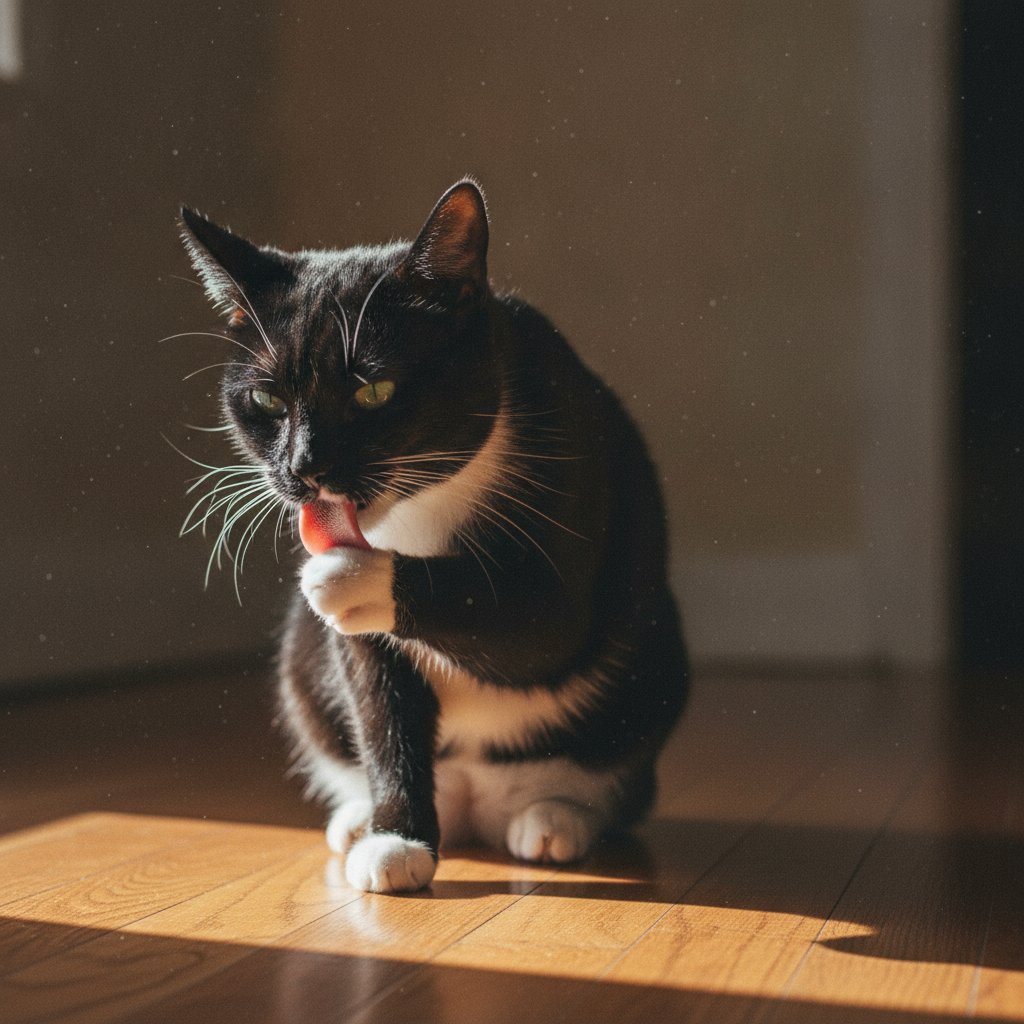
A reel went viral claiming cats are “the most toxic pets on the planet,” that they soak up every chemical in your home and their livers can’t keep up. As a headline it is alarming and a little smug. As science it is mostly wrong. But buried under the exaggeration is a genuinely fascinating and useful fact: your cat is absorbing your household’s chemical load faster and more completely than you are. Not because cats are uniquely poisoned, but because of where they live and how they clean themselves. That makes a cat something closer to a living air-quality monitor for your home than a “toxic pet.”
Let’s separate the hype from the part actually worth acting on.
Where the viral claim falls apart
The reel is loosely built on a real and serious piece of research: the Environmental Working Group’s “Polluted Pets” study, which analyzed blood and urine from dogs and cats and found a heavy chemical burden, including known carcinogens, neurotoxins, and endocrine disruptors, with nearly two dozen chemicals detected in pets for the first time. So the underlying study is not junk.
The viral interpretation of it is. Veterinarian Dr. Julie Hunt, a consultant for Embrace Pet Insurance, walked through the reel’s specific claims, and several don’t hold:
- “Most toxic pets on the planet.” The study only tested cats, dogs, and humans. It never measured reptiles, birds, or any other pet, so it literally cannot rank cats against “all pets.”
- “Cats absorb every chemical we use indoors.” Some compounds cats largely don’t absorb at all.
- “Their livers can’t clear any of it.” The liver clears some chemicals; others leave through the urinary tract; a few persist. “Can’t clear all of it” became “can’t clear any of it” somewhere in the retelling.
Hunt’s bottom line: the slogan is overcooked, and several of its specific numbers are unsupported by the study it cites. A cat is not a walking hazmat situation.
The real finding: cats as sentinels
Here is the part that is true, and more interesting than the scare version. The EWG data showed cats carrying dramatically higher levels of certain chemicals than people, roughly 23 times more PBDE flame retardants and over five times more mercury than typical human levels, while dogs ran about 2.4 times higher than people for stain- and grease-proofing perfluorochemicals. The pattern is not random. It maps directly onto how cats live.
Cats spend their lives at floor level, where heavier chemical particles in household dust settle out of the air. Then they groom obsessively, licking that dust straight off their coats. Researchers estimate cats ingest about seven times more household dust than an adult human does. Dust is where flame retardants from your couch, mattress, and electronics accumulate. So a cat is essentially running a continuous, high-volume sample of your home’s worst air, and storing the results in its body.
This is why I tell clients to think of a cat as a sentinel, not a victim. Whatever is settling in your home’s dust is concentrating in your cat first, because they sleep in it and eat it off their fur. If you want to protect the cat, you clean up the source, and you happen to protect yourself in the process.
That reframing matters. The flame retardants and forever chemicals showing up in cats are the same classes of compounds that worry researchers in human health. Your cat is not a separate problem. It is an early reading on a problem you share.
What actually reduces the load
Because the exposure runs through dust and grooming, the fixes target dust and the products that shed it. Hunt’s recommendations, lightly expanded:
Control the dust itself. This is the highest-leverage move, since dust is the delivery system. Vacuum regularly with a HEPA-filtered vacuum rather than sweeping, which just flings particles back into the air. Wet-mop hard floors. Dust with a damp cloth. Ventilate, open windows when you clean, so disturbed particles leave instead of resettling on the cat’s favorite nap spot.
Cut nonstick and flame-retardant sources. The perfluorochemicals in nonstick coatings and the PBDEs in flame-retardant furniture, mattresses, and electronics are persistent. Where you have the choice, favor uncoated cookware and furnishings not treated with added flame retardants. This is one of the cases where what helps the cat helps the humans equally.
Use safe bowls and feeding gear. Swap plastic food and water dishes for stainless steel or ceramic, which don’t shed plastics or harbor scratches that trap residue.
Mind mercury in the diet. Mercury concentrates in large predatory fish. Go easy on tuna, mackerel, and swordfish as regular cat foods or toppers, and don’t make fish the daily base of the diet.
Choose parasite control deliberately. For flea and tick products, use only what your veterinarian recommends, and apply topicals at the back of the neck where a cat can’t groom them off. If grooming-off is a concern, ask about an oral option instead.
None of this requires a panic or a gut renovation. It is mostly cleaning smarter and choosing a few materials more carefully.
The honest takeaway
Your cat is not the most toxic pet on the planet, and that reel oversold a real study to scare you. But the kernel under the clickbait is true and worth knowing: cats absorb the chemical character of your home, fast and completely, because they live in the dust and eat it off their fur. That makes them an unusually sensitive read on your indoor environment. Clean up what your cat is sampling, and you are not just protecting a sentinel, you are cleaning the air everyone in the house breathes.
References
- “Polluted Pets: Chemical Exposures and Pets’ Health.” Environmental Working Group, www.ewg.org/research/polluted-pets/chemical-exposures-and-pets-health.
- “Potential Role of Pet Cats As a Sentinel Species for Human Exposure to Flame Retardants.” Environmental Science & Technology / NIH PMC, www.ncbi.nlm.nih.gov/pmc/articles/PMC5449440.
- “Pet Cats, the Better Sentinels for Indoor Organic Pollutants.” Frontiers in Environmental Science, www.frontiersin.org/articles/10.3389/fenvs.2022.1023818/full.
Common questions
Why do cats absorb more household chemicals than we do?
Two reasons. Cats live at floor level where chemical-laden dust settles, and they groom constantly, licking that dust off their fur and swallowing it. Cats are estimated to ingest roughly seven times more dust than adult humans, which concentrates flame retardants and other compounds in their bodies.
How can I lower my cat's chemical exposure?
Cut indoor dust and the products that shed it: vacuum with a HEPA filter instead of sweeping, ventilate often, skip nonstick cookware and flame-retardant furniture where you can, use stainless or ceramic bowls, limit high-mercury fish, and choose vet-recommended flea and tick products.
Not a substitute for your vet. Our guidance is educational. For urgent symptoms, contact a vet or emergency clinic right away. Editorial standards
Dr. Kohl is a board-certified veterinary dentist with a particular interest in preventive oral care. She reviews all dental health content at The Pet Times and contributes practical guides on home dental routines, professional cleaning, and oral disease prevention.
Meet our experts ↗Keep reading
 Health & WellnessYour Indoor Cat's Food Bowl Is the Bird Flu Risk Nobody Warned You AboutDr. Mara Chen · 6 min
 LivingThe Litter Scoop in the Dishwasher: It Was Never About the IckNina Vasquez · 5 min
 Health & WellnessThe Farm-Cat Deaths Were the Warning. Raw Food Is How House Cats Now Catch Bird FluDr. Mara Chen · 5 min
 Health & WellnessChocolate Hits Cats Harder Than Dogs. One Quirk Is Why You Rarely Hear About ItDr. Lena Park · 6 min
 Health & WellnessYour Indoor Cat Can Still Get Fleas. Here's How They Sneak InDr. Mara Chen · 7 min
 Health & WellnessA Bee Sting Rarely Hurts a Cat. The Reaction to One Can Be DeadlyDr. Mara Chen · 6 min