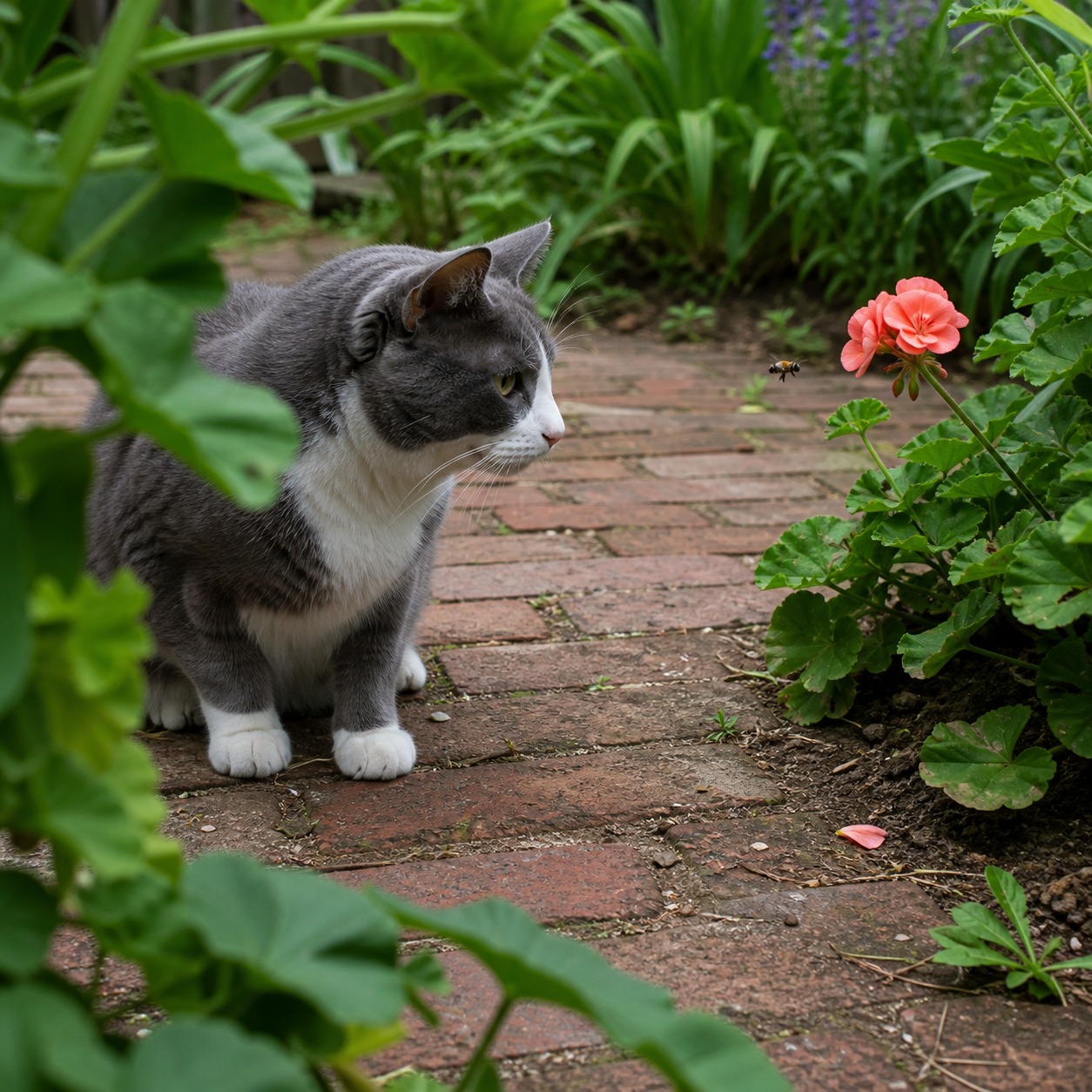
Cats are hunters, and some of them cannot resist a slow, buzzing, obviously-a-terrible-idea target: a bee or a wasp. The catch usually ends the same way, with a swollen paw or a puffed-up face and a cat who looks personally betrayed. Most of the time, that is the whole story, and a little first aid is all it takes.
But not always. The sting itself is rarely the real danger. The danger is an allergic reaction, and in a cat that is hypersensitive to bee or wasp venom, that reaction can escalate into anaphylaxis, which is life-threatening. The whole game is knowing which situation you are in, because the two call for very different responses and the window to act on the serious one is short.
What a normal sting looks like
Cats mostly get stung on the parts they hunt with: the paws and the face. The first sign is usually a startled cat, a yelp or a jump, followed by limping, licking, or pawing at the sore spot. Then comes swelling, which can turn a paw into what looks like a tiny boxing glove or leave a face looking lopsided and punched. Uncomfortable, undignified, and almost always fine. A cat with this kind of mild, local reaction typically recovers within 12 to 24 hours.
The symptoms that mean go now
A minority of cats are allergic or hypersensitive to stings, and their bodies overreact in a way that involves the whole system, not just the sting site. Get to a veterinarian immediately if you see any of these signs of a severe or anaphylactic reaction:
- Difficulty breathing
- Hives and intense itching
- Drooling
- Vomiting or diarrhea
- Weakness or collapse
- Pale gums
Also treat it as an emergency if your cat took multiple stings at once, or got stung somewhere genuinely dangerous, like the tongue, the mouth, or the eye. And know that a bad reaction can be delayed. A cat who seems fine right after the sting can worsen an hour or more later, so keep watching even after the initial drama passes. When in doubt, call.
What to do if your cat seems okay
If your cat was stung and is showing no signs of a whole-body reaction, you can handle it at home:
- Find and scrape out the stinger. Locating a stinger buried in fur is genuinely hard, but if you spot it, removing it helps. Use a fingernail or the edge of a stiff card (a credit card or ID works) to scrape it out sideways. Do not pinch it with fingers or tweezers, which can push still more venom down into the wound.
- Apply something cool. A cold, damp washcloth or a bag of frozen vegetables held gently against the area eases swelling and pain.
- Watch closely. Even a cat who looks fine deserves a couple of hours of close observation, because the serious symptoms can show up on a delay. If anything shifts, contact your vet.
One firm rule: do not reach for the human medicine cabinet. Common over-the-counter pain relievers are highly toxic to cats and can kill them, including acetaminophen (the drug in Tylenol) and ibuprofen (found in Advil and Motrin). If a cool compress and stinger removal are not cutting it, that is a reason to call your vet, not to improvise a dose.
What emergency treatment involves
A cat having a true allergic reaction needs veterinary care fast, and your vet will match the treatment to how severe things are. Mild cases may be managed as an outpatient with pain relief or an antihistamine. A cat in anaphylactic shock needs much more aggressive support, which can include:
- IV fluids to fight the drop in blood pressure and poor circulation that come with shock, and to rehydrate a cat who has been vomiting or has diarrhea.
- Oxygen to help a cat who is struggling to breathe.
- Medications chosen for the symptoms, which may include an antihistamine such as diphenhydramine (Benadryl) or, in severe cases, epinephrine, bronchodilators, and corticosteroids.
- Monitoring. Cats who have had an anaphylactic reaction are often hospitalized for a day or so, because doses sometimes need repeating and recovery needs watching.
It also helps the team to know if the stinger might still be in your cat, and roughly where. Finding it is not guaranteed and is far less urgent than the life-saving steps, but another set of eyes never hurts.
Skip the folk remedies
A baking soda paste or a splash of vinegar are popular internet fixes, and they mostly do not work on stings. Worse, either one can cause problems if your cat licks up a mouthful or gets it near their eyes. A plain cool compress is safer and more useful than anything from the pantry.
How to keep it from happening
You cannot talk a cat out of chasing bugs, so the best prevention is limiting the opportunity. Keeping your cat indoors removes the risk almost entirely, especially during peak bee activity in the early morning and late afternoon. If your cat does go outside, try to keep them away from the places bees congregate and nest: flowering plants, blooming bushes, and trees. A curious cat will always find some trouble, but a bee does not have to be on the menu.
“The paw that swells up like a balloon looks scary and is almost always the harmless version,” says Dr. Mara Chen. “What I want owners watching for is the breathing. Any struggle to breathe after a sting is a drive-to-the-ER-now situation, not a wait-and-see one.”
What’s worth keeping on hand
For a fast second opinion at 9 p.m. when you are not sure how worried to be, save a pet poison hotline in your phone, such as the ASPCA Animal Poison Control Center. They can help you gauge severity and decide whether a sting is a cool-compress night or an emergency-room night. And if your cat has ever had a bad reaction to a sting before, tell your vet, because a cat who reacted once is more likely to react again, and it is worth having a plan ready.
References
- Merck Veterinary Manual. “Insect Stings and Bites in Animals.” https://www.merckvetmanual.com/integumentary-system/insects-and-other-arthropods/insect-stings-and-bites-in-animals
- Andrew, S. E. (2001). “Corneal bee sting in a Bengal cat.” Veterinary Ophthalmology.
- Côté, E. Clinical Veterinary Advisor: Dogs and Cats. Elsevier.
- ASPCA Animal Poison Control Center. https://www.aspca.org/pet-care/animal-poison-control