Popsicle season shows up the moment the heat does, and somewhere in the middle of a hot afternoon a lot of cat owners find themselves holding a dripping fruit pop with a cat staring up expectantly. The instinct is generous and the worry is real: is this okay to share? The short version is that a lick usually won’t hurt, but that’s the wrong question. What you’re actually trying to do on a hot day is cool your cat down and get more water into them, and a popsicle is a clumsy tool for both jobs. There’s a much better one.
Start with what you’re really solving
When people reach for a popsicle to share, they’re chasing two goals: relief from the heat and hydration for an animal that famously refuses to drink enough water. Both are worth pursuing. Cats evolved from desert animals and carry a weak thirst drive, so many run mildly under-hydrated, which matters most for cats with kidney or urinary issues. And a cool treat on a sweltering day is a kindness.
Hold onto those two goals, because they’re the standard we should judge any frozen treat against. A popsicle happens to fail on the details even while it technically clears the toxicity bar.
Where the popsicle falls short
Most popsicles are built for human taste, which means sugar or high-fructose corn syrup near the top of the ingredient list. Cats are obligate carnivores who don’t metabolize simple sugars the way we do, and a steady sugar habit nudges them toward weight gain and diabetes. The cruel irony is that cats can’t even taste the sweetness, since they lack functional sweet-taste receptors. So the one thing a popsicle is designed to deliver is a thing your cat can’t appreciate.
Then there’s the company the sugar keeps. Creamy popsicles bring dairy, and most adult cats are lactose intolerant, so a real serving can mean vomiting, gas, or diarrhea. Some flavors carry outright hazards: anything with chocolate, xylitol, or grape has to be kept away completely.
The part people underestimate is the stick. A cat who ignores the sweet part will often go after the stick, and a chewed splinter of wood can cut the mouth or, if a piece is swallowed, set up an intestinal blockage. It turns a harmless-seeming treat into an emergency, so I tell owners to never hand a cat the whole thing.
And most cats don’t even want it. They’re hunters wired to prefer food that’s warm, the temperature of fresh prey, which is why so many turn their noses up at anything cold. Don’t take the snub personally; it’s instinct.
The treat that actually does the job
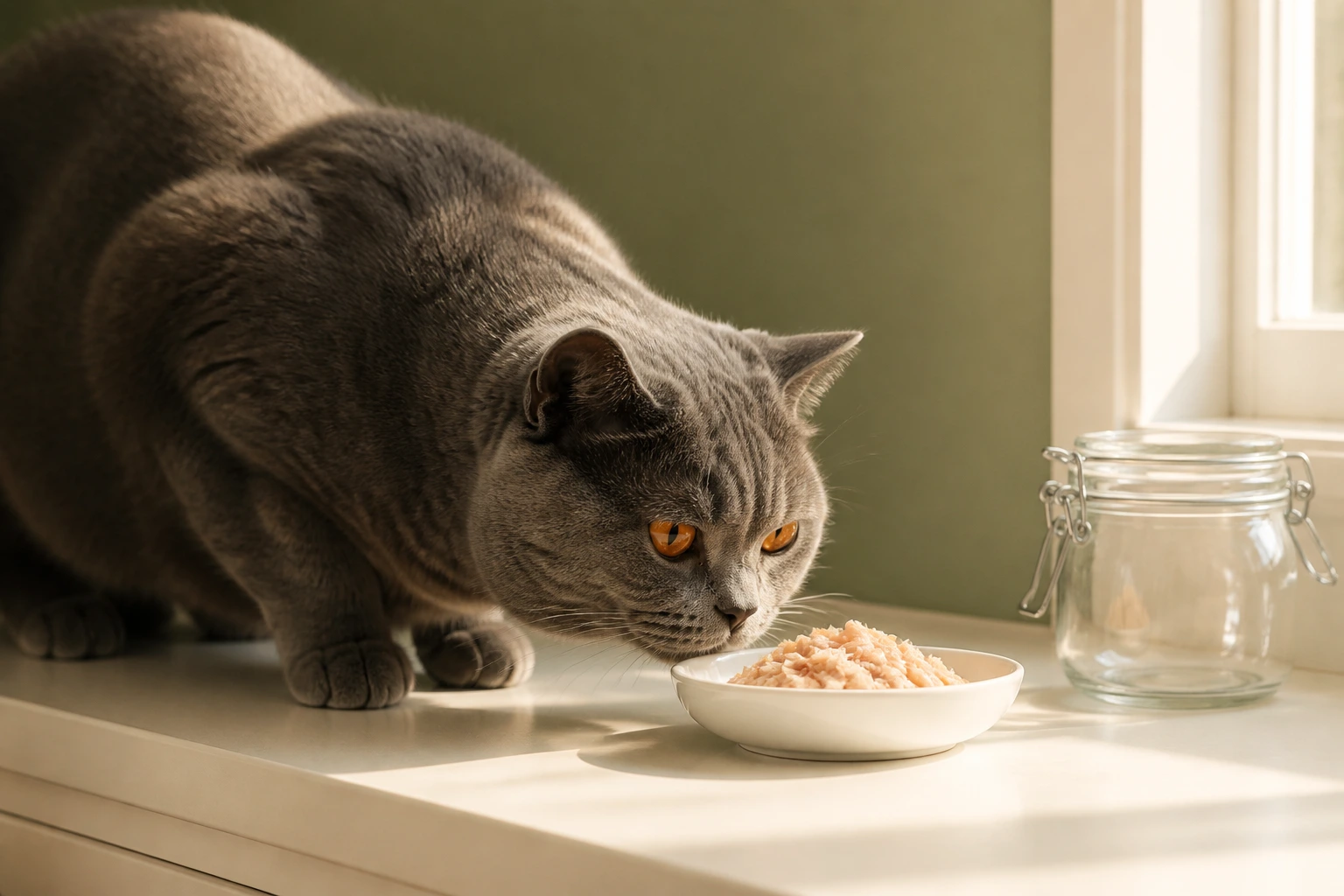
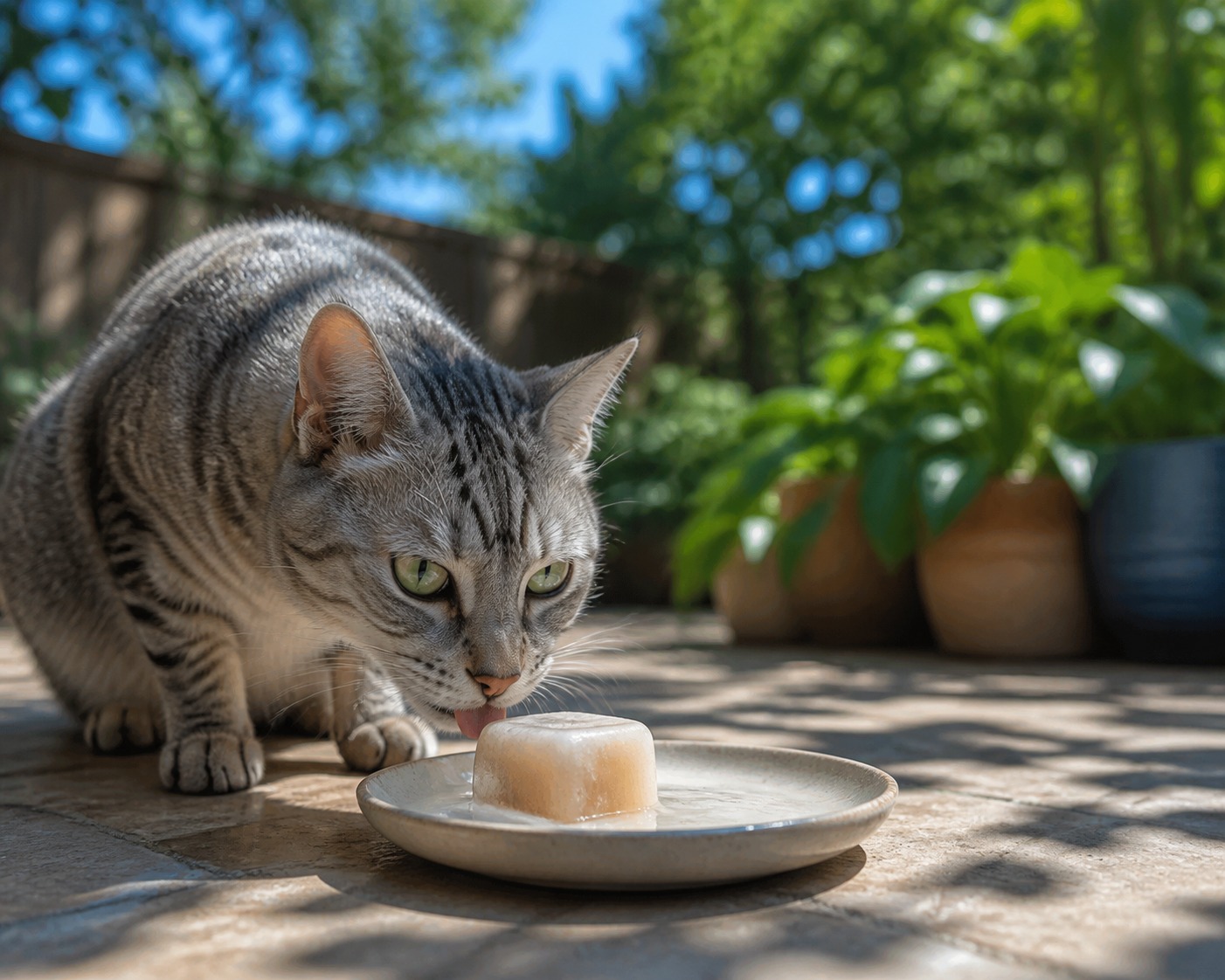
Here’s the reframe. If the goal is cooling and hydration, make the treat out of something a carnivore is built to want. A cube of frozen low-sodium chicken broth checks every box: it’s cold, it’s almost entirely water, it carries a meaty smell cats chase, and it has none of the sugar, dairy, or stick problems. Freeze plain broth in an ice tray and offer one cube in a shallow dish. Many cats who ignore a fruit pop will chase a broth cube around the floor happily.
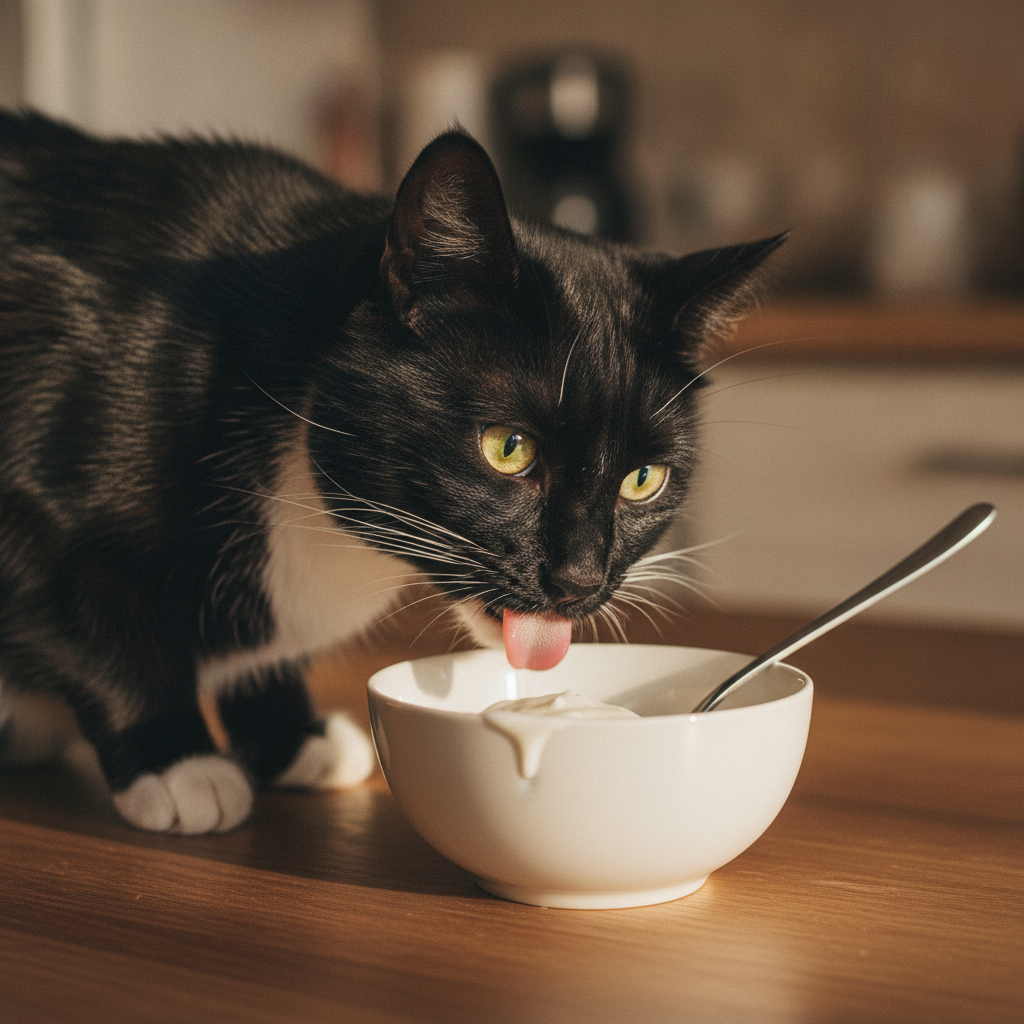
A few more cooling ideas that beat a popsicle: a spoonful of your cat’s wet food frozen into a lick-able puck, a couple of plain water ice cubes for a cat who likes to bat and lick, or, if your cat tolerates it, a tiny dollop of plain unsweetened yogurt frozen into a small cube. Keep any frozen treat to a lick or two, and count it inside the treat budget: no more than 10 percent of daily calories, with the other 90 percent coming from complete cat food.
If you’d rather buy than freeze, look for treats made specifically for cats and read the label the same way you’d read a popsicle’s: no added sugar, no dairy unless your cat handles it, no chocolate, xylitol, or grape.
What’s new since this was written
Cat obesity keeps climbing, which changes how much a sugary “sometimes” treat really matters. The Association for Pet Obesity Prevention’s 2024 survey found 33 percent of owners reported their cat as overweight or obese, up from 28 percent a year earlier, and vet-record studies put overweight rates near half of adult cats. In that context, choosing a near-zero-calorie broth cube over a sugar popsicle isn’t fussiness; it’s the difference between a treat that helps and one that quietly adds up.
The heat-safety side has sharpened too. Veterinary guidance now leans hard on passive cooling for cats in hot weather, shade, airflow, and easy access to fresh water, and treats hydration as a daily habit rather than a heat-wave rescue. A frozen broth cube fits that thinking; a popsicle doesn’t.
When to skip frozen treats entirely
Some cats simply won’t engage with cold food, and that’s fine, there’s no need to push it. Skip frozen treats for young kittens, who need a tightly controlled diet, and for any cat with diabetes or a weight problem, favor the plain-water or broth options with zero sugar. If your cat ever reacts to a new treat with vomiting, diarrhea, or gagging, take it off the list and check with your vet.
FAQs
How much popsicle can a cat have? No more than the occasional lick, and only if it’s free of chocolate, xylitol, grape, and heavy dairy. It should never be a real portion.
Do cats even like popsicles? Most don’t. Cats can’t taste sweetness and instinctively prefer warm food, so a cold, sweet treat works against two of their strongest preferences.
What frozen treat is safest? A cube of frozen low-sodium chicken broth or plain water. Both cool and hydrate without sugar, dairy, or a stick.