


Your Cat Sleeps Sitting Up Because Part of It Never Clocks Out
The upright 'meatloaf' nap looks deeply uncomfortable to us, but for a cat it's a predator keeping one boot on. Here's what each sleeping position says about how safe your cat feels — and the one change that should send you to the vet.

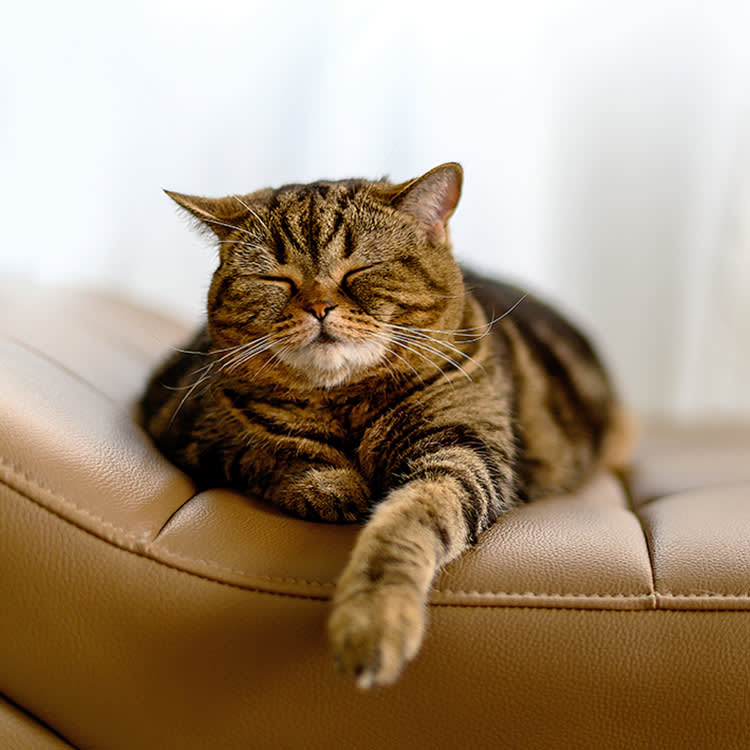
Cats nap in poses that range from the enviable to the baffling. There’s the full-belly sprawl that makes you want to lie down too, and then there’s the one where your cat is essentially sitting upright, chin held high, paws folded beneath them, apparently asleep with their head still on duty. If you’ve ever nodded off in an airport chair and woken up feeling like a wrung-out towel, you know that sleeping upright should not be restful. So why does your cat choose it, over and over, on purpose?
The short version: a cat asleep with its head up isn’t uncomfortable. It’s a small predator that never fully lets its guard down — and the position it picks is a running status report on how safe it feels.
Sleep is doing more than you think
Cats sleep for the same core reasons we do, but the job their sleep performs is shaped by a very different life. Rest recharges the body, settles the nervous system, and supports healing, and cats even appear to dream, judging by the way they twitch, paddle, and mutter through a deep nap. None of that is optional. Sleep keeps their senses sharp for the two things a cat’s brain is always half-tracking: the meal that might wander by, and the threat that might not.
Now picture what sleep meant for a cat’s ancestors. Imagine dozing with a litter of kittens crawling over you, ready to nurse at any second, while also staying primed to pounce on an unsuspecting mouse or bolt from something bigger and hungrier. Domestic life removed most of those stakes, but it didn’t rewrite the instinct. Your cat is still, at some level, a prey animal and a hunter at once, and that shapes how it lies down.
A quick field guide to cat sleeping positions
Your cat probably has a signature pose, and each one carries information. Here are the common ones and what they tend to mean.
The stretch. Belly down, front and back legs reaching out long. You’ll see it on a warm day, a cat poured across cool tile or a countertop. Like any low, extended, upright-ish pose, it keeps the cat ready to spring after a toy, a snack, or away from trouble.
The sphinx. Back legs tucked, propped on the front elbows (yes, cats have elbows), head up like a little monument. Easy to launch from, and a touch warmer than the full stretch.
The ball. Curled up tight on their side to conserve heat — cats generally like to run a bit warmer than we do. It also tucks the vulnerable belly away, which makes it a safe-feeling pose as well as a cozy one.
The belly-up. The irresistible one, all four paws in the air, soft stomach exposed. When it’s genuine, it’s a billboard for trust: your cat feels safe enough to leave its most sensitive area open and settle into a pose that’s slow to escape from. One caution, though — a cat that rolls belly-up when it feels cornered is doing the opposite, lining up claws and teeth to defend itself. Read the whole situation, not just the pose.
The side sleeper. Long and relaxed like the stretch, but lying fully on one side. Harder to spring from, so it usually signals a comfortable, unbothered cat at an easy temperature.
The meatloaf. The upright classic. Head high, both front and back legs folded underneath, body compact as a loaf of bread. It’s a cousin of the sphinx, great for leaping into action, with the belly shielded by the surface below and every limb pulled in to hold body heat.
So why sleep with the head up?
Several of those positions keep the head elevated, and if you couldn’t see the closed eyes, you’d swear the cat was awake. It can’t be comfortable — can it? There are a few solid reasons a cat chooses the alert posture anyway.
Old instincts, indoor cat. Your house cat faces none of the dangers its wild relatives did, but it runs the same ancient software. For tens of thousands of years, staying alert was survival, and head-up sleeping is one way to do it. The upright pose lets a cat instantly see and hear what’s happening, defend itself or flee, keep watch over kittens, seize a meal that presents itself, and — the modern version — dodge an overexcited puppy thundering through the living room. That readiness is baked in; a warm couch doesn’t switch it off.
Comfort and the body. Anatomy plays a role too. Even cats with similar builds differ in the fine print of their skeletons, and an older cat dealing with osteoarthritis or muscle weakness may simply find it easier to settle into and rise from an upright position. Certain medical issues, especially anything that makes breathing harder, can also nudge a cat toward sleeping with its head up.
Mood. Emotional state shapes posture the same way it does for us. Think about how you sleep when you’re anxious versus when you’re at peace — maybe curled around a pillow when you crave security. A stressed cat may favor the tight meatloaf; a nervous one picks a pose it can flee from in a heartbeat.
When the head-up nap should worry you
For the overwhelming majority of cats, sleeping upright is completely normal and nothing to fret over. The thing to watch isn’t the position itself — it’s a change in it.
If your cat has always been a sprawled-out back-sleeper and suddenly starts sleeping bolt upright, especially alongside other shifts in behavior, that’s worth a call to your veterinarian. Pair the new posture with the usual red flags — eating or drinking differently, changes in litter box habits, sleeping far more or far less, less play, or flinching and aggression when touched — and you may be looking at a medical problem affecting your cat’s comfort. A cat that can’t breathe easily lying down, for instance, will often prop itself up to cope.
What newer research adds
We’re still learning how much of a cat’s day is spent asleep and why the architecture of that sleep looks the way it does. What’s clear is that cats are champion sleepers — often clocking well over half the day in some stage of rest — and that their sleep is broken into many short bouts rather than one long block, exactly the pattern you’d expect from an animal that evolved to stay reactive. That polyphasic, easily-interrupted style is the same reason the head-up pose makes sense: a cat isn’t built for one deep, defenseless sleep, so it takes lots of lighter ones it can surface from instantly.
The practical takeaway hasn’t changed. Position tells you about mood and readiness, not health, until it suddenly shifts. Track your cat’s normal, and let a break from that normal — not the upright loaf on a quiet afternoon — be the thing that gets your attention.
Bottom line
Instinct drives a huge share of what your cat does, and sleep is no exception. As a creature built to detect threats, track a meal, and react in a heartbeat, a cat often chooses an upright, head-high position so it can go from asleep to airborne in a single second. Warmth, age, health, and mood all tug on the choice too. Sleeping with the head up is entirely natural — a feature, not a bug. Just keep a mental note of your cat’s usual routine, so that if it changes suddenly, you catch it early.
Any abrupt change in how your cat sleeps, paired with other symptoms, is worth a veterinary check rather than a wait-and-see.
Dr. Kohl is a board-certified veterinary dentist with a particular interest in preventive oral care. She reviews all dental health content at The Pet Times and contributes practical guides on home dental routines, professional cleaning, and oral disease prevention.
Meet our experts ↗Keep reading
 TrainingPawmistry Is Nonsense. But the Urge Behind It Just Got a Real AnswerSasha Ford · 5 min
 TrainingYes, Cats Are Ticklish. The Real Skill Is Knowing When to StopSasha Ford · 6 min
 TrainingThat Adorable Chirping Is the Sound of a Cat FailingDr. Nina Kohl · 7 min
 TrainingThe Spray Bottle Doesn't Teach Your Cat to Stop. It Teaches Them to Wait Until You Leave.Dr. Ravi Mehta · 6 min
 TrainingYour Sleeping Cat Is Twitching. Dream, or Something to Worry About?Dr. Priya Nair · 6 min
 TrainingYour Cat's 3 A.M. Meltdown Isn't Random. It's a Schedule You BuiltDr. Nina Kohl · 4 min