


When a Cat Snubs the Litter Box, They're Filing a Complaint. Learn to Read It.
Cats almost never miss the box at random. Each accident points at a specific problem, the box, the litter, the location, the cleaning, or their health. Here's how to diagnose it instead of guessing.

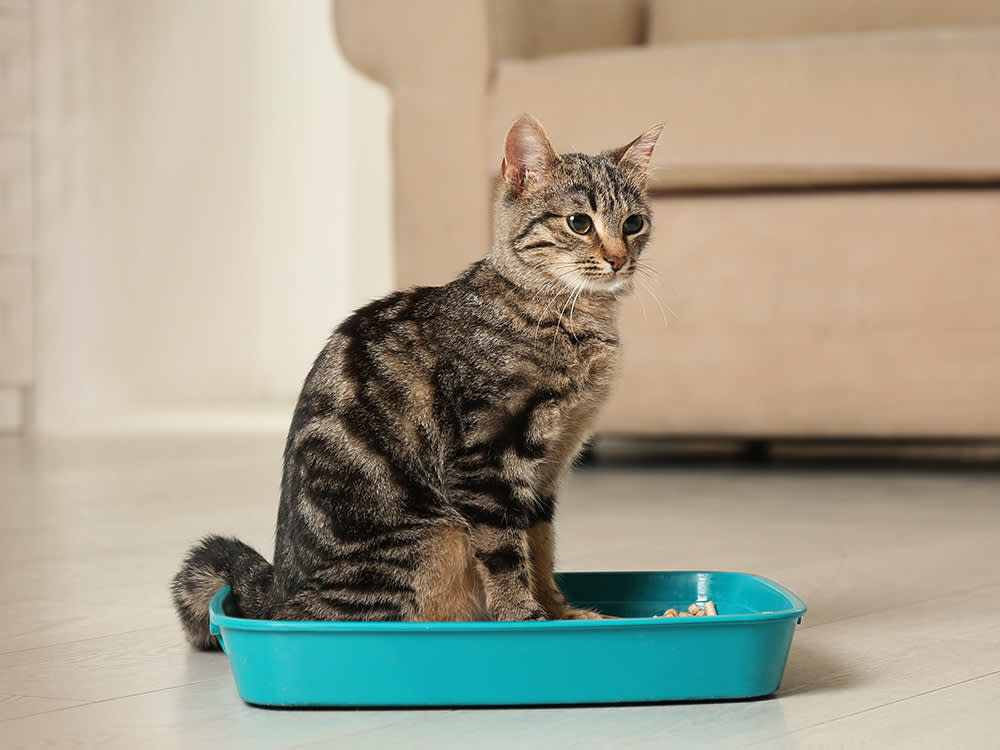
Here is a more useful way to think about a cat who pees on your slippers: they are not being spiteful, and they have not forgotten the rules. They are telling you something specific went wrong, and the location, the timing, and the circumstances of the accident are the clues. A cat’s litter habits run on instinct, so when that instinct gets overridden, there is almost always a concrete reason. Your job is to read the complaint, not to retrain a cat who mostly trains themselves.
That is genuinely good news, because it means “how do I fix this” is really a diagnostic question with a short list of usual suspects. Get the setup right and most cats need almost no teaching at all. As one veterinary behavior expert we work with puts it, the box is less a classroom than a customer-service desk: the cat files complaints, and the accidents are the paperwork.
People come to me convinced their cat is stubborn or vindictive. Nearly every time, the cat is just reacting to something about the box that we set up wrong. Once you stop taking it personally, the problem usually solves itself.
The four things a cat is picky about
When a cat rejects a box, the cause almost always traces to one of four setup choices. Walk through them in order.
1. The box itself
The wall of options at the pet store, big or little, covered or open, plain or robotic, makes this feel complicated, but the guiding rule is simple: match the box to the cat, and err toward bigger. Adult cats dislike small, cramped boxes, and as a rule of thumb, a larger cat calls for a larger tray. Covered versus open is a genuine preference that splits cats down the middle. Some feel safer enclosed; others feel trapped and refuse. If yours is having trouble, swapping the box style is one of the cheapest experiments you can run.
2. The litter
There is real science here, not just folklore. Studies on cat litter preferences found that cats tend to favor clay litter over silica (sand) crystals or wood pellets. Two other choices matter just as much:
- Skip heavy fragrance. Cats have far more sensitive noses than we do, and perfumed litter can drive them away from the box entirely.
- Watch the clumping texture. For some cats, clumping litter is unpleasant underfoot, because it turns urine into hard little balls they have to shove around to do their business.
- Keep it deep enough to bury. A cat wants to cover what they leave behind, so give them enough litter to dig into. It improves the experience for everyone.
If accidents started when you changed brands, the litter is your prime suspect. Cats are finicky about substrate, and switching back or trying a different unscented option often ends the problem.
3. The location
You value privacy in the bathroom, and so does your cat. A quiet spot, a low-traffic laundry room or bathroom, lets a cat relax without a dog thundering past or a roommate blasting videos nearby. But privacy has a limit. Do not exile the box to a far corner of the basement, because cats do not want to trek a long distance or work hard to reach the bathroom. The more hassle the trip, the more likely your cat decides that some closer, “better” spot behind the couch will do instead.
4. The cleanliness
This is the one owners underestimate most. Cats are fastidious, and they will refuse a dirty box and find somewhere else to go. Your side of the deal is simple maintenance: scoop at least once a day, and once a week empty the box completely, scrub it, and refill it. Nobody wants to step into their own mess on the next visit, and neither does your cat.
Kittens usually train themselves, fast
Wondering how long litter training takes? For most kittens, almost no time. The majority use the box instinctively with no instruction, though some need a few days, and a minority take a couple of weeks to get the hang of it. You can start as soon as a kitten is weaned, typically around three weeks old.
To speed a slow learner along, lean on timing and encouragement. Put the kitten in the box right after meals and naps, when their body naturally wants to go, so they link the box with the urge. And resist every impulse to yell. Scolding a kitten mid-accident does not teach them anything useful; it just frightens them, and stress is itself a leading cause of litter-box problems, so punishment makes the very thing you are trying to prevent more likely.
The instinct to bury is already installed. With a kitten you’re mostly just making sure the box is nearby when the urge hits and keeping the experience calm. Fear is the one thing that reliably backfires.
Adult cats and strays need a slower on-ramp
Older cats and newly rescued strays come with their own challenges, and a few tactics help.
Offer more than one box. Multiple boxes in different rooms mean a cat is more likely to find one nearby, and always has a clean backup. In multi-cat homes this is non-negotiable, because cats often refuse to share. The standard is one box per cat plus one extra; cut corners on that count and you invite one of your cats to start going outside the box.
Try an attractant or a calming pheromone spray. These can draw a cat toward the right spot and take the edge off their stress. They can also spot-treat trouble areas, marking a piece of furniture as “already claimed” so a cat feels less need to mark it themselves, which is handy for both scratching hotspots and inappropriate urination.
Confine, but only as a last resort. If nothing else works, confining a cat to a small room that holds the litter box, along with everything they need to be comfortable, food, water, a bed, can help them relearn that the box is the place to go. It is not the most pleasant option for the cat, so reserve it for stubborn cases. Once they are reliably using the box in that small space, gradually widen their access to the rest of the home, and they will usually return to the box when nature calls.
When it is not the setup at all
If you have run through the box, litter, location, and cleaning and a cat is still missing, shift your thinking to their body and their stress level.
Health first, always. Urinary tract infections and bladder stones can make peeing painful, and a cat who hurts in the box comes to associate the box with pain and avoids it. If the usual fixes fail, book a vet visit to rule out medical causes. Clear up the health problem and the accidents usually stop.
Then stress. Anxiety and upheaval, new people, new pets, a move, can push a cat to eliminate outside the box. Watch for other signs of a stressed or low cat, and experiment with calming products and more predictable routines.
And territory. In homes with more than one cat, friction over a shared box is a classic trigger. Give each cat their own turf, and their own box, plus that spare.
The one mindset that fixes most of it
Stop asking “how do I train my cat” and start asking “what is my cat objecting to.” A cat who will not use the box is almost always reacting to something you can identify and change: a box that is too small or too covered, a litter that smells wrong or feels wrong, a spot that is too far or too busy, a tray that is not clean enough, or a body that hurts. Read the complaint, adjust the one thing, and the instinct that was there all along takes back over.
References
- Cats prefer clay litter: substrate preference studies (Journal of Feline Medicine and Surgery)
- American Association of Feline Practitioners: Litter Box Best Practices
- Feline Behavior Problems: House Soiling (Cornell Feline Health Center)
- The Humane Society of the United States: Preventing litter box problems
This article is general guidance, not veterinary advice. Sudden or ongoing litter-box accidents can signal a medical problem, so please see your veterinarian if the behavior appears or persists.
Common questions
What litter do most cats prefer?
Research on cat preferences points to clay litter over silica (sand) crystals or wood pellets, in a fine, unscented form deep enough to bury waste. Perfumed litters and, for some cats, hard clumping textures are common turn-offs.
How many litter boxes do I need?
One per cat, plus one extra, placed in different areas. Skimp on boxes in a multi-cat home and you risk one or more cats starting to go elsewhere. Extra boxes also guarantee a clean option when one is dirty.
My previously perfect cat suddenly started having accidents. Why?
Treat a sudden change as medical until a vet says otherwise. Urinary tract infections and bladder stones make the box hurt, so the cat blames the box and moves on. Rule out health causes before assuming it's behavioral.
How often should I clean the box?
Scoop at least once a day, and empty, scrub, and refill the entire box about once a week. Cats avoid dirty boxes, and cleanliness is one of the most common reasons a cat keeps using, or abandons, a box.
Dr. Solis is a board-certified veterinary dermatologist with over twelve years of clinical experience. She advises on skin conditions, allergies, and grooming practices that affect coat and skin health. All dermatology and allergy content at The Pet Times is reviewed by her team before publication.
Meet our experts ↗Keep reading
 TrainingKitten Biting Has a Closing Window. This Is What You Do in It.Dr. Amara Solis · 6 min
 First DaysTake a Kitten Home Too Early and You'll Pay for It for 15 YearsDr. Lena Park · 10 min
 First DaysYour Older Cat Doesn't Hate the Kitten. It Hates the Energy.Dr. Priya Nair · 7 min
 TrainingLittermates Don't Replace a Mother Cat. The Study Is Blunt About It.Dr. Amara Solis · 6 min
 Training'My Cat Doesn't Like to Play' Is Almost Always a You ProblemDr. Lena Park · 8 min
 First DaysHer Cat Hid Under a Dresser for Months. That Was the Adoption Working.Dr. Amara Solis · 7 min