


South Korea Outlawed the Dog Meat Trade. Half a Million Dogs Still Need You.
A ban is coming, but the dogs already caught in Asia's meat trade won't rescue themselves. Here are the groups doing the actual work, and the specific ways your help reaches a dog.

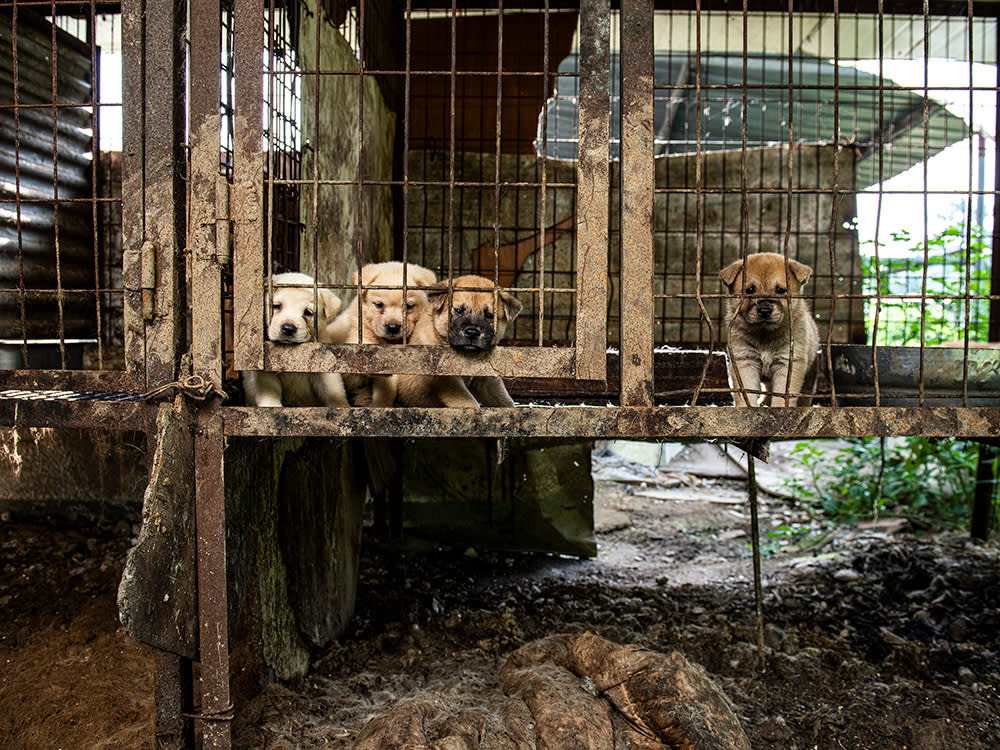
For years, the dog meat trade felt like a problem too big and too far away to touch. That changed on paper in January 2024, when South Korea’s National Assembly passed a law banning the breeding, slaughter, and sale of dogs for meat, with full enforcement arriving in 2027. It is a genuine turning point. It is also the exact moment the animals need more help, not less.
Here is why. A law with a three-year runway leaves hundreds of farms winding down at once, and South Korea has said it will help rehome close to half a million dogs bred for food as the industry closes. Those dogs do not vanish when a bill passes. They still have to be pulled, vetted, transported, and matched with families, and almost none of that is paid for by the ban itself. That work runs on the same small rescue organizations that were doing it before anyone in a legislature cared.
The scale across the region is still staggering. Humane World for Animals (formerly Humane Society International) estimates the trade kills roughly 30 million dogs a year across Asia, with the largest numbers in China, and additional millions in Vietnam, South Korea, and Indonesia. Many are strays or stolen pets. Conditions are brutal at every stage, from transport in crammed trucks where animals die of heat and suffocation, to filthy holding cages on arrival.
It is worth sitting with one uncomfortable point that rescuers themselves raise: the farmers are not cartoon villains. Many want out, and the most durable path forward pairs enforcement with real help for people transitioning away from the trade. That is precisely the model South Korea is now testing, offering subsidies to farmers who file phase-out plans. But the transition only works if someone catches the dogs on the other side. That is where you come in.
Below are four organizations doing that catching, grouped by where they work. Each one gives you a concrete, different way to help.
Korean K9 Rescue (South Korea)
Gina Boehler founded Korean K9 Rescue in 2017 after learning about the trade while working in New York City animal rescue. The group partners with activists and rescuers inside Korea and runs a facility in Bundang, where dogs pulled from slaughterhouses, meat farms, high-kill shelters, and the streets get health screenings, vaccinations, and the training that prepares them to fly to its New York facility and on to foster and adoptive homes. To date it has rescued and adopted out more than 2,000 dogs.
Your options here are unusually hands-on. You can apply to foster or adopt, back the group monthly on Patreon, or sponsor an individual dog to cover food, bedding, medication, and training. The group has also run “Unchain Me, Korea,” an effort to free chronically chained dogs in rural areas and teach residents alternatives to keeping dogs tethered outside year-round.
Animal Rescue Korea (South Korea)
Animal Rescue Korea works a two-front mission that fits this moment well: it pulls dogs out of the meat trade and matches them with homes in the US, Canada, and Europe, while also supporting local activists lobbying the government to hold the line on the ban. If you cannot foster or adopt, the group has a role that costs nothing but a plane ticket you were already taking. Flight volunteers accompany dogs from Korea to their new homes overseas, and it is one of the highest-impact things an ordinary traveler can do. You can also set up a recurring sponsorship.
Soi Dog Foundation (Thailand)
The Soi Dog Foundation began in the early 2000s as a spay-and-neuter effort for Thailand’s enormous street-dog population and grew into a full operation: rescue, sterilization, vaccination, medical care, sheltering, and adoption, plus daily mobile clinics around Bangkok. Its Phuket facilities include dog and cat hospitals. Crucially, Soi Dog has committed to helping end the regional dog-and-cat meat trade through public campaigns, legislative pressure, and support for law-enforcement raids on illegal operations. Support runs the full range: one-time or monthly donations, supply donations, sponsoring a specific animal, adopting, or buying from its merchandise shop.
Harbin Slaughterhouse Survivors (China)
Harbin SHS started in July 2016 when three expats in Harbin took in a handful of dogs from a local slaughterhouse. It scaled fast, rescuing more than 400 animals in its first eighteen months and over 4,000 to date. The group outgrew its original safehouse, built for 120 animals, and has been renovating a larger facility to hold the 600-plus dogs currently in its care. You can adopt one of its dogs, donate toward the new safehouse, or, when the program reopens, volunteer at the shelter or as a flight escort.
What’s new since the ban
The 2027 deadline is the single biggest development in this story in decades, and it reframes what your donation buys. Money and foster homes now feed directly into the largest coordinated dog-rehoming effort the region has ever attempted. South Korea reported roughly 1,600 dog-meat restaurants and over 1,100 farms as of 2023, all now required to file plans to shut down, and public appetite for the trade has collapsed: a 2022 survey found more than 87 percent of South Koreans had no intention of eating dog meat again.
None of that momentum reaches an individual dog automatically. The farms are closing whether or not the rescues can keep up, which means the bottleneck for the next few years is capacity: kennel space, medical care, transport, and homes on the receiving end. A ban writes the ending. The groups above, and the people who fund and foster for them, are the ones who make sure the dogs actually live to see it.
References
- Humane World for Animals. “South Korea Passes Law to End Dog Meat Industry by 2027.” humaneworld.org
- Time. “South Korea Finally Passes Historic Ban on Dog Meat Industry.” time.com
- Humane World for Animals. “Dog Meat Trade FAQs.” humaneworld.org
- Korean K9 Rescue. koreank9rescue.org
- Soi Dog Foundation. soidog.org
Leila Torres leads our Living coverage, from home life and travel to the products and rescue stories that come with sharing a life with animals. She edits and writes across the section, with a soft spot for pieces about the bond between people and their pets.
Meet our experts ↗Keep reading
 Living27 Dogs Flew to America From a Korean Meat Farm. The Country That Bred Them Is Now Ending the Trade.Leila Torres · 4 min
 LivingItaly's Most Beloved Rescue Dog Was Poisoned. A New Law Now Carries His Name.Nina Vasquez · 4 min
 LivingToo Wild to Keep, Perfect to Save LivesMarcus Webb · 6 min
 LivingThe Brooklyn Rescue That Grew Slower on Purpose, and Survived the CrashNina Vasquez · 7 min
 LivingA Viral Dog Reunion Rewrote California LawMarcus Webb · 6 min
 LivingShe Called the Sheriff to Approve Her Dog 'Rescue.' Over 100 Dogs Were Already Dead.James Okafor · 4 min