


Your Cat Notices the Empty Spot. Whether to Call It Grief Is the Hard Part
When a companion pet dies, surviving cats often eat less, play less, and cling more. New research says those changes are real. What we still can't do is read a cat's mind, and that gap is where owners go wrong.

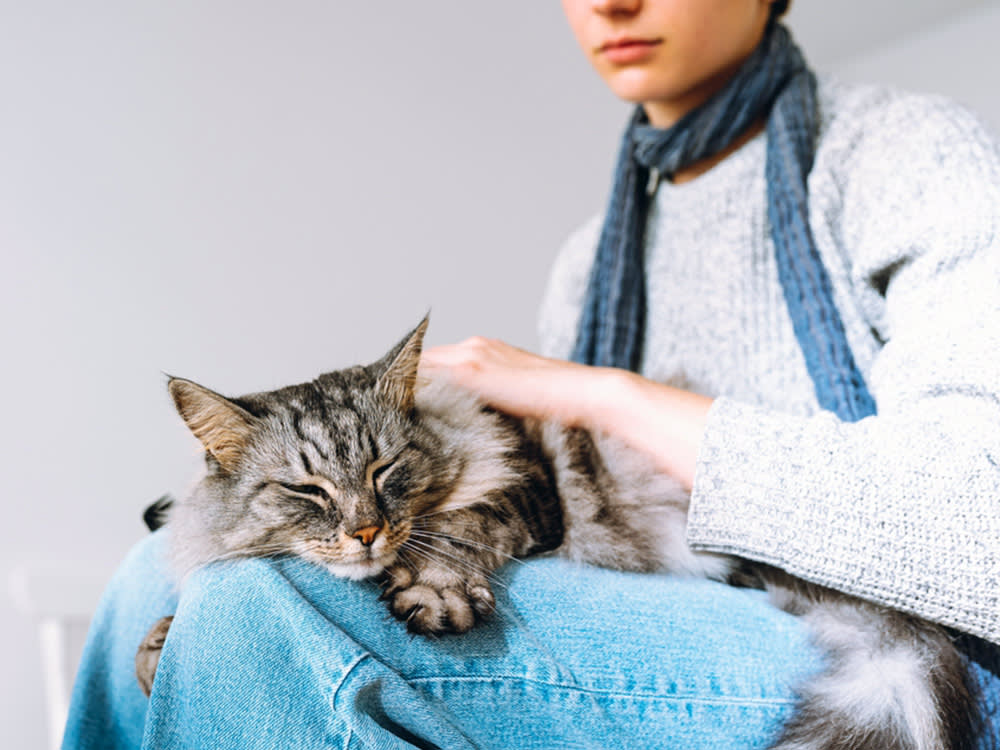
A cat whose companion has died will often do a set of small, unmistakable things. Eat a little less. Play a little less. Sleep in a new spot, or the old shared one. Follow you around more, or call out at odd hours. The behavior is real and observable. The trap is what we do next, which is to reach past the behavior and start narrating the feelings behind it. That leap, from what a cat does to what a cat thinks, is where even loving owners get it wrong.
For years the honest answer to “do cats grieve?” was a shrug. Now there’s data, and it points toward yes, or at least toward a solid grief-shaped yes. But the same research that validates the behavior also draws a hard line around how much meaning we can safely assign to it. Both halves matter, and holding them together is the whole skill.
I tell owners to describe, not interpret. You can say your cat is eating less and sitting by the door. Those are facts. The moment you say your cat is heartbroken and blaming you, you’ve stopped observing your cat and started writing a story about yourself. The care they need lives in the facts.
What the research actually found
The strongest evidence came out of a 2024 study in Applied Animal Behaviour Science, run by researchers at Oakland University, who surveyed more than 450 households where a cat had recently lost another companion animal. The most commonly reported changes were a decrease in eating, a decrease in playing, and an increase in attention-seeking from humans. Some cats went off their food entirely, yowled, or struggled to sleep. Many appeared to search for the animal that was gone.
One finding stands out: the longer two animals had lived together, the more the surviving cat leaned into attention-seeking in the weeks and months afterward. Shared history seemed to deepen the response, which is a striking thing to document in a species we tend to caricature as indifferent.
But the study also handed us a caution, and it’s an important one. Owners who reported feeling more grief themselves were more likely to report grief-like behavior in their cats. That could mean grieving people are simply more attentive observers. It could also mean we project our own sadness onto the animal in front of us. Both can be true at once, and neither can be fully separated out from a survey. So the honest reading is that cats respond to loss, that the response runs deeper with a longer bond, and that our own emotions color what we see.
Why we can’t just ask
The reason this stays murky is straightforward: cats have no language and we can’t read their minds, so every conclusion about their inner life is inference. We watch a cat become lethargic, less playful, less hungry, or less engaged after a loss. Those are the facts. Why the cat is doing it is where projection creeps in, and the more meaning we pile onto the behavior, the less reliable that meaning becomes.
It helps to separate feeling from thought. An animal can have a feeling without a thought about it. A cat may feel the absence of a familiar body in the usual patch of sun, or notice that no one is at the second food bowl, and experience something like loneliness or confusion without ever forming the sentence my friend is gone. They likely can’t name the feeling or trace where it comes from. That doesn’t make the feeling less real to them. It just means we should stop pretending we know its exact shape.
The searching phase
One behavior worth recognizing, because it’s easy to misread, is searching. Many cats don’t start “grieving” until they’ve decided the missing companion isn’t coming back. Before that, they may wander the home, checking familiar spots and calling out, apparently looking for their friend. Only when that search comes up empty does the behavior shift toward the quieter, withdrawn signs we associate with mourning. If your cat is pacing and vocalizing in the first days after a loss, that restless looking is often part of the process, not a separate problem.
How to help a cat through it
The behavior may be ambiguous, but the response to it isn’t. If your cat is showing changes after the death of a fellow pet or a human family member, lean in with attention, affection, and structure.
Give them more of your time, and build small new rituals they can count on, a scheduled play session at the same hour each day gives a disrupted routine a new anchor. Keep feeding, litter, and sleep arrangements steady, since predictability is comforting to an unsettled cat. And resist the urge to fix the gap by rushing out for a new cat. Bringing home another animal is stressful in the best of circumstances, and a grieving cat may actively reject a newcomer. Even cats who were closely bonded to their lost companion don’t necessarily want a replacement. Let your cat set the pace, and consider a new pet later, if at all, based on their personality rather than your grief.
There’s also the question some owners face directly: should a healthy cat be present when a sick companion is euthanized? In theory, being there can help a cat skip the searching phase by making the loss concrete. In practice it’s rarely that tidy, and it depends heavily on how the surviving cat has been relating to the sick one. If your cat has been keeping watch and staying close, an at-home euthanasia that lets them be present may help. If your cat has been distancing themselves from the dying companion, which is common, respect that and don’t force a goodbye. Every household is different, and the right call is the one that fits your cats, not a rule.
The bottom line
Whether your cat is grieving or simply thrown off by a change, the medicine is the same: time, patience, extra affection, and a stable routine. Keep an eye out for changes that don’t ease, since a prolonged loss of appetite or lethargy can also signal a medical problem worth a vet visit. Watch what your cat does, meet those needs generously, and hold the interpreting loosely. Your cat will appreciate the extra cuddles and quiet company regardless of what, exactly, is going on behind those eyes.
References
- Greenberg, Brittany J., and Jennifer Vonk. “Is Companion Animal Loss Cat-astrophic? Responses of Domestic Cats to the Loss of Another Companion Animal.” Applied Animal Behaviour Science, vol. 278, 2024, https://doi.org/10.1016/j.applanim.2024.106355.
- Walker, Jessica K., et al. “Owners’ Perceptions of Their Animal’s Behavioural Response to the Loss of an Animal Companion.” Animals, vol. 6, no. 11, 2016, https://doi.org/10.3390/ani6110068.
- Vitale, Kristyn R. “The Social Lives of Free-Ranging Cats.” Animals, vol. 12, no. 1, 2022, https://doi.org/10.3390/ani12010126.
Common questions
Do cats actually grieve?
Cats clearly change their behavior after a companion dies, eating less, playing less, sleeping poorly, and seeking more attention. A 2024 study documented these patterns across hundreds of homes. Whether the inner experience matches human grief is something we can't measure, so it's most honest to say cats respond to loss in grief-like ways.
How long does a cat grieve?
There's no set timeline. Many cats move through a searching phase, wandering and calling for the missing companion, before the behavior settles over days to weeks. Give your cat time and extra attention, and watch for changes that don't ease up, which may need a vet's eye.
Should I get a new cat to help my grieving cat?
Usually not right away. Introducing a new animal is stressful even in good times, and a grieving cat may not welcome a stranger. Let your cat adjust at their own pace first, and only consider a new companion later, based on your cat's temperament rather than your own timeline.
Dr. Kohl is a board-certified veterinary dentist with a particular interest in preventive oral care. She reviews all dental health content at The Pet Times and contributes practical guides on home dental routines, professional cleaning, and oral disease prevention.
Meet our experts ↗Keep reading
 Living95% of Them Adopted the Cat They 'Just' FosteredNina Vasquez · 5 min
 Living95% of Them Kept the Cat: What a Loneliness Study Proved About FosteringNina Vasquez · 5 min
 LivingNobody Gives Up a Cat They Love on a Whim. Here Are the 5 Real Reasons, and the Fixes.Dr. Amara Solis · 6 min
 LivingBrooklyn's Cat Cafe Flipped the Model: It's a Rescue Clinic With a Cafe AttachedSara Lim · 6 min
 LivingHer Cats Kept Sneaking Into the Drawings. Then They Took Over.Leila Torres · 6 min
 LivingThe Viral Cat Essay's Real Failure Was Confusing a Feeling With a ChoiceDr. Mara Chen · 8 min