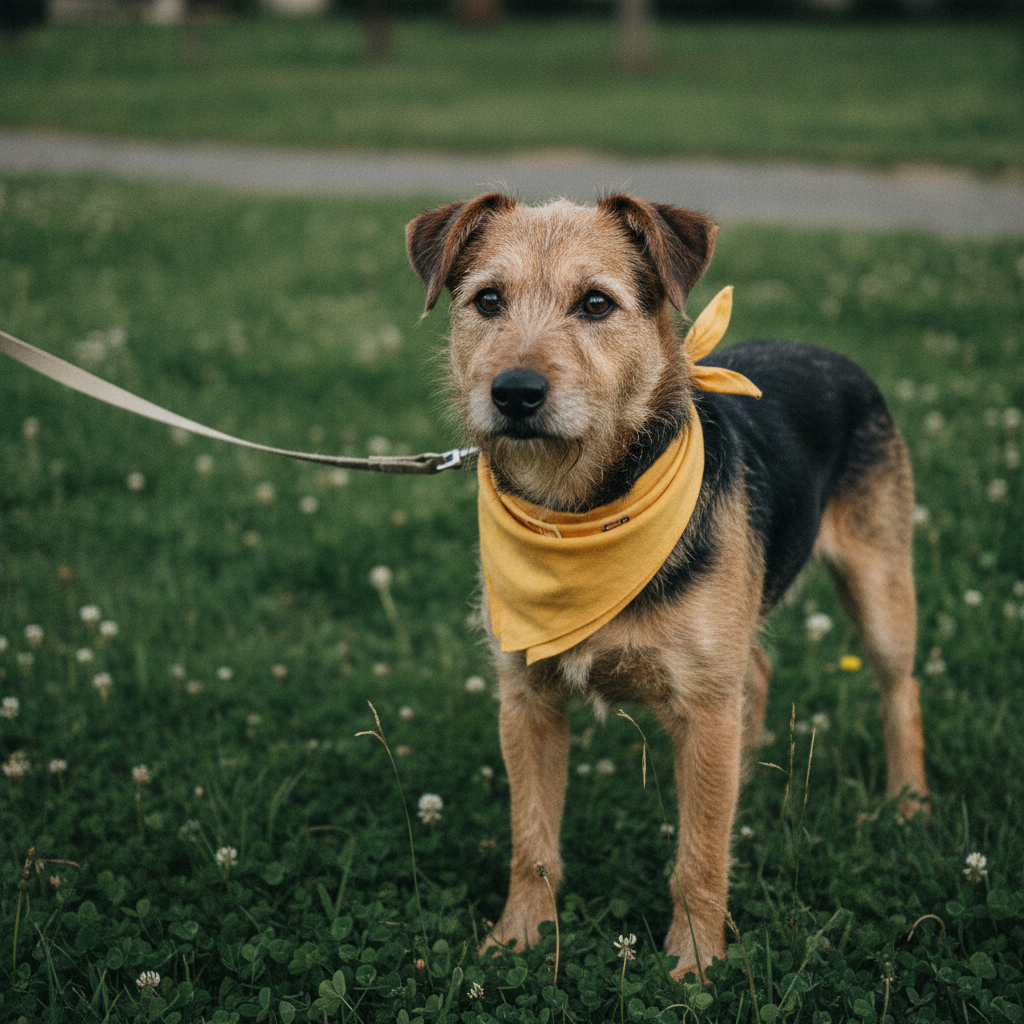
You’re on a walk when another dog approaches, wearing a bright yellow bandana. It’s easy to read that as a warning, “dangerous dog, stay away.” It isn’t, exactly. That yellow is a quiet, increasingly common request, and it says something gentler and more useful: please give us some space.
If you’ve ever walked a dog who gets overwhelmed in public, you already understand why that request matters. And if you haven’t, learning to recognize the signal will make you a better, kinder presence on every trail and sidewalk you share.
Reactive is not the same as aggressive
The whole idea rests on a distinction that gets blurred constantly. A reactive dog is one who responds to ordinary things, other dogs, strangers, bikes, with an outsized intensity that a more easygoing dog would shrug off. That reaction might look like lunging on the leash, barking, or trying to hide. Sometimes the dog is over-excited, sometimes anxious. What it usually is not is a dog looking to hurt anyone. Reactivity is about a low threshold for getting overwhelmed, not a desire to attack.
The problem for these dogs and their people is logistics. A reactive dog needs a buffer to stay calm, and it’s genuinely hard to convey that to a friendly stranger bearing down for a chin scratch, or to an off-leash dog barreling over to say hello. Once a reactive dog is triggered, it’s tough to bring them back down. What their handler needs is a way to ask for room before the moment tips over.
The signal, and where it comes from
That’s what the yellow bandana does. A dog wearing yellow is flagging, ahead of time, that they need space, so people know to keep their distance and not overwhelm the dog. It’s a simple, low-tech, dignified way to communicate a need.
The idea isn’t new, and it isn’t one city’s invention. It grew out of an international movement. Canadian dog trainer Tara Palardy launched The Yellow Dog Project and coined a handy acronym for exactly these dogs: D.I.N.O.S., or “dogs in need of space.” The campaign has spread around the world, with parallel efforts like Yellow Dog UK and programs across Australia and Europe. And crucially, the yellow signal isn’t only for reactive dogs. A dog might wear it because they’re recovering from surgery, in the middle of training, being carefully socialized or rehabilitated, elderly and easily startled, or simply nervous. The common thread is a need for room, whatever the reason.
Cities have started to formalize it. Vancouver’s Animal Services, for instance, hands out free yellow bandanas to residents with a licensed dog, an official nudge to spread a signal that only works when enough people recognize it. As one animal-services staffer has emphasized in explaining the program, a reactive dog and an aggressive one are not the same thing, and plenty of dogs simply need a bit of extra room. You don’t need a municipal program to take part, though, any yellow bandana or ribbon carries the same meaning.
“A yellow bandana is one of the most considerate things a reactive dog’s owner can do, and one of the easiest for the rest of us to honor,” says Jordan Ellis. “It turns a stressful guessing game into a clear signal. When I see yellow, I create distance without taking it personally, that dog isn’t bad, it’s just asking for room to succeed.”
What to do, on either end of the leash
If you see a dog in yellow: give space. Don’t approach to pet, don’t let your dog charge over, and if your dog is off-leash, leash up and move along. You’re helping a nervous dog have a good day instead of a bad one, and you’re making the interaction pleasant for everyone.
If you have a reactive dog: consider using the signal. It won’t train the reactivity away, that’s separate work, ideally with a positive-reinforcement trainer, but it buys you the buffer you need to manage walks and set your dog up to succeed. The more people who recognize yellow, the better it works. Every handler who uses it, and every passerby who honors it, makes the signal a little stronger for the next dog.
That’s really the heart of it. A yellow bandana isn’t a scarlet letter. It’s a small act of communication between strangers who both want the same thing: a calmer, safer walk for the dog on the other end of the leash.
References
- The Yellow Dog Project. “About D.I.N.O.S. (Dogs In Need Of Space).” https://www.theyellowdogproject.com/
- City of Vancouver. “Reactive dogs and the yellow bandana.” https://vancouver.ca/home-property-development/reactive-dogs.aspx
- Yellow Dog UK. https://yellowdoguk.co.uk/
- American Veterinary Society of Animal Behavior. “How to help a reactive or fearful dog.” https://avsab.org/resources/